
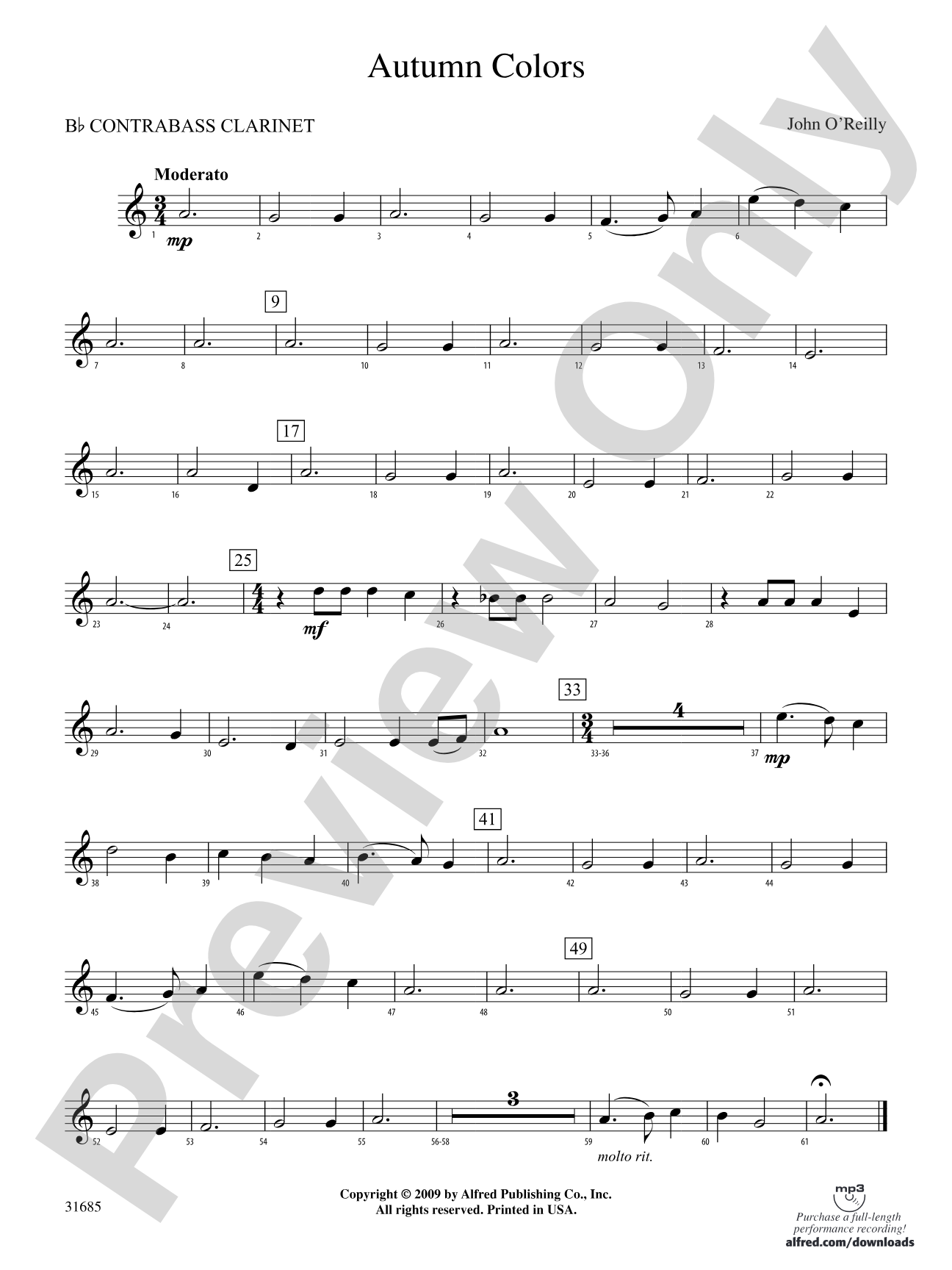

Autumn Colors: (wp) B-flat Contrabass Clarinet
By John O'Reilly
Grade: 1.5 (Easy)
Item: 00-PC-0001789_wpBCBC
$3.00
Pickup currently not available
Description
Autumn is always an exciting time of the year for children as they head back to school and fall sports. For the composer John O'Reilly, autumn is a special time because of the dramatic colors that dot the Adirondack Mountains in New York State. Summer is over and autumn is the lovely season that precedes the harsh winter to come. Autumn Colors is set in a natural minor tonality and features flowing melodic lines from all the winds. This lyrical ballad portrays the warm feelings the composer experiences when the leaves put on their yearly display of beautiful colors. (2:20) Correlates with Book 2. Page 13 This title is available in MakeMusic Cloud.


Don't just read it, hear it, play along with it, and watch your students grow with it. In MakeMusic Cloud, Autumn Colors: (wp) B-flat Contrabass Clarinet comes alive with professional accompaniment, adjustable tempo, and built-in practice tools that turn solo practice into real progress.
Open in the Player
Jump straight in and assign it today.
Start Your Free Trial
Open this title and explore the full library in minutes.
Sample Audio
1
Audio File
--:--
0:00
0:00
Sample Video
Additional Details
Series:
Accent on Achievement
Publisher:
Alfred Music
Page Count:
124
SKU:
00-PC-0001789_wpBCBC
More about this title
About the Composer: John O'Reilly
John O'Reilly has built a distinguished career as a composer and educator deeply invested in creating accessible yet musically substantive works for young ensembles. His compositions frequently draw inspiration from natural landscapes and seasonal imagery, translating visual phenomena into carefully crafted wind writing that engages students at all levels.
O'Reilly's work with the Accent on Achievement series reflects his pedagogical philosophy: each piece is designed to reinforce specific technical concepts while maintaining artistic integrity. His approach emphasizes lyrical content and voicing techniques that encourage students to listen beyond their own parts and shape longer musical phrases.
Why we love this
O'Reilly captures something genuinely moving here: the nostalgia and quiet beauty of seasonal change rather than relying on bombast or cliché. The natural minor tonality creates a reflective quality that appeals to developing bands without feeling patronizing. A Grade 1.5 piece that actually has musical substance.
What to expect
Quiet contemplation. The minor tonality gives the piece an introspective warmth rather than darkness, as though you're watching leaves turn color on a clear autumn afternoon. The flowing wind lines create a sense of gentle motion, neither rushing nor stalling.
Who it's for
Grade 1.5 concert bands ready for repertoire that combines accessibility with real musical intent. This works especially well for ensembles working through the Accent on Achievement curriculum and looking for material that extends their developing technique without overwhelming early intermediate players.
How to get the most out of it
- Shape the flowing melodic lines through long phrasing rather than chopping them into phrases at every bar line. Wind players will need to coordinate dynamic contours across the entire ballad.
- Balance the melodic voices carefully. Since the winds carry the primary material throughout, identify which section leads in each section and ensure the supporting voices recede appropriately.
- Maintain steady breath support in the minor tonality to avoid sagging the line. The lyrical quality can easily become draggy if players don't think through the legit.
- Allow time in rehearsal to discuss the imagery. Knowing that this reflects the composer's experience with New England autumn helps musicians invest in the mood rather than simply reading notes.
How to use it
Natural fit for fall concerts, Thanksgiving programs, or festival appearances in October and November. Its lyrical character and moderate length (2:20) make it an excellent complement to more energetic pieces on the same concert, or a solid opener for a set emphasizing seasonal themes.
Skills your students will build
- Sustaining legato lines in minor tonality
- Balancing wind voices in ensemble writing
- Shaping longer phrases with dynamic contour
- Responding to programmatic and emotional content in music