Automne (Low Voice) Sheet Music Preview

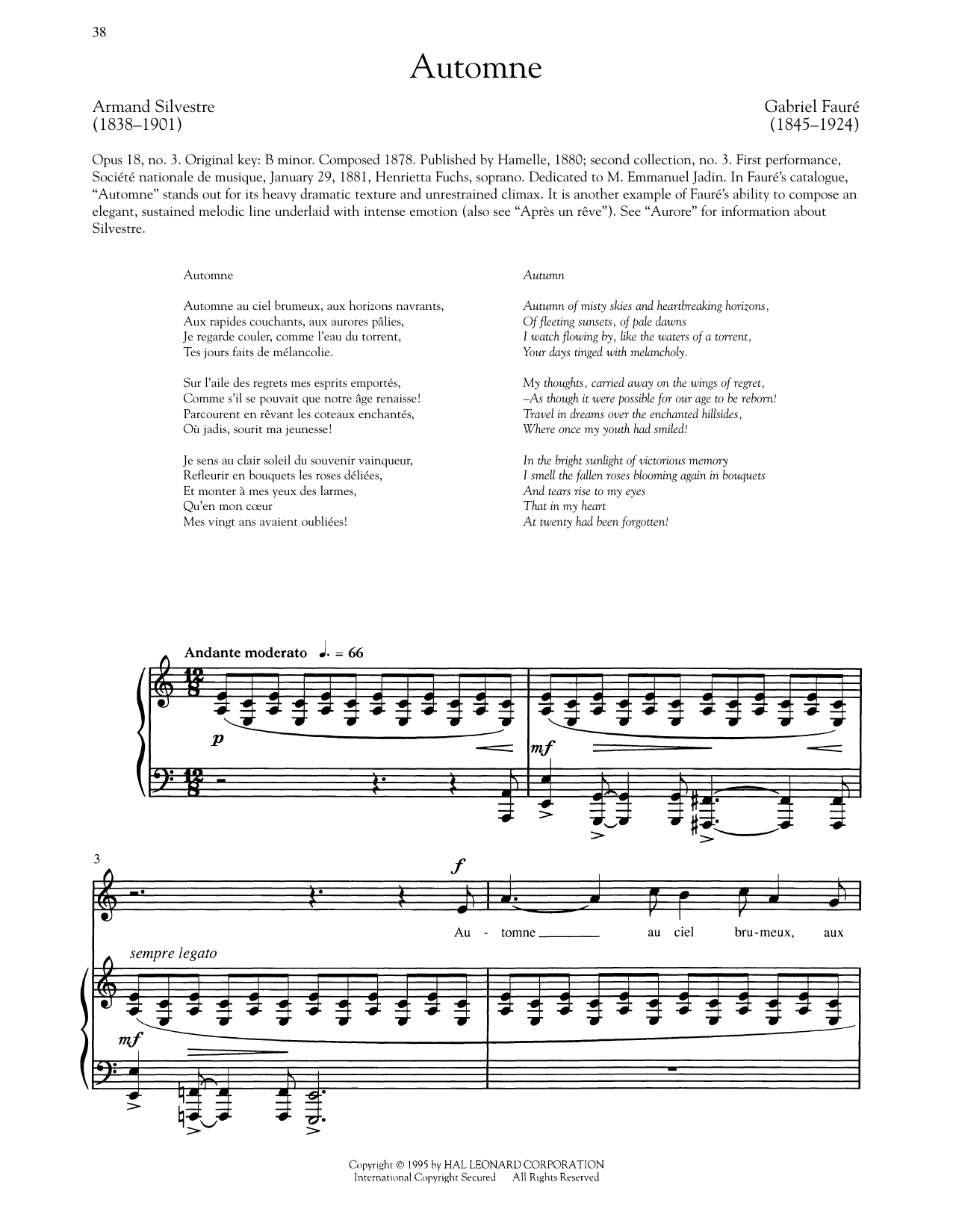
Automne (Low Voice): Piano Vocal

By Gabriel Fauré

Item: 35-DS01827447

Digital Download
$5.99
Description

Automne (Low Voice): Piano Vocal isn't in MakeMusic Cloud just yet...but it could be. Let us know you'd like to see it, and you'll help shape what comes next. In the meantime, start a free trial and dive into thousands of interactive titles your students can play along with today.

Sample Audio
No sample audio found.
Sample Video
Additional Details
Publisher: Hal Leonard
Page Count: 5
SKU: 35-DS01827447

More about this title

About the Composer: Gabriel Fauré

Gabriel Fauré (1845–1924) shaped French musical aesthetics for nearly five decades, moving seamlessly between intimate vocal works and large orchestral forms. His gift lay in refined harmonic language and psychological depth; he could convey emotional complexity through deceptively simple melodic lines, influencing everything from Debussy's impressionism to the art song tradition that followed.

Why we love this

Fauré's setting of Autumn captures transience and melancholy without sentimentality, making it a natural fit for singers seeking substance beyond obvious virtuosity. The vocal line sits comfortably in a low voice without sacrificing lyricism, and the piano writing supports rather than overwhelms the text.

What to expect

The piece unfolds like watching leaves fall in still air; there is movement and quiet inevitability together. The harmonic palette shifts gently, creating moments of brightness that fade back into introspection, leaving singers and listeners with a sense of acceptance tinged with longing.

Who it's for

Baritones, mezzo sopranos, and low tenors who want to develop interpretive subtlety without tackling heavier dramatic repertoire. This work suits intermediate singers committed to art song and pianists looking for rewarding collaborative material.

How to get the most out of it

  • Sing through the text quietly first, focusing on the arc of the French vowels and syllable weights before adding dynamic contour to the melody.
  • Work with your pianist to establish a tempo that allows the piano's harmonic movement to breathe; rushing dulls the contemplative mood.
  • Attend to the piano's inner voices, which often carry thematic material that complements the vocal line.
  • Avoid over-interpreting dynamic markings; Fauré's restraint is part of the work's power.

How to use it

Pair this with other French mélodie to create a focused vocal recital segment, or feature it as a solo moment in a classical concert where it provides contrast to larger ensemble works. Its reflective character makes it effective in autumn-themed programs or as a thoughtful opening number.

Skills your students will build

  • Phrasing through French text and its natural stress patterns
  • Responding to subtle harmonic shifts in the accompaniment
  • Sustaining lyrical line without vibrato excess
  • Collaborating with pianist on tempo and emotional shape
  • Interpreting music through restraint rather than excessive dynamic contrast

You May Also Like