Automne Sheet Music Preview

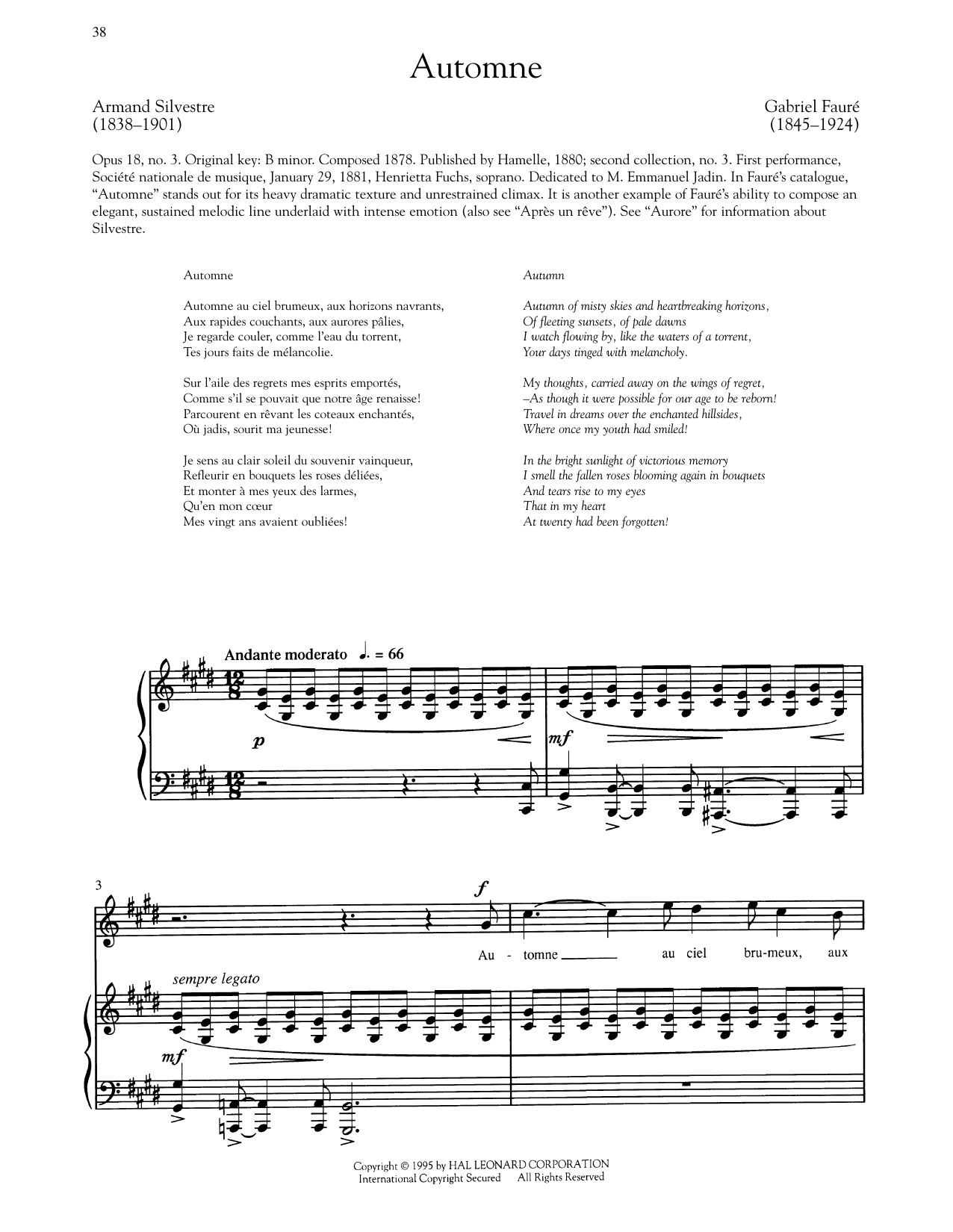
Automne: Piano Vocal

By Gabriel Fauré / As performed by Gabriel Faure

Item: 35-DS01819439

Digital Download
$5.99
Description

Automne: Piano Vocal isn't in MakeMusic Cloud just yet...but it could be. Let us know you'd like to see it, and you'll help shape what comes next. In the meantime, start a free trial and dive into thousands of interactive titles your students can play along with today.

Sample Audio
No sample audio found.
Sample Video
Additional Details
Publisher: Hal Leonard
Page Count: 5
SKU: 35-DS01819439

More about this title

About the Composer: Gabriel Fauré

Gabriel Fauré (1845–1924) shaped French music through both his compositions and his role as director of the Paris Conservatoire. His song cycle works and art songs established new possibilities for the voice, treating it as an equal partner to the piano rather than merely supported by it. Fauré's harmonic language was quietly revolutionary; his chromaticism and use of modal inflection influenced generations of composers while remaining deeply rooted in French lyrical tradition.

Why we love this

Fauré's songs reward singers who can sustain a long phrase without pushing; the music itself provides the shape and momentum. This piece sits naturally for high voices and demands the kind of refined pianistic touch that elevates an accompanist from timekeeper to true collaborator.

What to expect

Contemplative and suffused with the light of late autumn. The music moves through harmonic territory that feels both intimate and slightly distant, as if observing seasonal change from inside a quiet moment.

Who it's for

Advanced high voice singers preparing an art song recital or masters-level study. Accompanists looking to deepen their understanding of French song style will find this a central work in the canon.

How to get the most out of it

  • Treat the vocal line as song-first, resisting the urge to melodramatize. The French text carries its own weight without forcing the music.
  • Balance the piano accompaniment so it complements rather than cushions the voice; Fauré expects clarity on both sides of the score.
  • Shape longer phrases by breathing at natural language cadences, not bar lines. This creates linguistic authenticity and musical line.
  • Pay attention to the harmonic shifts Fauré uses to paint the text; small changes in tone color will expose the compositional craft without sounding mannered.

How to use it

Feature this in a solo recital where it can anchor an all-French or art song program. The five pages work beautifully as a standalone offering or as the opening work in a group of Fauré songs, setting the tone for what follows.

Skills your students will build

  • Sustaining long vocal lines without rhythmic support
  • Understanding French prosody and text setting
  • Recognizing chromatic harmony and modal inflection
  • Ensemble listening between voice and piano
  • Interpretation of subtly shifting harmonic color

You May Also Like