Aura Lee Sheet Music Preview

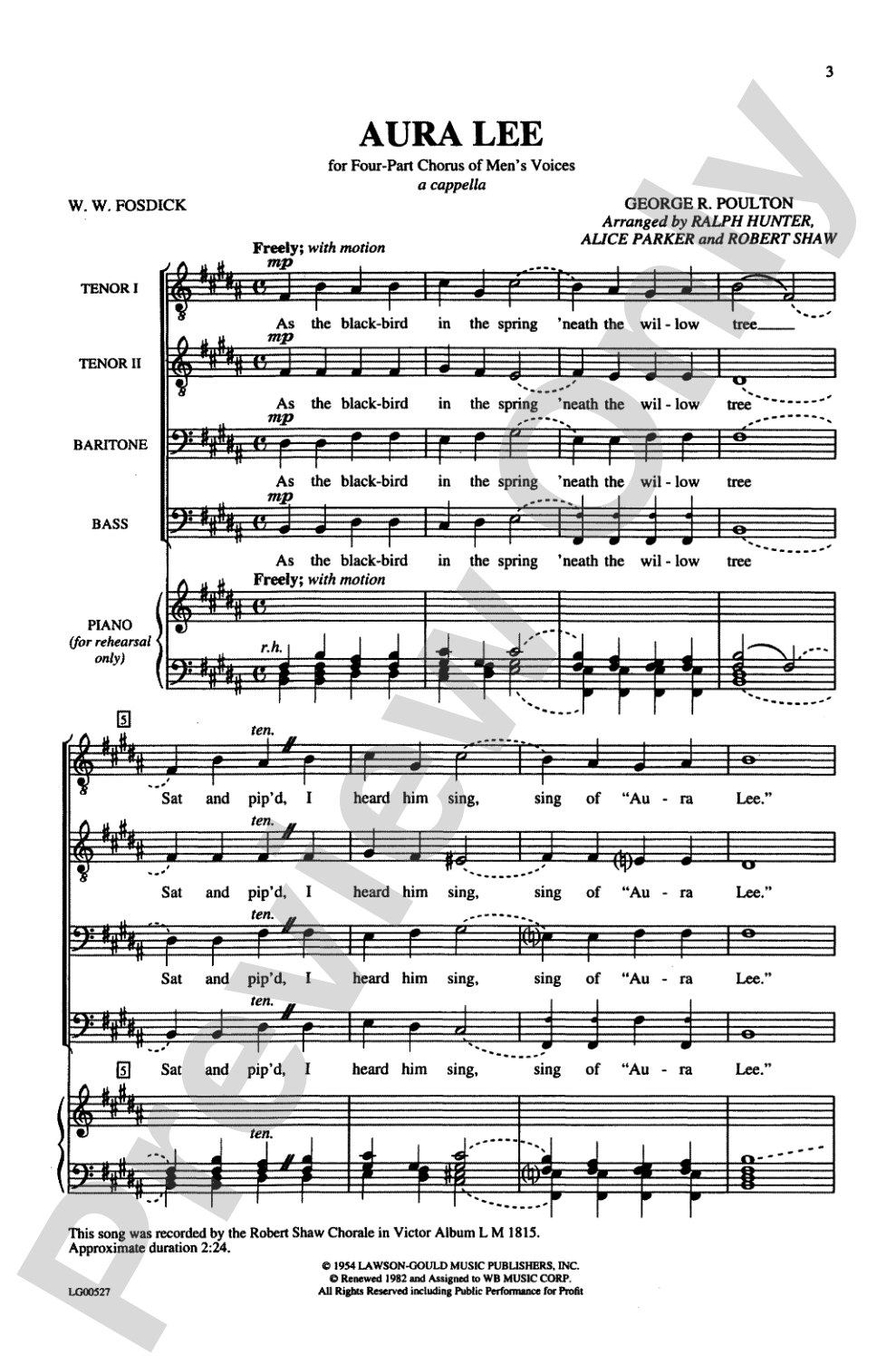
Aura Lee: TTBB Choral Octavo

By George Poulton / arr. Ralph Hunter, Robert Shaw and Alice Parker

Item: 00-PO-0002997

Digital Download
$2.25

Minimum order quantity: 20 copies

Description

Aura Lee: TTBB Choral Octavo isn't in MakeMusic Cloud just yet...but it could be. Let us know you'd like to see it, and you'll help shape what comes next. In the meantime, start a free trial and dive into thousands of interactive titles your students can play along with today.

Sample Audio
No sample audio found.
Sample Video
Additional Details
Series: Alfred Archive Edition: Lawson-Gould Music Publishers
Publisher: Alfred Music
Page Count: 8
SKU: 00-PO-0002997

More about this title

Why we love this

Ralph Hunter, Robert Shaw, and Alice Parker bring serious artistry to this arrangement, and their names alone signal that this TTBB setting will honor both the melody and the men singing it. The flexible voicing (TB/TTB/TBB/TTBB) means you can perform it with the singers you have without compromising the musical intent.

What to expect

Warm and grounded, with the nostalgic quality of a well-loved American tune presented through a lens that respects both the song and the singers performing it. The arrangement invites conversation between voice parts rather than stacking them, creating a sense of intimacy even in fuller sections.

Who it's for

TTBB choirs and ensembles with mixed tenor and baritone strength looking for accessible repertoire that sits well for men's voices. Directors who want to include traditional material without settling for a generic arrangement will find this work substantive and singable.

How to get the most out of it

  • Balance the melody across your voice parts rather than letting it rest entirely in the tenors; this arrangement rewards blend over solo projection.
  • Use the flexibility of the voicing to your advantage in rehearsal. Start with TTB if your second tenor section is thin, then layer in baritone parts as confidence builds.
  • Pay attention to vowel consistency within each phrase; men's voices can drift into a swallowed quality if they're not thinking forward on the vowels.

How to use it

Pair this with spirituals or other folk-derived pieces to build a program rooted in American musical tradition, or use it as a moment of simplicity and warmth between more complex contemporary works. It works equally well in a casual setting or on a formal concert.

Skills your students will build

  • Sustaining independent melodic lines in men's voices
  • Voice part independence and listening within TTBB texture
  • Performing arranged standards with stylistic authenticity
  • Intonation and blend across changing voice part distributions

You May Also Like