
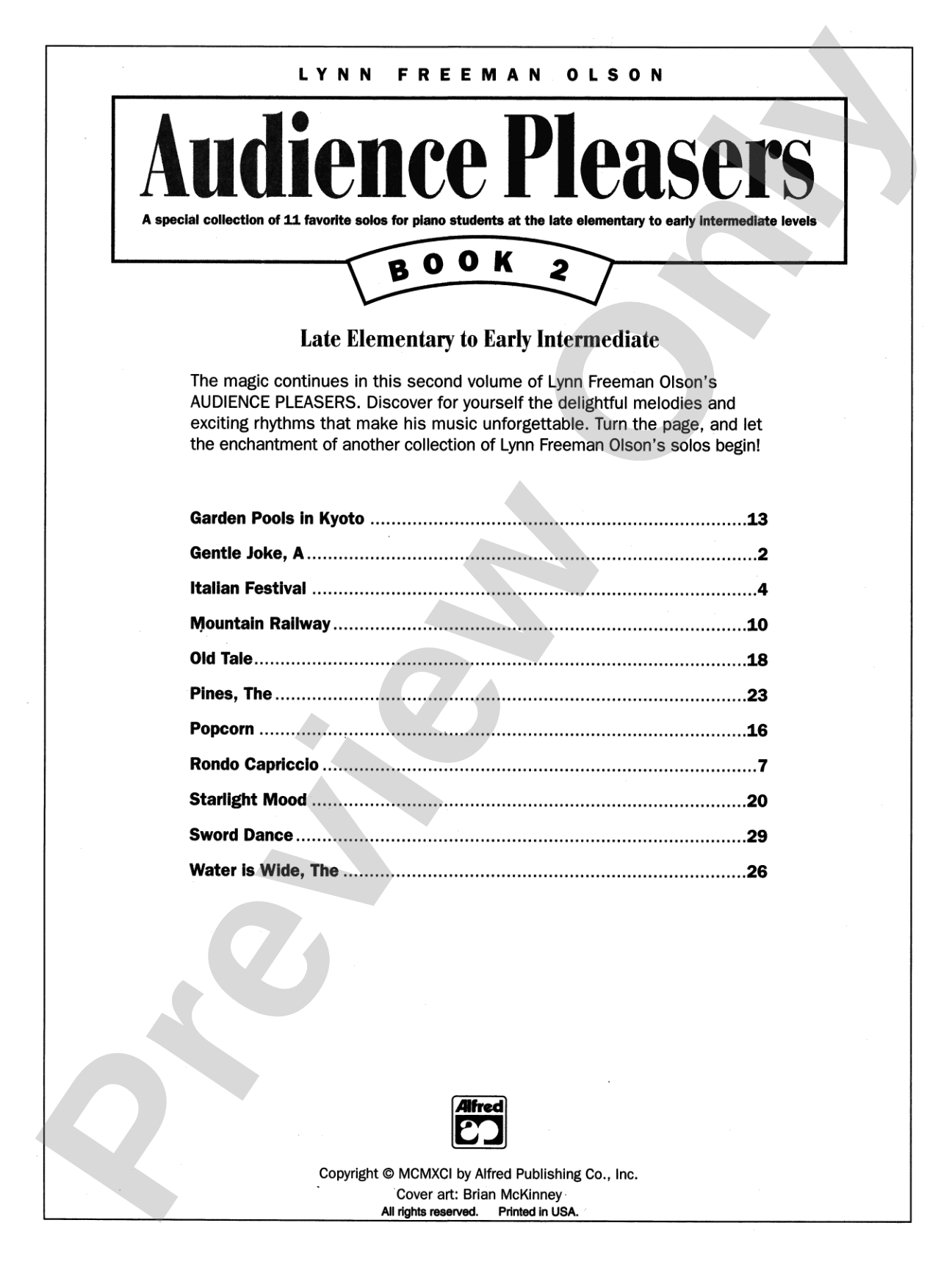
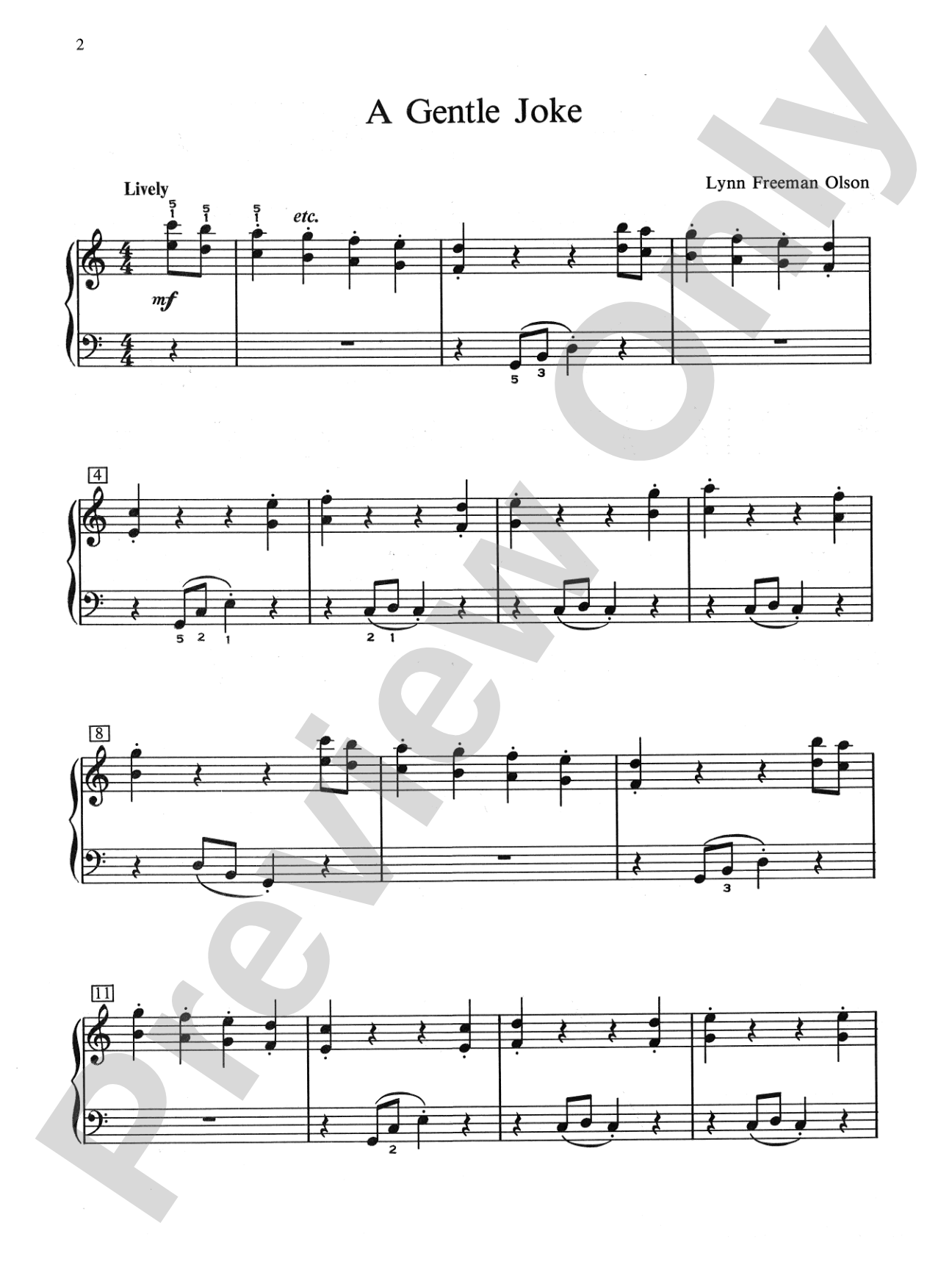
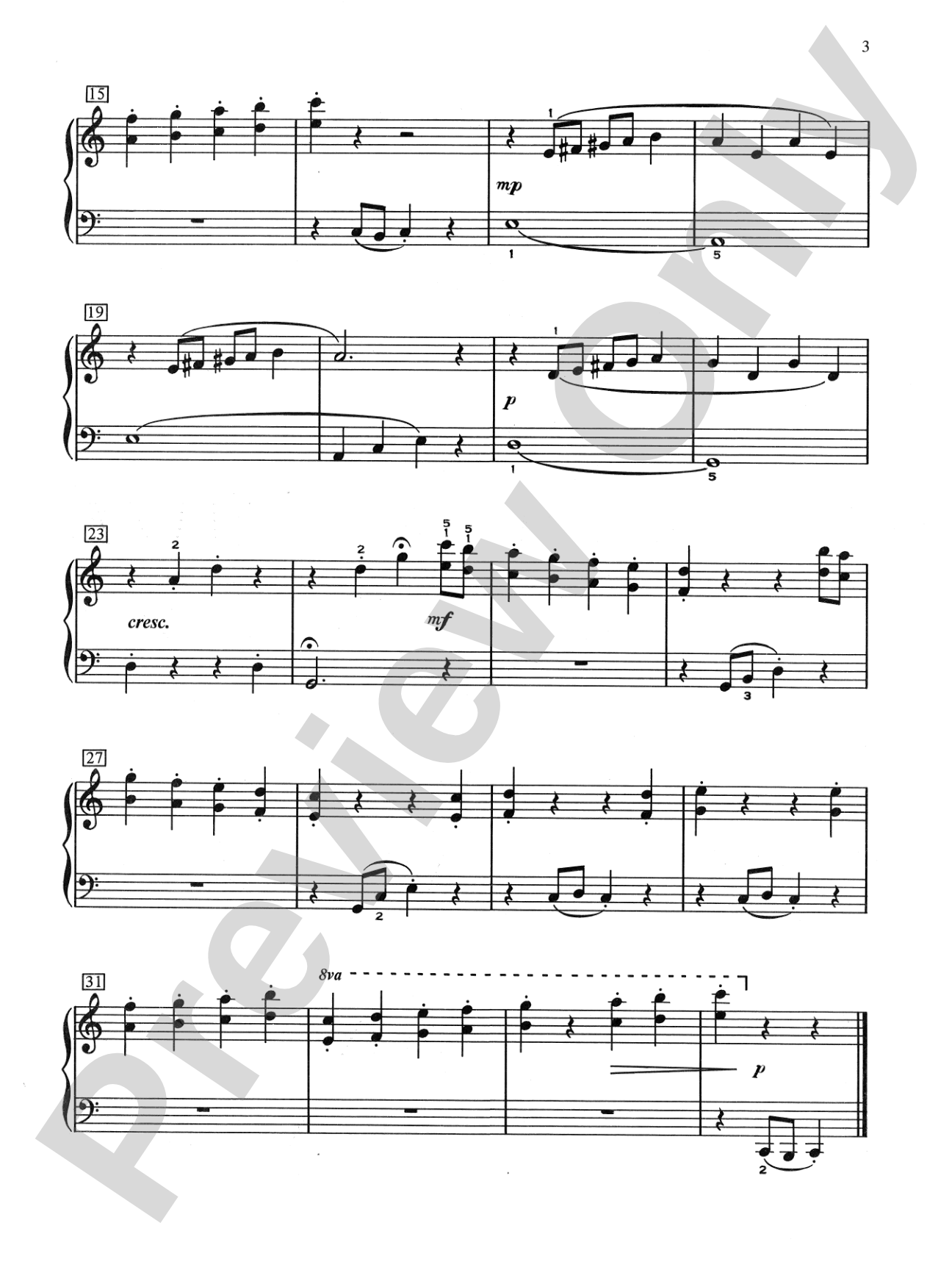
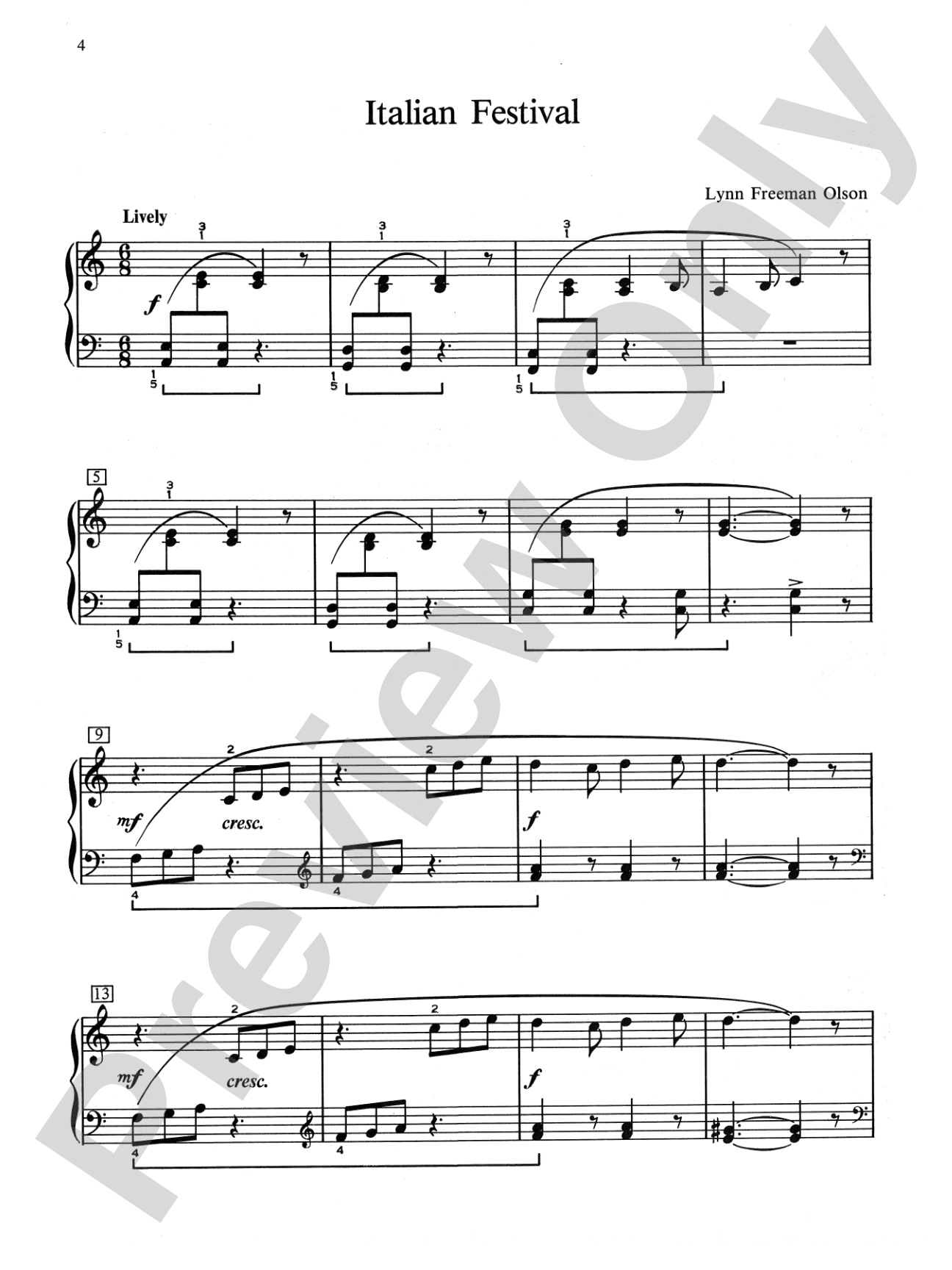
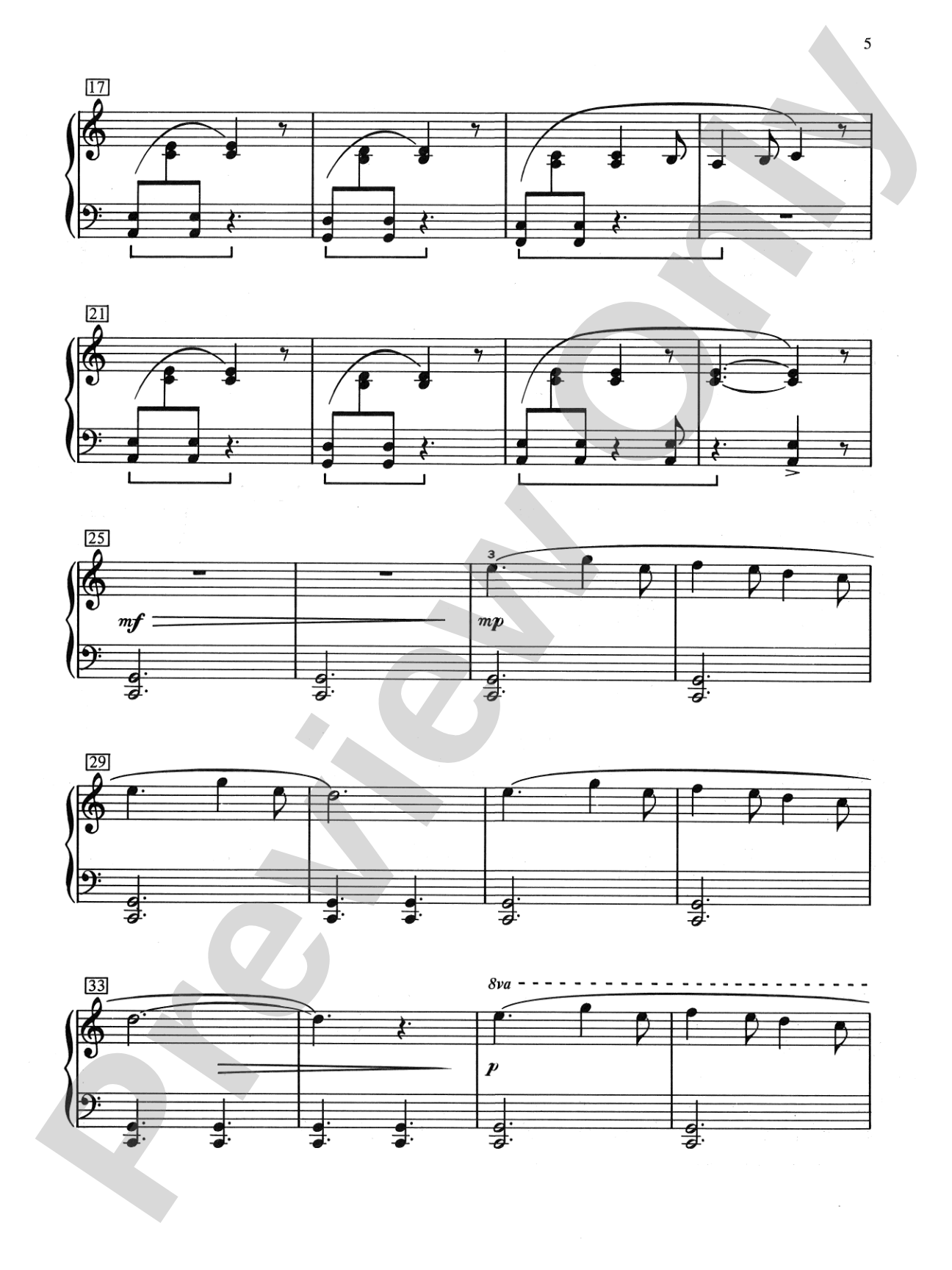
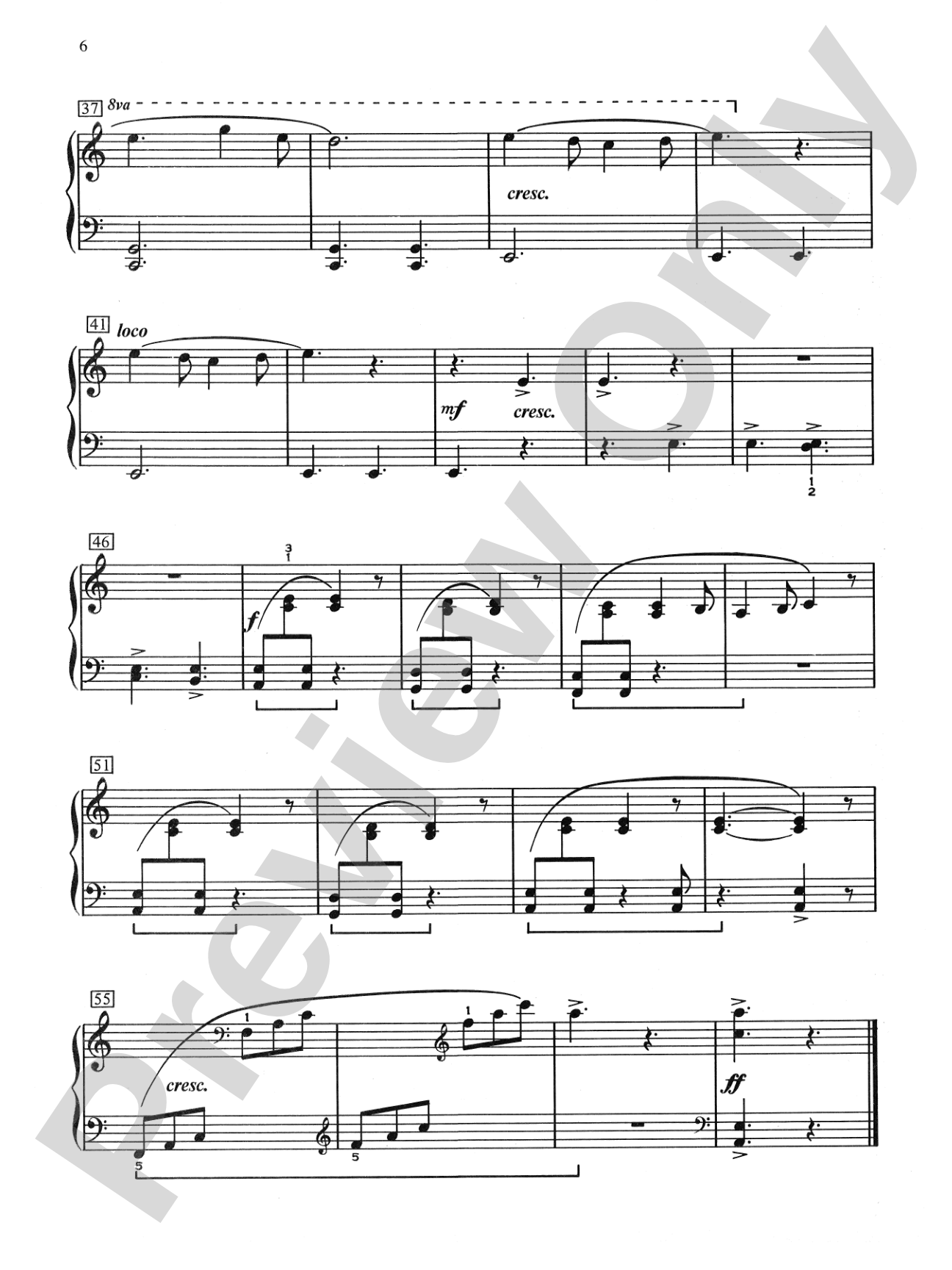
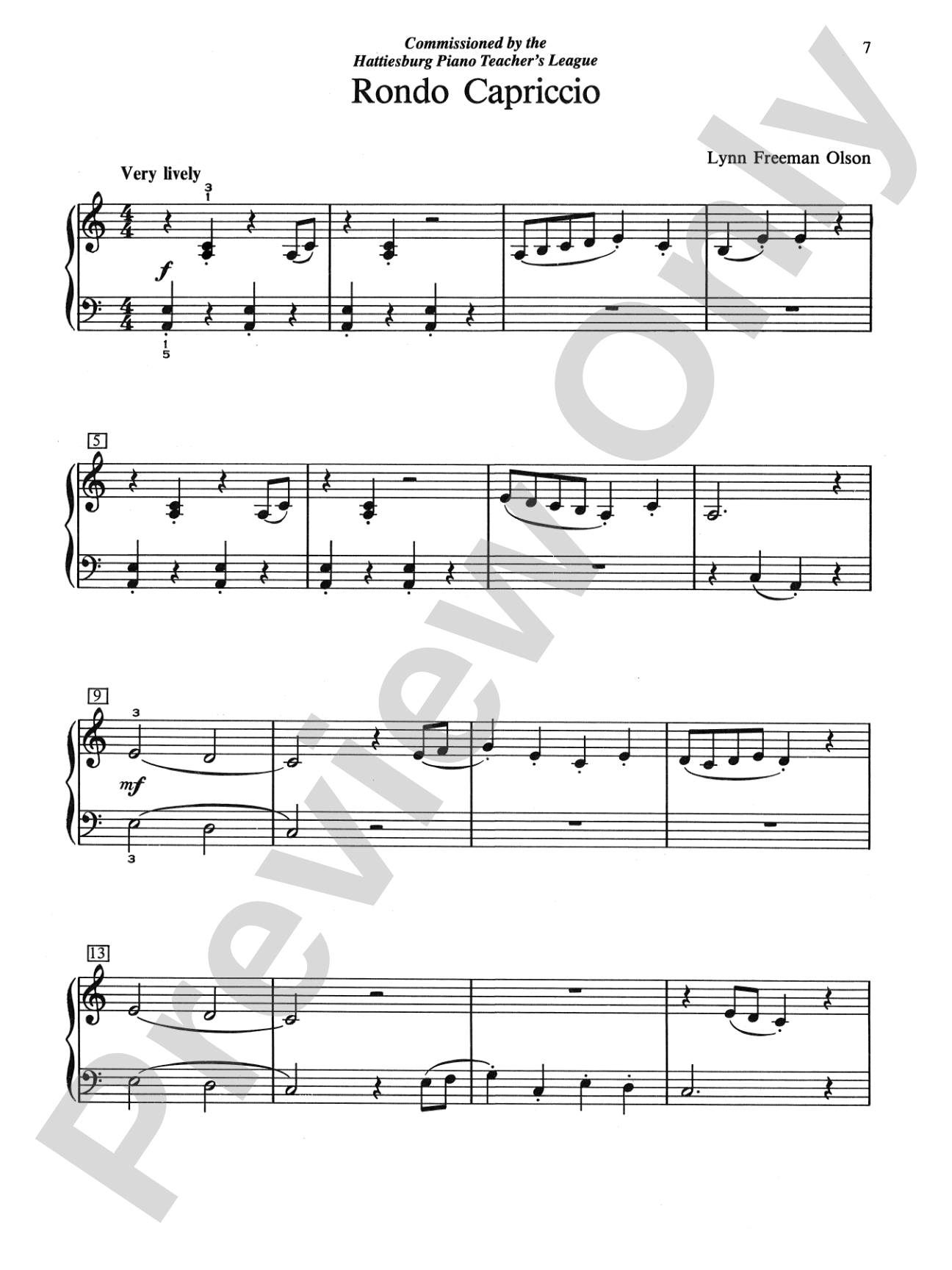

Audience Pleasers, Book 2: A Special Collection of 11 Favorite Solos for Piano Students at the Late Elementary to Early Intermediate Levels: Piano
A Special Collection of 11 Favorite Solos for Piano Students at the Late Elementary to Early Intermediate Levels
By Lynn Freeman Olson
Level: Late Elementary / Early Intermediate
Item: 00-PB-0000874
$7.99
Pickup currently not available
Related Items
Audience Pleasers, Book 2: Piano Book |
$7.95
|
View |
Description
Lynn Freeman Olson's music has enchanted several generations of students and teachers. His legacy lives on in this series of books that have been pulled from his most loved sheet music solos. Book 1 spans the early elementary and elementary levels, Book 2 is late elementary/early intermediate, Book 3 is intermediate/early advanced. A Federation Festivals 2024-2028 selection.


Audience Pleasers, Book 2: A Special Collection of 11 Favorite Solos for Piano Students at the Late Elementary to Early Intermediate Levels: Piano isn't in MakeMusic Cloud just yet...but it could be. Let us know you'd like to see it, and you'll help shape what comes next. In the meantime, start a free trial and dive into thousands of interactive titles your students can play along with today.
Request This Title
Tell us you want it.
Start Your Free Trial
Explore everything that's ready to play right now.
Sample Audio
No sample audio found.
Sample Video
No sample videos found.
Additional Details
Publisher:
Alfred Music
Page Count:
32
SKU:
00-PB-0000874
More about this title
About the Composer: Lynn Freeman Olson
Lynn Freeman Olson (1938-2011) was an American composer whose distinctive voice shaped piano pedagogy for over fifty years. His gift lay in creating music that felt genuinely musical—never condescending—while remaining accessible to developing pianists. Teachers have long chosen Olson's solos because they sound polished in performance yet reward careful practice without demanding virtuosity.
Olson understood what motivated students to keep playing. His melodies stick with you, his harmonies surprise without confusing, and his forms teach structure through listening rather than analysis. His catalog remains a standard resource in American music studios and festivals.
Why we love this
This collection pulls from Olson's catalog at exactly the right level for the stretch that happens in late elementary piano study. The 11 solos balance familiar musical language with genuine compositional craft, so students experience what good writing sounds like—not simplified classical, but music composed specifically for them. Programming these pieces builds repertoire that translates directly to festival success and genuine recital moments.
What to expect
These solos breathe with melodic warmth and harmonic color that feels sophisticated without pretension. You'll encounter moments of quiet reflection, sprightly humor, and genuine lyricism—the kind of music that reminds students why they wanted to play piano in the first place.
Who it's for
Late elementary and early intermediate piano students who have moved beyond primer-level repertoire but aren't yet ready for fully Romantic-era material. Students preparing for festival competitions, recitals, or studio milestones will find polished, memorable pieces that earn genuine applause.
How to get the most out of it
- Attend carefully to articulation markings; Olson's staccatos and legato directions shape the melodic character and prevent pieces from sounding one-dimensional.
- Work with a metronome only after the piece is learned; students often rush these pieces from excitement, so establishing a stable tempo before memorization prevents locked-in habits.
- Balance the printed dynamics against your own ear; these pieces gain personality when students discover where they naturally want breath or emphasis rather than mechanically following every marking.
How to use it
Build a recital entirely from this book to showcase stylistic range and progression, or select individual pieces to anchor a concert alongside baroque and contemporary works. These solos anchor festival preparations throughout the season and pair naturally with early intermediate etudes.
Skills your students will build
- Phrase shaping with dynamic contrast and rubato
- Pedal technique as an expressive tool rather than habit
- Reading and executing varied articulation in a single piece
- Building secure memorization through melodic and harmonic structure
- Interpreting character and mood from compositional language