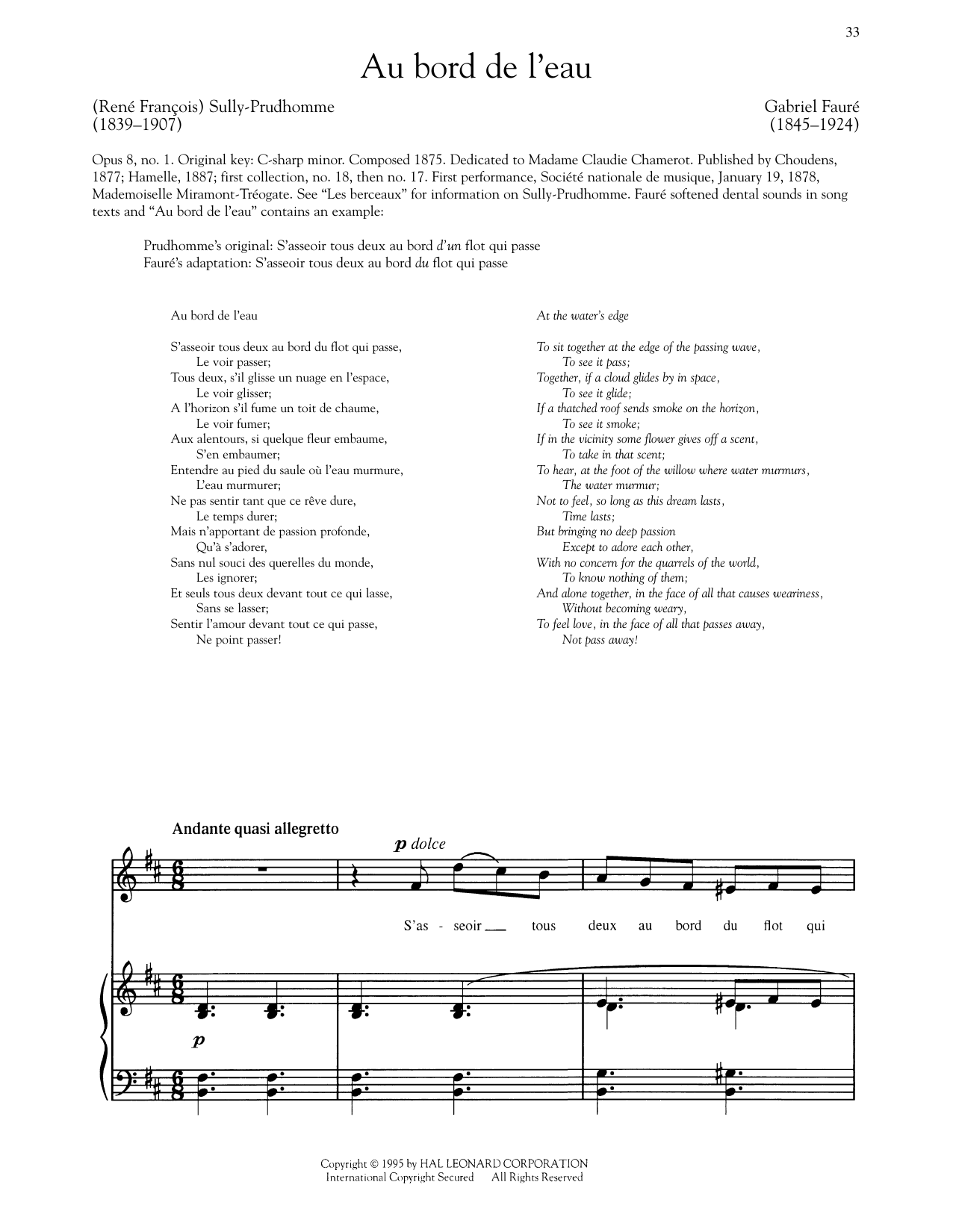
Au Bord De L'eau (Low Voice) Sheet Music Preview

Au Bord De L'eau (Low Voice): Piano Vocal

By Gabriel Fauré

Item: 35-DS01827446

Digital Download
$5.99
Description

Au Bord De L'eau (Low Voice): Piano Vocal isn't in MakeMusic Cloud just yet...but it could be. Let us know you'd like to see it, and you'll help shape what comes next. In the meantime, start a free trial and dive into thousands of interactive titles your students can play along with today.

Sample Audio
No sample audio found.
Sample Video
Additional Details
Publisher: Hal Leonard
Page Count: 5
SKU: 35-DS01827446

More about this title

About the Composer: Gabriel Fauré

Gabriel Fauré (1845-1924) shaped French musical identity across five decades, moving from salon composer to director of the Paris Conservatoire. His mastery of vocal writing set the standard for the French mélodie; his songs marry poetic texts with harmonic sophistication that rewards careful study of voice leading and text declamation.

Why we love this

Fauré's mélodies belong in every vocalist's repertoire, and this low voice version opens the work to singers across the range spectrum. The harmonic language is both accessible and refined, making it an ideal choice for introducing students to French art song without requiring excessive technical demands.

What to expect

Contemplative and intimate, evoking a quiet moment by water. The harmony shifts subtly like light on the surface; the voice floats above, observant and reflective rather than demonstrative.

Who it's for

Mature high school singers and collegiate vocalists preparing concert or recital repertoire, particularly those developing comfort with French art song styles. This arrangement suits low voice types (baritone, mezzo-soprano, contralto) who want access to canonical melodie literature.

How to get the most out of it

  • Shape the melodic line in long, connected phrases rather than stopping at bar lines. This piece breathes as a complete musical thought, not a series of gestures.
  • Attend carefully to the piano part's role in establishing the scene. The accompaniment paints the water imagery; coordinate with the pianist so neither voice overwhelms the other.
  • Resist the urge to over-interpret dynamics. Fauré's markings are economical but exact; honor them as written rather than adding expressive swells.
  • Bring France inflection to the vowels without exaggerating diction. The text should emerge naturally from the vocal line's contour.

How to use it

Pair this with other French mélodies by Fauré or Debussy for a focused vocal recital segment, or include it in a general classical voice concert to demonstrate mastery of art song repertoire. It works equally well as a teaching piece for students beginning to explore non-English vocal literature.

Skills your students will build

  • French diction and legit vowel placement
  • Phrasing across harmonic changes in extended melodic lines
  • Collaborative listening with a sensitive pianist
  • Stylistic interpretation of late Romantic vocal writing
  • Music reading in varied accompaniment figures

You May Also Like