
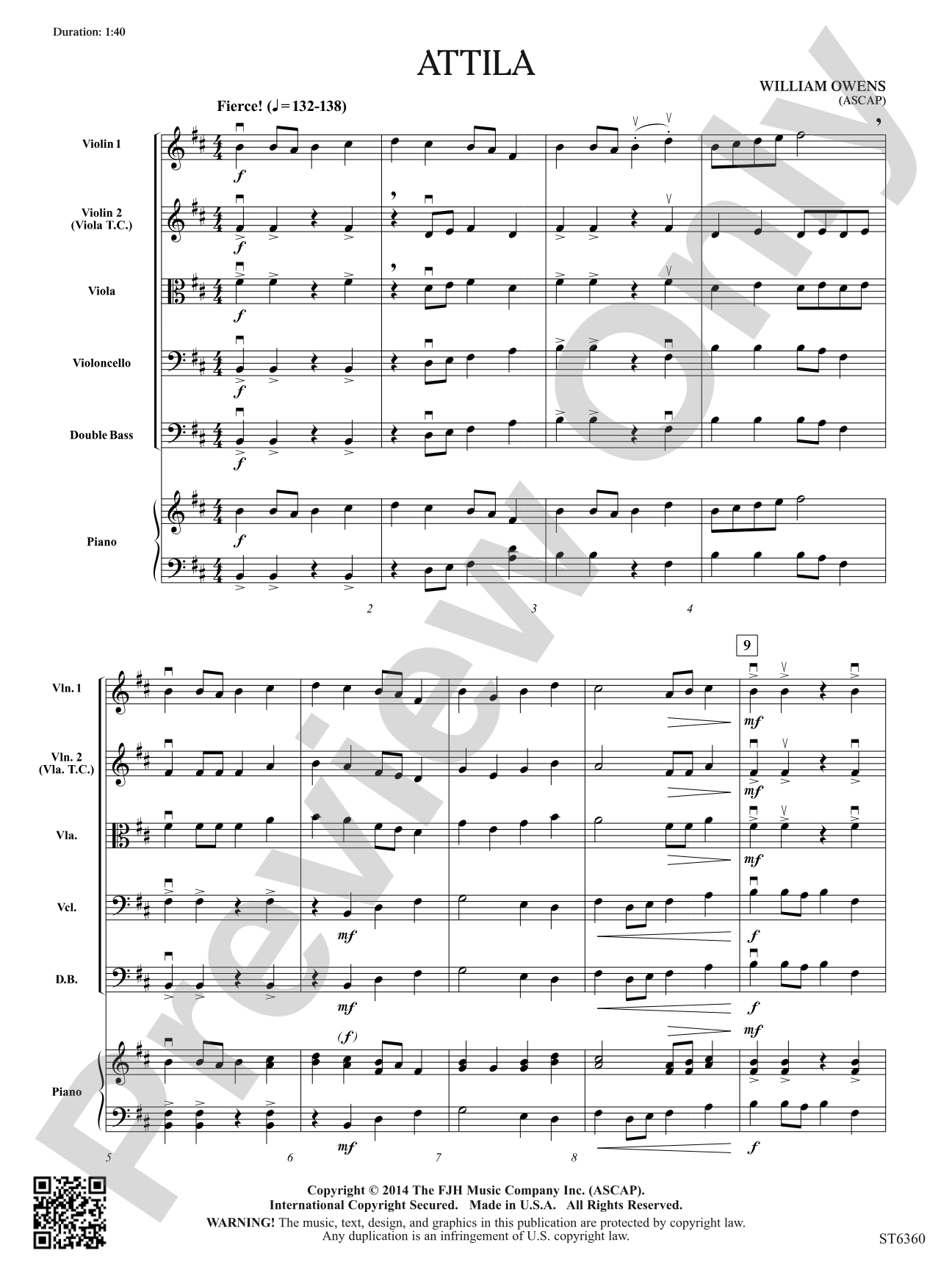
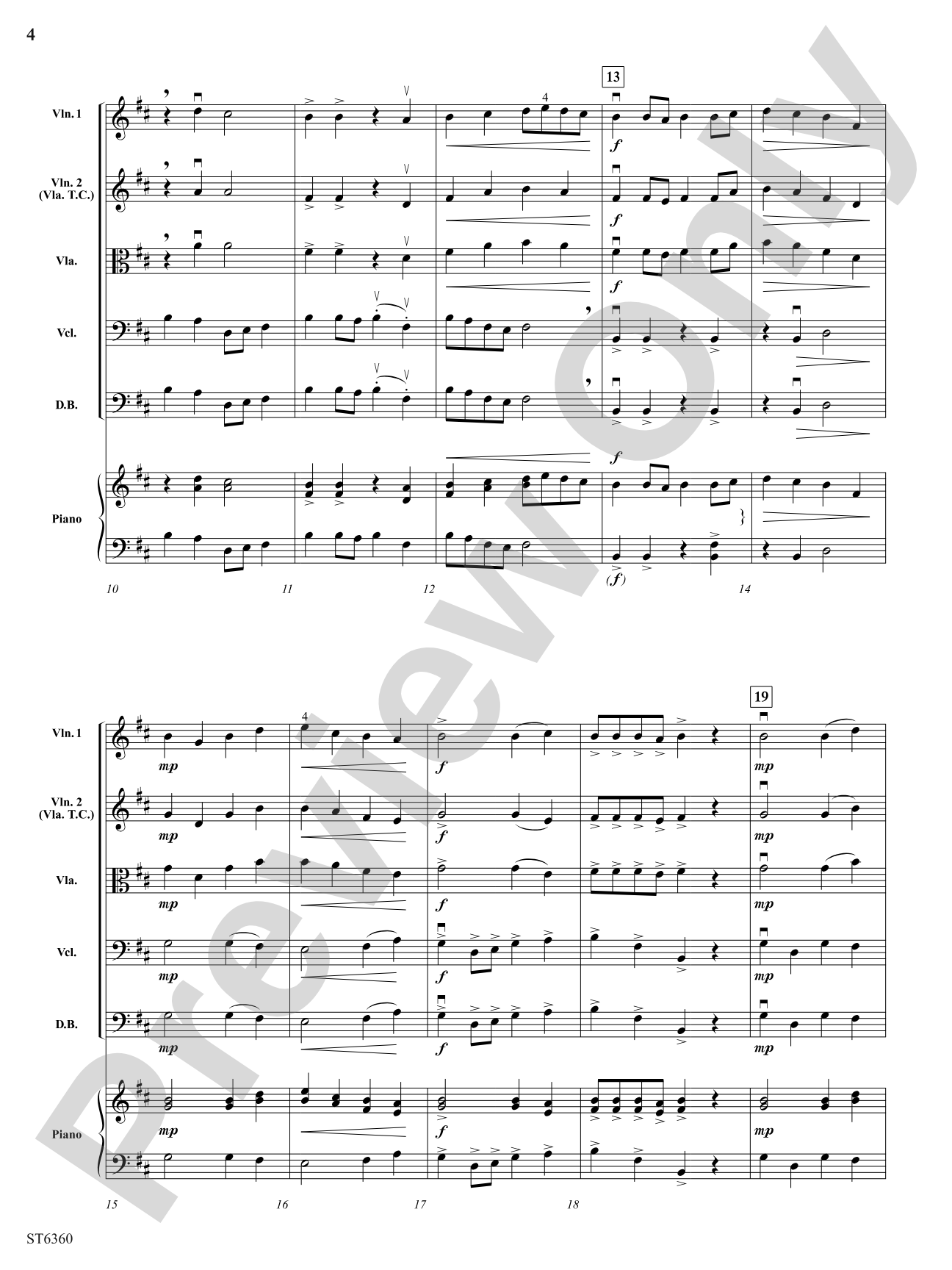
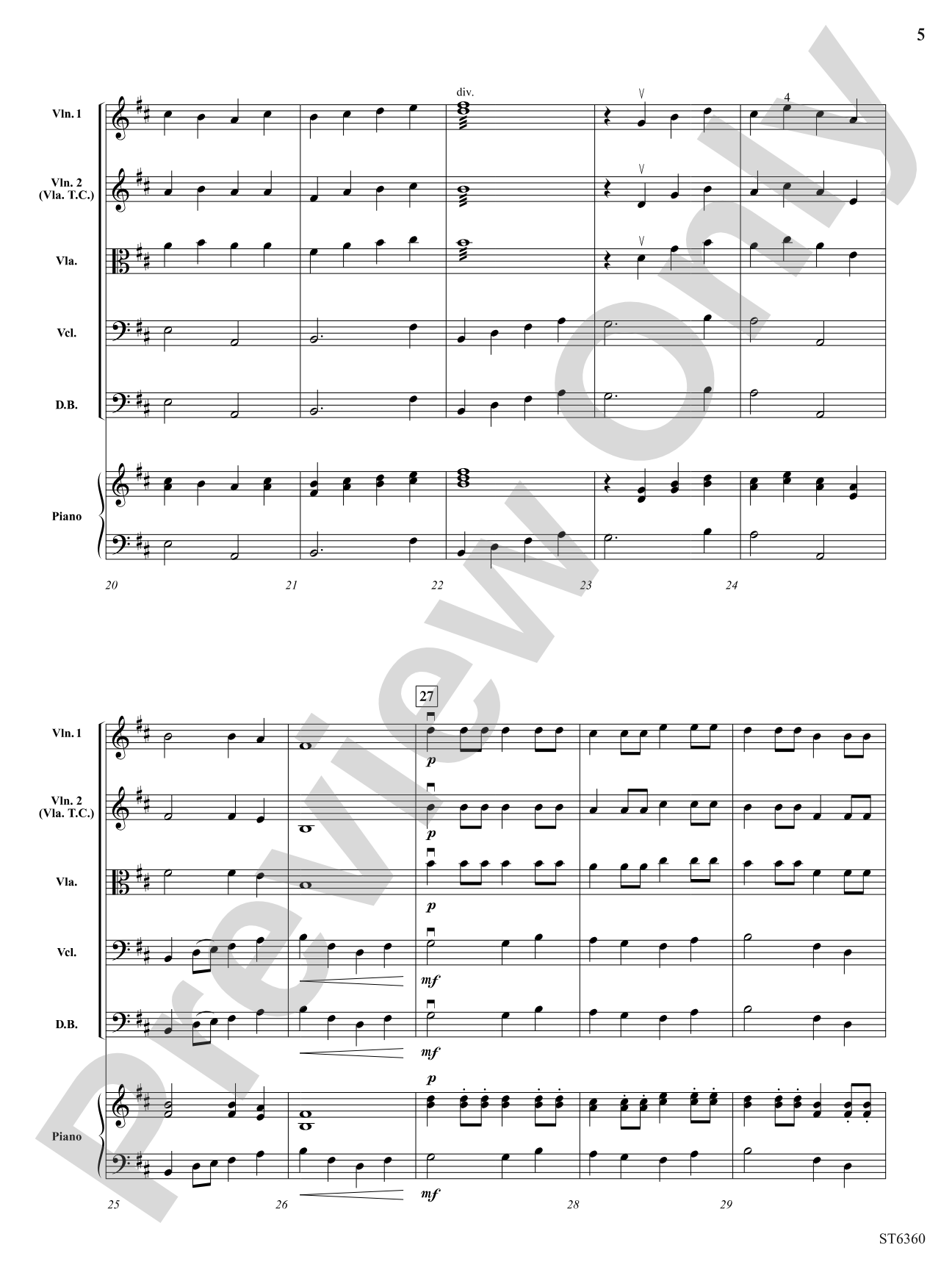
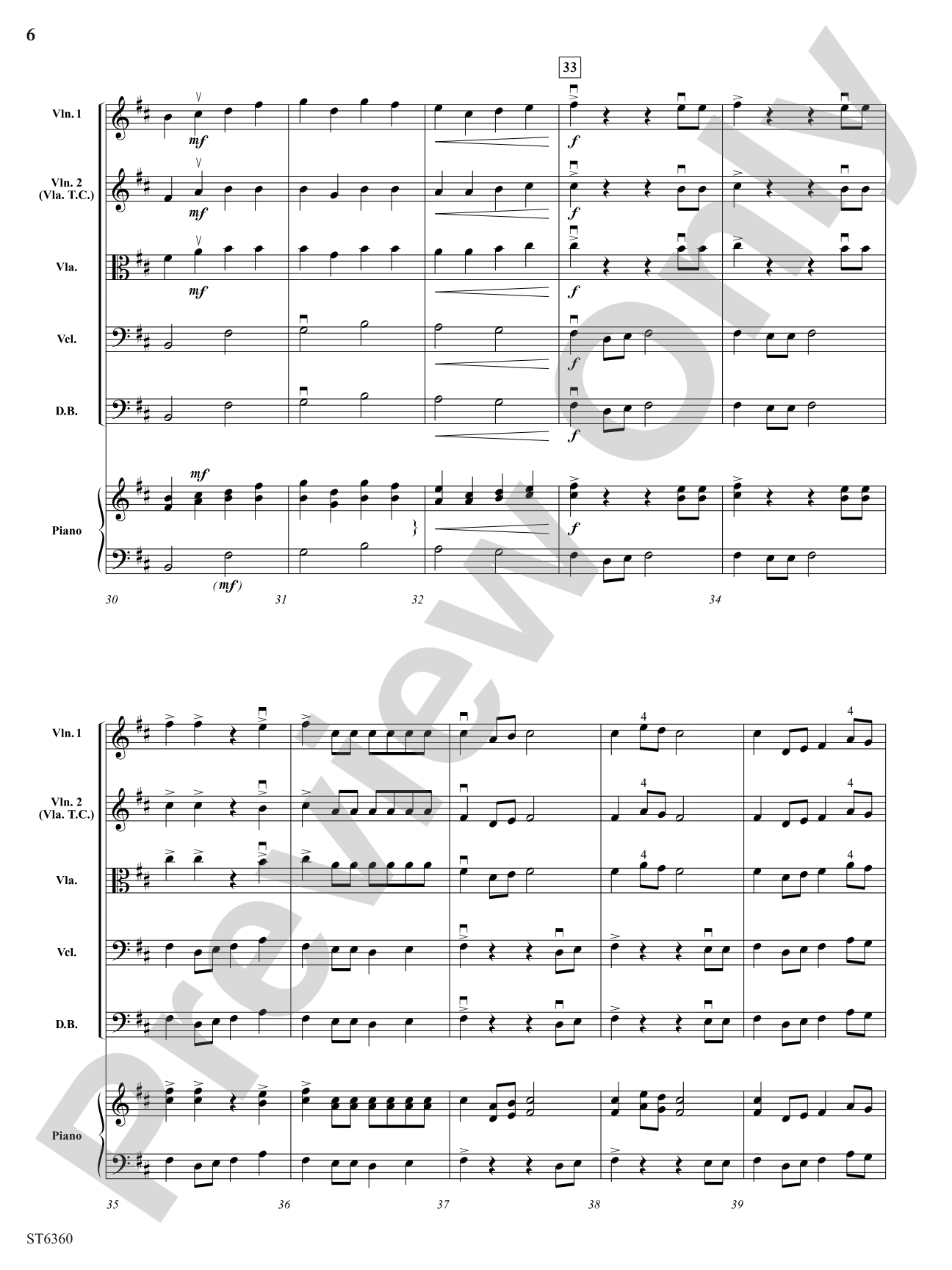
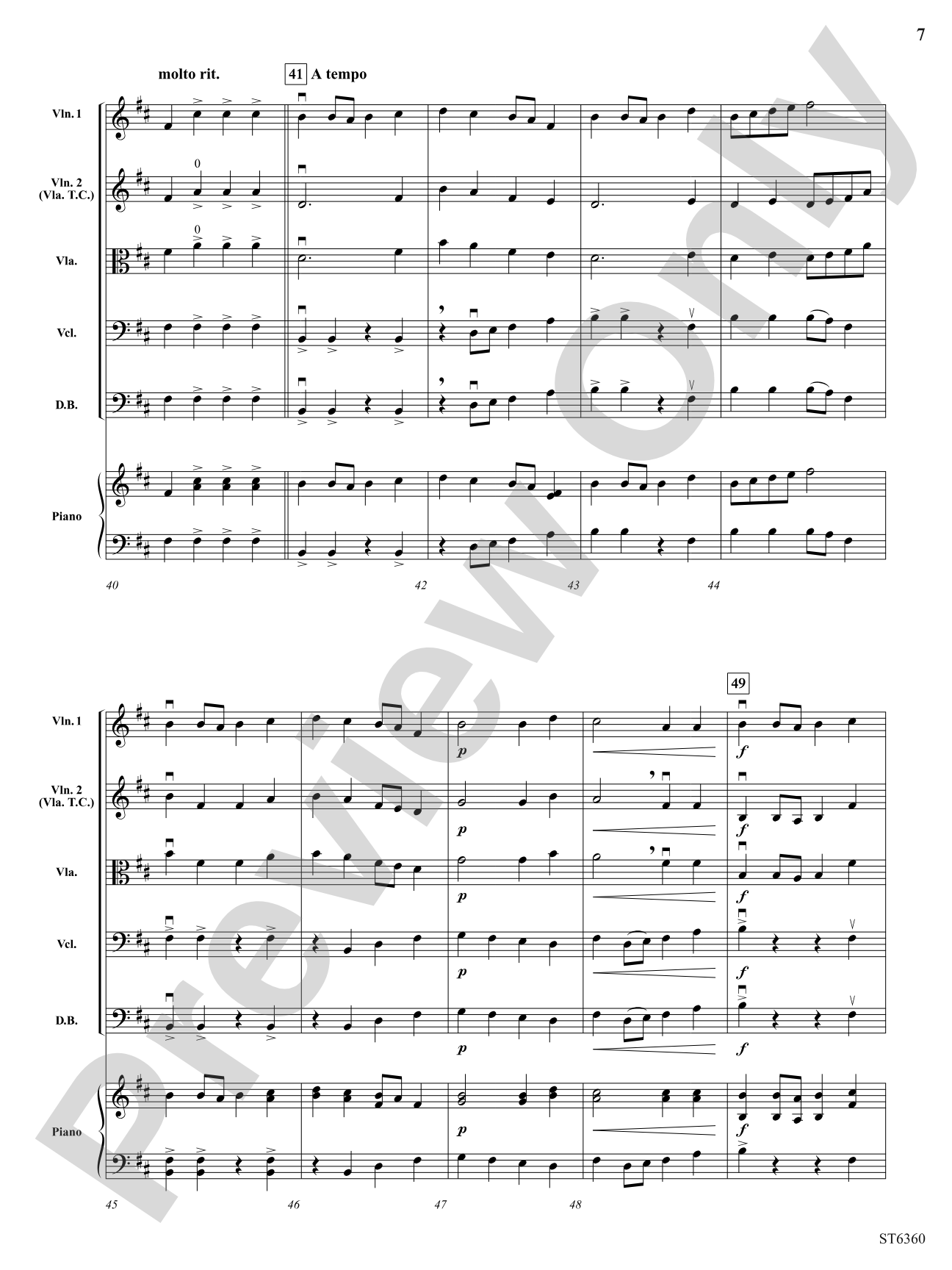
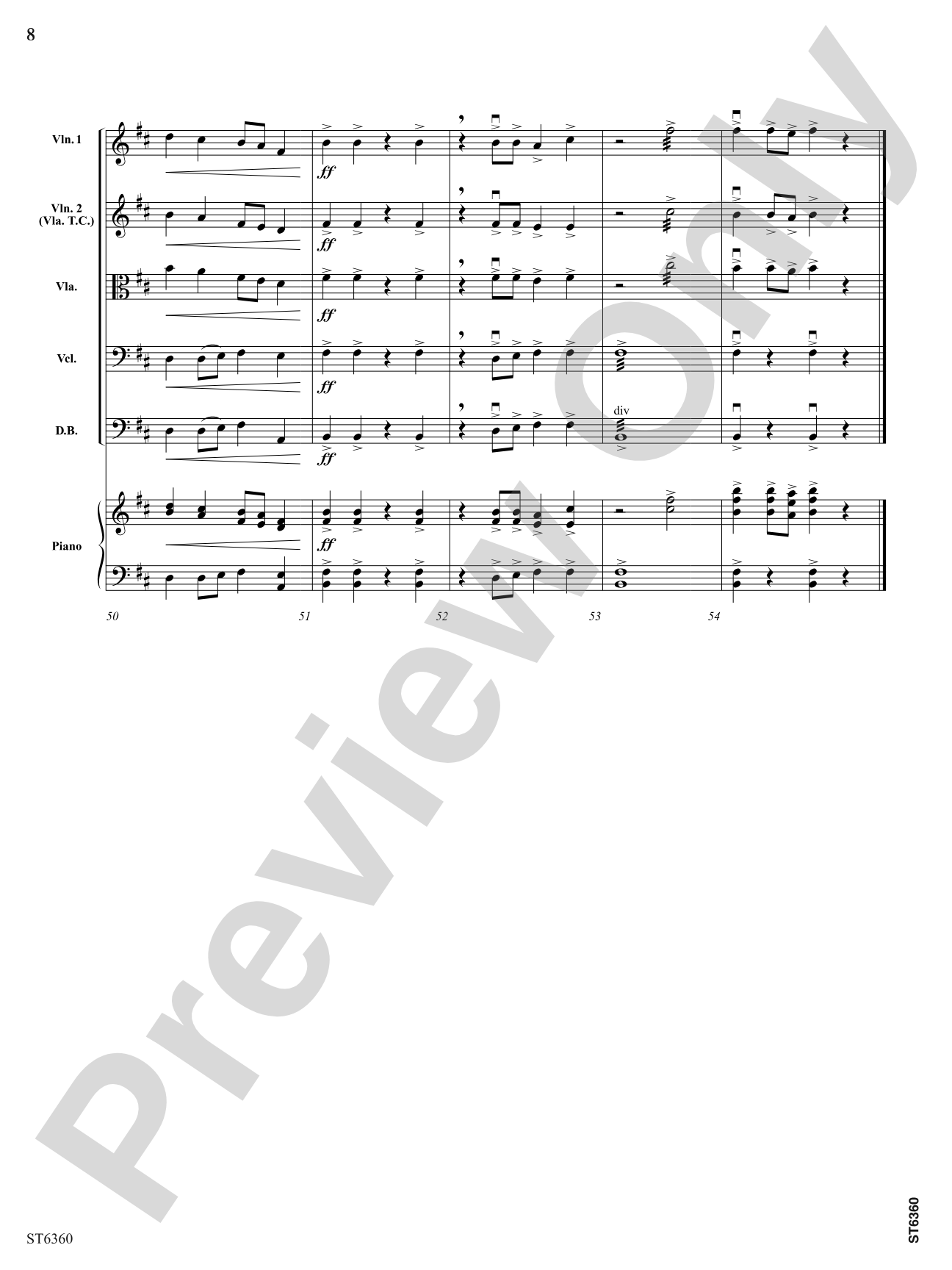

Attila: Score
By William Owens
Grade: 1.5
Item: 98-DST6360S
$10.00
Pickup currently not available
Description
The mighty army of Attila the Hun is once again on the move with this aggressive, masterfully crafted work! Melodies both powerful and tender come together to create a memorable musical experience for students and audiences alike. Fun to play and incredible to hear!


Don't just read it, hear it, play along with it, and watch your students grow with it. In MakeMusic Cloud, Attila: Score comes alive with professional accompaniment, adjustable tempo, and built-in practice tools that turn solo practice into real progress.
Open in the Player
Jump straight in and assign it today.
Start Your Free Trial
Open this title and explore the full library in minutes.
Sample Audio
1
Audio File
--:--
0:00
0:00
Sample Video
No sample videos found.
Additional Details
Series:
FJH Beginning Strings
Publisher:
The FJH Music Company, Inc.
SKU:
98-DST6360S
More about this title
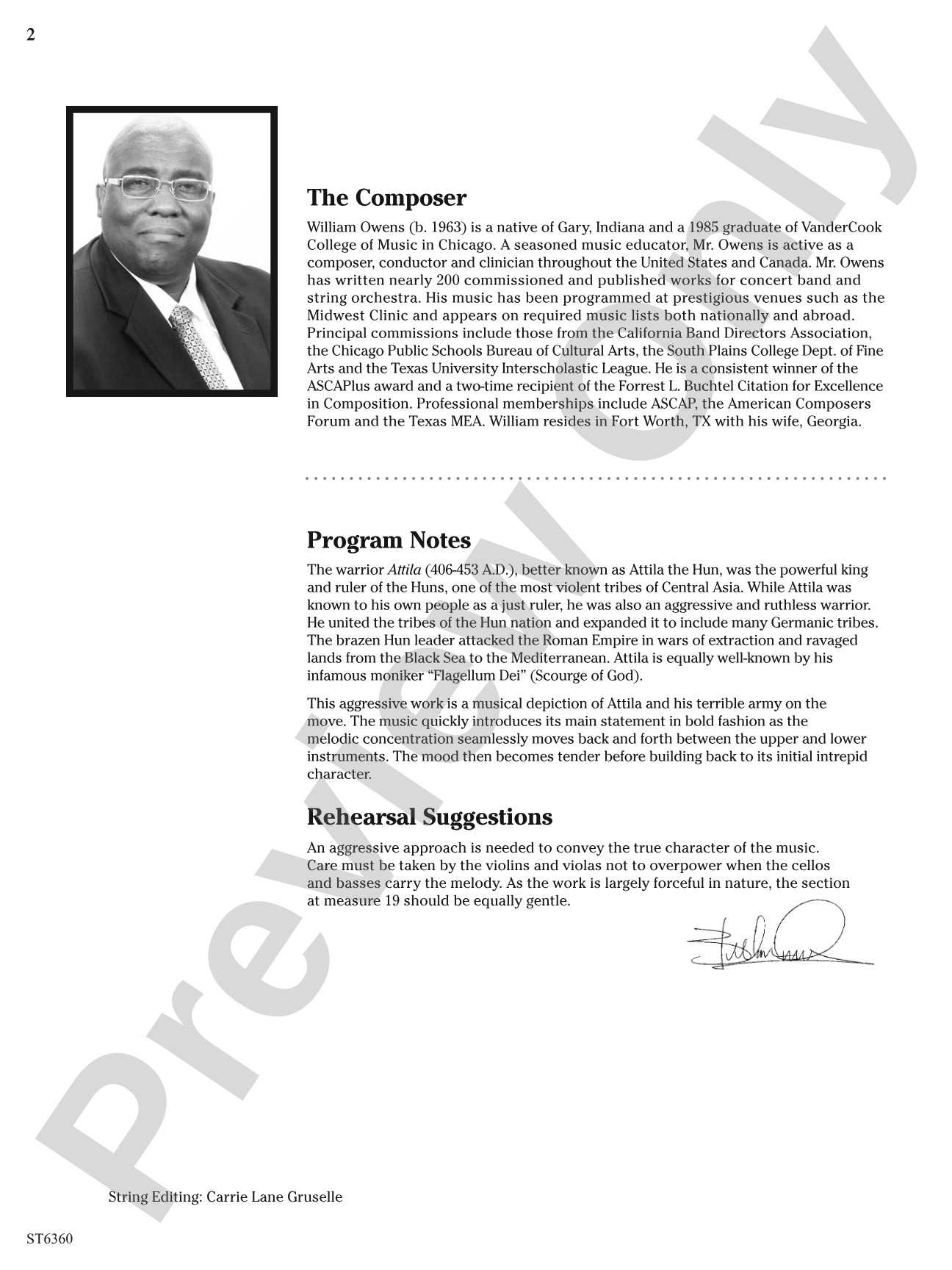
About the Composer: William Owens

William Owens was born in Gary, Indiana, in 1963 and has built a distinguished career as a composer, clinician, and conductor across North America. A graduate of VanderCook College of Music (1985), he spent 30 years as a band director in Texas before retiring in 2014, during which time he composed over 300 works for concert band, string orchestra, and small ensembles. His music appears on required lists nationally and internationally, with many pieces analyzed in educational texts and recognized as foundational repertoire for young musicians.
Owens's compositional approach balances practical musicianship with artistic substance, earning him memberships in ASCAP, TMEA, and Phi Beta Mu International. He has received numerous commissions, awards, and grants throughout his career, including recognition as a Distinguished Alumnus of VanderCook and recipient of the Texas Bandmasters Association's Meritorious Achievement Award. He currently resides in Fort Worth, Texas.
Why we love this
Owens crafts programmatic string writing that grabs attention without overwhelming early students. The contrast between aggressive, driving passages and lyrical moments gives conductors real interpretive choices while keeping part difficulty at 1.5, and the dramatic subject matter energizes both rehearsals and performances.
What to expect
Attila moves with relentless momentum when the music demands it, then yields to moments of surprising warmth and tenderness. The piece captures both the brutality and the humanity within its subject, creating a performance arc that feels substantial even at an early grade level.
Who it's for
String orchestra programs at the middle school level or advanced elementary ensembles ready for Grade 1.5 difficulty with dramatic character. Conductors preparing contest or festival submissions will find this appealing for its engaging narrative quality and achievable technique demands.
How to get the most out of it
- Balance the powerful melodic statements across the ensemble; mark cues clearly so all sections can hear when a theme passes between voices.
- Shape the tender passages by having students listen across stands rather than within their own parts, especially in moments of reduced texture.
- Use dynamic contrasts to deepen the programmatic intent; Attila's relentless aggression demands clean articulation and clear rhythmic precision in the driving sections.
- Consider a brief conductor's note in your program explaining the Attila concept; audiences respond more fully when they know what the music depicts.
How to use it
This works as a strong opening number for a concert when you want to establish energy and capture immediate attention, or as a centerpiece that demonstrates your ensemble's range of musicianship and interpretive maturity. Its programmatic nature makes it an excellent choice for themed concerts or festival competitions seeking distinctive repertoire.
Skills your students will build
- Dynamic contrast and phrasing across extended passages
- Articulation precision in driving rhythmic sections
- Ensemble balance when handling melodic material passed between sections
- Listening skills for coordinating texture changes and thematic transitions
- Musical storytelling through intentional interpretive choices