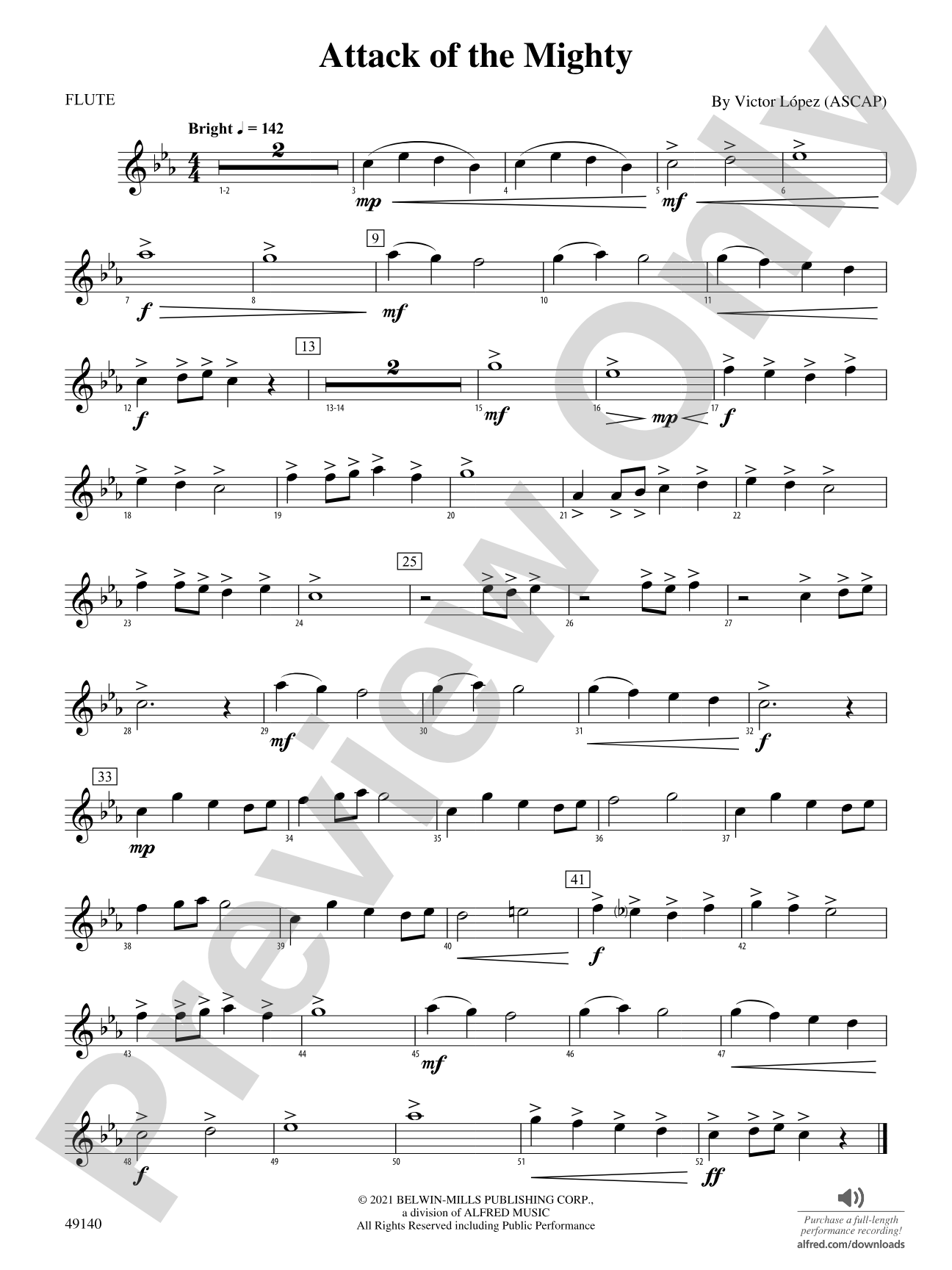
Attack of the Mighty: Flute Sheet Music Preview

Attack of the Mighty: Flute

By Victor López

Grade: 0.5 (Very Easy)

Item: 00-PC-0018693_F1

Digital Download
$3.00
Description
The inspiration for this spirited original Victor López composition is generated from superhero characters' supernatural powers to help the world become a better place. Attack of the Mighty has several repeated phrases that eases teaching, along with opportunities to explore consistency of articulations, dynamics, balance, and style. Shifting between a menacing musical statement and the heroic melody, our heroes are victorious. The enthusiasm is infectious. (1:30)

Don't just read it, hear it, play along with it, and watch your students grow with it. In MakeMusic Cloud, Attack of the Mighty: Flute comes alive with professional accompaniment, adjustable tempo, and built-in practice tools that turn solo practice into real progress.

Sample Audio
0:00
0:00
Sample Video
Additional Details
Series: Belwin Very Beginning Band
Publisher: Alfred Music
Page Count: 87
SKU: 00-PC-0018693_F1

More about this title

About the Composer: Victor López

Victor López is a prolific composer and arranger whose works span concert band, orchestra, and choral literature. His arrangements and original compositions are widely performed in school settings and have earned recognition for their accessibility without sacrificing musical substance. López has a gift for crafting engaging pieces that work for younger ensembles while maintaining enough sophistication to hold conductors' and audiences' attention.

Why we love this

López understands exactly how a very young band learns and retains music. The repeated phrases make memorization realistic and rehearsal time productive, while the contrasting menacing and heroic sections give students genuine expressive work without overwhelming them. This is a piece that builds confidence and sounds impressive in performance, which matters enormously at this level.

What to expect

Imagine the moment heroes realize they have the power to save the day. The piece opens with a shadowy, threatening sound, but soon the heroic anthem breaks through, triumphant and bright. There's a cinematic quality to it all, with enough musical tension and release to keep listeners genuinely interested.

Who it's for

Beginning concert bands and very young musicians in their first or second year of instruction. This is an excellent choice for students who need melodic interest and narrative drive to stay engaged, and for conductors teaching an ensemble that's still developing rhythmic independence and ensemble blend.

How to get the most out of it

  • Lock in the articulation language early. The menacing sections demand crisp, synchronized attacks; use those as teaching moments for ensemble precision before shifting to the heroic material.
  • Balance the melody line carefully against the accompaniment. At grade 0.5, many sections will carry the tune, so listen for which players have it and ensure they project without drowning supporting voices.
  • Shape the repeated phrases with slight dynamic variation across repetitions. Even small crescendos or terraced dynamics will prevent the piece from feeling static and reward students' listening skills.
  • Mark your score with entrance cues and clear gestures for style shifts. The transition from menacing to heroic needs intentional conducting so everyone arrives together.

How to use it

Program this for a family concert, school assembly, or festival where you want to showcase your beginning band with something entertaining and age-appropriate. The 1:30 duration fits neatly into most concert formats, and the superhero theme resonates with student audiences. It also works as a strong early-season piece to build morale and demonstrate progress to families.

Skills your students will build

  • Consistent articulation across the ensemble
  • Executing dynamic contrasts (menacing versus heroic sections)
  • Maintaining style changes within a single piece
  • Listening for and balancing melody and accompaniment
  • Interpreting repeated musical phrases with nuance
  • Responding to conductor cues during style transitions

You May Also Like