
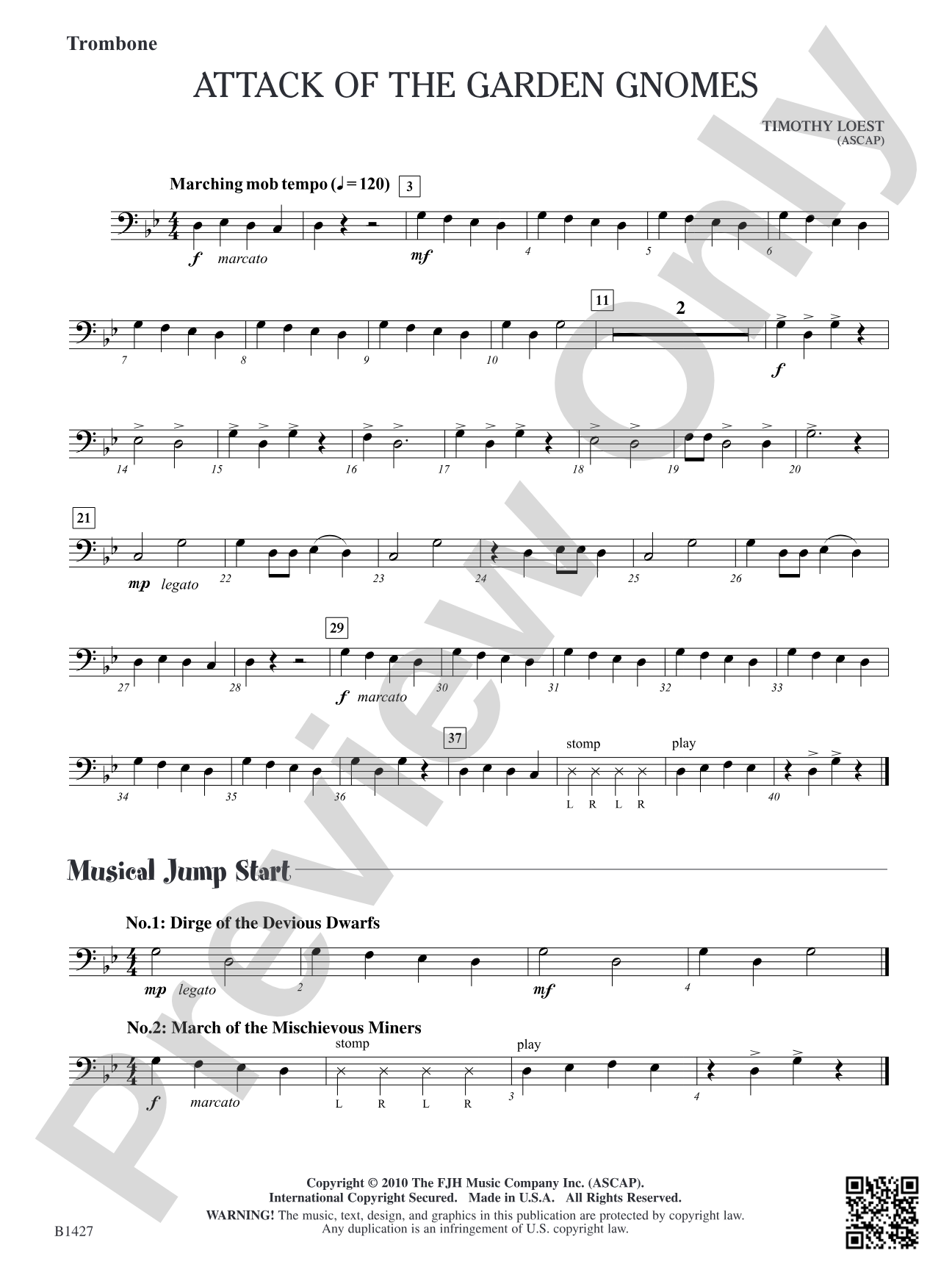

Attack of the Garden Gnomes: Trombone
By Timothy Loest
Level:.5
Item: 98-PC-DB1427_TN1
$7.00
Pickup currently not available
Description
This mischievous original work tells the story of angry garden gnomes that carry out an attack against humanity. A bugle call sounds the charge as the diabolical mob marches into battle. Interesting percussion effects, accompanied by foot stomps and screams, will have your audience running for cover. A musical riot! (1:20)


Don't just read it, hear it, play along with it, and watch your students grow with it. In MakeMusic Cloud, Attack of the Garden Gnomes: Trombone comes alive with professional accompaniment, adjustable tempo, and built-in practice tools that turn solo practice into real progress.
Open in the Player
Jump straight in and assign it today.
Start Your Free Trial
Open this title and explore the full library in minutes.
Sample Audio
1
Audio File
--:--
0:00
0:00
Sample Video
No sample videos found.
Additional Details
Series:
FJH Starter Series
Publisher:
The FJH Music Company, Inc.
SKU:
98-PC-DB1427_TN1
More about this title
About the Composer: Timothy Loest

Timothy Loest brings three decades of classroom experience into every score he writes. His compositions have reached audiences far beyond the concert hall, appearing on network television shows including The Tonight Show Starring Jimmy Fallon and Good Morning America, while also filling theaters and parks across the country. In 2017, his work Cloud Gate drew over 5,000 listeners to Chicago's Millennium Park, and that same year he received the Illinois Grade School Music Association's Cloyd Myers Memorial Award for Excellence in Music Education.
Loest's prolific output spans multiple publishers and formats. He co-authored several widely adopted band methods including Measures of Success: A Comprehensive Musicianship Band Method and Warm-ups and Beyond, and in 2022 founded Fanfare Music Press to publish original compositions and arrangements. His education includes a Bachelor of Music Education degree from Illinois State University and a Master of Music degree from Northwestern University. He holds ASCAP membership and has built a reputation for creating works that balance accessibility with musical substance.
Why we love this
Loest understands the 9- to 11-year-old mind; this piece delivers exactly the kind of humor and energy that connects with emerging musicians while asking them to play with real precision and intention. The concept is impossible to ignore in rehearsal—gnomes marching, percussion chaos, audience screams—yet the actual musicianship demands (clean articulation, rhythmic unison, dynamic control) keep the educational value intact. It's novelty music that earns its place in the concert, not one that feels like a gimmick.
What to expect
Picture mischief unfolding in real time: a bugle summons an invisible army, marching feet grow louder, percussion crashes erupt, and finally chaos breaks loose. The piece channels the specific kind of controlled mayhem that appeals to young musicians and their audiences alike. It's theatrical and absurd, yet every note and rhythm serves a musical purpose.
Who it's for
Beginning concert bands at the level of Grade 1/2 students looking for a legitimate novelty piece that doubles as solid training material. Directors programming family concerts, school assemblies, or spring concerts need something that entertains audiences and builds ensemble skills simultaneously.
How to get the most out of it
- Lock the rhythm section on the march rhythm; if the percussion and low brass waver during the attack section, the whole effect collapses. Spend time isolating those measures in sectional rehearsals.
- Assign the foot stomps and screams to specific players ahead of time. Chaos works best when it's choreographed. Have your low brass or percussionists execute these effects as if they were playing a written line.
- Let the opening bugle call breathe. The Bb clarinet or trumpet soloist should play it with theatrical clarity, as though calling the gnomes to order. This moment sets the tone for what follows.
- Balance the interesting percussion effects so they enhance rather than bury the melodic material. The goal is a musical riot, not an audio wall.
How to use it
Program this as a closer or a concert-opener that sets an energetic, playful tone. It works especially well on a mixed concert where it balances longer, more serious works. A single minute and twenty seconds means it fits easily into any concert structure without derailing pacing. Consider pairing it with other Loest pieces from the Starter Series to showcase the range of his writing at this level.
Skills your students will build
- Clean articulation and rhythmic precision during fast, repetitive passages
- Dynamics control in ensemble settings, particularly managing soft vs. loud transitions
- Ensemble balance, especially maintaining melodic clarity over active accompaniment
- Rhythmic unison in march-style passages with steady tempos
- Stage communication and ensemble trust during choreographed effects (stomps, screams)