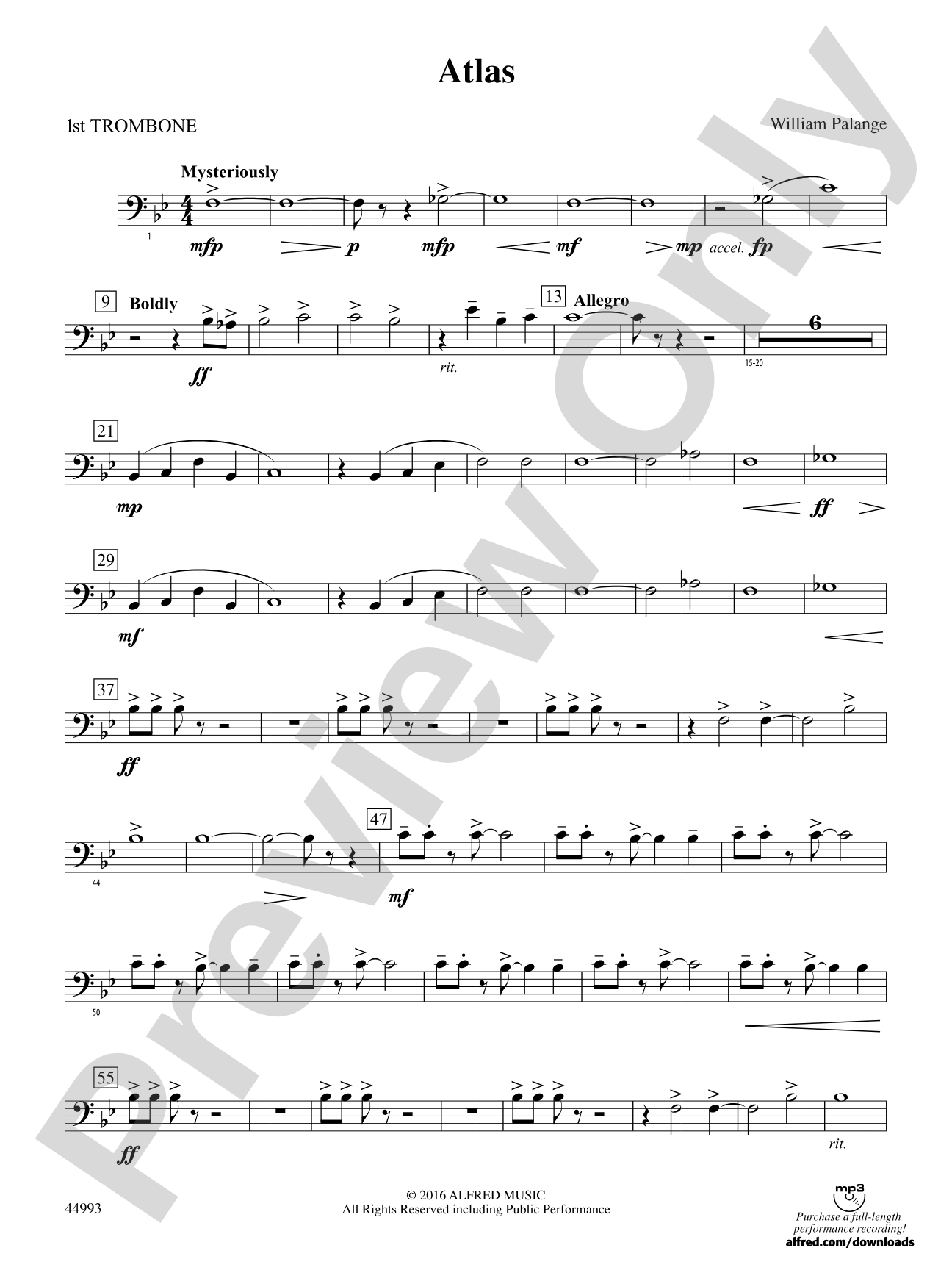
Atlas: 1st Trombone Sheet Music Preview

Atlas: 1st Trombone

By William Palange

Grade: 2.5 (Medium Easy)

Item: 00-PC-0017458_TN1

Digital Download
$3.00
Description
In July, 2013, the wreckage of a commercial schooner named Atlas was discovered in Lake Ontario in nearly 300 feet of water just outside the Port of Oswego, NY. The Atlas was carrying a load of limestone meant for the U.S. government harbor in Oswego on the day of its fateful journey in May, 1839. Only two miles from port, a gale-force wind rocked the ship and its heavy load shifted, causing the vessel to sink and all of its crew members to perish. This piece was written to portray the majesty of Lake Ontario as well as the brave sailors, young and old, who navigated her volatile waters. (4:50) This title is available in MakeMusic Cloud.

Don't just read it, hear it, play along with it, and watch your students grow with it. In MakeMusic Cloud, Atlas: 1st Trombone comes alive with professional accompaniment, adjustable tempo, and built-in practice tools that turn solo practice into real progress.

Sample Audio
0:00
0:00
Sample Video
Additional Details
Series: Young Symphonic
Publisher: Alfred Music
Page Count: 304
SKU: 00-PC-0017458_TN1

More about this title

Why we love this

Palange anchors this piece in a specific historical tragedy, giving your band a narrative framework that deepens their musical storytelling. The Grade 2.5 writing delivers genuine musical substance without overwhelming younger ensembles, making it equally effective for a well-prepared intermediate group or a developing advanced band.

What to expect

Atlas captures both the serene immensity of Lake Ontario and the sudden violence of the gale that claimed the ship and crew. The music honors the sailors with dignity while acknowledging the unpredictable power of nature, creating a soundscape that feels both reverent and turbulent.

Who it's for

Concert bands working at the Grade 2 to 3 level, especially those preparing for festival or contest performances. This piece rewards both developing ensembles seeking substantive repertoire and established bands building a concert program around American maritime history.

How to get the most out of it

  • Study the historical context before rehearsal. Players who understand the Atlas's fate and the lake's dangers will shape phrases with appropriate weight and respect, transforming notes on a page into a memorial.
  • Balance the portrayal of majesty with tragedy throughout. Resist the urge to make atmospheric moments sound thin; the lake's power and beauty deserve as much sonic presence as the dramatic elements.
  • Mark your conductor score with clear visual cues for the programmatic arc. A four-minute fifty-second journey needs roadmap clarity so the ensemble understands when they're depicting the calm before the storm, the crisis, and the aftermath.

How to use it

This works beautifully as a concert centerpiece or festival selection that lets audiences into the band's storytelling ability. Consider programming it alongside other Americana or historical-themed works for a thematic concert, or place it strategically to showcase your ensemble's dynamic range and musical maturity.

Skills your students will build

  • Shaping longer phrases with programmatic intent
  • Balancing lyrical passages with dramatic intensity
  • Responding to conductor cues that support narrative pacing
  • Sustaining tone quality across contrasting musical moods

You May Also Like