
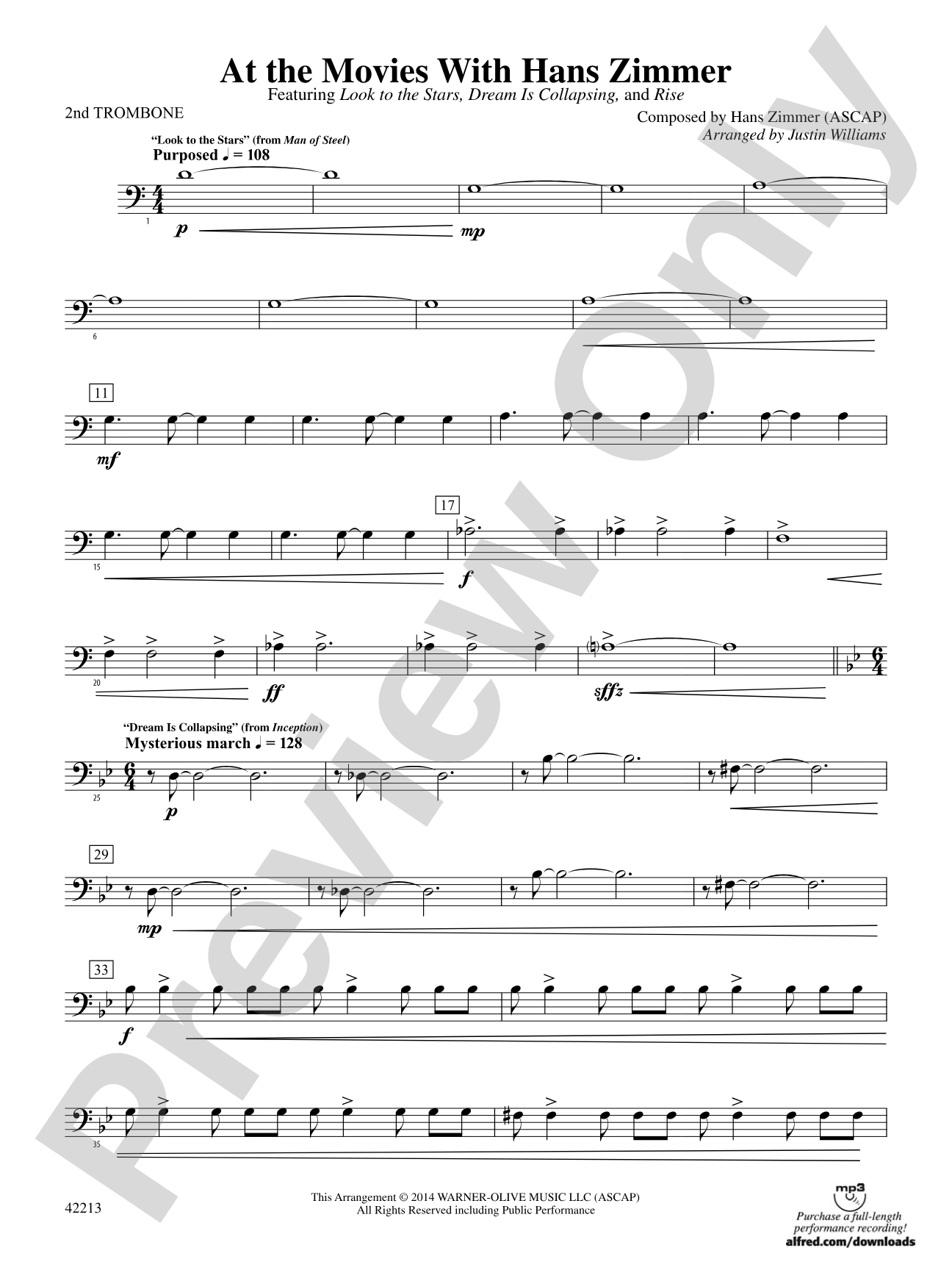

At the Movies with Hans Zimmer: 2nd Trombone
Featuring: Look to the Stars / Dream Is Collapsing / Rise
Composed by Hans Zimmer / arr. Justin Williams
Grade: 3 (Medium Easy)
Item: 00-PC-0016566_TN2
$5.99
Pickup currently not available
Description
Hans Zimmer's film scores are unique, bold, and unmistakable. His works are notable for integrating electronic music sounds with traditional orchestral arrangements. This collection is not so much a medley of tunes as it is a portrait of his styles and "Zimmer-esque" moods. Incorporating selections from Man of Steel, Inception, and The Dark Knight Rises, this arrangement is a tour de force of dramatic and emotional cinematic textures. (3:30) This title is available in MakeMusic Cloud.


Don't just read it, hear it, play along with it, and watch your students grow with it. In MakeMusic Cloud, At the Movies with Hans Zimmer: 2nd Trombone comes alive with professional accompaniment, adjustable tempo, and built-in practice tools that turn solo practice into real progress.
Open in the Player
Jump straight in and assign it today.
Start Your Free Trial
Open this title and explore the full library in minutes.
Sample Audio
1
Audio File
--:--
0:00
0:00
Sample Video
Additional Details
Series:
Pop Concert Band
Publisher:
Alfred Music
Page Count:
252
SKU:
00-PC-0016566_TN2
More about this title
About the Composer: Hans Zimmer
Hans Zimmer stands among the most influential film composers of the past three decades, reshaping how orchestral music functions in cinema. His signature approach layers synthetic textures with acoustic instrumentation, creating soundscapes that feel both monumental and intimate. In concert band settings, his scores present unique challenges and opportunities: they demand precision in balancing electronic-style effects with traditional instrumental color, and they reward ensembles that can sustain emotional intensity across extended passages without losing focus.
Zimmer's work with Christopher Nolan on The Dark Knight trilogy and Inception established a compositional language built on repetition, gradual layering, and timbral contrast rather than traditional melodic development. For band directors, this means teaching students to listen as ensemble builders, not just note readers, and to understand how a single sustained line or rhythmic idea can carry enormous expressive weight when supported by carefully constructed textures.
Why we love this
This arrangement captures what makes Zimmer's film work so electrifying without requiring electronic equipment or extensive amplification. Justin Williams has preserved the architectural integrity of these scores, maintaining their emotional arc while translating them idiomatically for concert band. Grade 3 ensembles gain access to sophisticated compositional thinking, expansive structural forms, and the deep satisfaction of executing music that genuinely connects with audiences who know these films.
What to expect
Expect grand, brooding orchestral colors interrupted by moments of crystalline clarity. The music moves with the inevitability of a film score, building emotional temperature through repetition and layering rather than sudden shifts. There are passages of heroic unison, stretches of intricate counterpoint, and long sustained moments that reward absolute ensemble alignment.
Who it's for
This collection serves Grade 3 bands ready to tackle contemporary concert music with cinematic scope and intellectual substance. It works equally well for ensembles that want to program something their audience recognizes and for directors seeking to broaden students' understanding of compositional techniques used outside traditional concert band literature.
How to get the most out of it
- Establish the electronic textures through careful articulation and timbre. In passages inspired by synthesizer lines, clarinet sections and vibraphone often carry material that sounds 'digital' only if the band treats each note with precision and consistency.
- Let the low reeds and tuba anchor harmonic shifts without rushing. Zimmer's harmonies often move slowly and deliberately; patience here allows upper voices to float and resonate.
- Balance the dramatic swells carefully. These scores build intensity through layering, not volume alone. Bring in each additional voice thoughtfully so climaxes feel earned rather than immediate.
- Use the conductor score's cues to track emotional temperature across the full 3:30. Zimmer composes in long arcs; identify 2-3 key pivot points where the ensemble's collective focus needs to shift.
How to use it
Program this in the second half of a concert, where it can breathe across its full duration and serve as a centerpiece rather than an opener. It pairs naturally with other contemporary film music or modern original compositions, and it creates a compelling bridge between traditional band repertoire and the film scores students encounter outside the rehearsal room. Consider it for a multimedia concert where video clips accompany the performance.
Skills your students will build
- Sustaining long harmonic progressions without losing focus or intonation
- Tracking and executing gradual dynamic layering and textural buildup
- Balancing synthetic instrumental effects (pizzicato strings, staccato brass) within traditional band voicing
- Maintaining rhythmic precision in complex, overlapping ostinati
- Interpreting emotional narrative through ensemble balance rather than individual voice prominence