
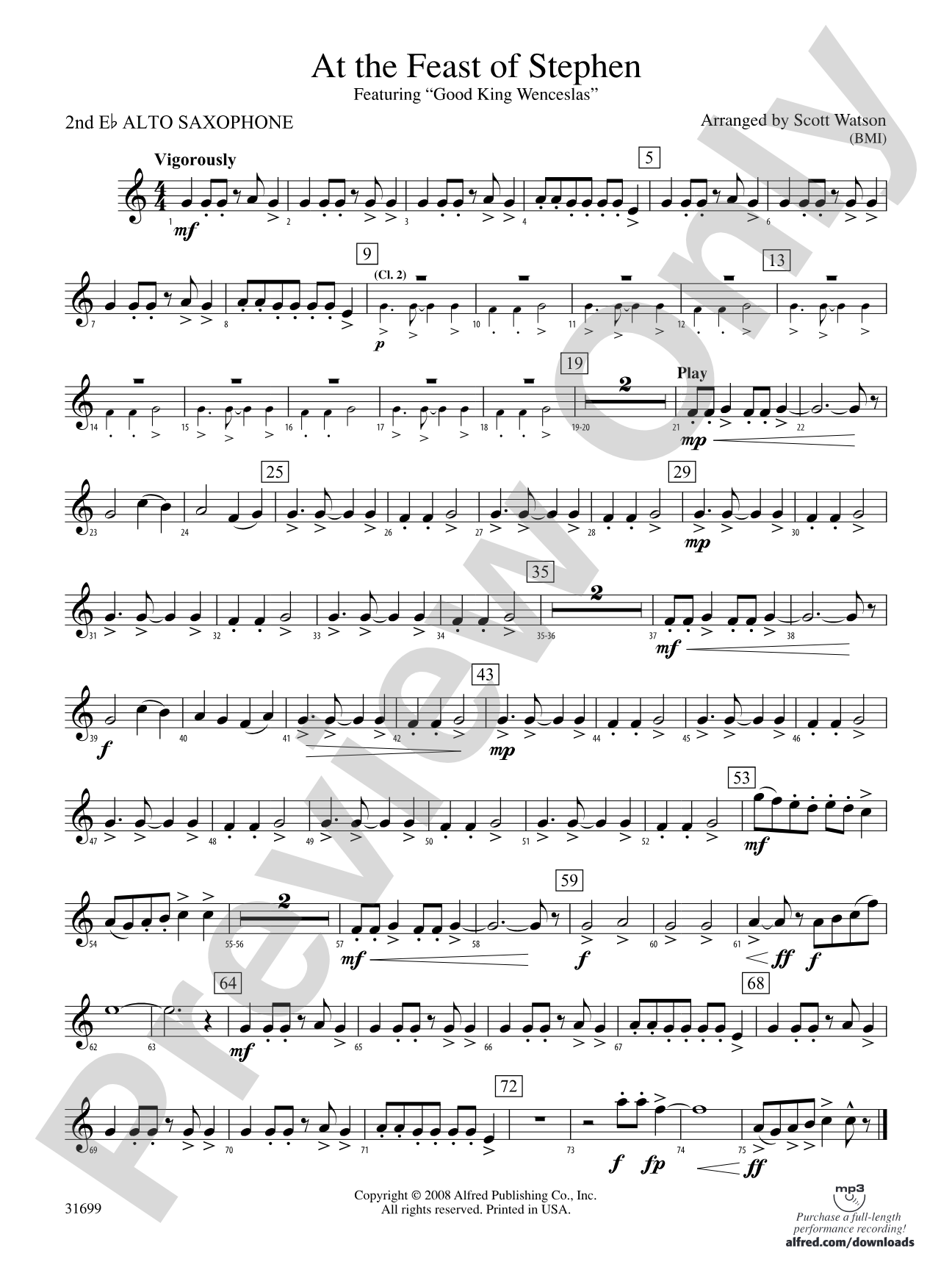

At the Feast of Stephen: 2nd E-flat Alto Saxophone
Traditional / arr. Scott Watson
Grade: 1 (Very Easy)
Item: 00-PC-0001798_AX2
$3.00
Pickup currently not available
Description
This novel setting of the traditional carol "Good King Wenceslas" will musically transport you and your students to the royal Christmas banquet hall of a medieval king!
The old carol tells the story of a legendary 10th-century monarch, Duke Wenceslas of Bohemia, who went out in the severe cold to give charity to the poor on December 26, also known as St. Stephens Day. The well-known 13th-century carol tune, as well as additional original material in period style, vividly conjures a lively celebration of Christmas in the high Middle Ages.
Come now ye lords and ladies to the Feast of Stephen and upon your instruments faire make most merry this Yuletide! (2:31) This title is available in MakeMusic Cloud.


The old carol tells the story of a legendary 10th-century monarch, Duke Wenceslas of Bohemia, who went out in the severe cold to give charity to the poor on December 26, also known as St. Stephens Day. The well-known 13th-century carol tune, as well as additional original material in period style, vividly conjures a lively celebration of Christmas in the high Middle Ages.
Come now ye lords and ladies to the Feast of Stephen and upon your instruments faire make most merry this Yuletide! (2:31) This title is available in MakeMusic Cloud.
Don't just read it, hear it, play along with it, and watch your students grow with it. In MakeMusic Cloud, At the Feast of Stephen: 2nd E-flat Alto Saxophone comes alive with professional accompaniment, adjustable tempo, and built-in practice tools that turn solo practice into real progress.
Open in the Player
Jump straight in and assign it today.
Start Your Free Trial
Open this title and explore the full library in minutes.
Sample Audio
1
Audio File
--:--
0:00
0:00
Sample Video
Additional Details
Series:
Alfred Debut Series
Publisher:
Alfred Music
Page Count:
118
SKU:
00-PC-0001798_AX2
More about this title
About the Composer: Scott Watson

Scott Watson has spent more than three decades in music education, serving as Director of Bands at the high school level and later directing the elementary band and strings program across the Parkland School District in Allentown, Pennsylvania. He now teaches at Cairn University as Associate Professor of Music. Watson's compositional voice draws equally from his deep experience in both contemporary concert art music and the working band room, resulting in over 120 published works for concert band, string orchestra, and chamber ensembles across all difficulty levels.
His music has been performed at major venues including the Academy of Music in Philadelphia, the Midwest Clinic in Chicago, and the White House. Watson is an exclusive composer and clinician for Alfred Publications and has authored the widely used text "Using Technology to Unlock Musical Creativity" published by Oxford University Press. He regularly presents workshops for music educators and serves as guest conductor for festival and honor bands.
Why we love this
Watson brings the pedagogical wisdom of a career band director to this arrangement, crafting something genuinely festive without overwhelming young players. The Grade 1 setting respects the carol's dignity while the medieval banquet atmosphere and original material create an engaging listening experience that feels far more substantial than the technical demands suggest.
What to expect
The piece unfolds like stepping into a medieval hall hung with garlands and warmth, where torchlight flickers across stone walls. Watson's orchestration gives the familiar tune a sense of pageantry and richness that belies its technical simplicity, wrapping players and listeners alike in the generous spirit of the legend.
Who it's for
Beginning concert bands and young musicians encountering the carol for the first time will engage immediately with both the story and Watson's imaginative harmonic treatment. Directors seeking Grade 1 repertoire with genuine artistic substance and holiday programming flexibility will find this particularly valuable.
How to get the most out of it
- Shape the familiar carol melody with gentle dynamic contours; let the well-known tune breathe rather than push relentlessly forward.
- Balance the original material surrounding the carol tune carefully so students hear how Watson contextualizes this 13th-century melody within his period-style orchestration.
- Approach articulation in the festive sections with clarity and precision to project the character of a royal celebration without sacrificing ensemble blend.
- Use the 2 minute 31 second duration as a planning point; this piece works perfectly as a substantial closing number without requiring an extended rehearsal commitment.
How to use it
Program this as a show-closing number at your winter concert to send audiences out with a story and a smile. The Grade 1 accessibility makes it ideal for a joint concert featuring both beginning and advanced ensembles, allowing younger students meaningful stage time alongside their more experienced peers.
Skills your students will build
- Balancing melodic and accompaniment parts in ensemble texture
- Sustaining legato phrasing and connecting phrases across bar lines
- Responding to subtle dynamic shaping and expressive direction
- Reading and performing period-style articulation and rhythmic figures
- Maintaining accurate ensemble intonation in harmonic progressions