At the Crossroads: 2nd B-flat Clarinet Sheet Music Preview

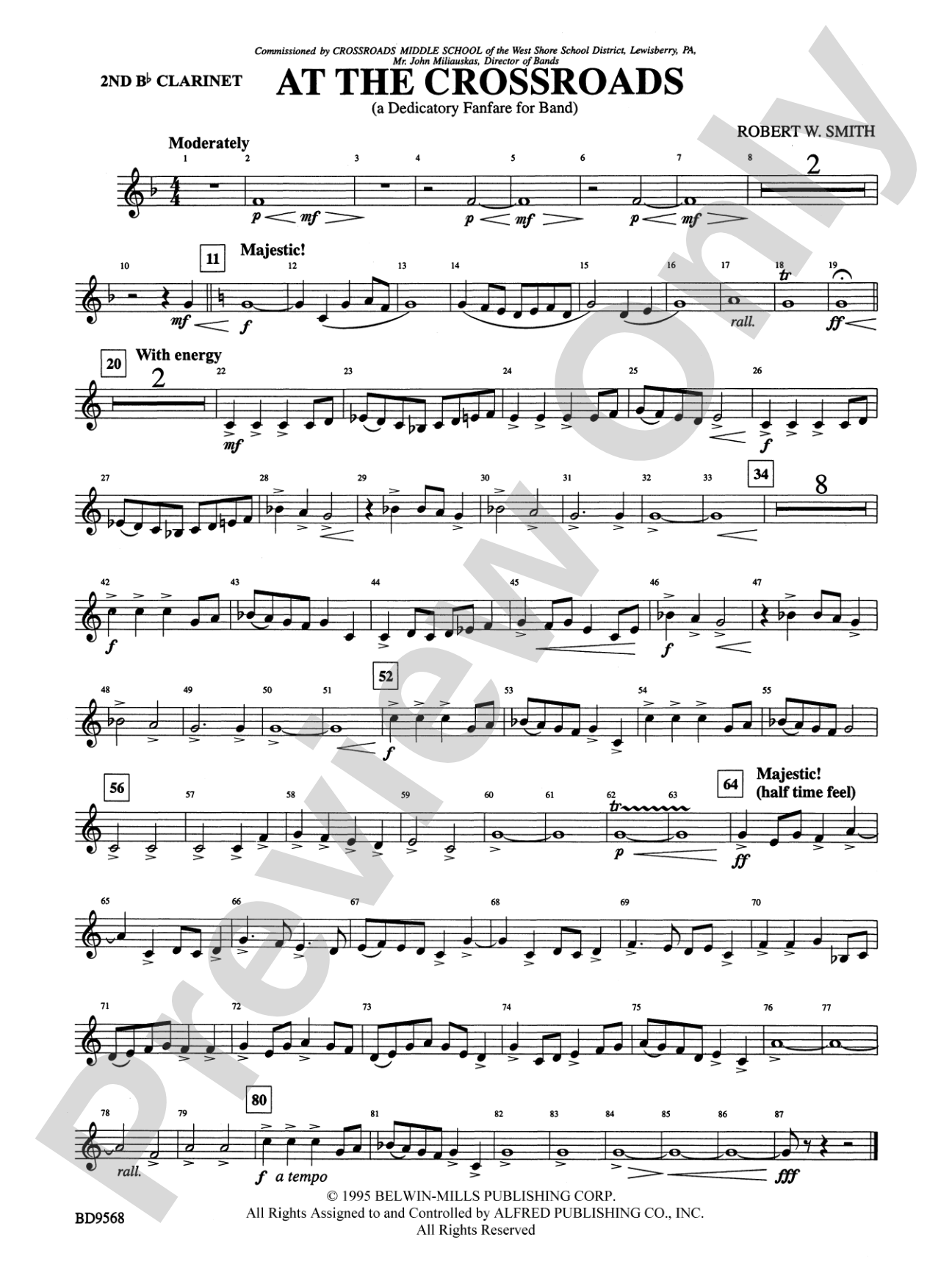
At the Crossroads: 2nd B-flat Clarinet

By Robert W. Smith

Grade: 2 (Easy)

Item: 00-PC-0002019_C2

Digital Download
$3.00
Description
In this dynamic concert opener, each section of the band plays a key role in the ensemble; there are multiple opportunities for low brass and woodwinds to play melodic and countermelodic lines. With its intriguing layered textures and shifting tonalities and colors, this is an important contribution to band literature for the young ensemble. (2:48)

Don't just read it, hear it, play along with it, and watch your students grow with it. In MakeMusic Cloud, At the Crossroads: 2nd B-flat Clarinet comes alive with professional accompaniment, adjustable tempo, and built-in practice tools that turn solo practice into real progress.

Sample Audio
0:00
0:00
Sample Video
Additional Details
Series: Belwin Young Band
Publisher: Alfred Music
Page Count: 132
SKU: 00-PC-0002019_C2

More about this title

About the Composer: Robert W. Smith

Robert W. Smith

Robert W. Smith stands among the most frequently performed composers of concert band and orchestral music in America. His catalog exceeds 400 published works, the vast majority distributed through Alfred Music. He holds degrees from Troy State University (Alabama) and the University of Miami (Florida).

Smith's original compositions for concert band and orchestra have traveled internationally, earning performances across North America, Europe, Australia, and Asia. His symphonic works The Divine Comedy and The Odyssey have become touchstones for ambitious ensembles worldwide. Beyond concert halls, his music has appeared on major television broadcasts, from presidential ceremonies in Japan to Olympic Games coverage, the Macy's Thanksgiving Day Parade, and Opening Day at Dodger Stadium. As a conductor and clinician, he has worked extensively across the United States, Canada, and internationally.

Why we love this

At the Crossroads opens with immediate energy and clear section writing that gives every player something to do. Smith resists the temptation to feature only the usual suspects; instead he distributes melodic responsibility across low brass and woodwinds, ensuring your developing ensemble members feel ownership of the sound. The shifting colors and layered textures sustain musical interest across a brief runtime without demanding technical pyrotechnics.

What to expect

The piece arrives with forward momentum and architectural clarity. Its intriguing layering and shifting harmonic colors create a sense of exploration, as if the band is discovering something new with each section entrance.

Who it's for

This score and parts set works for concert bands at the Grade 2 level, where technical demands stay manageable but musical sophistication begins to emerge. It serves directors building ensemble cohesion and looking to showcase the full spectrum of instrumental voices without creating bottlenecks in rehearsal.

How to get the most out of it

  • Balance the layered textures by rehearsing sections independently first, then bringing them together gradually. This reveals how each line contributes to the overall harmonic and melodic architecture.
  • Attend to the shifting tonalities and colors Smith creates. Mark these transitions clearly on your score and cue conductors through ensemble to track the sectional handoffs.
  • Let the countermelodic material in low brass and woodwinds breathe. These lines deserve the same articulation clarity and phrasing attention you'd give to a featured melodic voice.

How to use it

Open a concert with this piece to establish energy and demonstrate the full ensemble's musical capability in the opening moments. Its two-minute-forty-eight-second duration makes it an ideal pairing with longer works or a strong complement to a thematic concert program exploring layered textures in band writing.

Skills your students will build

  • Balancing independent melodic lines within a multi-layered texture
  • Tracking sectional transitions and shifting harmonic colors
  • Playing countermelodic material with equal musical conviction as primary themes
  • Responding to conductor cues that coordinate multiple active lines

You May Also Like