At Quite A Rate Sheet Music Preview

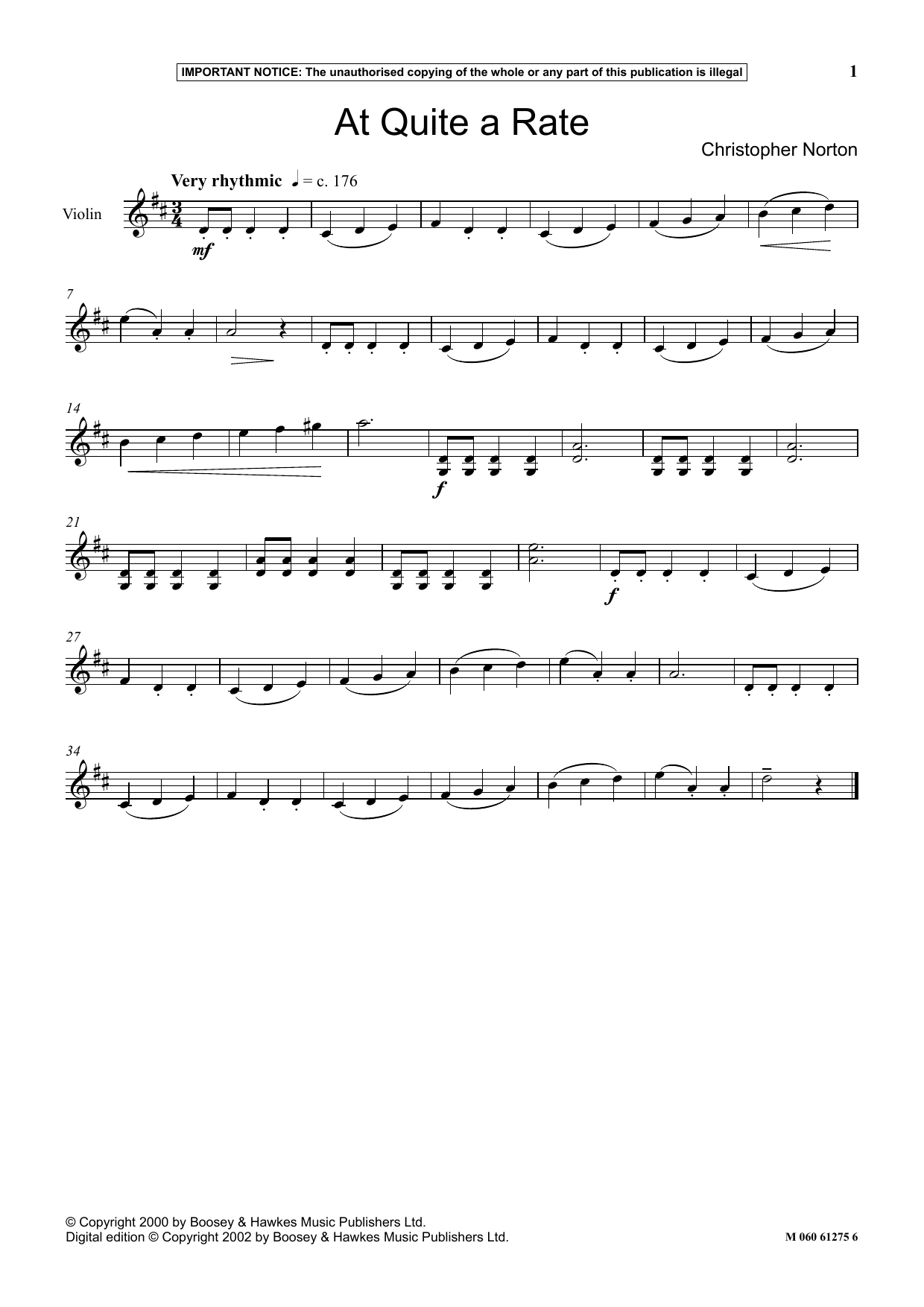
At Quite A Rate: Instrumental Solo

As performed by Christopher Norton

Item: 35-DS00239408

Digital Download
$3.99
One moment…
Description

Discover MakeMusic Cloud: thousands of interactive titles your students can play along with today.

Sample Audio
No sample audio found.
Sample Video
Additional Details
Publisher: Hal Leonard
Page Count: 3
SKU: 35-DS00239408

More about this title

About the Artist: Christopher Norton

Christopher Norton is a composer and pianist whose work bridges classical training with accessible, engaging writing for students at all levels. His prolific output includes solo repertoire, chamber music, and educational collections that prioritize musical substance without sacrificing playability. Norton's approach to composition emphasizes clear musical ideas, rhythmic vitality, and harmonic interest that keeps both performers and audiences invested.

Why we love this

Norton's title immediately signals what you're getting: a piece that moves. The musical character feels contemporary yet rooted in classical principles, making it an excellent bridge for students exploring twentieth-century compositional thinking. It's substantial enough to hold its own in a recital without demanding technical superhero status.

What to expect

The piece radiates forward momentum and clarity. You'll hear rhythmic energy paired with purposeful harmonic movement that avoids predictability without becoming experimental. The overall impression is of a composer in control of his material, writing music that satisfies both technically and musically.

Who it's for

This works well for intermediate to advanced pianists developing their contemporary repertoire, or for students encountering Norton's style for the first time. It's equally suitable for recital programming or study within a broader exploration of late twentieth-century keyboard writing.

How to get the most out of it

  • Pay attention to the tempo markings as guides for phrase shaping, not metronomic absolutes. The title hints at motion, so resist the urge to slow down during more complex passages.
  • Listen for structural landmarks throughout the three pages. Norton typically builds his pieces around clear sections, so identifying these transitions helps both performance clarity and memorization.
  • Consider the acoustic properties of your practice space when working on dynamics. Small rooms can amplify what sounds understated, so use a recording device to check balance as you rehearse.

How to use it

Include this in a contemporary solo recital alongside works by other modernist-leaning composers to establish a coherent artistic statement. It also works as a strong closing piece for a student showcase when you want to demonstrate range and stylistic awareness.

Skills your students will build

  • Reading and executing contemporary rhythmic patterns
  • Understanding phrase structure in twentieth-century composition
  • Developing control over tempo and pulse without metronomic rigidity
  • Interpreting dynamic and articulation markings in context

You May Also Like