At Long Last Love: Piano/Vocal/Chords Digital Sheet Music

At Long Last Love: Piano/Vocal/Chords Digital Sheet Music

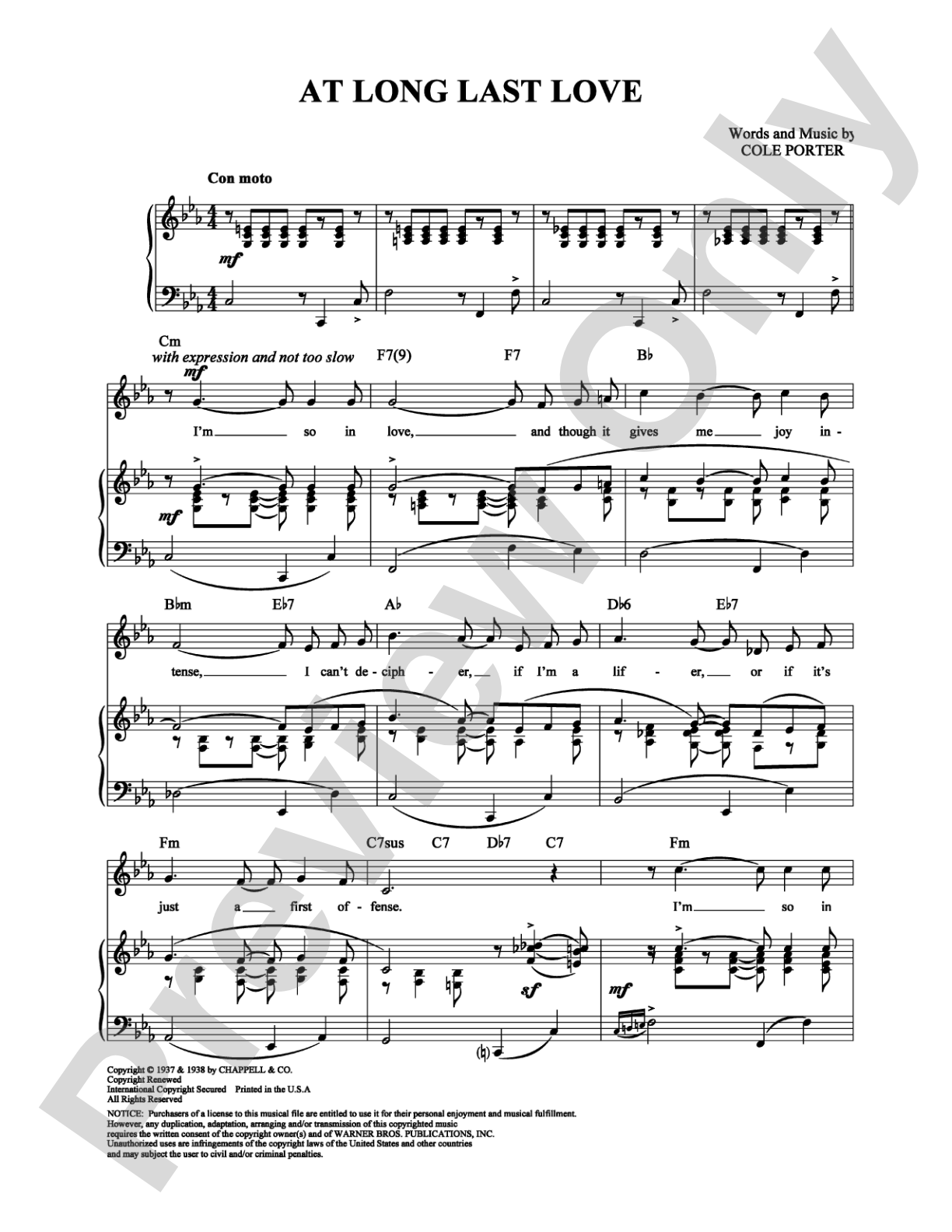
Cole Porter, Frank Sinatra, Nat "King" Cole

Item: 00-PS-0005722

Digital Download
$3.99
Description

At Long Last Love: Piano/Vocal/Chords Digital Sheet Music isn't in MakeMusic Cloud just yet...but it could be. Let us know you'd like to see it, and you'll help shape what comes next. In the meantime, start a free trial and dive into thousands of interactive titles your students can play along with today.

Sample Audio
No sample audio found.
Sample Video
Additional Details
SKU: 00-PS-0005722

More about this title

About the Artist: Frank Sinatra

Frank Sinatra (1915-1998) redefined popular song interpretation through his mastery of phrasing, dynamic control, and emotional nuance. His influence on vocal jazz and American standards extends far beyond his recording career; his approach to melody, text, and accompaniment interaction established a model that continues to shape how singers approach the Great American Songbook.

Why we love this

This standard sits perfectly in the vocal jazz curriculum because it demands real musicianship from both singer and pianist. The interplay between voice and piano requires genuine listening and flexibility, and the harmonic language rewards careful chord study without feeling academic.

What to expect

Playful sophistication with an undercurrent of genuine affection. The melody dances lightly over a harmonically rich foundation, creating space for the text's clever wordplay to land without pressure.

Who it's for

Singers preparing recital repertoire or jazz standards units will find this accessible yet musically substantial. Pianists accompanying vocalists need a clear, singable chart with room for interpretation.

How to get the most out of it

  • Shape the phrase across the bar line rather than settling into predictable melodic punctuation; Sinatra's genius lay in his ability to breathe mid-phrase for dramatic effect.
  • Explore the chord chart fully. The harmonic movement offers room for comping variation; resist playing the same voicing twice in succession.
  • Balance vocal projection with the piano part. This arrangement works best when the accompaniment breathes with the vocalist rather than pushing underneath.

How to use it

Use this in a standards-focused recital or as a bridge between classical art song and jazz vocal literature. It works equally well as a duet with two singers or as a solo vocal feature with piano accompaniment.

Skills your students will build

  • Interpreting jazz phrasing and rubato within a metrical framework
  • Reading and voicing chord symbols for improvised accompaniment
  • Balancing independence between voice and piano parts
  • Shaping long melodic lines across multiple bar structures

You May Also Like