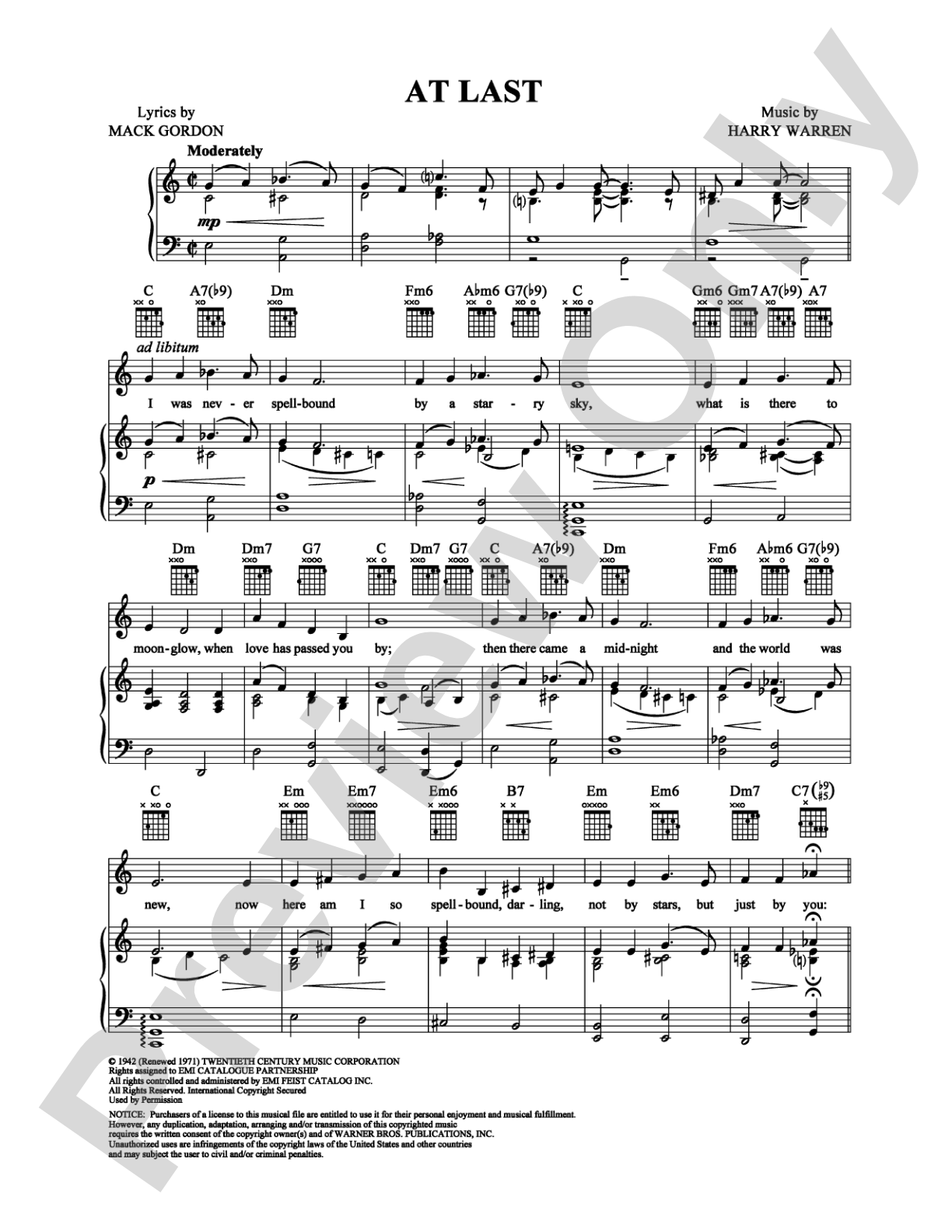
At Last: Piano/Vocal/Chords Digital Sheet Music

At Last: Piano/Vocal/Chords Digital Sheet Music

Harry Warren, Ray Anthony and His Orchestra

Item: 00-PS-0000724

Digital Download
$3.99
Description

At Last: Piano/Vocal/Chords Digital Sheet Music isn't in MakeMusic Cloud just yet...but it could be. Let us know you'd like to see it, and you'll help shape what comes next. In the meantime, start a free trial and dive into thousands of interactive titles your students can play along with today.

Sample Audio
No sample audio found.
Sample Video
Additional Details
SKU: 00-PS-0000724

More about this title

About the Artist: Ray Anthony and His Orchestra

Ray Anthony (1922, 2024) was a trumpeter and bandleader who became one of the defining voices of the swing and early pop era. His orchestra bridged the big band sound with the emerging pop sensibility of the 1950s, recording dozens of charting hits and maintaining a touring ensemble for over seven decades. Anthony's instrumental prowess and ear for arrangement made him a fixture on radio, television, and in film, influencing generations of players who heard both his trumpet work and his band's sophisticated orchestration.

Known for his warmth as a performer and his commitment to accessible yet well-crafted music, Anthony became a reliable standard in American popular music. His recordings remain teaching tools for understanding how jazz-inflected pop arranging works and how a strong lead voice, whether instrumental or vocal, can anchor an ensemble sound.

Why we love this

This classic vocal standard gives students direct access to one of swing era's most enduring melodies. The straightforward piano/vocal/chords format makes it equally useful for a singer preparing a solo or a pianist developing fluency with jazz-influenced harmony.

What to expect

Warm and yearning, with that particular glow of the 1940s popular song tradition. The melody sits naturally in the voice, and the harmonic language carries both sophistication and accessibility, inviting singers to linger on phrases and find their own emotional truth in the lyrics.

Who it's for

Singers preparing a solo recital or audition, pianists looking to expand their popular standards repertoire, and students exploring the intersection of jazz harmony and vocal performance. This works equally well in a studio setting or as part of a broader American songbook study.

How to get the most out of it

  • Balance the vocal line with accompaniment so the lyrics remain clear; the piano should support rather than compete.
  • Pay attention to the chord symbols to understand the harmonic movement; these changes often suggest where to shape the phrase.
  • Let the swing rhythm inform your phrasing without overdoing it; find the groove that sits between classical restraint and jazz freedom.

How to use it

Pair this with other American standards from the same era to create a concert segment on the swing and vocal traditions of the 1940s-50s. It also works as a showstopper recital piece for a student vocalist, or as a teaching example for understanding voice-piano balance in popular song.

Skills your students will build

  • Reading and interpreting chord symbols in a jazz-influenced harmonic context
  • Balancing vocal melody with keyboard accompaniment
  • Understanding the rhythmic and phrasing conventions of swing-era popular song
  • Accompanying a vocalist while maintaining rhythmic independence in the piano part

You May Also Like