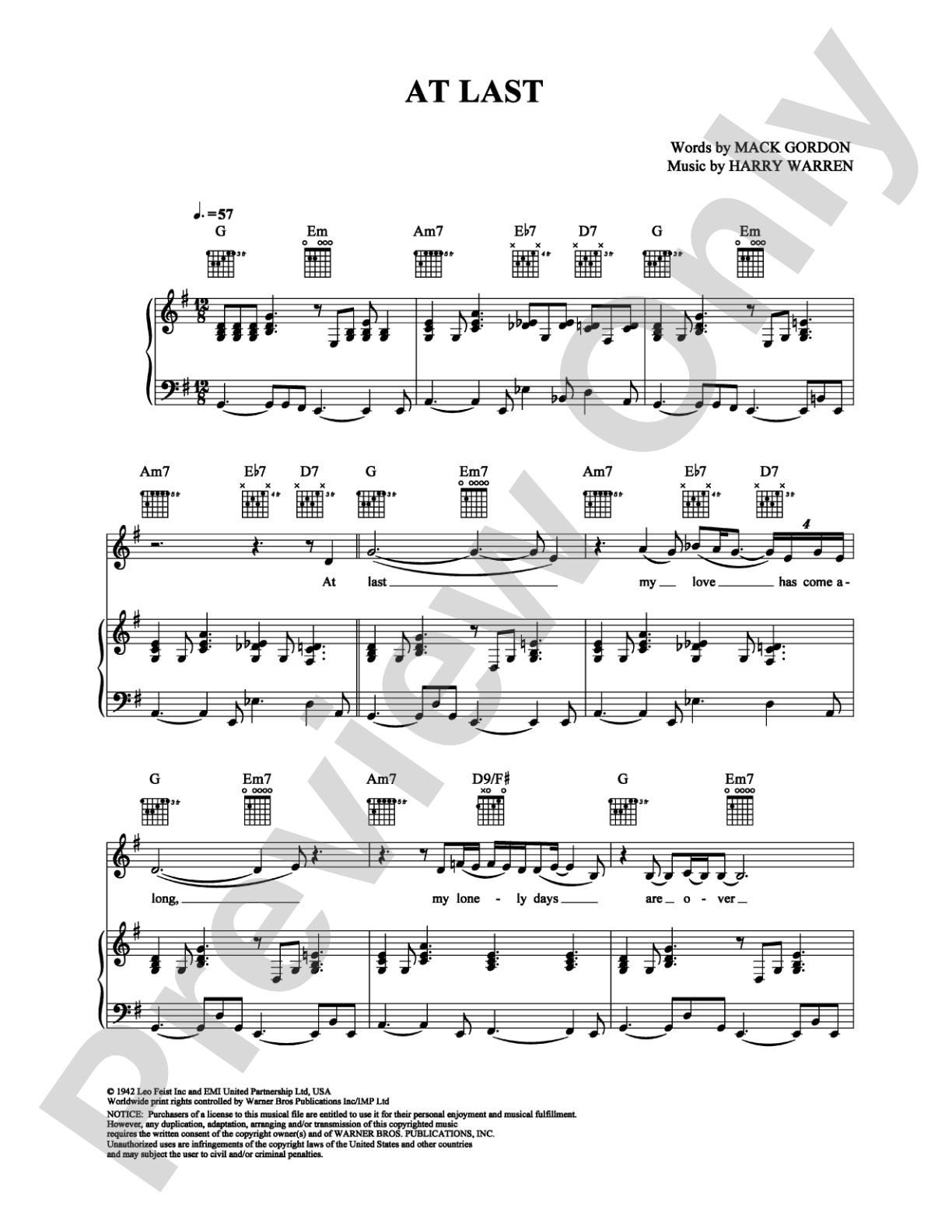
At Last: Piano/Vocal/Chords Digital Sheet Music

At Last: Piano/Vocal/Chords Digital Sheet Music

Harry Warren, Eva Cassidy

Item: 00-PS-0000722

Digital Download
$3.99
Description

At Last: Piano/Vocal/Chords Digital Sheet Music isn't in MakeMusic Cloud just yet...but it could be. Let us know you'd like to see it, and you'll help shape what comes next. In the meantime, start a free trial and dive into thousands of interactive titles your students can play along with today.

Sample Audio
No sample audio found.
Sample Video
Additional Details
SKU: 00-PS-0000722

More about this title

About the Artist: Eva Cassidy

Eva Cassidy (1963–1996) was a Washington, D.C.-based vocalist known for her interpretive approach to standards, pop songs, and folk material. Her unflinching honesty and ability to inhabit a song regardless of genre made her a distinctive voice in live performance and studio recording. Though her career was cut short by illness, her catalog has grown in recognition since her death, introducing new audiences to her gift for emotional clarity and stylistic range.

Why we love this

Cassidy's version of "At Last" strips away arrangement conventions to focus on the lyric and the singer's emotional truth. The piano/vocal/chords format gives you room to interpret the melody and phrasing without fighting a fixed arrangement, making it ideal for singers developing their own voice on a jazz standard.

What to expect

The song unfolds with quiet anticipation, each phrase landing like a confession. Cassidy's approach emphasizes the vulnerability of wanting and waiting rather than triumph or resolution. There's intimacy here, as if the singer is sitting across from you in a dimly lit room.

Who it's for

Singers tackling jazz standards and pop ballads will find this accessible and rewarding. Pianists accompanying vocalists in recital or studio sessions can use this as a starting point for custom arrangements. Young adults exploring their voice through classic material benefit from the simplicity and emotional directness of the chart.

How to get the most out of it

  • Listen to Cassidy's recorded interpretation to understand her approach to rubato and phrase shaping, then build your own interpretation from that foundation.
  • Let the chord changes breathe; this arrangement rewards space and intentionality over rushing through changes.
  • Shape the melody with dynamics rather than speed. The emotional arc of the lyric should drive how you color each phrase.
  • Work closely with your pianist on the balance between accompaniment and vocal line so neither overshadows the lyric.

How to use it

Include this in a recital pairing it with other standards or contemporary interpretations of classic songs. It works equally well as a feature in a cabaret-style concert or as part of a program exploring how different artists approach the same material. The simplicity of the arrangement means it can anchor a longer vocal performance without requiring extensive rehearsal or orchestration.

Skills your students will build

  • Phrasing and interpretation of jazz standards
  • Reading chord charts and understanding harmonic movement
  • Balancing vocal line against piano accompaniment
  • Using dynamics and space to convey emotional content

You May Also Like