
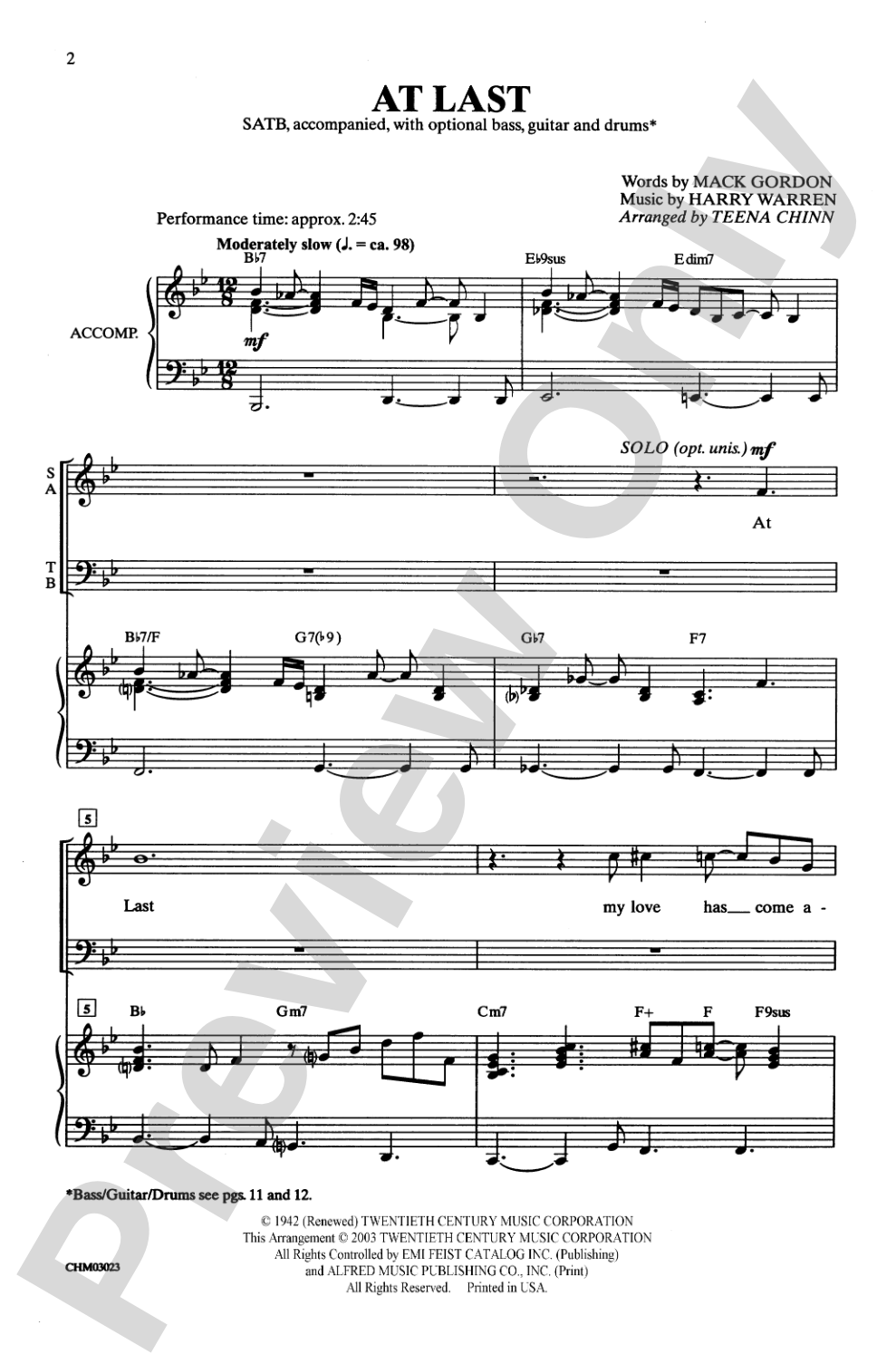
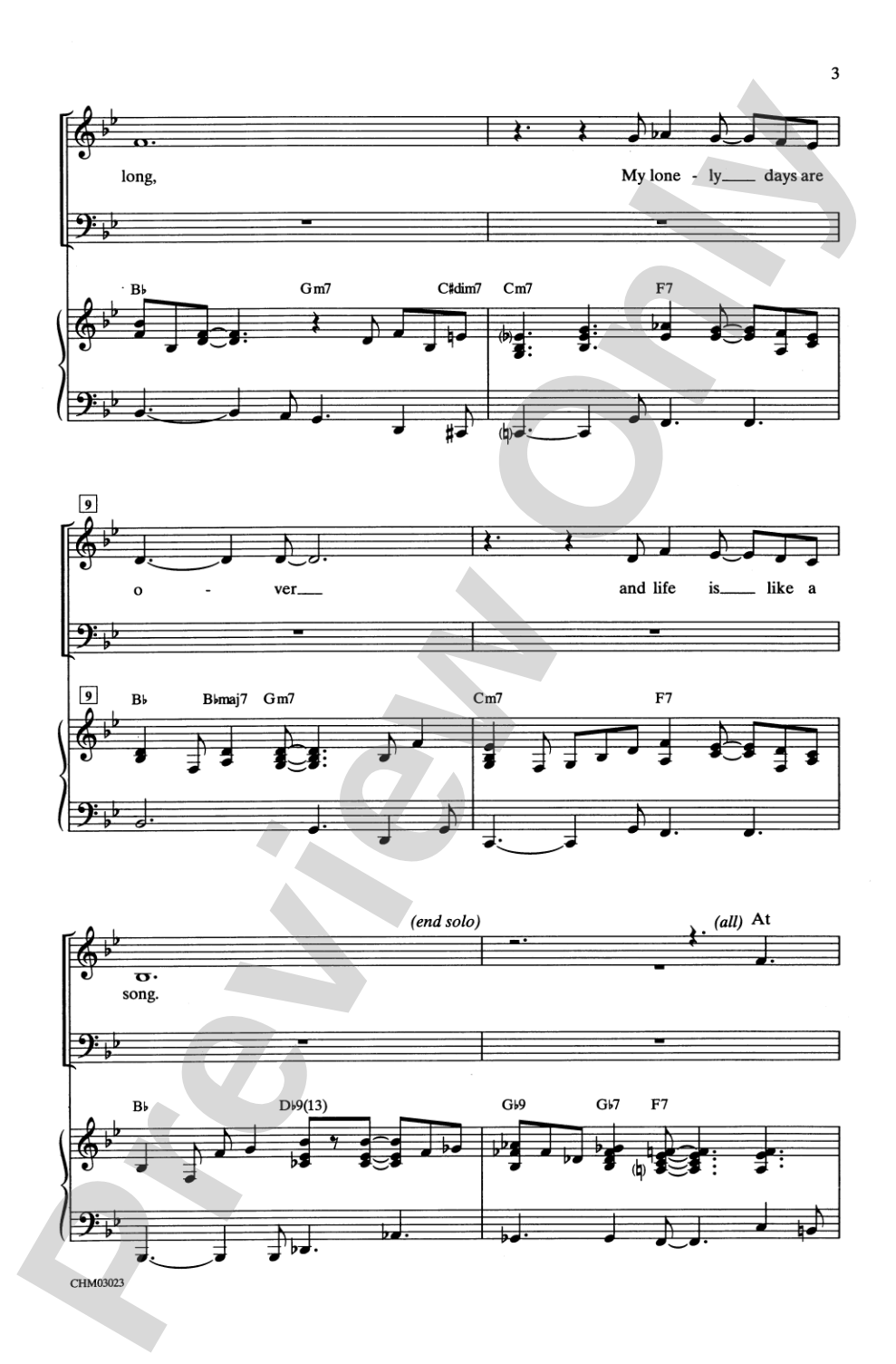
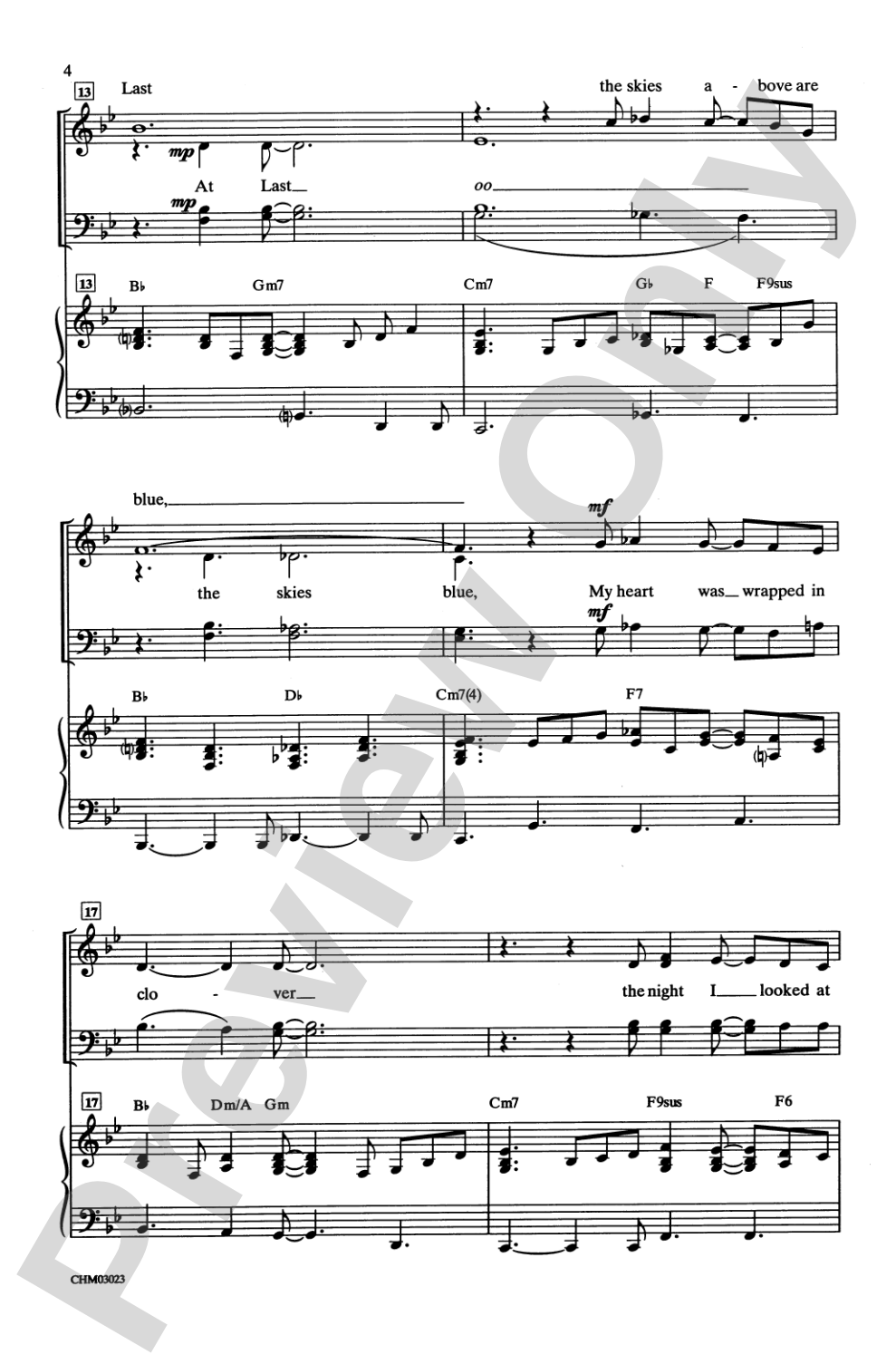

At Last: SATB Choral Octavo
Words by Mack Gordon, music by Harry Warren / arr. Teena Chinn
Level: Moderate
Item: 00-PO-0004825
$2.25
Minimum order quantity: 20 copies
One moment…
Description
Featured in Celine Dion's most recent New Day Has Come CD, this Harry Warren song is a true pop standard. Your singers and audiences will all enjoy this Teena Chinn arrangement for years to come.


At Last: SATB Choral Octavo isn't in MakeMusic Cloud just yet...but it could be. Let us know you'd like to see it, and you'll help shape what comes next. In the meantime, start a free trial and dive into thousands of interactive titles your students can play along with today.
Request This Title
Tell us you want it.
Start Your Free Trial
Explore everything that's ready to play right now.
Sample Audio
1
Audio File
--:--
0:00
0:00
Sample Video
No sample videos found.
Additional Details
Series:
Alfred Archive Edition: Alfred Pop Choral Series
Publisher:
Alfred Music
Page Count:
12
SKU:
00-PO-0004825
More about this title
About the Composer: Harry Warren
Harry Warren (1893-1981) was one of the most prolific and successful songwriters of Hollywood's Golden Age. His catalog includes over 800 compositions, many of which became standards through films and radio broadcasts. Warren won three Academy Awards for Best Original Song and collaborated with the era's greatest lyricists, creating music that bridged classical sophistication and popular accessibility.
Warren's melodies are characterized by their singability and emotional directness. His gift for writing memorable hooks combined with harmonic interest makes his standards enduringly popular with both professional and student singers. For choral programs, his music offers the rare advantage of being immediately recognizable to audiences while remaining musically substantive.
Why we love this
Teena Chinn's arrangement captures the warmth and accessibility of Warren's standard without diluting its emotional core. The voicing sits comfortably for Grade 3 singers while preserving enough harmonic sophistication to keep musicians engaged through rehearsal and performance. Your singers will take pride in performing material that resonates with audiences of all ages.
What to expect
This is a song of quiet certainty and contentment. Chinn's arrangement maintains the intimate, almost conversational quality of the original while giving each voice part a sense of purpose. Singers experience the satisfaction of ensemble work that serves the lyric rather than overshadowing it.
Who it's for
This arrangement works for mixed choirs at the intermediate level, whether in a high school general music class, community choir, or church music program. The Grade 3 difficulty keeps technical demands manageable while the subject matter and familiar melody appeal to singers who want to perform recognizable, emotionally genuine music.
How to get the most out of it
- Balance the melodic line in whichever voice carries it in each section. The top voice naturally dominates, but shade the supporting parts so they enhance rather than compete with the primary melody.
- Shape phrases toward natural lyrical peaks rather than stopping at bar lines. This style of song rewards legit, connected phrasing that mirrors the way singers approach jazz standards.
- If using the recorded accompaniment, rehearse with it early and often. This allows singers to internalize the harmonic context and groove without becoming dependent on counting bars.
- Pay attention to vowel consistency within chords. Open, resonant vowels will unify blend and let the song's warmth shine through without sounding overly formal.
How to use it
Program this in a set of standards that showcases the breadth of American songwriting, or pair it with other pop classics for a show-tune themed concert. The moderate tempo and moderate difficulty make it an ideal piece for the middle section of a concert, when singers are warmed up and audiences are fully engaged but before the program's most demanding selections.
Skills your students will build
- Phrasing in a pop/jazz idiom (shape toward lyrical peaks rather than harmonic function)
- Blending and balance across four voice parts with distributed melody
- Sustaining emotional expression in a lower-energy arrangement
- Interpreting articulation and dynamics to support text and style