
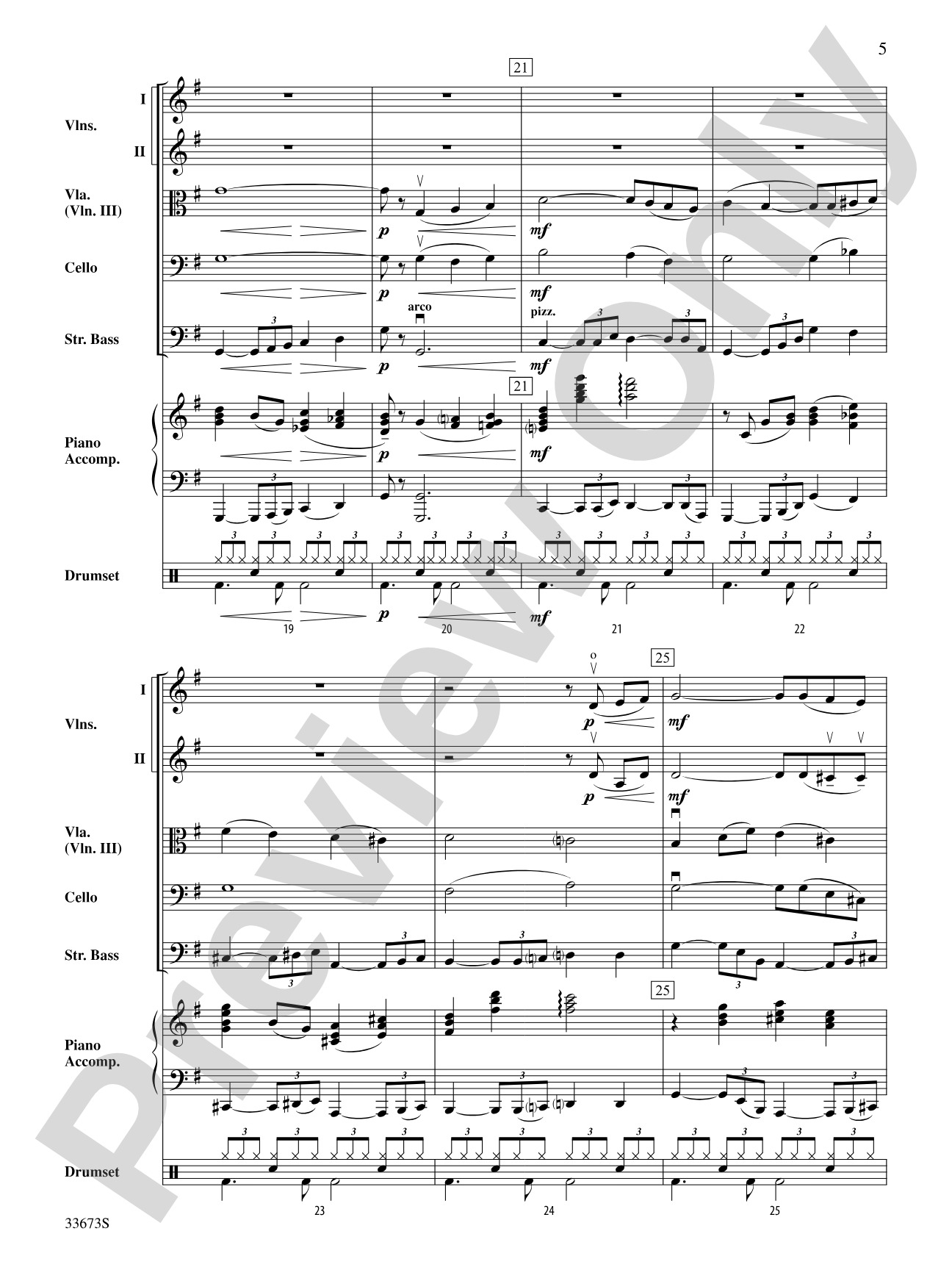
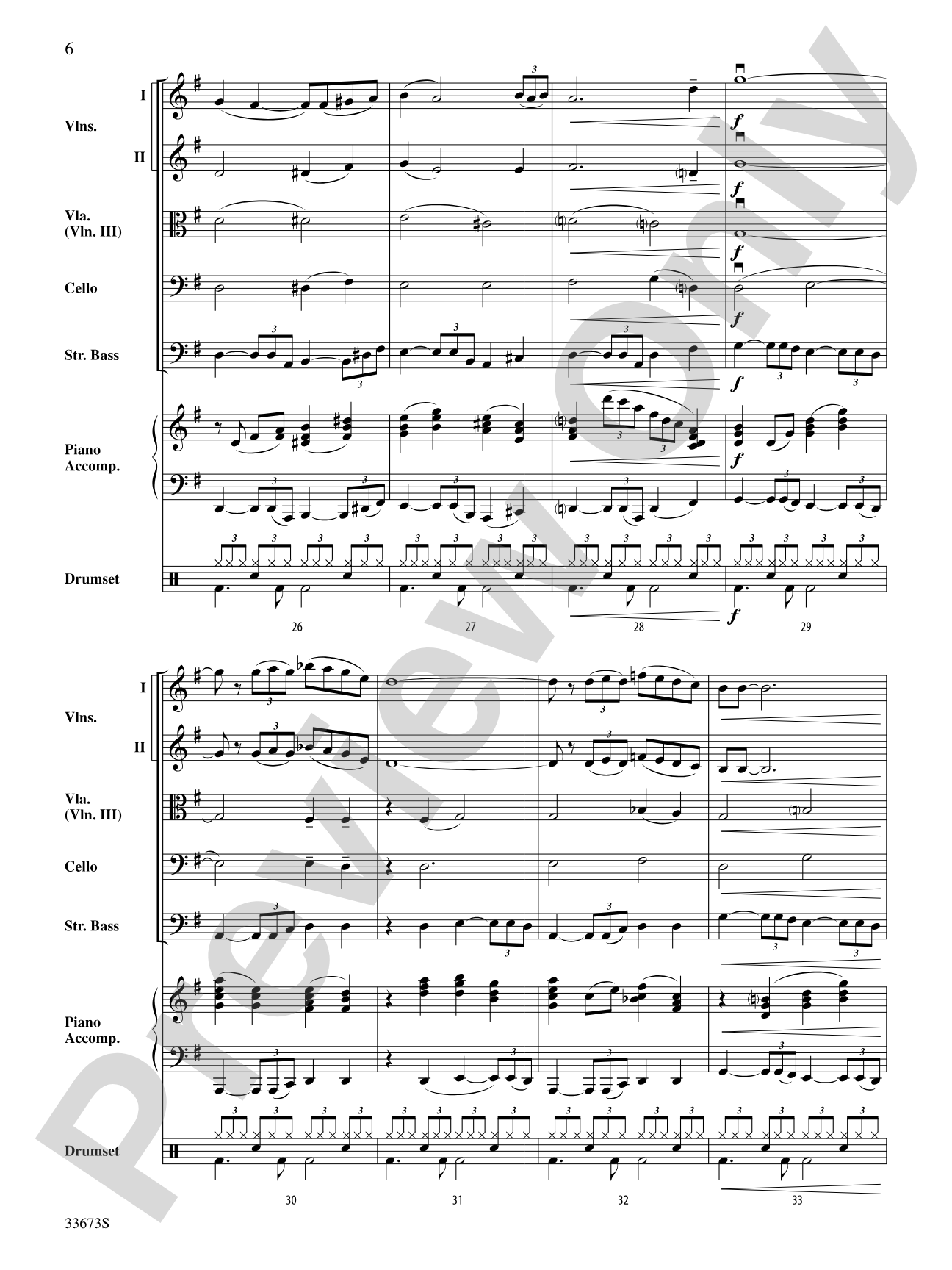
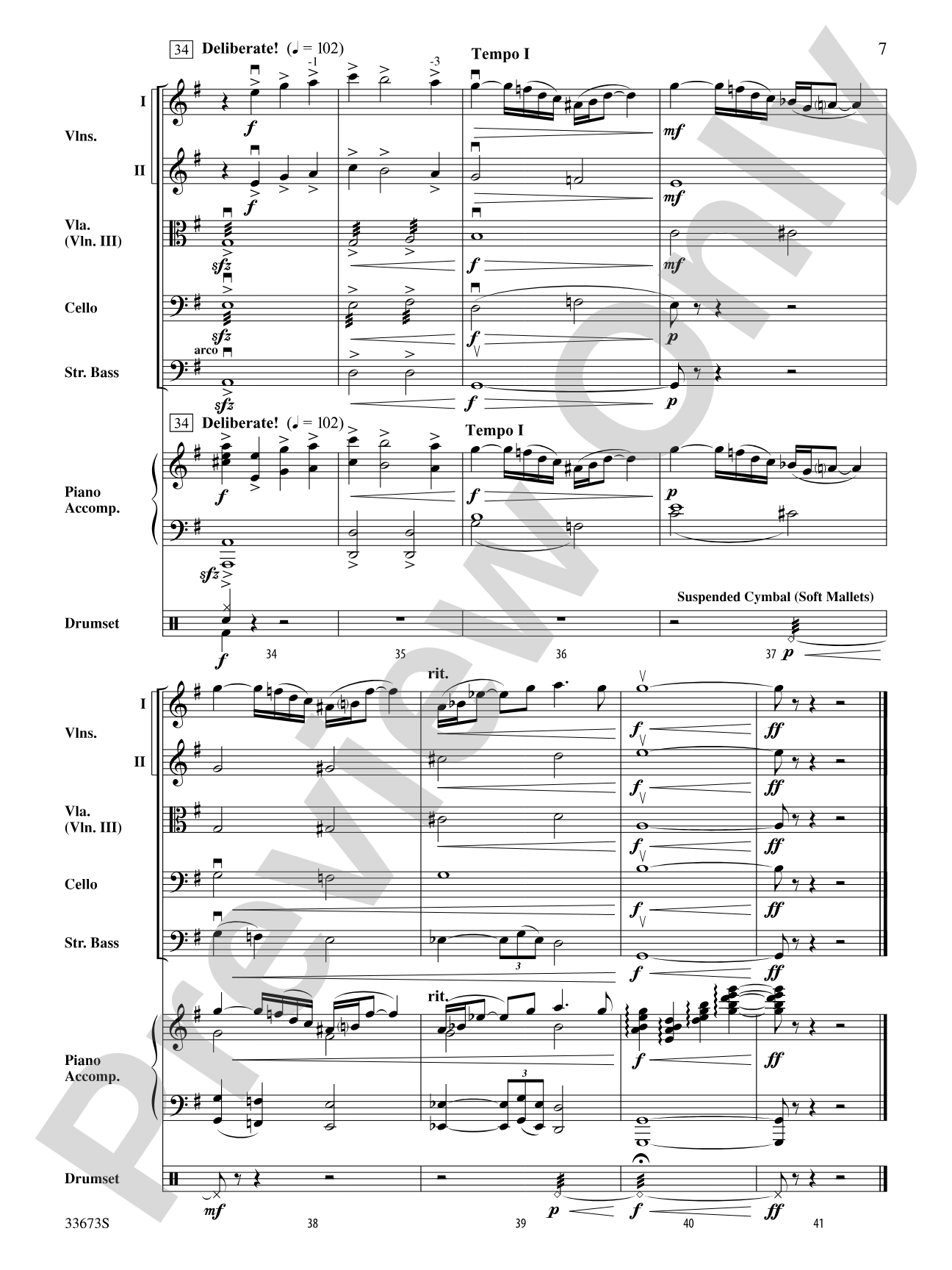


At Last: String Orchestra Conductor Score & Parts
As performed by Beyoncé
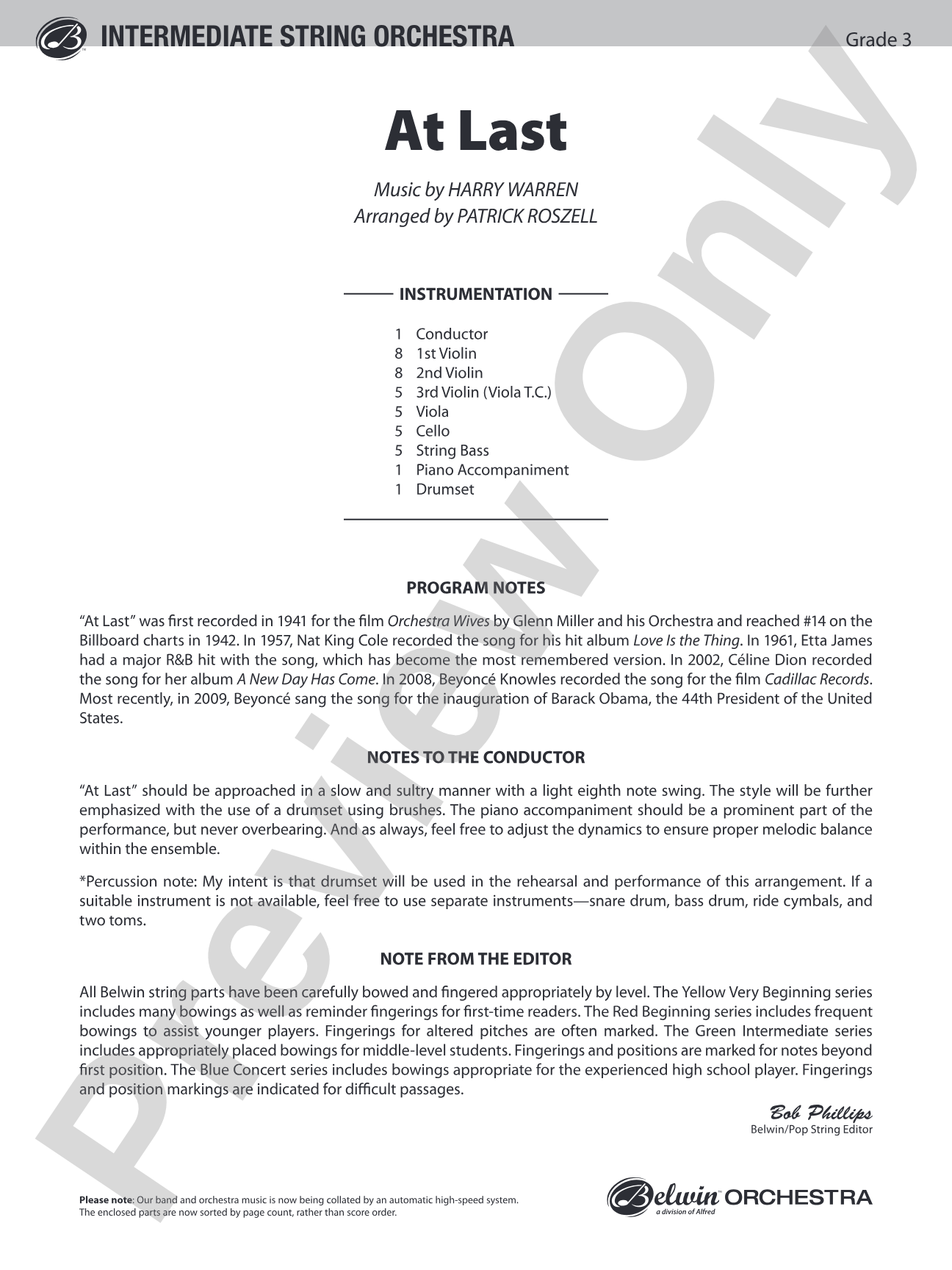
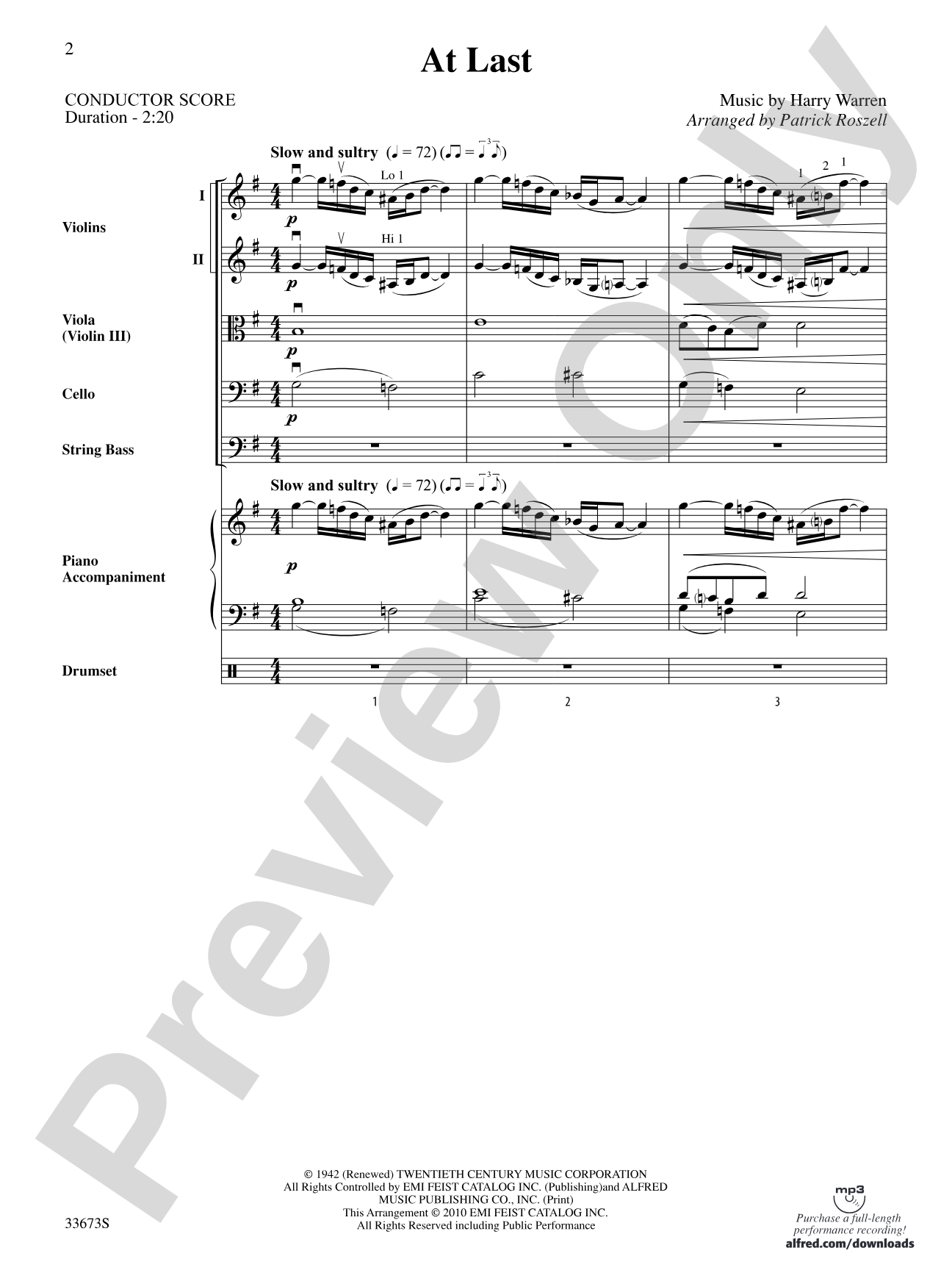
Music by Harry Warren / arr. Patrick Roszell
Grade: 3
Item: 00-PK-0004169

$51.00
One moment…
Description
This gorgeous song, a favorite since the 1940s, hit new popularity when performed by Beyoncé for the touching dance of President and Mrs. Obama at the 2009 inaugural ball. Perfectly scored for strings, and great for working on tone and bowing. A hit of the ages with vocalists and instrumentalists alike.


Don't just read it, hear it, play along with it, and watch your students grow with it. In MakeMusic Cloud, At Last: String Orchestra Conductor Score & Parts comes alive with professional accompaniment, adjustable tempo, and built-in practice tools that turn solo practice into real progress.
Open in the Player
Jump straight in and assign it today.
Start Your Free Trial
Open this title and explore the full library in minutes.
Sample Audio
1
Audio File
--:--
0:00
0:00
Sample Video
No sample videos found.
Additional Details
Series:
Pop Intermediate String Orchestra
Publisher:
Alfred Music
Page Count:
78
SKU:
00-PK-0004169
More about this title
About the Composer: Harry Warren
Harry Warren (1893–1981) was one of Hollywood's most prolific songwriters, composing over 800 songs during his career in film and theater. His gift for memorable melodies and sophisticated harmonies made him a favorite among composers and arrangers throughout the 20th century. Warren won three Academy Awards and created standards that have endured across generations, performed by everyone from jazz singers to orchestras.
For music educators, Warren's work offers accessible yet harmonically rich material. His melodies are intuitive enough for students to connect with immediately, yet the underlying harmony rewards careful musical analysis and expressive playing.
Why we love this
This arrangement captures the lyrical warmth of Warren's original while giving your strings the kind of elegant, singable writing that keeps students engaged and sounding musical without requiring virtuosic technique. The scoring allows you to work on tone quality and clean ensemble bowing across all sections, and having such a recognizable piece in your rehearsal elevates morale every time you play it.
What to expect
Warm, unhurried, and genuinely romantic—the kind of piece that sounds like it breathes naturally. The arrangement respects the song's ballad roots while giving string players room to shape the melody with their own musicality. There is no rush, no flash; just careful voicing and clean, singing lines.
Who it's for
This score and parts work well for intermediate string orchestras in middle school through early high school, or adult community ensembles seeking repertoire that sounds polished without excessive technical demands. Directors building a concert program that bridges classical standards with music students know from popular culture will find this piece connects immediately with audiences.
How to get the most out of it
- Shape phrases with the breath of a vocalist; even at Grade 3 level, younger strings respond well to treating longer lines as song rather than sequential notes.
- Balance the inner voices carefully in sustained passages to prevent the harmonic support from muddying the main melodic line.
- Work transitions between key areas deliberately so modulations feel intentional rather than accidental.
- Use the printed parts to establish consistent vibrato timing across sections so sustained chords resonate with unified warmth.
How to use it
Program this as a palate-cleansing contrast between faster concert pieces or as a graceful opener for a pops-focused concert where familiarity and accessibility matter. It also works well as a second-half anchor piece that allows your ensemble to showcase improved tone quality after warming up earlier in the concert.
Skills your students will build
- Legato bowing and tone control in sustained passages
- Listening to and balancing inner harmony voices
- Phrasing longer melodic lines with intentional shape and direction
- Executing clean ensemble transitions and key changes
- Vibrato coordination across section unison and chordal writing