
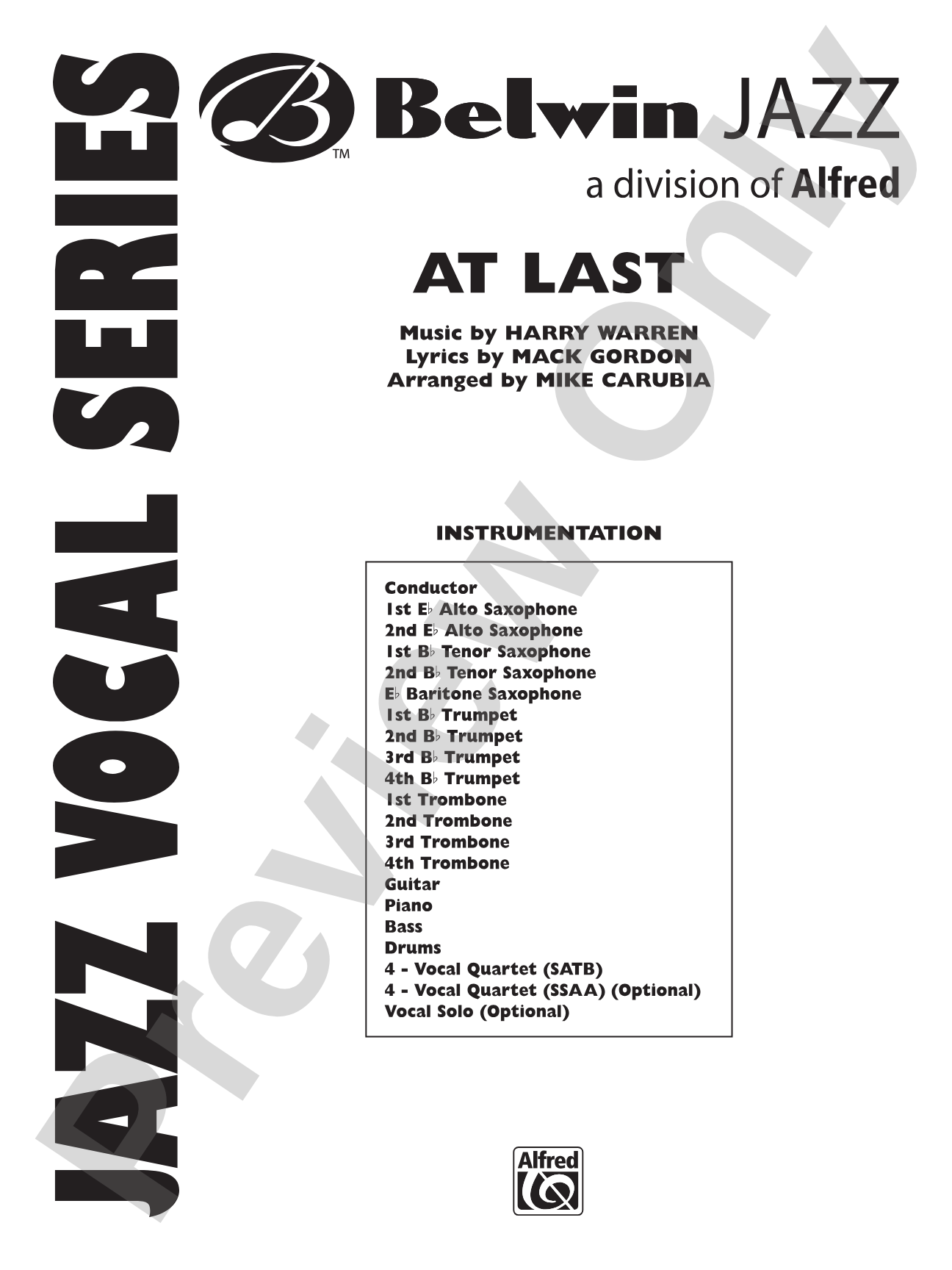
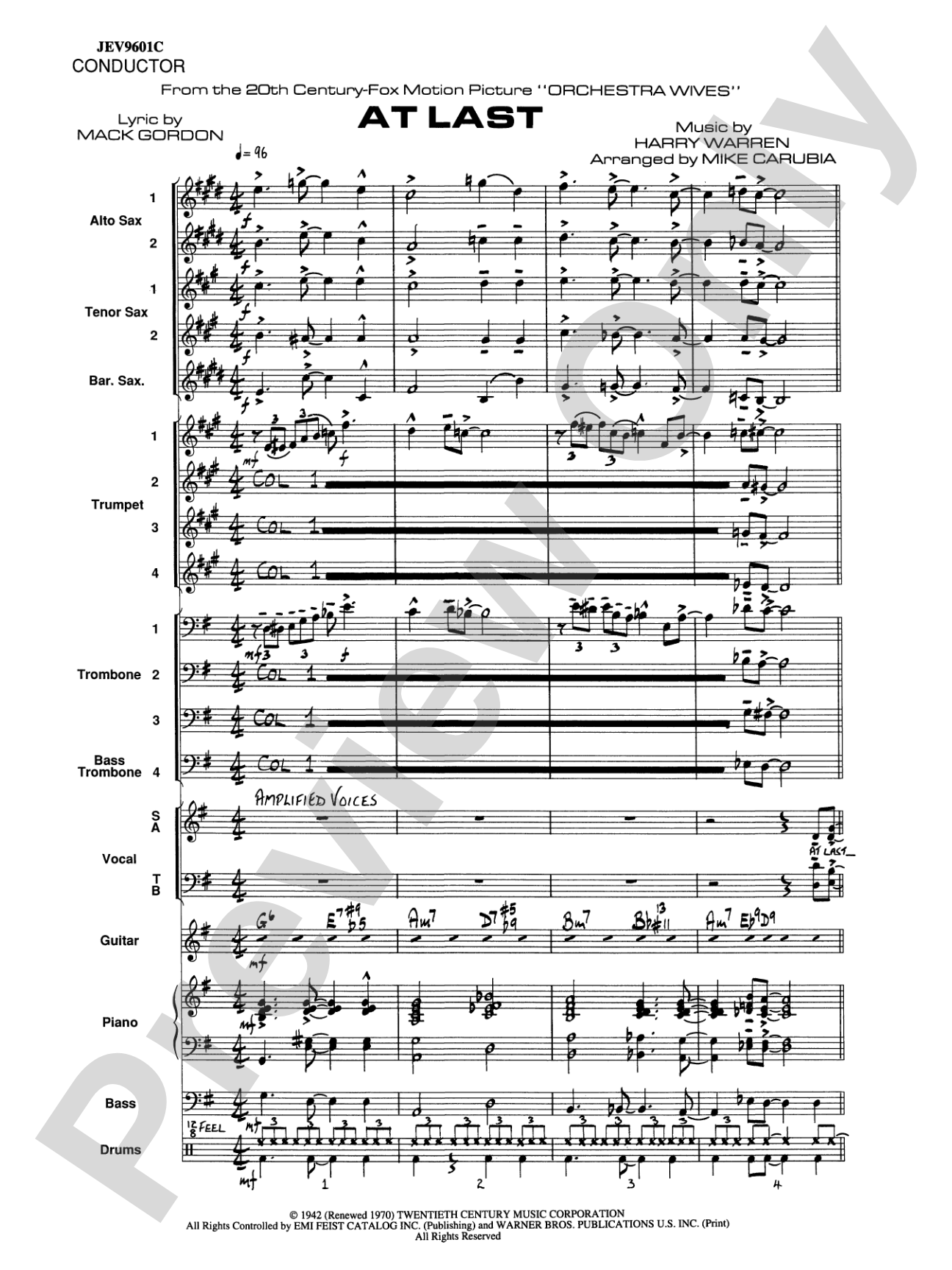
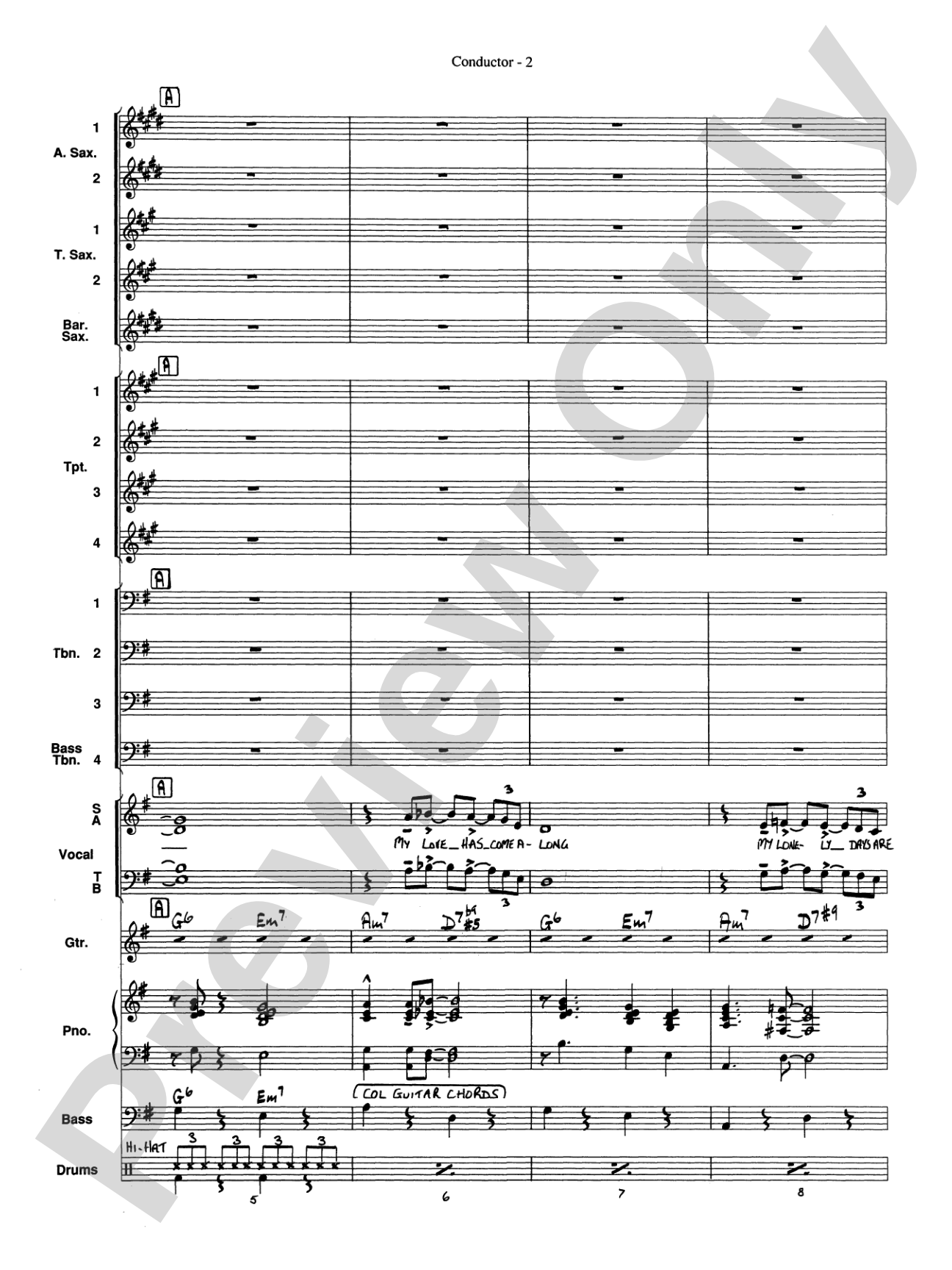
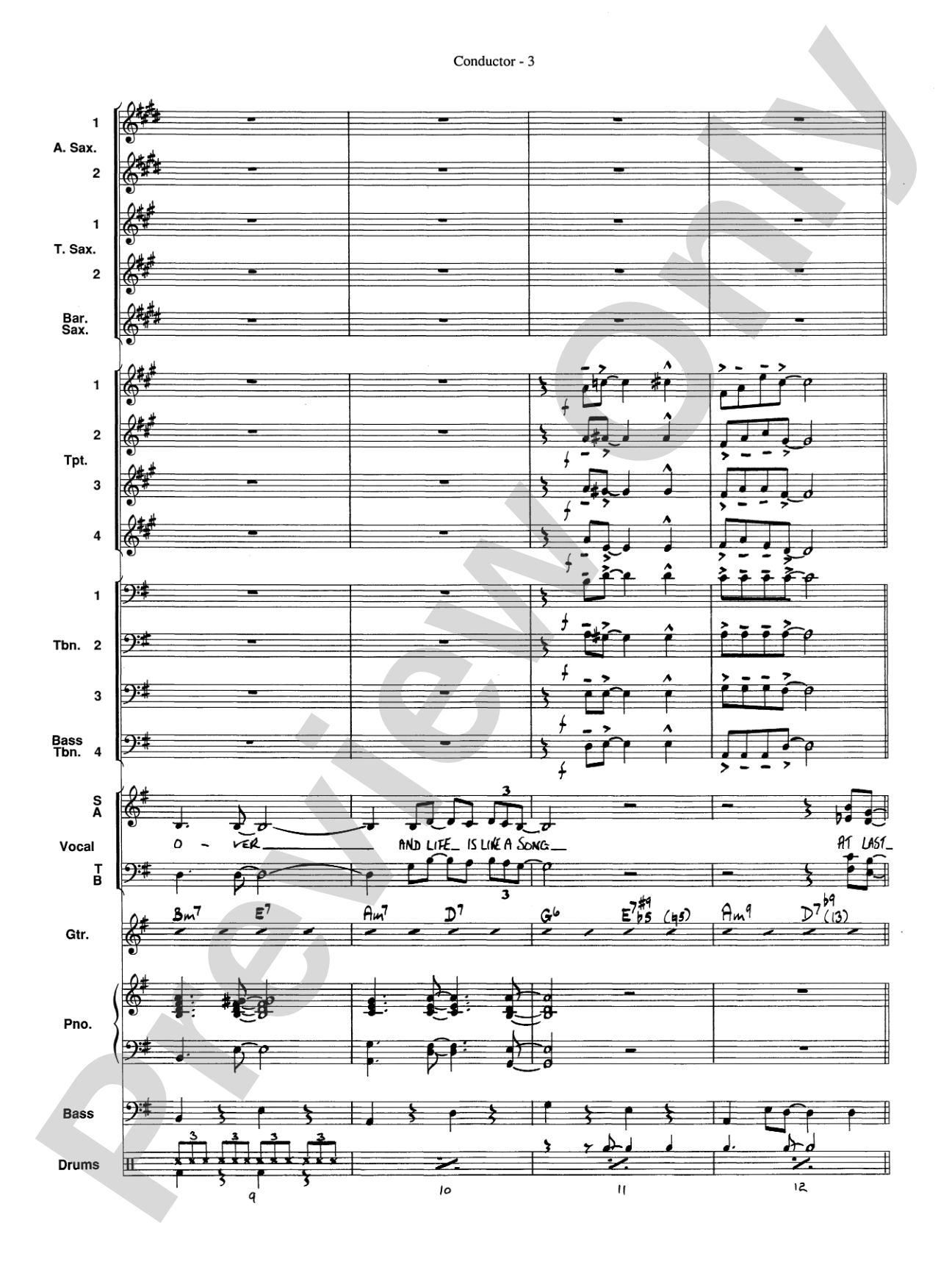
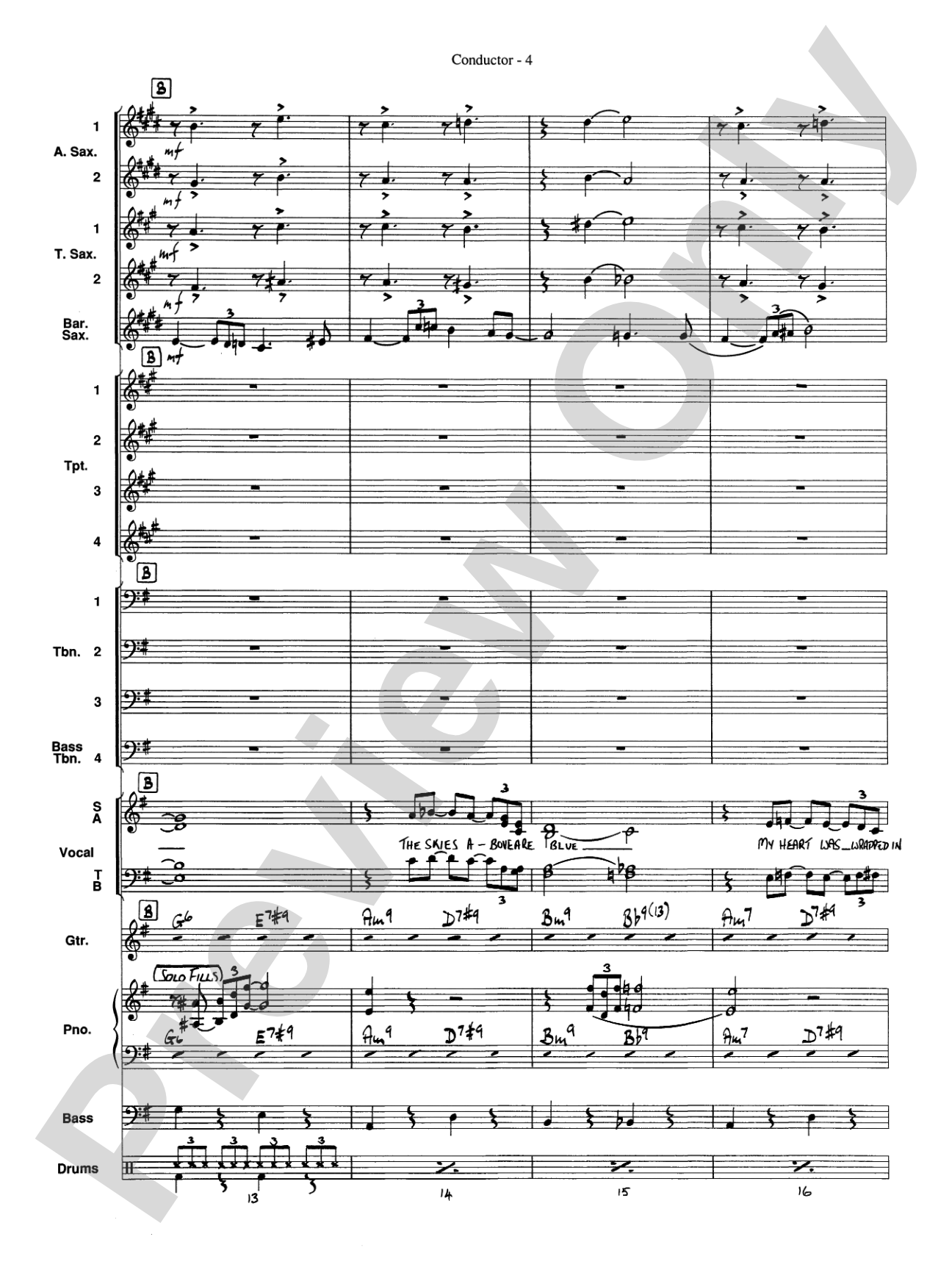
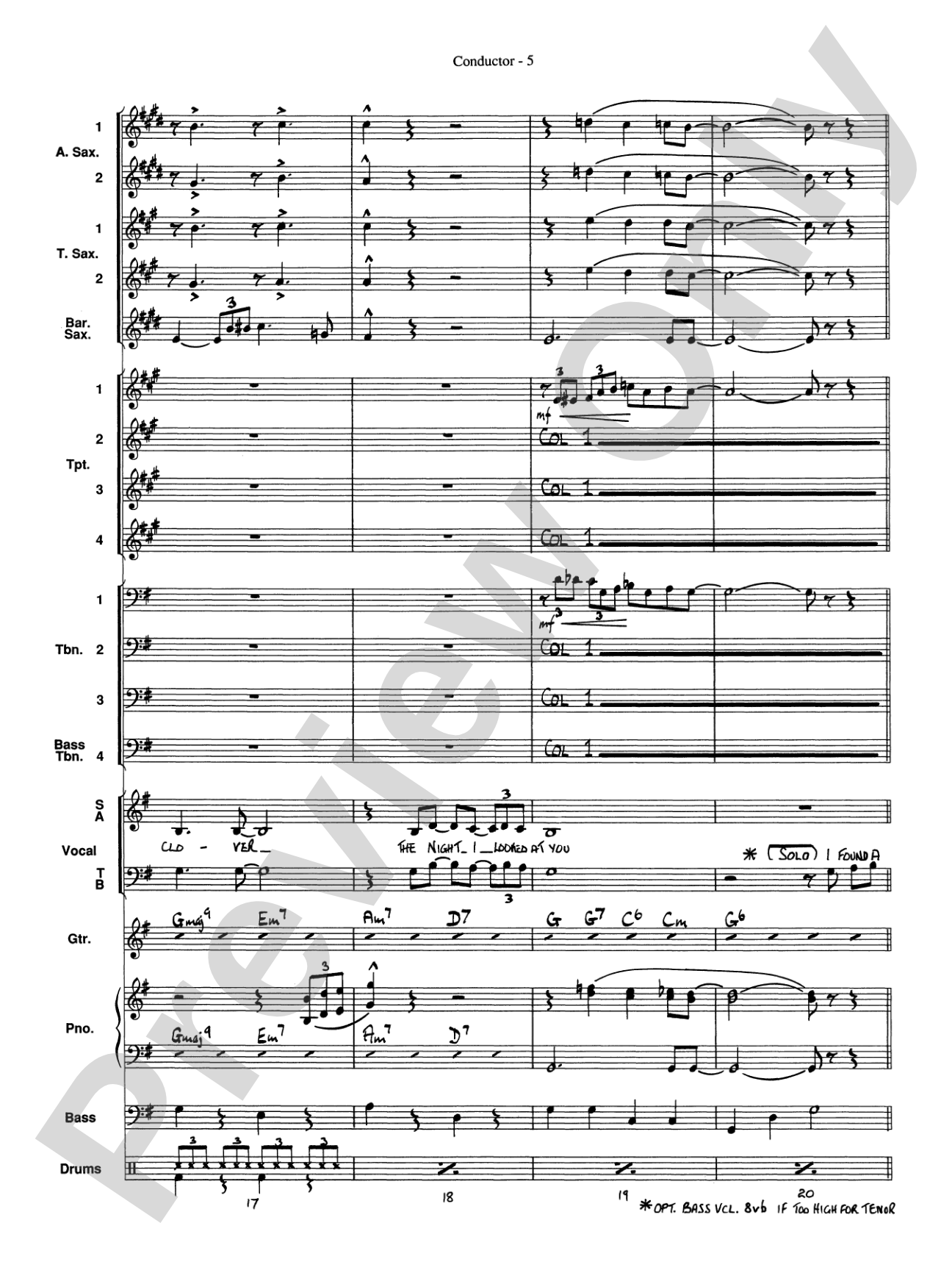
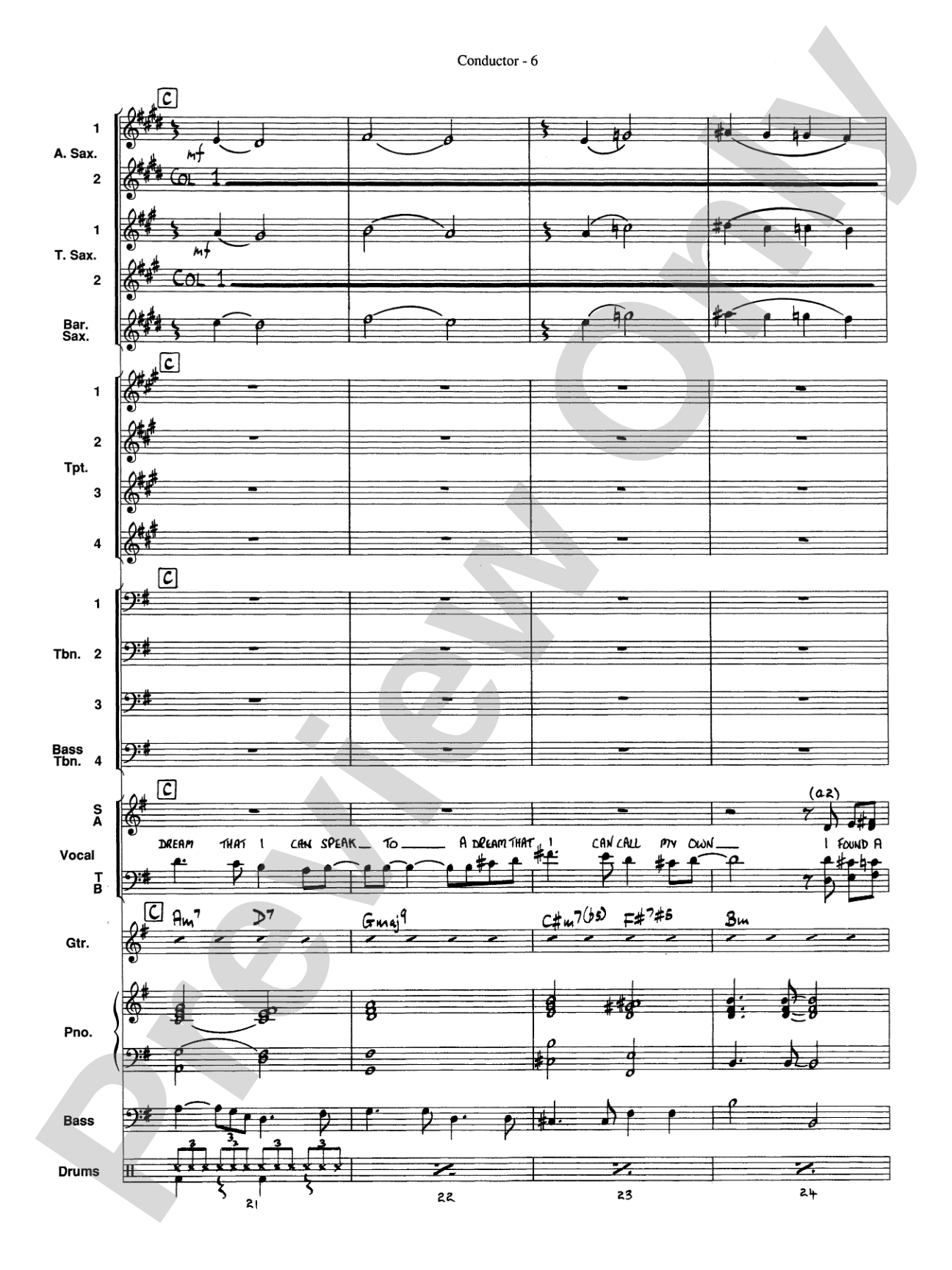
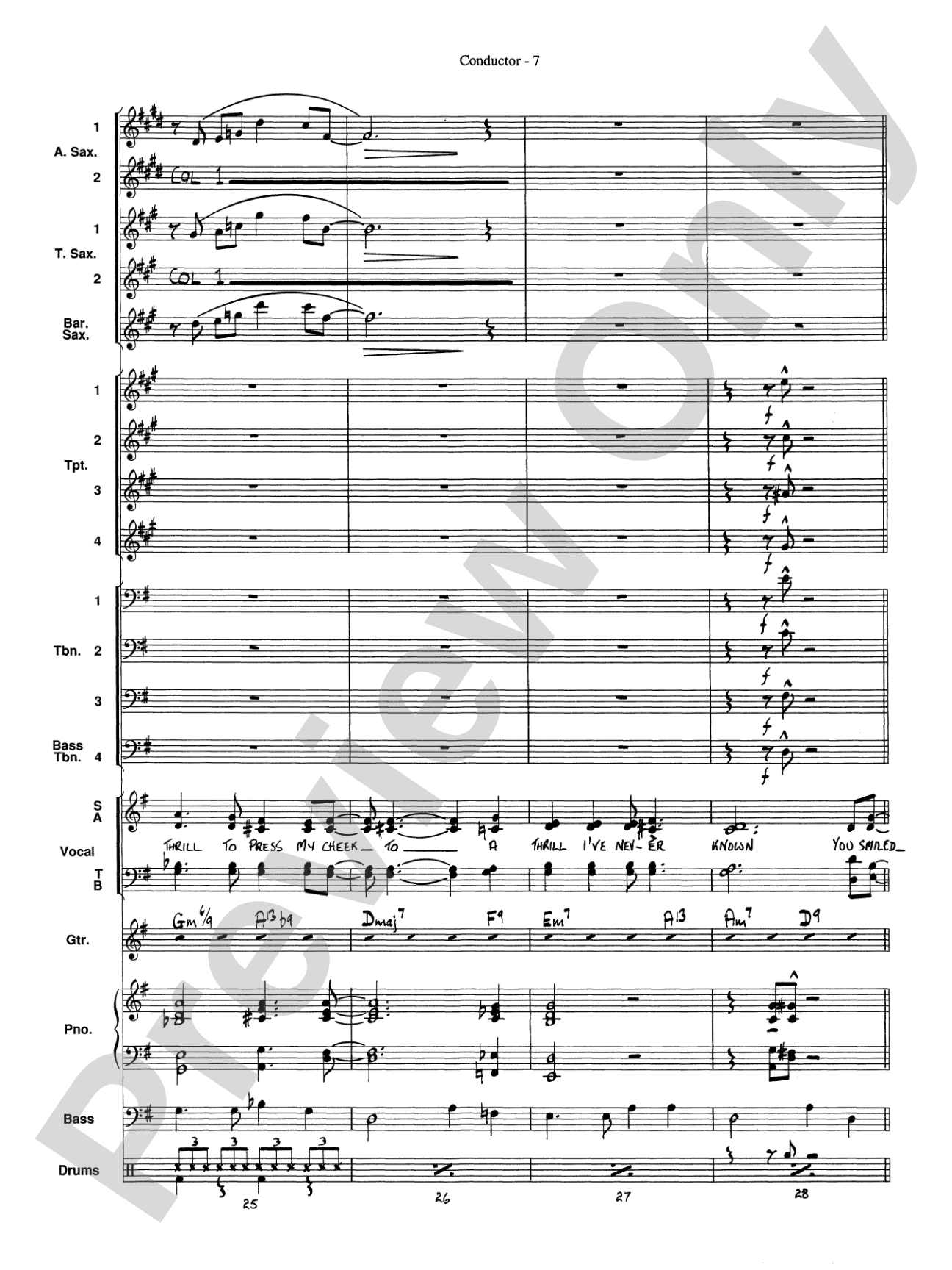
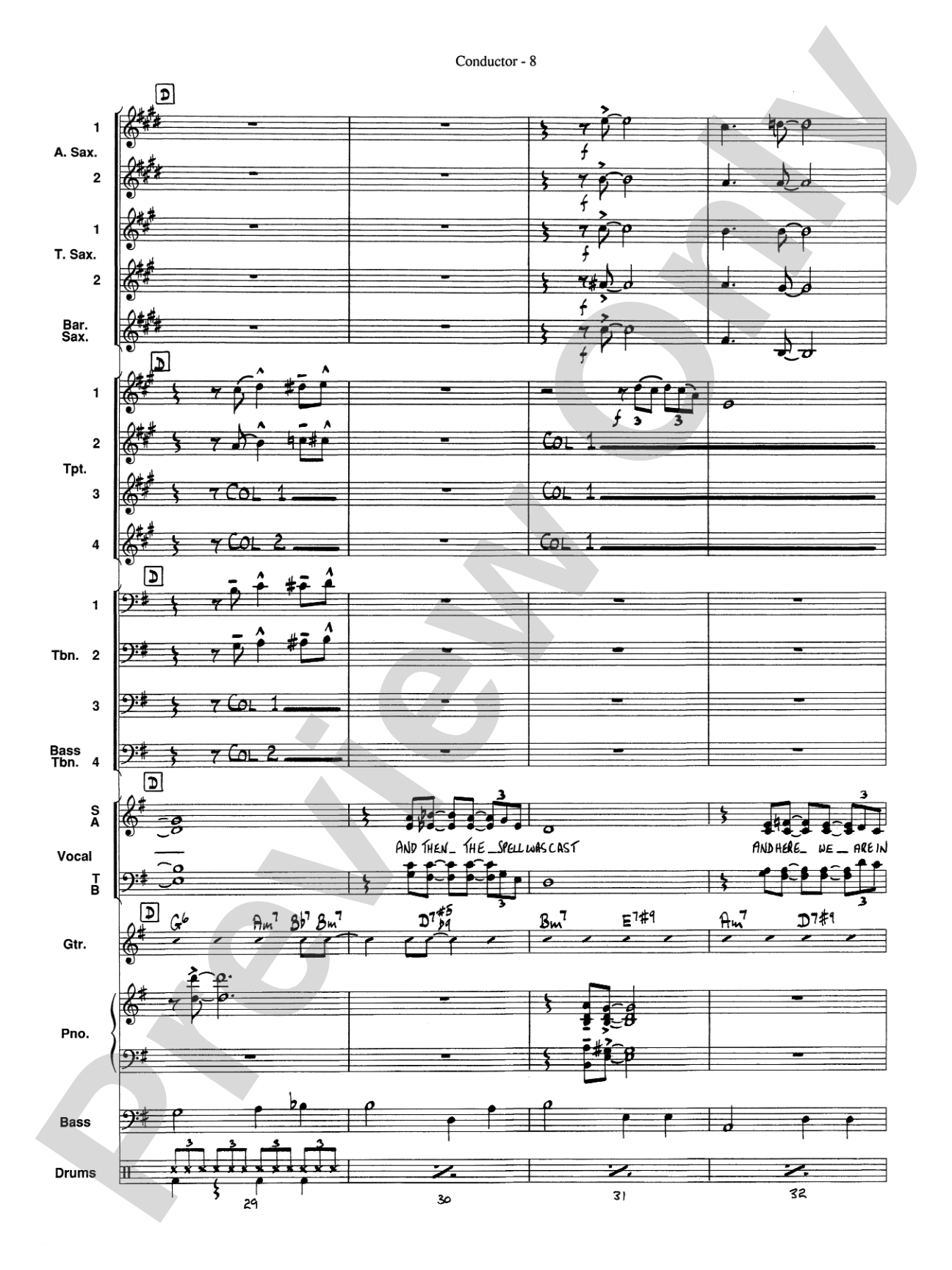
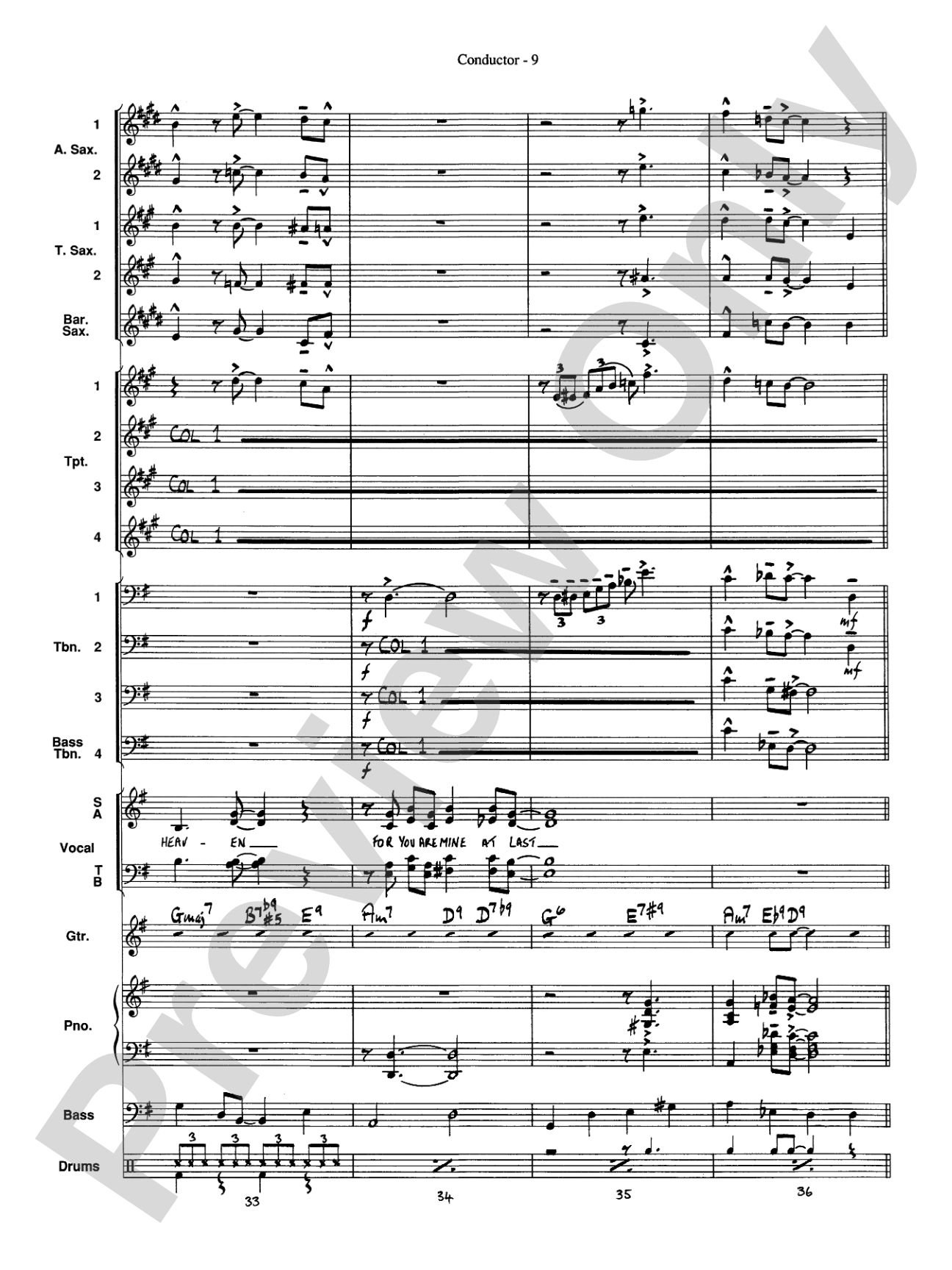
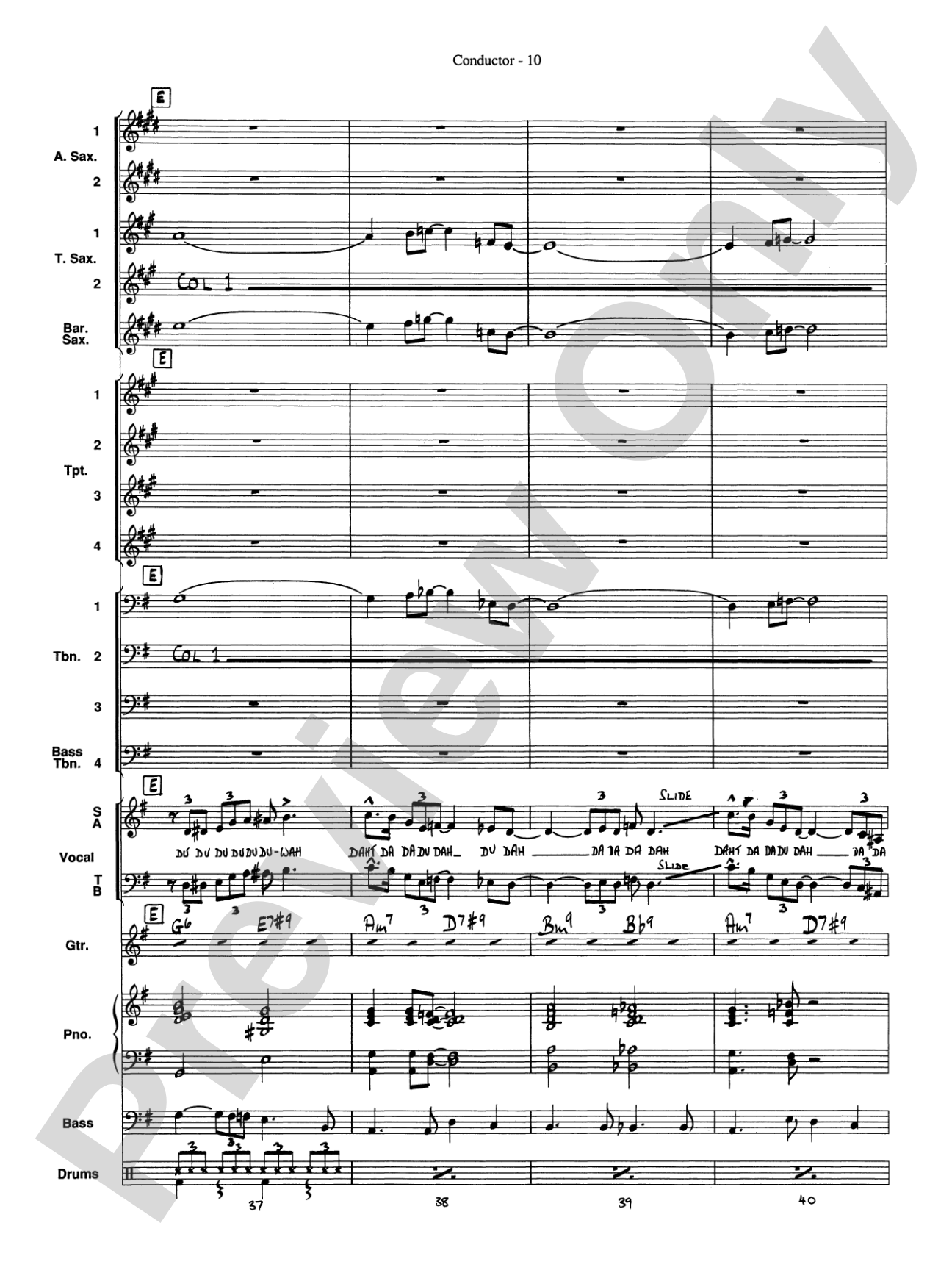
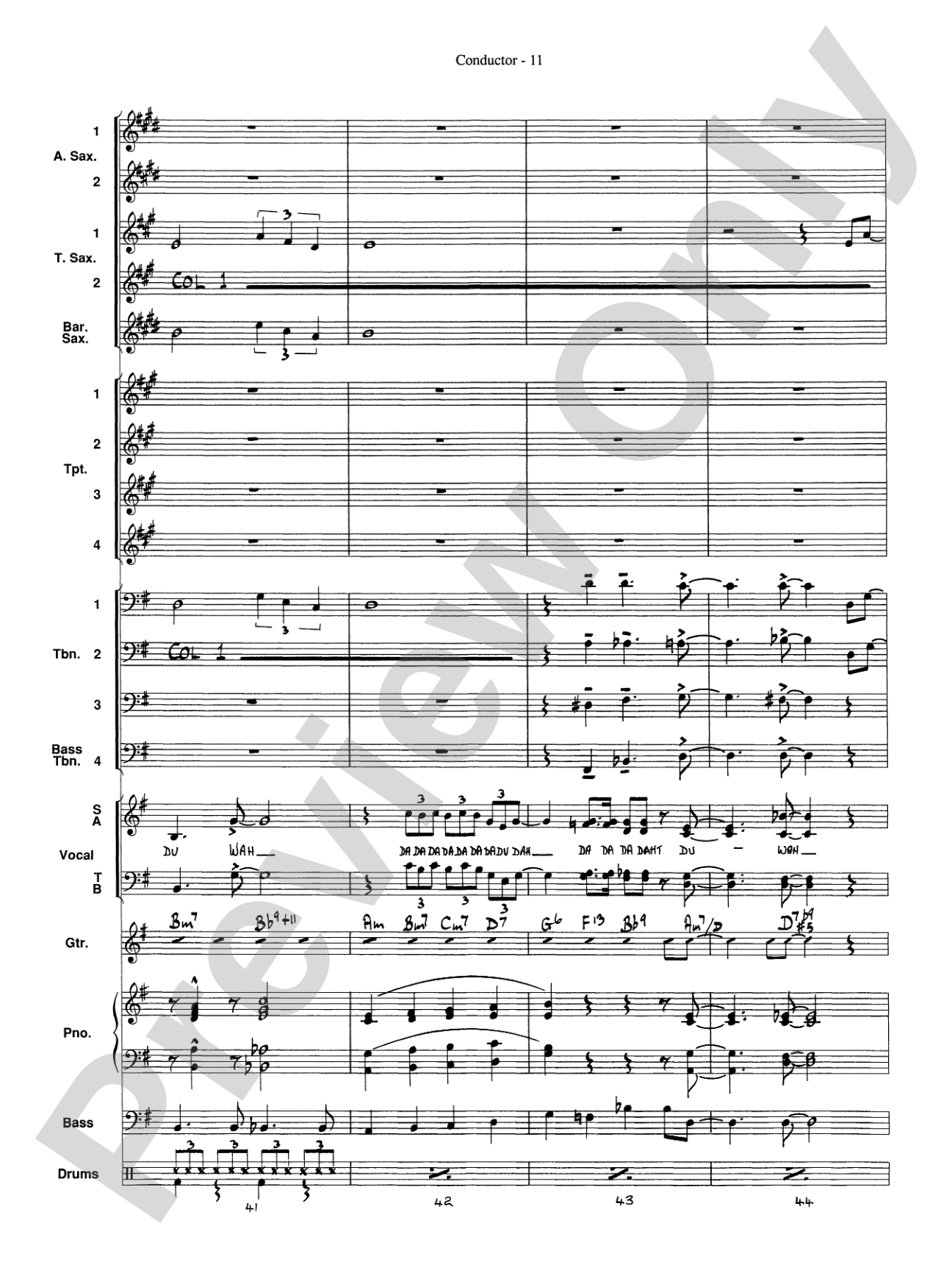
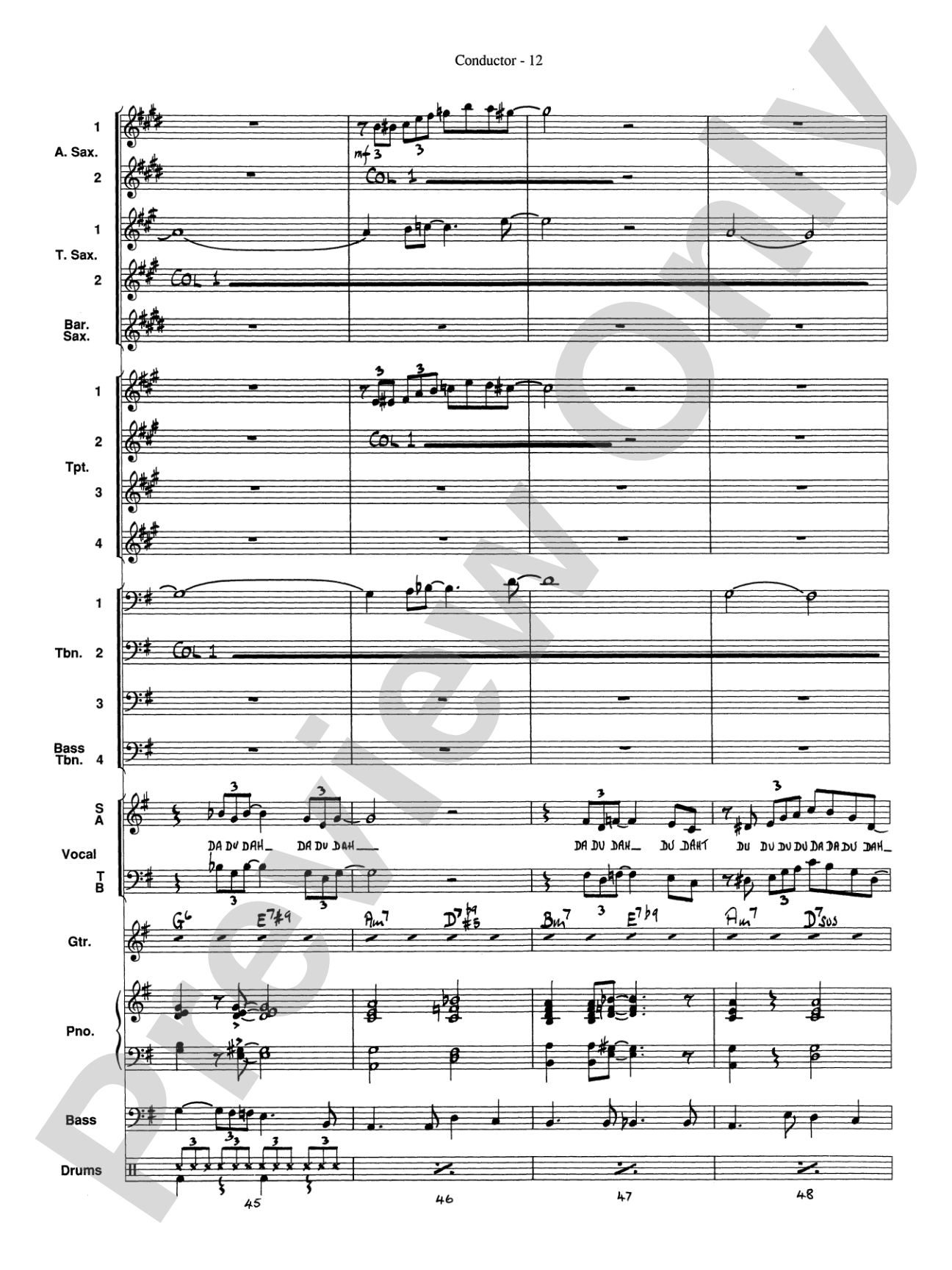
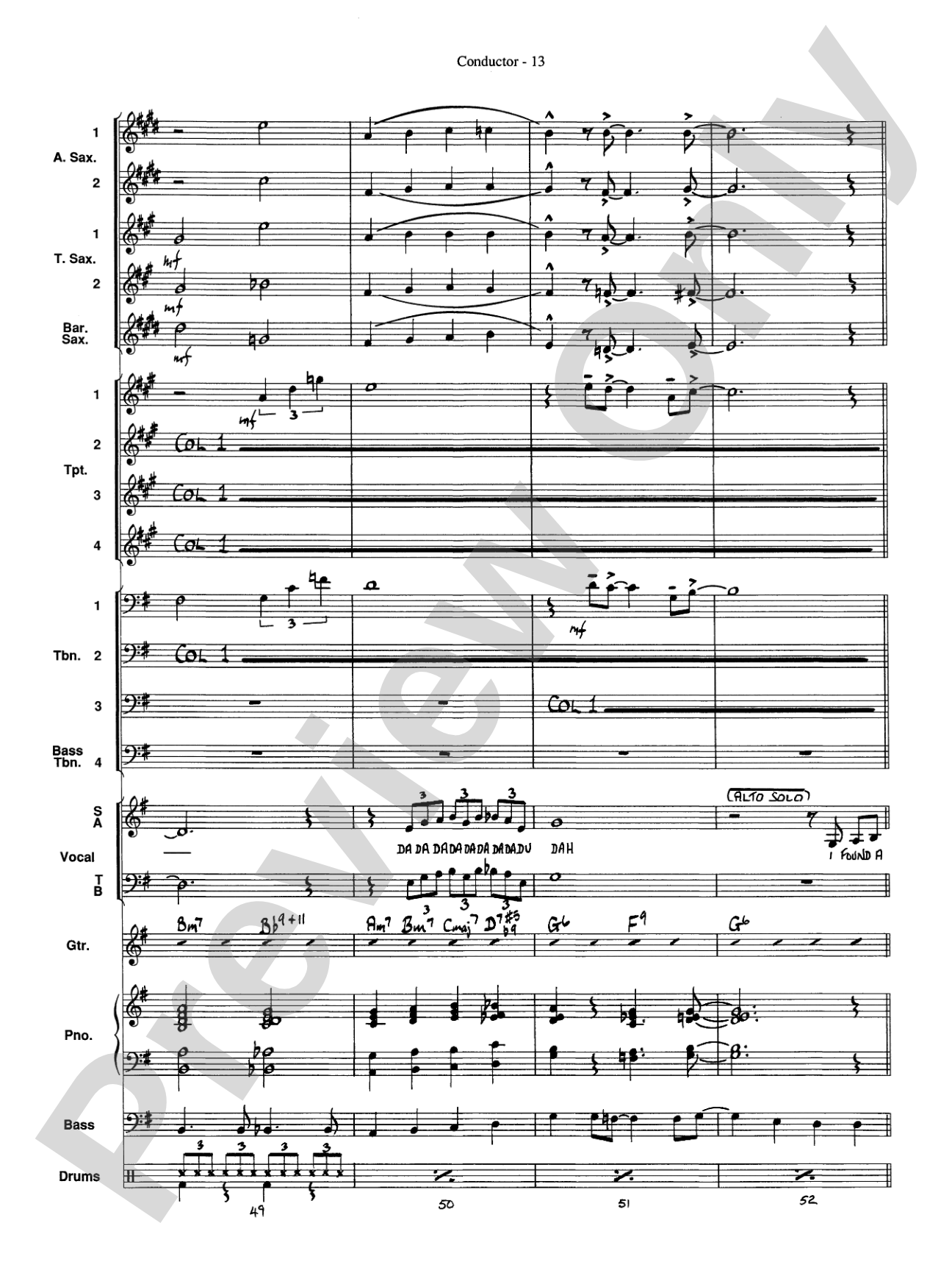
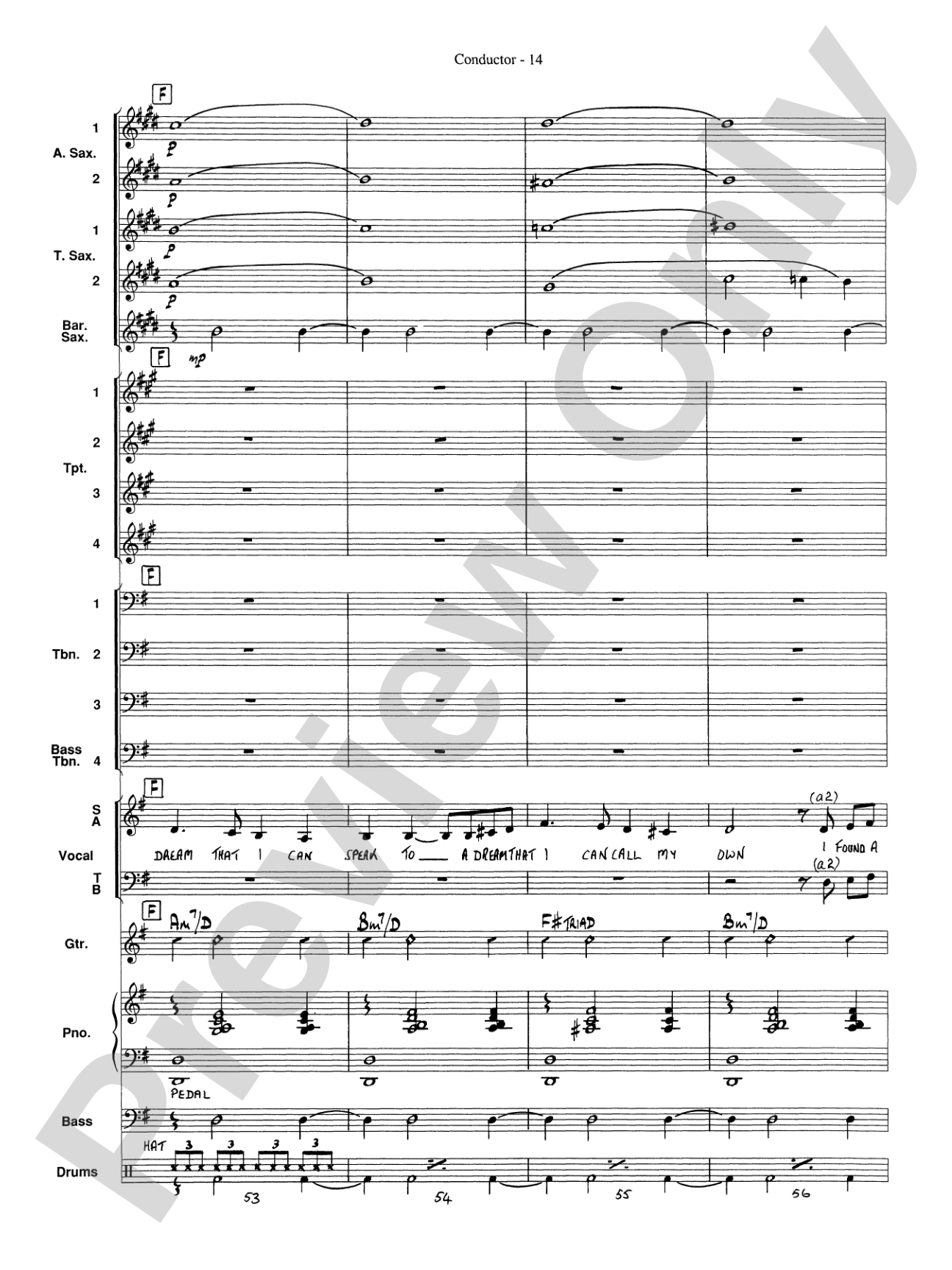
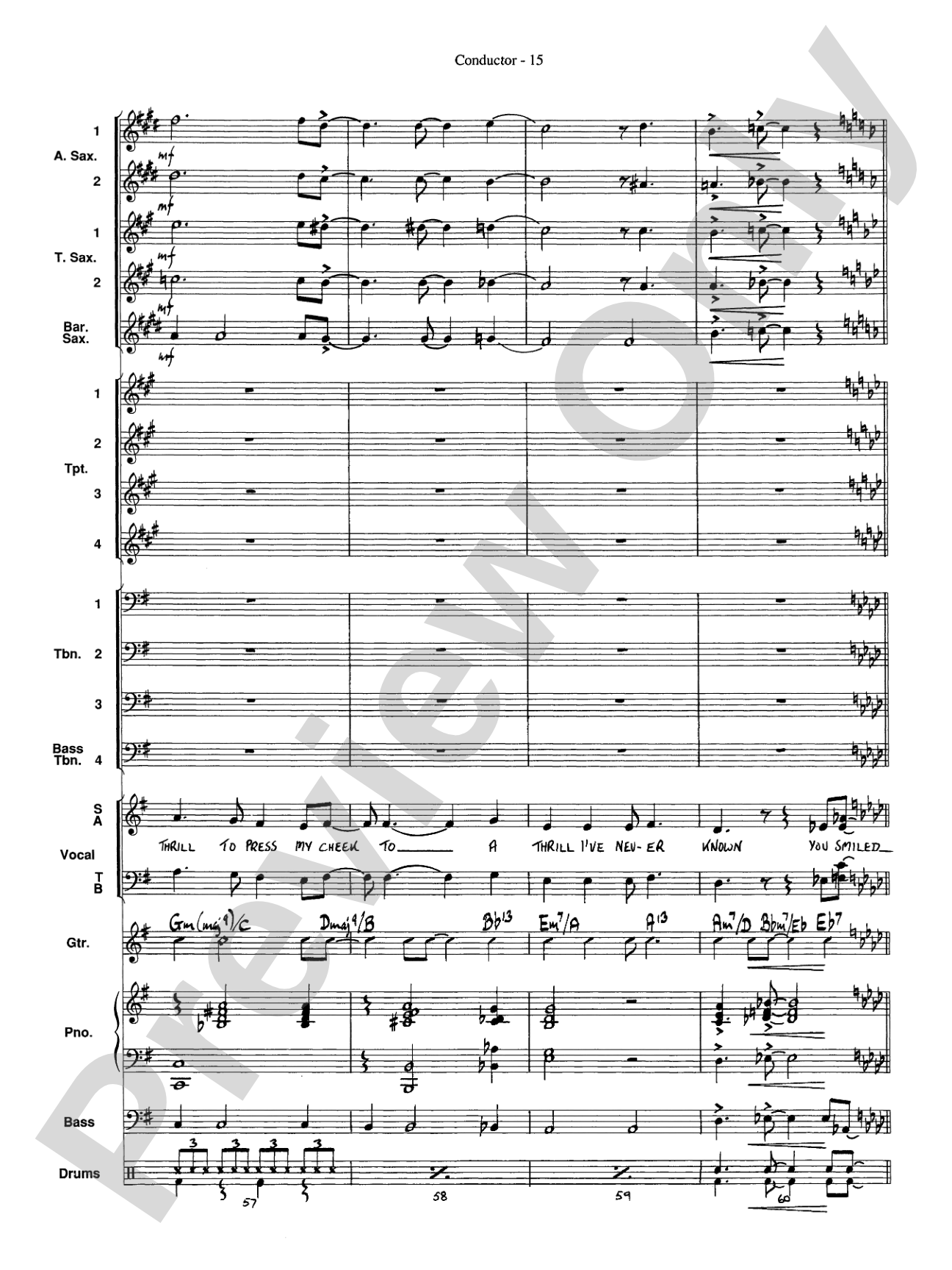
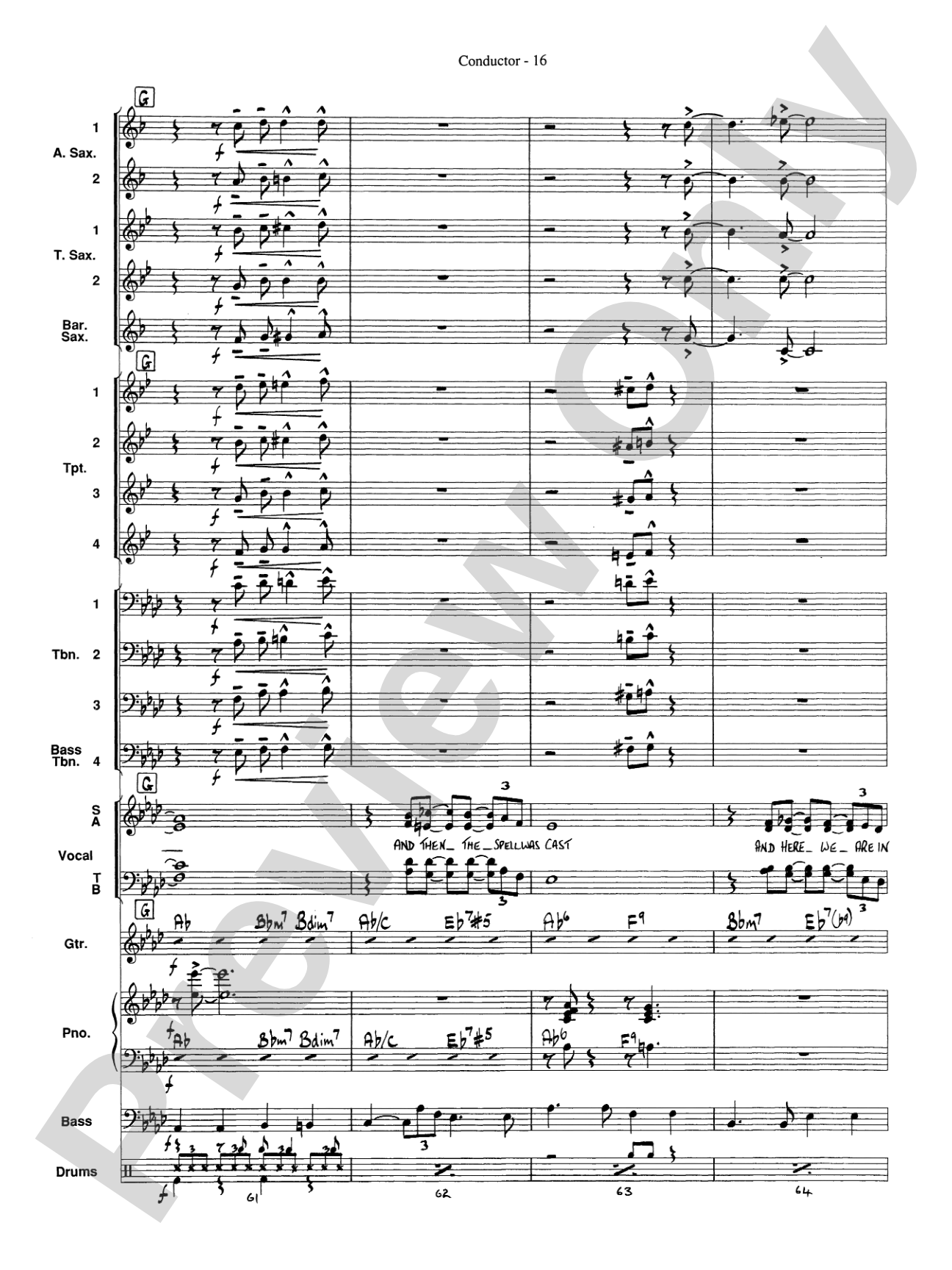
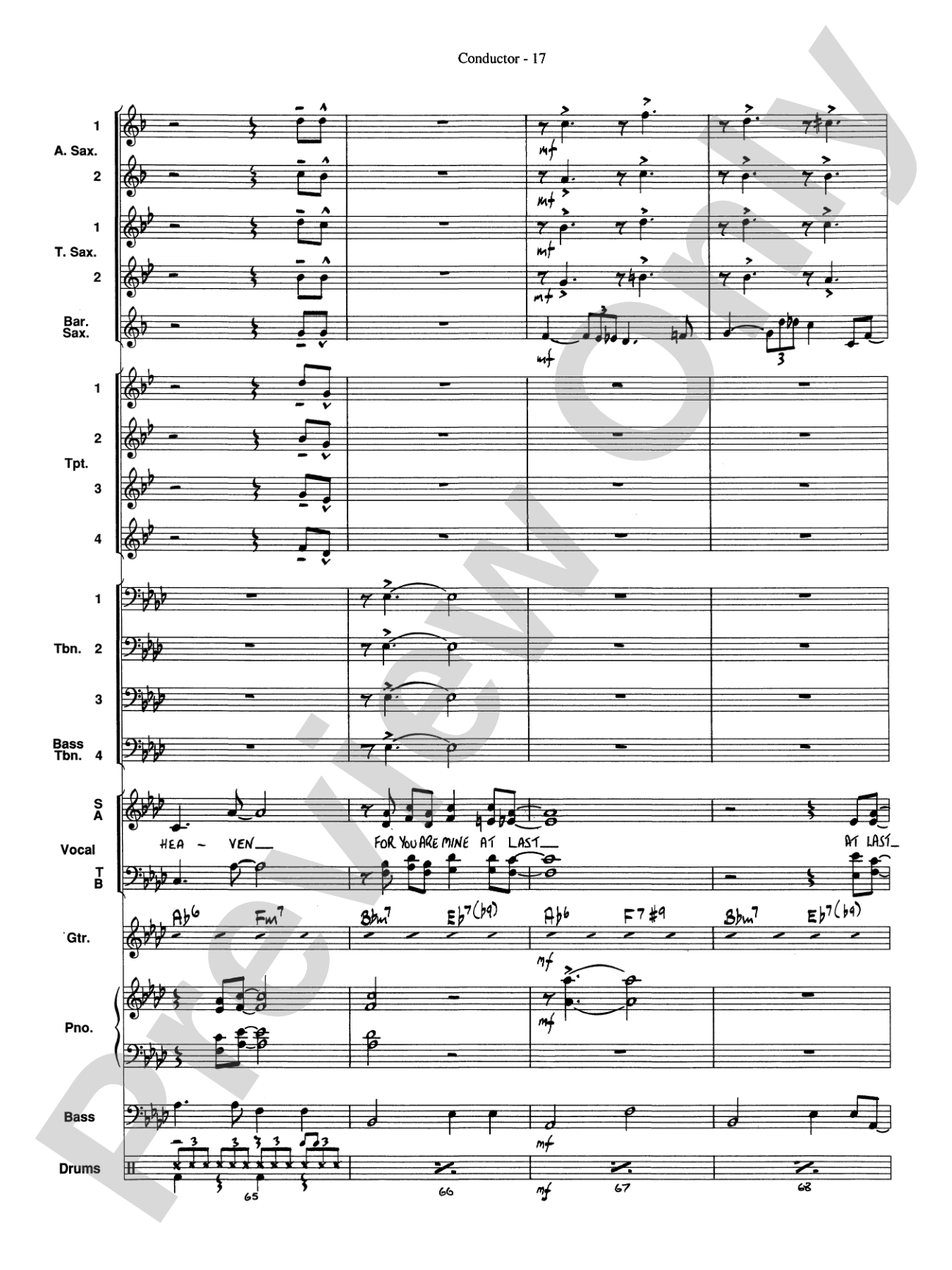
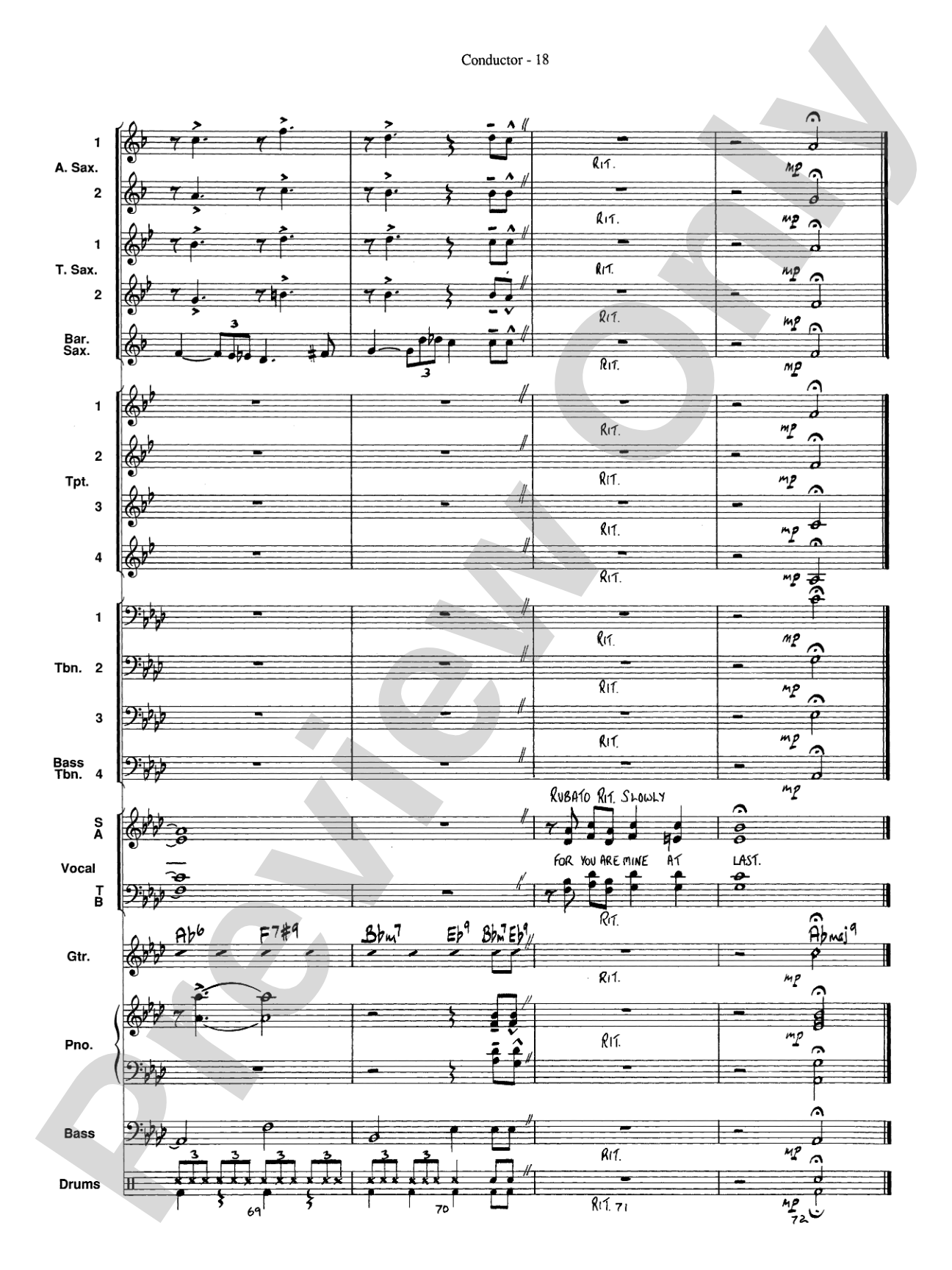


At Last: Vocal Solo with Jazz Ensemble Conductor Score & Parts
Vocal Feature
By Harry Warren / arr. Mike Carubia
Grade: 4 (Medium Advanced / Difficult)
Item: 00-PK-0002544

$62.00
One moment…
Related Items
At Last: Vocal Solo with Jazz Ensemble Conductor Score & Parts |
$62.00
|
View |
Description
This is a classic tune in a classic arrangement for four vocalists with jazz band. In the style of the great big bands, this chart contains lush, thick four-part vocal writing, but it is very singable. There is a great 'scat' section in the tune, and solo opportunities for the tenor and alto singers. AT Last is the perfect vehicle for your best singers and jazz ensemble! (Vocal Solo range: G below staff to 3rd space C, treble clef) (3:10)


Don't just read it, hear it, play along with it, and watch your students grow with it. In MakeMusic Cloud, At Last: Vocal Solo with Jazz Ensemble Conductor Score & Parts comes alive with professional accompaniment, adjustable tempo, and built-in practice tools that turn solo practice into real progress.
Open in the Player
Jump straight in and assign it today.
Start Your Free Trial
Open this title and explore the full library in minutes.
Sample Audio
No sample audio found.
Sample Video
No sample videos found.
Additional Details
Series:
Jazz Vocal Series
Publisher:
Alfred Music
Page Count:
110
SKU:
00-PK-0002544
More about this title
About the Arranger: Mike Carubia
Mike Carubia has built a reputation as an arranger who understands what works on the jazz stage. His arrangements for vocal ensembles balance the sophistication of big band writing with the practical demands of high school and college singers, prioritizing singability without sacrificing musicianship.
Why we love this
Carubia's voicing here strikes the rare balance between sophistication and singability. Four-part harmony sits naturally in the vocal ranges, and the scat section gives your ensemble a chance to demonstrate both technical chops and personality in a way that feels organic to the style rather than tacked on.
What to expect
Luxurious and swinging. The four-part writing envelops the melody in warm, sophisticated harmonies that evoke the golden age of big band arranging, while the scat breaks inject playfulness and contemporary energy. It's romantic and confident at once.
Who it's for
Your strongest vocal soloists paired with a rehearsed jazz ensemble. The range and harmonic density require singers comfortable with blend and intonation in close harmony, and the solo opportunities demand singers who can navigate both lyrical singing and rhythmic scat vocabulary. This is a feature for a program where vocals and jazz ensemble are both at home.
How to get the most out of it
- Balance the four-voice blend during the thick harmonic sections by bringing the tenor and alto soloists slightly forward when they have featured lines, then receding them back into the ensemble texture for full-band moments.
- The scat section benefits from tight rhythmic alignment with the rhythm section. Have your singers listen closely to the drums and bass during rehearsal; mark any tricky syncopations in their parts so precision lands without overthinking.
- In the lower range (G below the staff), support the tone with breath control rather than pushing harder. These notes carry the foundation of the voicing and need clarity, not volume.
- Use the conductor score to shape ensemble entrances and cutoffs cleanly. With four vocalists and a full jazz band, crisp articulation of text and releases keeps the sound unified.
How to use it
Slot this into a concert that celebrates your jazz ensemble's depth. It works equally well as a feature for a pops program or as the centerpiece of a jazz-focused concert, and the extended runtime (3:10) makes it substantial enough to stand alone as a major work rather than a filler number.
Skills your students will build
- Reading and singing four-part closed harmony with accurate intonation
- Balancing solo lines against ensemble texture
- Rhythmic precision in scat singing and syncopated passages
- Blend and blend adjustment within a vocal quartet
- Stylistic interpretation of jazz phrasing and articulation
- Ensemble coordination between vocalists and instrumental rhythm section