
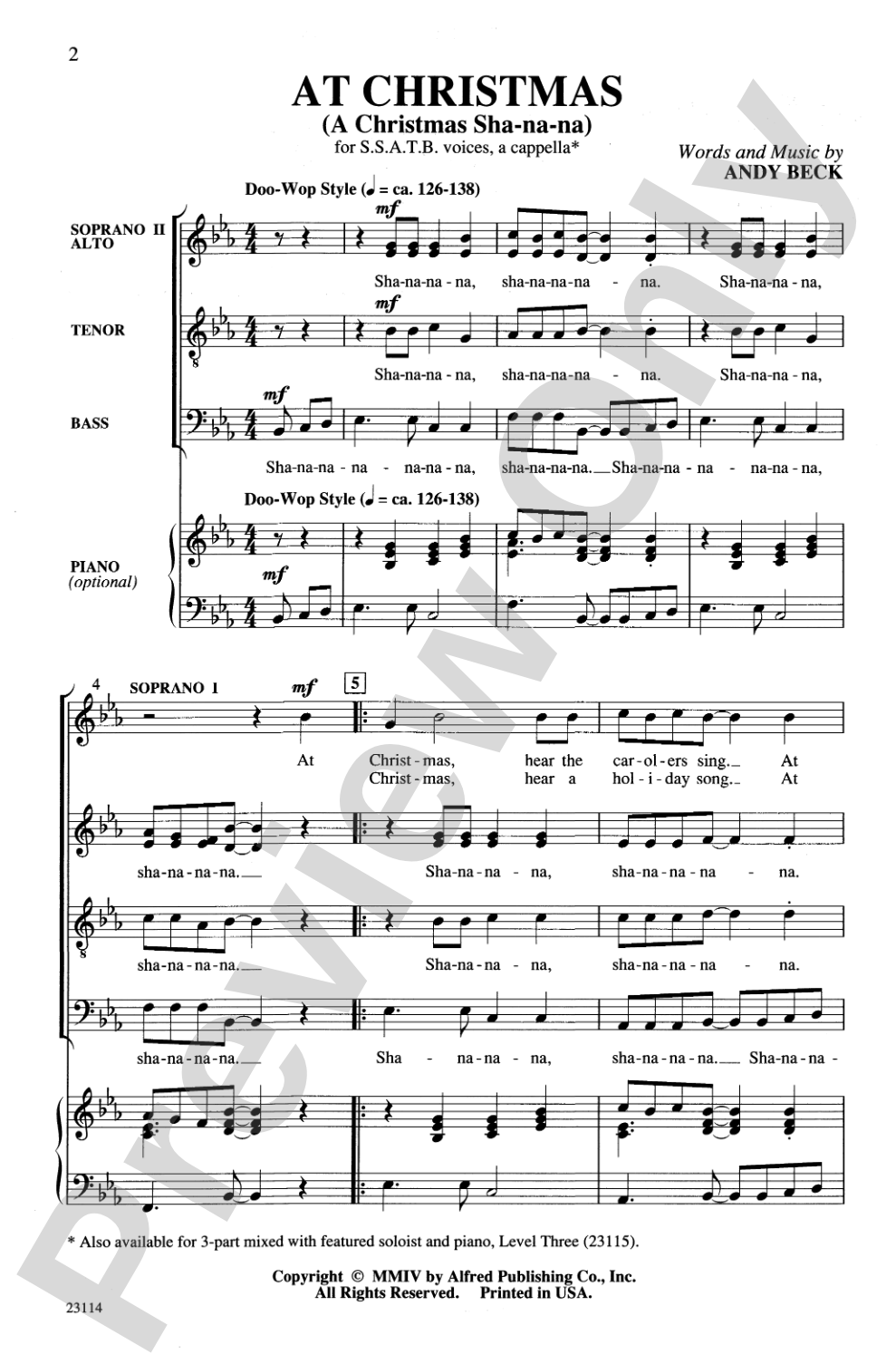
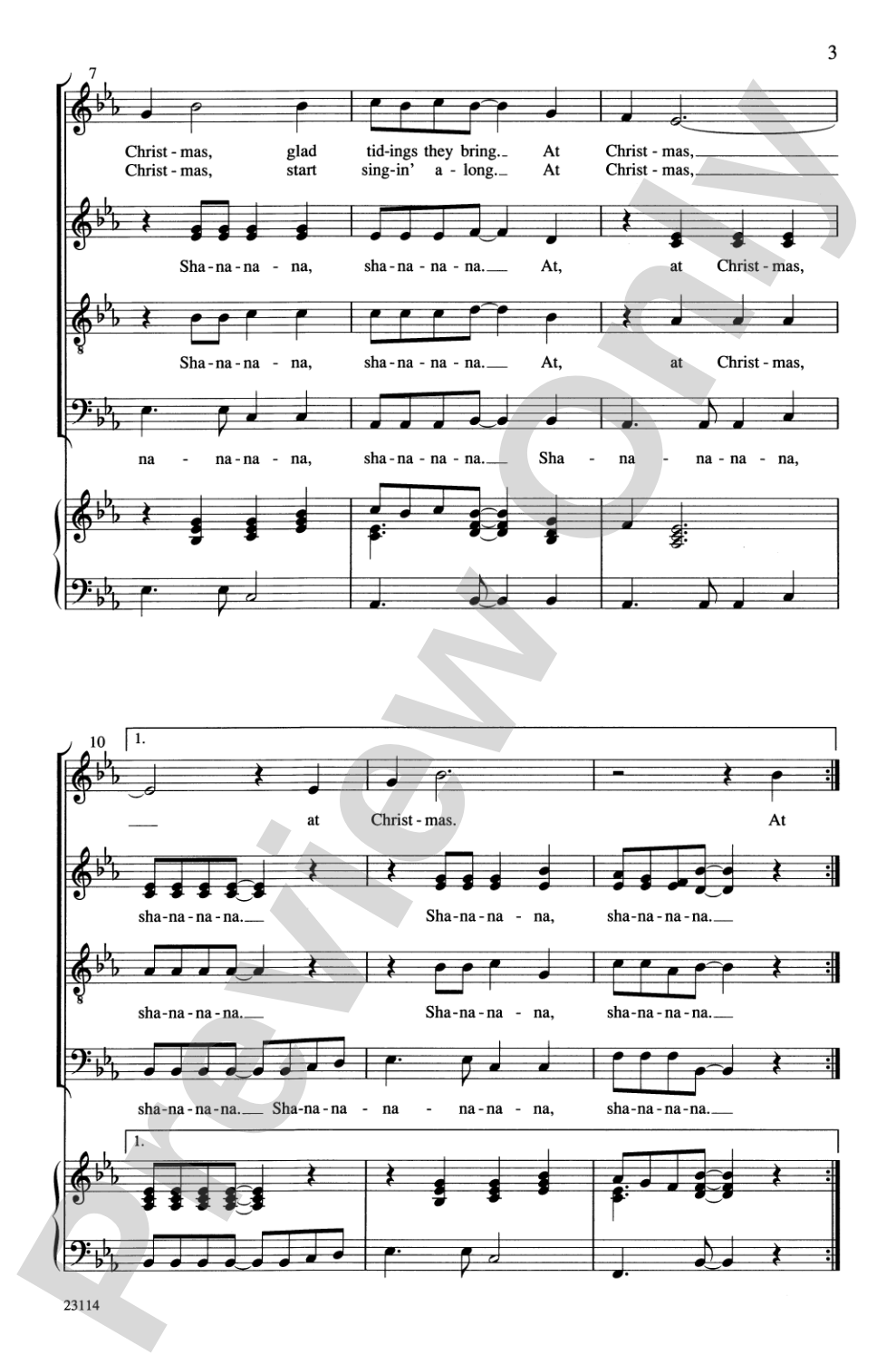
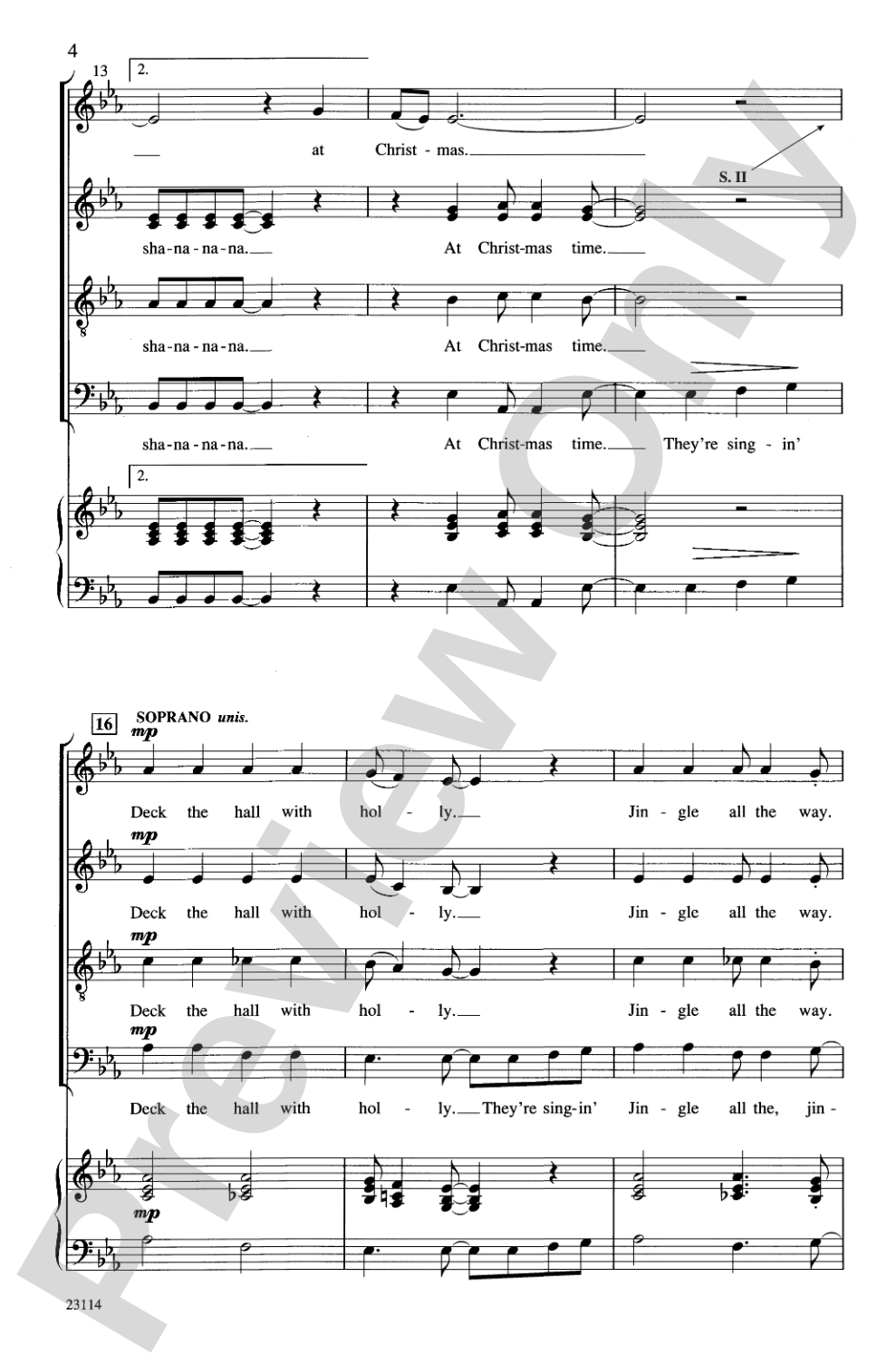

At Christmas (A Christmas Sha-na-na): SSATB, a cappella Choral Octavo
(A Christmas Sha-na-na)
Music by Andy Beck
Item: 00-PO-0004330
$2.25
Minimum order quantity: 20 copies
Pickup currently not available
Description
It's a blast from the past when your choir sings this fun-filled holiday original by Andy Beck. Your singers and audience will love snapping their fingers and tapping their toes to this do-wop style tune backed up with traditional 50s harmonies and classic "sha-na-nas." And don't miss the clever use of quotes from several popular holiday songs throughout! It's an easy-to-learn a cappella novelty in the SSATB voicing, or feature a crooning soloist with piano accompaniment and back-up singers in the 3-part.


At Christmas (A Christmas Sha-na-na): SSATB, a cappella Choral Octavo isn't in MakeMusic Cloud just yet...but it could be. Let us know you'd like to see it, and you'll help shape what comes next. In the meantime, start a free trial and dive into thousands of interactive titles your students can play along with today.
Request This Title
Tell us you want it.
Start Your Free Trial
Explore everything that's ready to play right now.
Sample Audio
1
Audio File
--:--
0:00
0:00
Sample Video
No sample videos found.
Additional Details
Series:
Alfred Archive Edition: Alfred Choral Designs
Publisher:
Alfred Music
Page Count:
12
SKU:
00-PO-0004330
More about this title
About the Composer: Andy Beck

Andy Beck leads choral publications at Alfred Music, where he oversees a catalog of over 450 choral works, vocal resources, and children's musicals. His compositions and arrangements span everything from secular novelties to serious concert pieces, and his vocal pedagogy resources including Sing at First Sight, Foundations in Choral Sight Singing, and Vocalize! have become standards in choral classrooms. A trained tenor with degrees in Music Education from Ithaca College and Northwest Missouri State University, Beck brings both compositional skill and classroom experience to his work.
Beyond his publishing role, Beck is an active clinician, guest conductor, and adjudicator who works regularly with honor choirs and all-state groups throughout the Southeast and beyond. He performs with the North Carolina Master Chorale Chamber Choir and has contributed studio vocals to Alfred Music recordings since 1992. His dual commitment to composition and music education shapes every piece he writes, making his work immediately practical for directors and engaging for singers.
Why we love this
Beck captures the playful energy of 1950s vocal groups without a hint of pastiche or condescension. The harmonic sophistication beneath the novelty element keeps singers engaged musically while the "sha-na-na" hooks and finger-snapping rhythms guarantee an audience that leans forward in their seats. Programming this creates a palate-cleansing moment that still feels substantial enough to belong in a full concert.
What to expect
Stepping into a time capsule of vocal harmony from an era when choirs gathered on street corners and makeshift stages to trade harmonies for the pure pleasure of it. The piece bounces along with infectious energy, punctuated by clever references to beloved holiday songs that spark recognition without derailing the momentum. There's a wink in every measure, but the musicianship underneath keeps the whole thing from feeling cheap.
Who it's for
Directors seeking a crowd-pleasing piece that doesn't sacrifice musicality will find this SSATB arrangement delivers on both counts. It works equally well for high school ensembles and community choirs looking to balance their holiday programming with something that brings genuine joy to both singers and listeners.
How to get the most out of it
- Balance the "sha-na-na" backup figures so they sit behind the melodic content rather than overwhelming it; these are seasoning, not the main course.
- Establish a steady groove first in rehearsal (the finger-snapping becomes your metronome), then layer in the harmonic movement so intonation stays locked.
- Find the spoken or rhythmic quality in the doo-wop syllables; they're not sung prettily but with the conversational snap of a 1950s street corner.
- Use the piano accompaniment option to support early learning of parts, but pull away gradually so singers own the independent a cappella voicing by performance.
How to use it
Place this after something traditionally reverent to signal a tonal shift in your concert, or use it as a penultimate piece before a grand finale to leave the audience smiling. It's particularly effective in mixed programs where you want to show the full range of your choir's personality and capabilities beyond classical repertoire.
Skills your students will build
- Maintaining rhythmic independence in a cappella settings
- Balancing soloistic melody against harmonic backup figures
- Understanding and performing period-appropriate vocal style (doo-wop, 1950s harmony conventions)
- Intonation stability in extended chord progressions without instrumental support
- Rhythmic precision in syncopated and pop-influenced contexts