
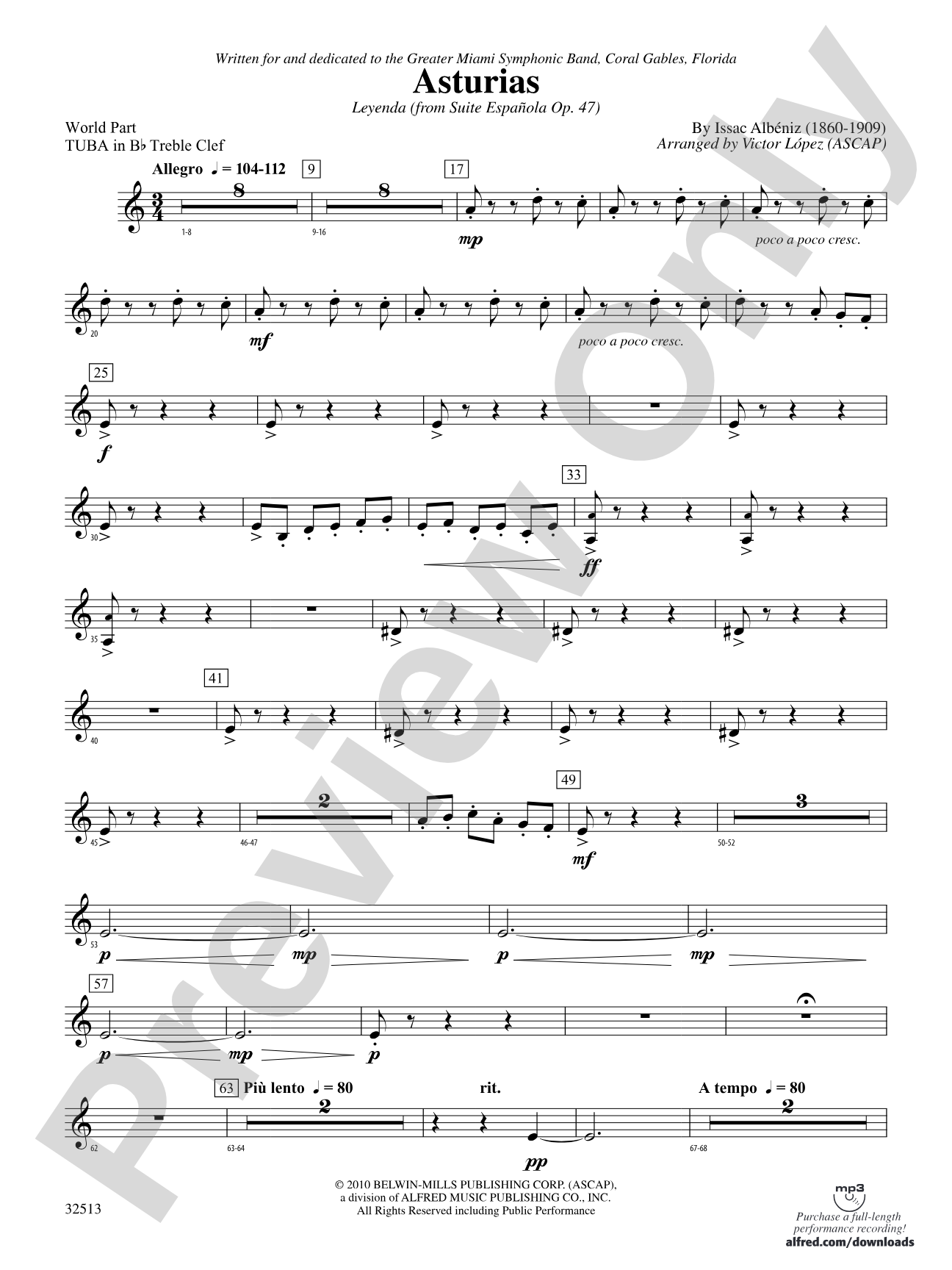
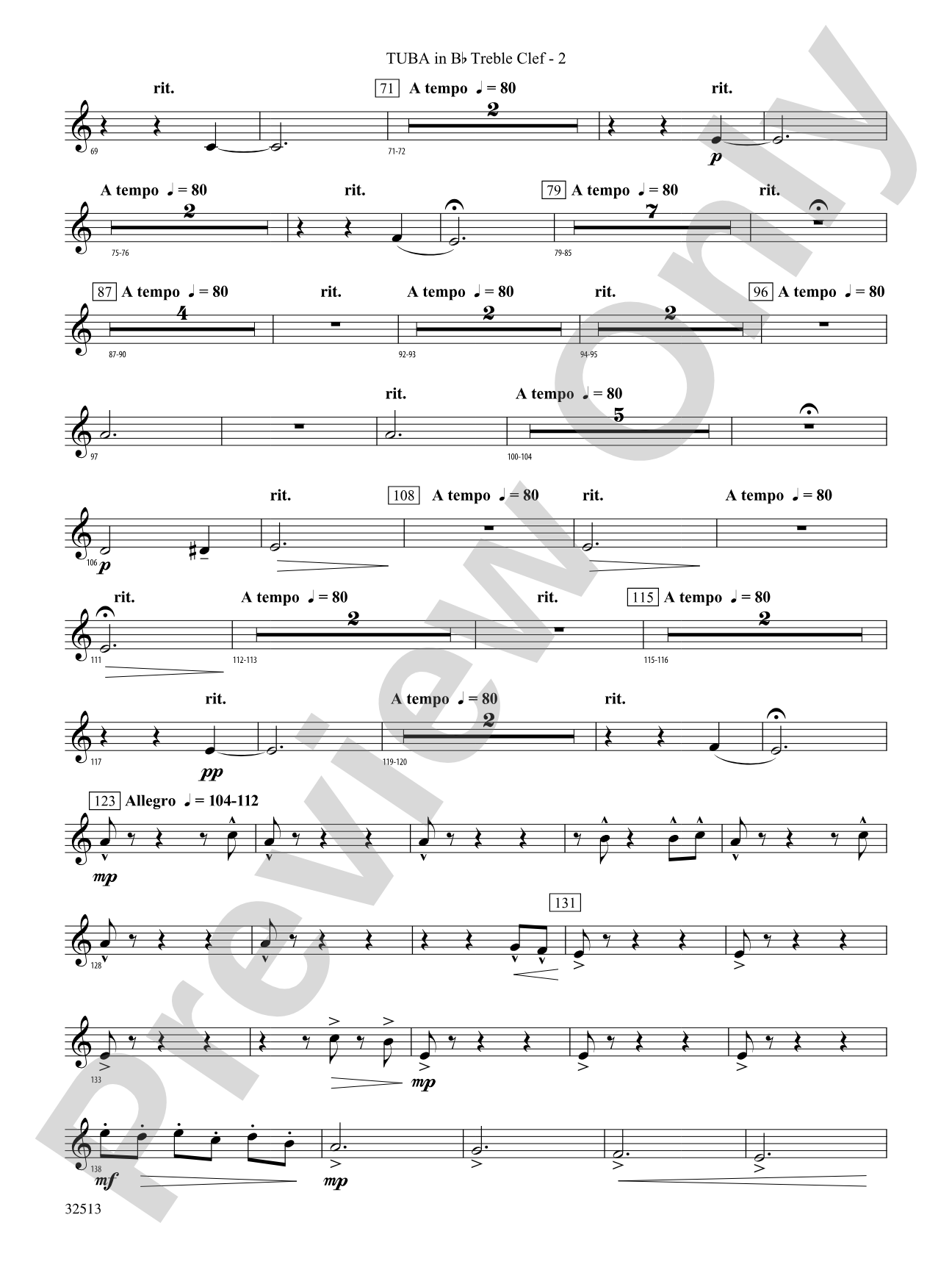
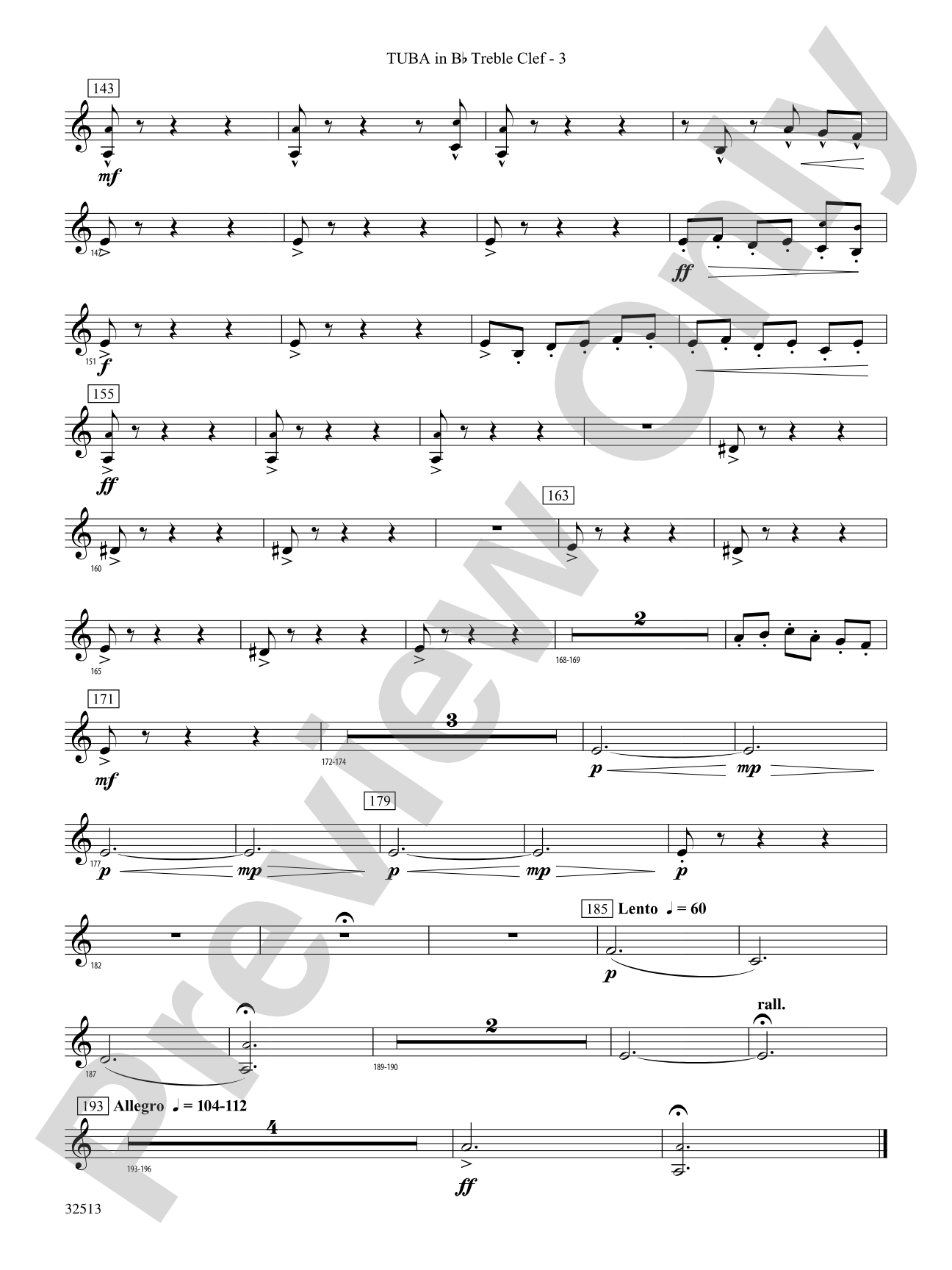

Asturias: (wp) B-flat Tuba T.C.
"Leyenda" from Suite Española, Op. 47
By Isaac Albéniz / arr. Victor López
Grade: 3.5 (Medium Easy to Medium)
Item: 00-PC-0014390_wpTBBTC
$5.99
Pickup currently not available
Description
This transcription of Asturias from Issac Albéniz's Suite Española, Op. 47 brings new life to the work originally composed for piano and is brilliantly colored, filled with suggestive harmonies and complex textures, and richly evocative. (6:45)


Don't just read it, hear it, play along with it, and watch your students grow with it. In MakeMusic Cloud, Asturias: (wp) B-flat Tuba T.C. comes alive with professional accompaniment, adjustable tempo, and built-in practice tools that turn solo practice into real progress.
Open in the Player
Jump straight in and assign it today.
Start Your Free Trial
Open this title and explore the full library in minutes.
Sample Audio
1
Audio File
--:--
0:00
0:00
Sample Video
Additional Details
Series:
Belwin Concert Band
Publisher:
Alfred Music
Page Count:
260
SKU:
00-PC-0014390_wpTBBTC
More about this title
About the Composer: Isaac Albéniz
Isaac Albéniz (1860-1909) was a Spanish pianist and composer whose keyboard works defined the Romantic piano repertoire and established a distinctly Iberian voice in concert music. His Suite Española remains among the most beloved piano cycles in the classical canon, celebrated for its rich harmonic language and vivid evocation of Spanish regional character.
Albéniz's compositional legacy extends far beyond the piano. His works for orchestra and ensemble reveal a sophisticated understanding of orchestration and a gift for memorable melody grounded in folk idiom. He composed throughout his career while maintaining a demanding performance schedule, leaving behind a catalog that continues to inspire transcriptions and new arrangements across all instrumental genres.
Why we love this
Victor López's arrangement captures everything that makes Asturias a masterwork: the opening guitar-like figuration translates brilliantly to band sonority, the harmonic richness emerges through carefully voiced woodwind and brass combinations, and the sheer melodic invention sustains the full 6:45 duration without flagging. This is a piece that sounds far more complex than its 3.5 grade level suggests, offering conductors a work that impresses audiences and challenges players without requiring advanced technical facility.
What to expect
Asturias evokes the warmth and passion of Spanish guitar music, with its insistent rhythmic accompaniment and soaring melodic line creating an immediate sense of place and emotion. The harmonies shift unexpectedly, adding color and sophistication that keeps the ear engaged; this is romantic expression grounded in folk tradition but elevated through Albéniz's masterful compositional craft.
Who it's for
Concert bands at the high school and community college level will find this an ideal addition to repertoire that demands musicality and ensemble control without excessive technical demand. The piece rewards sections that can execute clean articulation and balance sustained textures, making it valuable for students developing their ability to listen and blend across the band.
How to get the most out of it
- Balance the opening ostinato figures across the ensemble so the accompaniment sits behind rather than overwhelming the melodic line; the guitar character depends on transparency.
- Attend closely to the sectional dynamic shifts. The swells and recessions in volume are not ornamental; they shape the emotional arc and prevent the piece from becoming static across its length.
- Shape the phrasing in two- and four-bar gestures rather than measure-by-measure. Albéniz's melodies breathe in complete musical sentences.
- The middle section invites a softer, more intimate approach. Resist the urge to match the opening's vigor; the contrast makes the return to full band sound even more striking.
How to use it
Program this as a centerpiece for a concert featuring works of the Romantic era or as a culturally diverse programming choice that opens conversation about how classical composers drew inspiration from folk music. Its six and three-quarter minute duration and approachable grade level make it suitable for contests or festival play without overshadowing lighter openers or serving as a grueling closer.
Skills your students will build
- Balance and blend across mixed ensemble textures
- Sustaining tone quality and intonation through longer phrases
- Responding to subtle dynamic shaping and sectional weight shifts
- Listening to and maintaining clear rhythmic ostinato patterns
- Interpreting Romantic-era harmonic language and rubato