Asturias: B-flat Bass Clarinet Sheet Music Preview

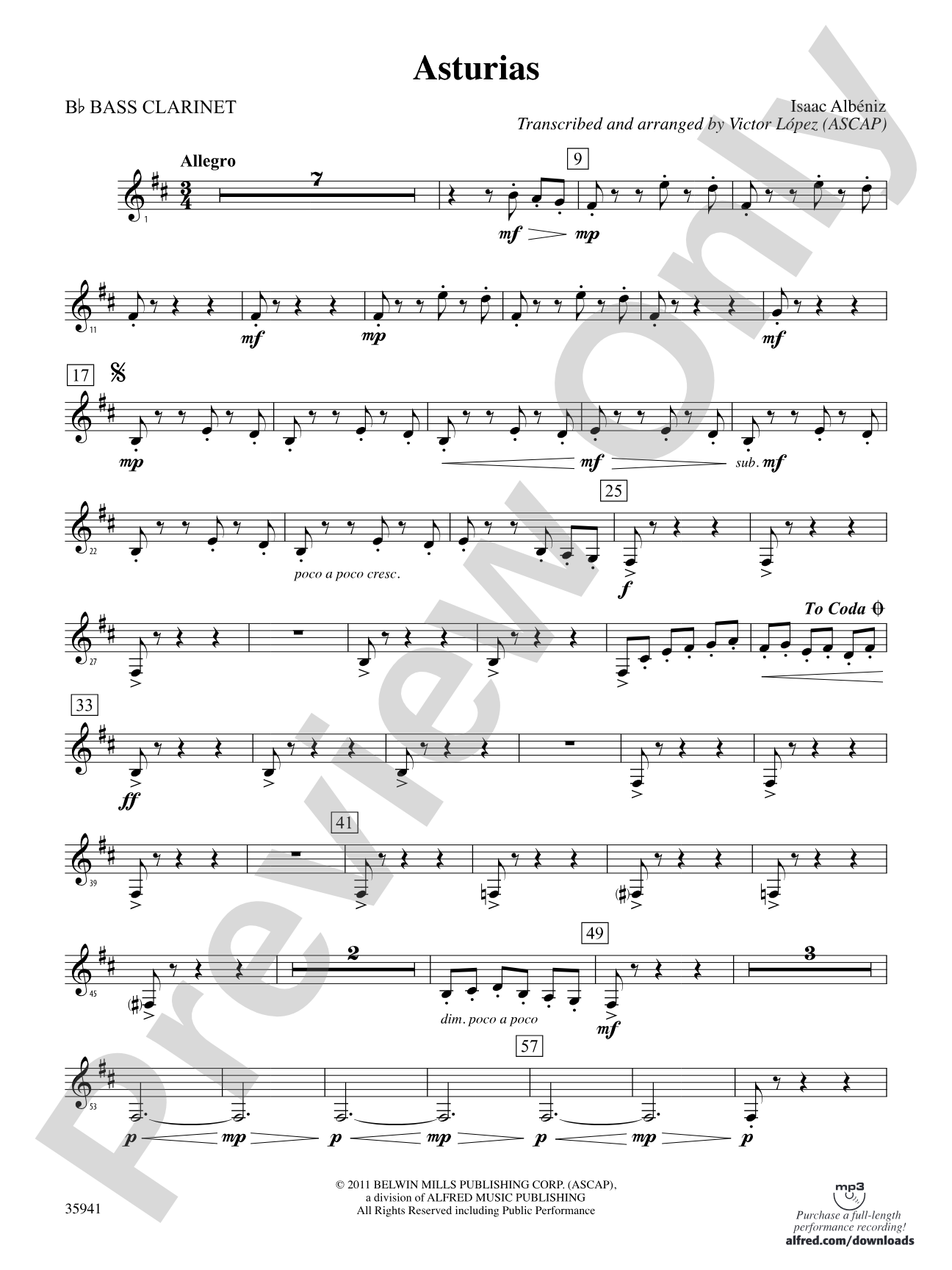
Asturias: B-flat Bass Clarinet

By Isaac Albéniz / transcr. and arr. Victor López

Grade: 4.5

Item: 00-PC-0015021_BC

Digital Download
$3.00
Description
Enjoy the intensity and intricate harmonies of this piece, in a shorter version that captures the spirit and feel of the original work. First written for piano but also a beloved part of the classical guitar repertoire, this piece is a wonderful addition to your orchestra library.

"This fun and exciting piece is suitable for festival competition; students would love to play it."
-Murilou Chilman, American String Teacher

Don't just read it, hear it, play along with it, and watch your students grow with it. In MakeMusic Cloud, Asturias: B-flat Bass Clarinet comes alive with professional accompaniment, adjustable tempo, and built-in practice tools that turn solo practice into real progress.

Sample Audio
0:00
0:00
Sample Video
Additional Details
Series: Belwin Concert Full Orchestra
Publisher: Alfred Music
Page Count: 228
SKU: 00-PC-0015021_BC
Instrumentation: full (vibraphone opt marimba, bells, timp, snare, bass, tamb, triangle, crashcym, castinets, fingercym, pno)

More about this title

About the Composer: Isaac Albéniz

Isaac Albéniz (1860-1909) was a Spanish Romantic composer and virtuoso pianist whose works brilliantly captured the color and passion of Spanish music. His piano suite "Iberia" and other compositions drew deeply from Spanish folk traditions, flamenco rhythms, and regional character, establishing him as a major voice in nationalist music of the late 19th century.

Albéniz's music translates remarkably well to ensemble settings. His harmonic language and orchestral sensibility have inspired numerous arrangements, allowing conductors and students to experience the drama and technical brilliance of his writing beyond the solo piano tradition.

Why we love this

Victor López's arrangement preserves the unmistakable character of Albéniz's original while making it accessible to a full orchestra at Grade 4.5. The piece delivers the excitement and sophisticated harmonies that students and audiences crave, with percussion writing that brings Spanish color to life without overshadowing the melodic and harmonic core.

What to expect

Asturias pulses with Spanish passion and rhythmic vitality. The piece balances lyrical melodic passages with driving harmonic momentum, creating a sense of forward motion that feels both elegant and exhilarating. Its combination of flamenco-inspired color and Romantic emotional depth makes it feel both exciting and sophisticated.

Who it's for

This score and parts set is ideal for conductors programming a full orchestra at the upper-intermediate level who want a crowd-pleasing masterwork arrangement with real substance. Students benefit from playing music that sounds and feels concert-ready while still offering reasonable technical demands.

How to get the most out of it

  • Balance the main theme between strings and woodwinds so neither section drowns out the other; the piece's power comes from clarity, not volume.
  • Use the percussion section deliberately. Castanets, triangle, and tambourine are essential to the Spanish flavor; rehearse these parts separately until they lock with the harmony.
  • Shape phrases with attention to Albéniz's Romantic sensibility. This is not a folk tune; it's a concert piece built on lyrical, singing lines that demand expressive rubato and dynamic shaping.
  • Coordinate the vibraphone (or optional marimba) carefully with the harmonic progression so it enhances rather than muddies the orchestral color.

How to use it

Program this as a contest or festival centerpiece where you need a work that demonstrates musicality, orchestration skill, and interpretive maturity without requiring advanced virtuosity. It also works beautifully on a concert program featuring Spanish or Latin repertoire, or as a brilliant finale that leaves audiences energized.

Skills your students will build

  • Balancing texture across multiple instrumental families
  • Playing with Spanish rhythmic vocabulary and character
  • Ensemble coordination in pieces with complex percussion parts
  • Phrasing and expressive interpretation in a Romantic harmonic language
  • Responding to orchestration that emphasizes color and timbral contrast

You May Also Like