
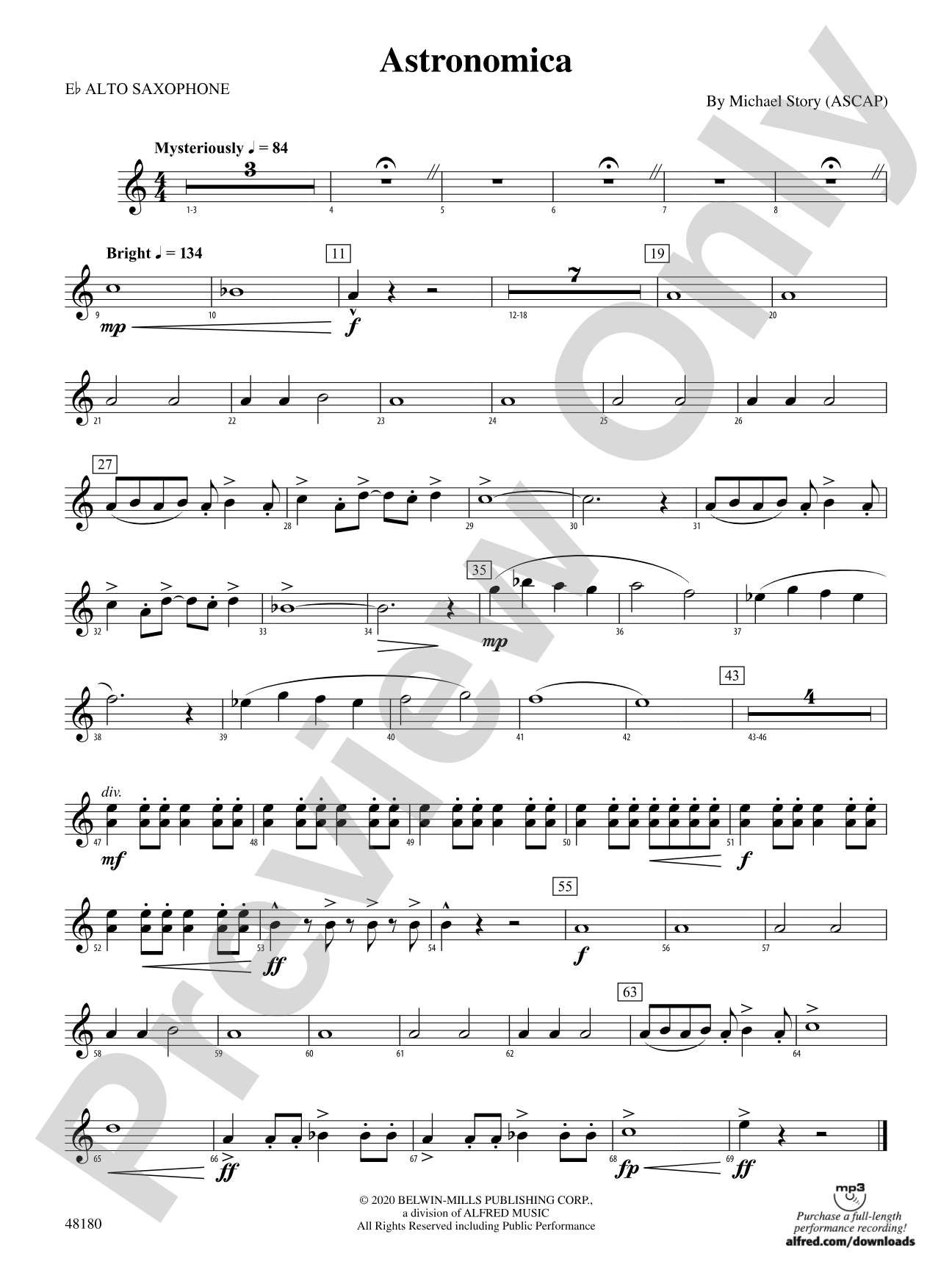

Astronomica: E-flat Alto Saxophone
By Michael Story
Grade: 2 (Medium Easy)
Item: 00-PC-0018549_AX1
$3.00
Pickup currently not available
Description
Musically depicting the earliest recorded writings on astrology, this original composition begins with a hauntingly beautiful introduction transitioning to a forceful exploration with a dynamic conclusion. Enjoy this astrological journey that reinforces fermatas, caesuras, and contrasting articulations. (2:30) This title is available in MakeMusic Cloud.


Don't just read it, hear it, play along with it, and watch your students grow with it. In MakeMusic Cloud, Astronomica: E-flat Alto Saxophone comes alive with professional accompaniment, adjustable tempo, and built-in practice tools that turn solo practice into real progress.
Open in the Player
Jump straight in and assign it today.
Start Your Free Trial
Open this title and explore the full library in minutes.
Sample Audio
1
Audio File
--:--
0:00
0:00
Sample Video
Additional Details
Series:
Belwin Young Band
Publisher:
Alfred Music
Page Count:
126
SKU:
00-PC-0018549_AX1
More about this title
About the Composer: Michael Story
Michael Story is a prolific composer and arranger whose works have become standard repertoire in school bands across North America. His compositions consistently balance musical sophistication with accessibility, making him a trusted voice for educators seeking material that challenges students without overwhelming them.
Story's output spans concert band, jazz ensemble, and wind ensemble literature. His ability to craft engaging narratives through orchestration—whether depicting celestial phenomena or historical events—has earned him recognition among band directors who value compositions that engage both performers and audiences.
Why we love this
This piece gives Grade 2 bands a genuine concert work with structural sophistication that transcends its difficulty level. The journey from ethereal introduction through dynamic exploration feels substantive rather than didactic, and the specific focus on fermatas and caesuras means you're not just playing a piece—you're building rehearsal language and ensemble control that transfers directly to other repertoire.
What to expect
The piece unfolds like an unfolding sky map. Opening with delicate, floating textures that feel almost suspended in time, it gradually expands into bold orchestration and decisive rhythmic drive. The journey feels intentional rather than random, creating a satisfying arc from mystery to clarity.
Who it's for
Concert bands at the upper end of Grade 2 or lower Grade 3 looking for a piece with genuine musical substance. Directors seeking material for contests, festivals, or concert programs will find this delivers interpretive depth without requiring advanced technical facility.
How to get the most out of it
- Shape the opening introduction with deliberate dynamic restraint; the contrast lands harder when the fortissimo entrance truly surprises. Resist the urge to creep up in volume during the quiet passage.
- Mark fermatas clearly in rehearsal and establish a consistent release gesture. These moments frame the piece structurally, so precision here elevates the entire performance.
- Layer your articulation work by section. Have brass lock in their marked articulations first, then add woodwind refinement on top. Contrasting articulations only register when each group owns theirs completely.
- Use the dynamic arch during the forceful middle section to maintain forward momentum. Young bands often plateau on sustained loud passages; slight dynamic shapes prevent fatigue and hold attention.
How to use it
This works beautifully as a centerpiece for a thematic concert on science or history, or as a confident opener that establishes your band's musicality early. At 2:30, it's substantial enough to anchor a set without overwhelming a program, and the distinct sections allow it to stand alongside both lyrical and energetic pieces without tonal repetition.
Skills your students will build
- Controlling fermata releases with precision
- Balancing contrasting articulations across sections
- Managing dynamic range and ensemble balance through extended crescendi
- Responding to caesura cues and holding releases
- Sustaining musical intensity during static harmony
- Coordinate rapid tonal shifts between introduction and main section