
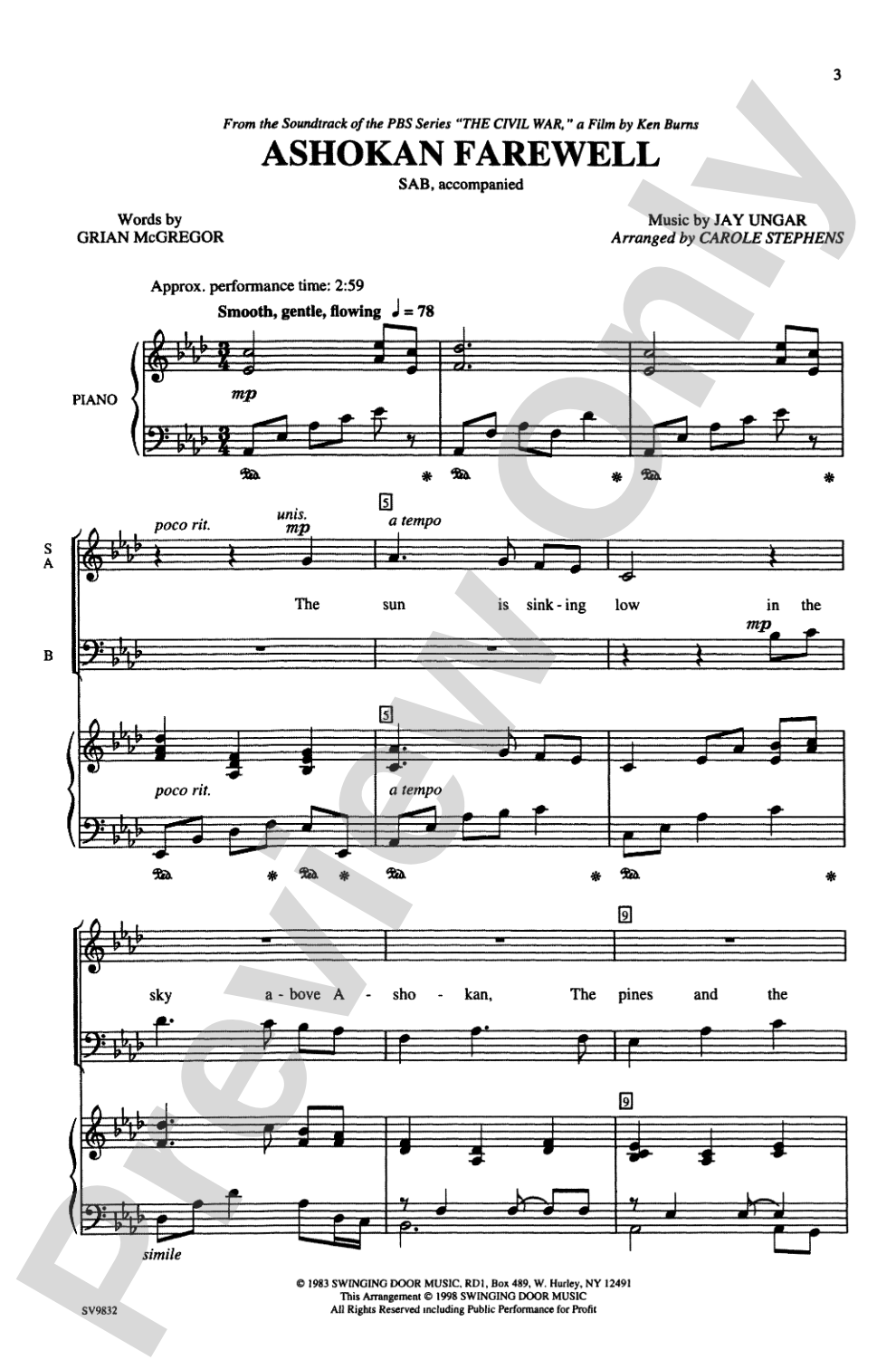
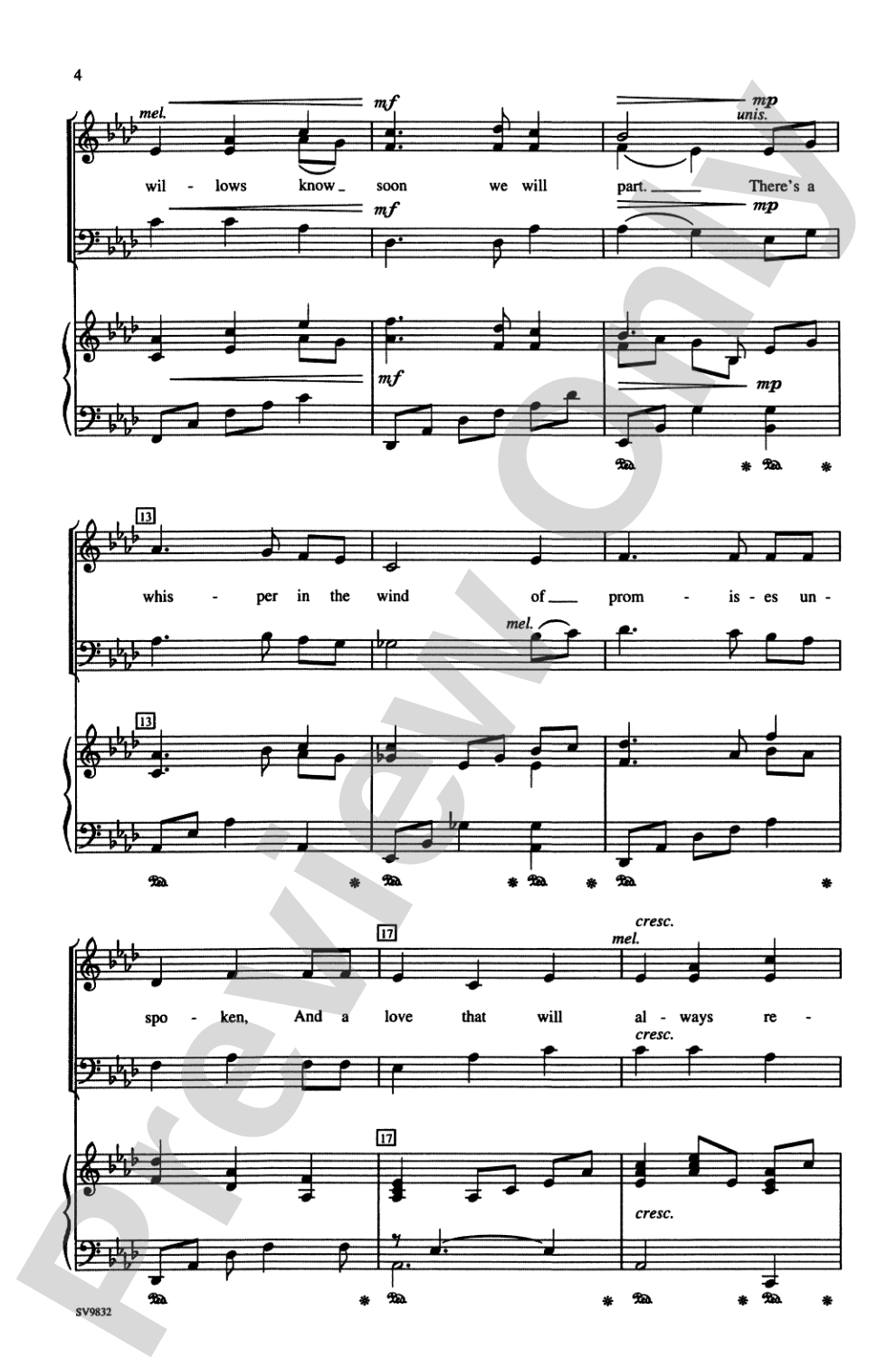

Ashokan Farewell (from "The Civil War," a Film by Ken Burns): SAB Choral Octavo
From the Soundtrack of the PBS Series "The Civil War," a Film by Ken Burns
Words by Grian McGregor, music by Jay Ungar / arr. Carole Stephens
Item: 00-PO-0003547

$2.00
Minimum order quantity: 20 copies
One moment…
Description
Almost everyone recognizes the superb melody of Jay Ungar's 'Ashokan Farewell' that was featured so prominently in Ken Burns' television film 'The Civil War'. Now, finally, a choral setting comes alive with lyrics that skillfully paint a beautiful picture of Americana. This is music that will warm the hearts of choirs and audiences everywhere! This title is available in Music Prodigy.


Don't just read it, hear it, play along with it, and watch your students grow with it. In MakeMusic Cloud, Ashokan Farewell (from "The Civil War," a Film by Ken Burns): SAB Choral Octavo comes alive with professional accompaniment, adjustable tempo, and built-in practice tools that turn solo practice into real progress.
Open in the Player
Jump straight in and assign it today.
Start Your Free Trial
Open this title and explore the full library in minutes.
Sample Audio
1
Audio File
--:--
0:00
0:00
Sample Video
No sample videos found.
Additional Details
Publisher:
Alfred Music
Page Count:
12
SKU:
00-PO-0003547
More about this title
About the Composer: Jay Ungar
Jay Ungar is an American fiddler and composer whose instrumental work has shaped contemporary folk and Americana music. His composition 'Ashokan Farewell' gained widespread recognition through Ken Burns' 1990 documentary series 'The Civil War,' where its haunting melody became synonymous with the historical narrative and emotional arc of the film.
Why we love this
Carole Stephens' choral arrangement transforms an instrumental icon into something choirs can claim as their own. The addition of lyrics grounds the familiar melody in Americana storytelling, giving singers a text that deepens connection to the music rather than simply vocalizing an existing tune. This is repertoire that resonates immediately with audiences while offering choirs genuine artistic material to explore.
What to expect
A tender, contemplative hymn to American history and personal remembrance. The melody carries the ache of farewell alongside quiet dignity, inviting singers and listeners into a shared moment of reflection without sentimentality or bombast.
Who it's for
Choirs at the intermediate level and above will find this accessible yet musically satisfying. The SAB voicing makes it viable for mixed choirs with uneven voice distributions, and the fame of the melody means singers often arrive already emotionally invested in the piece.
How to get the most out of it
- Honor the simplicity of the melody. The power of this tune comes from its directness, so resist the urge to oversaturate with vibrato or excessive expression. Let the words and Ungar's original contour do the work.
- Balance the three voice parts carefully in passages where they move independently. SAB voicings can muddy if the soprano line isn't clear enough to anchor the ear, especially in a slower, reflective piece like this.
- Use the recorded accompaniment to establish tempo and harmonic context during early rehearsals, but encourage singers to internalize the emotional pacing themselves so the performance never feels locked to a track.
- Shape the lyrics with awareness of their narrative arc. These words tell a story about loss and memory; phrasing should reflect the weight of the text, not just the musical phrases.
How to use it
This works powerfully as a concert centerpiece that bridges classical and popular contexts, or as part of a program exploring American themes and documentary music. Its cultural familiarity makes it an effective closer or a moving transition between contrasting repertoire.
Skills your students will build
- Sustaining legit, unforced tone across longer phrases
- Balancing individual voice parts in three-part writing
- Interpreting historical and emotional context through text
- Ensemble blend across varied dynamic ranges