
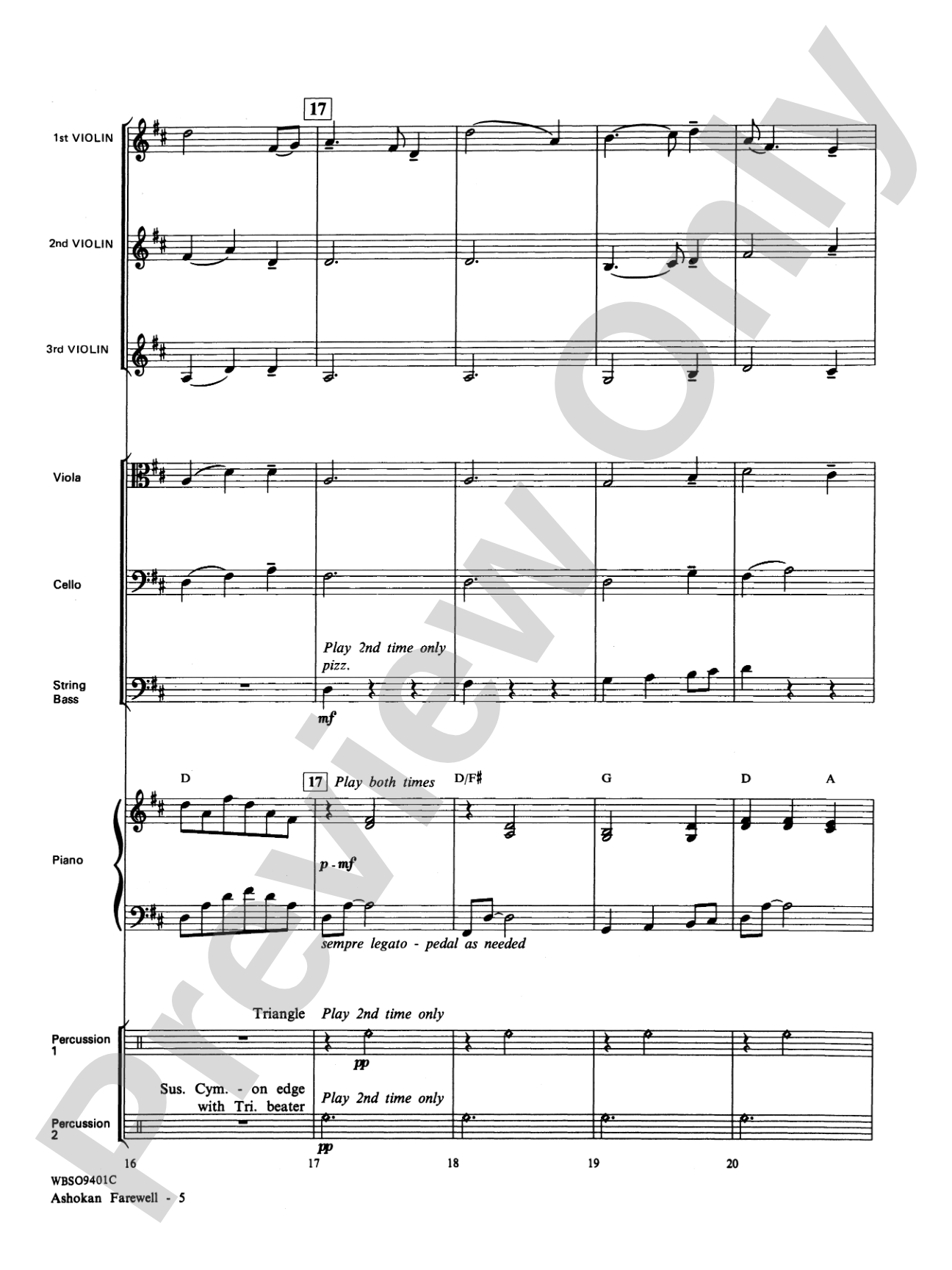
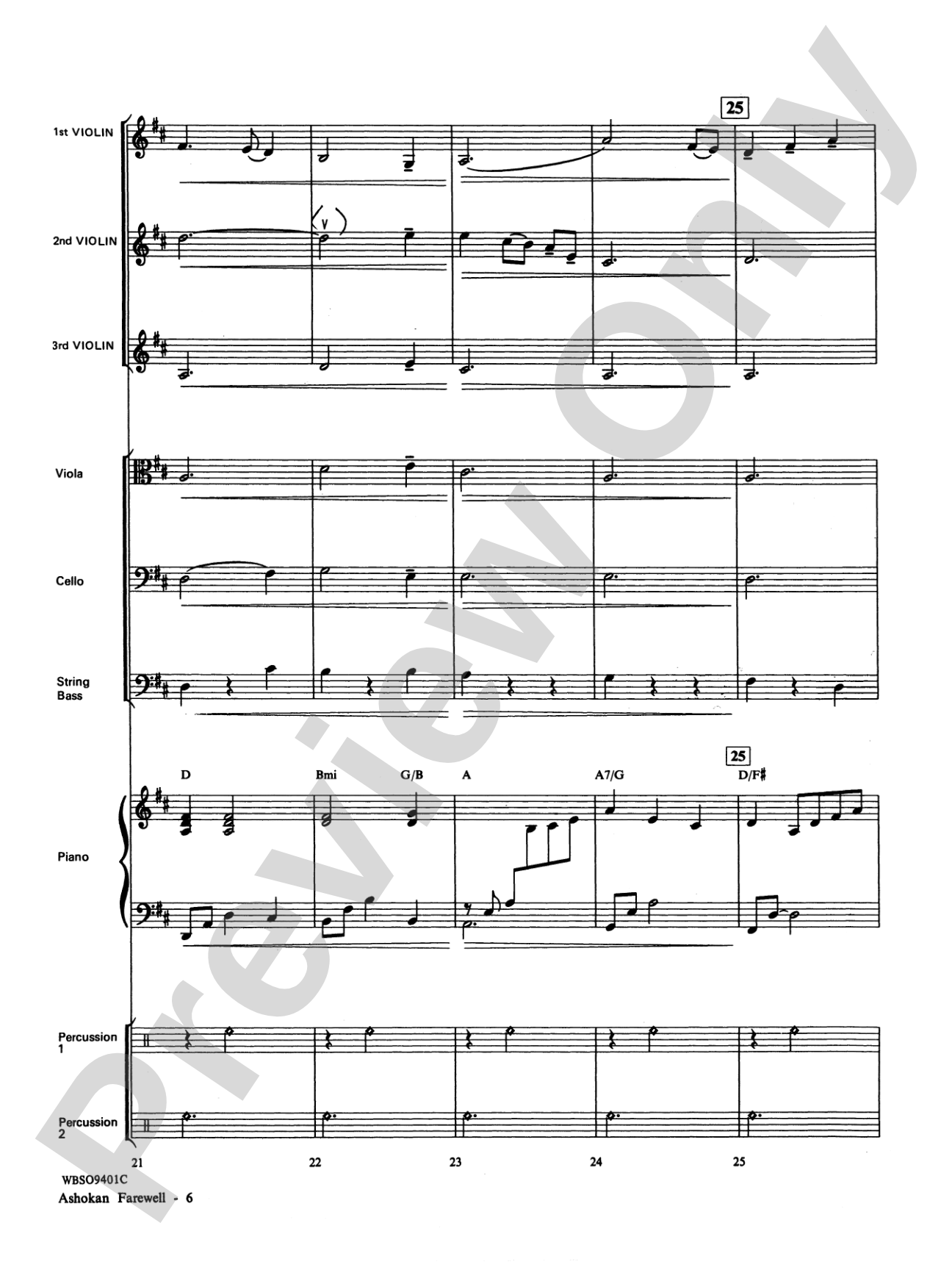
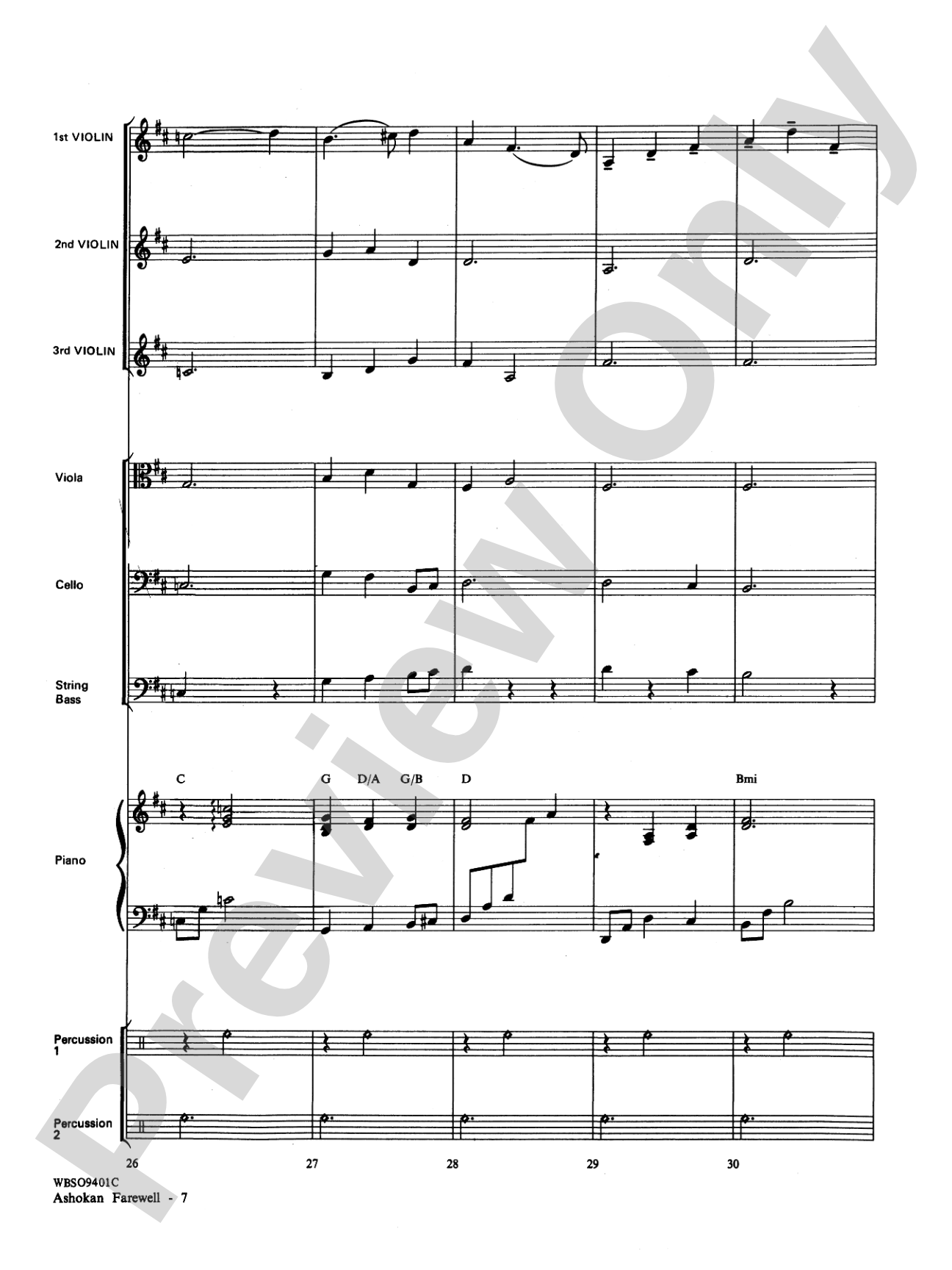
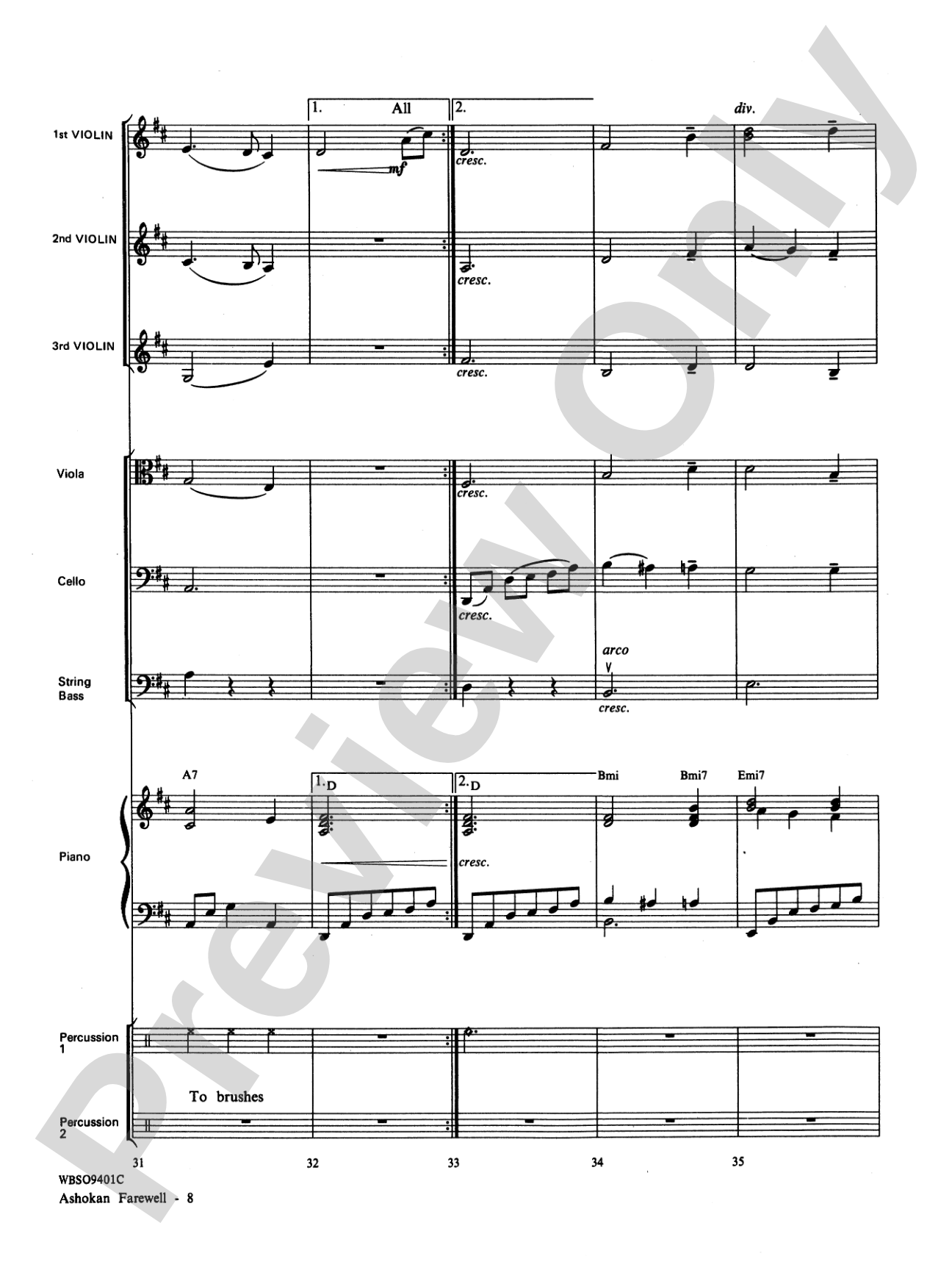
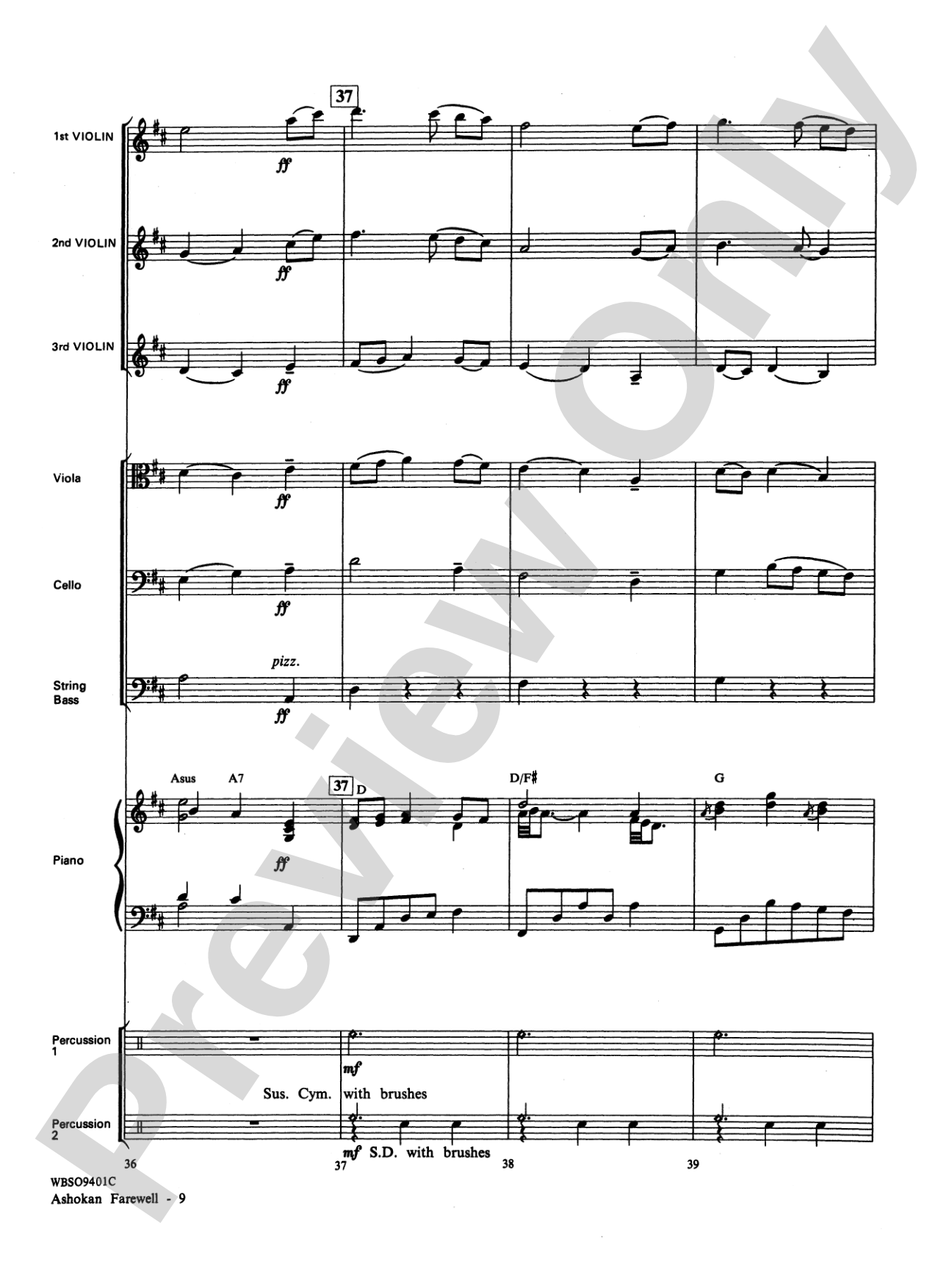
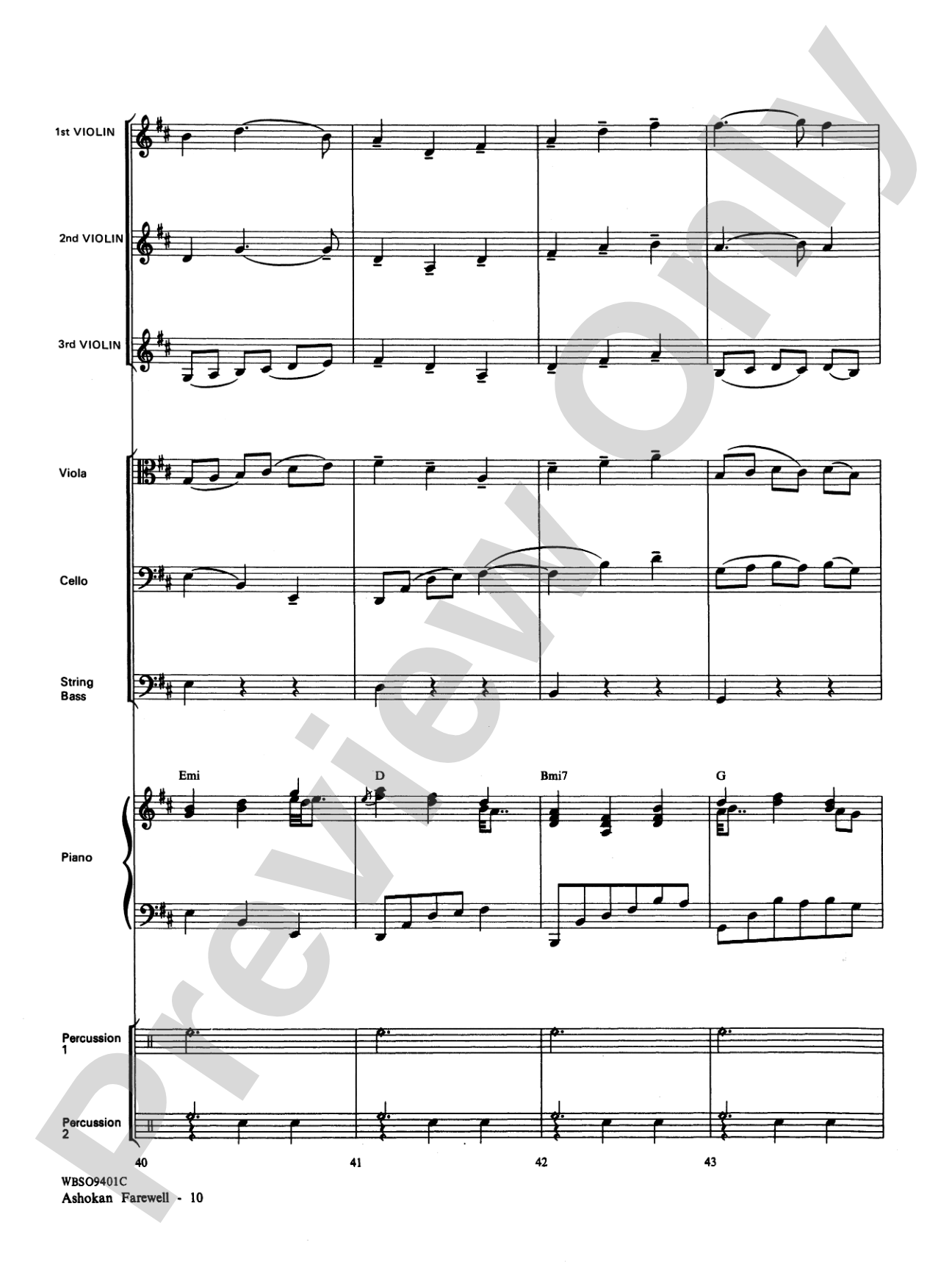
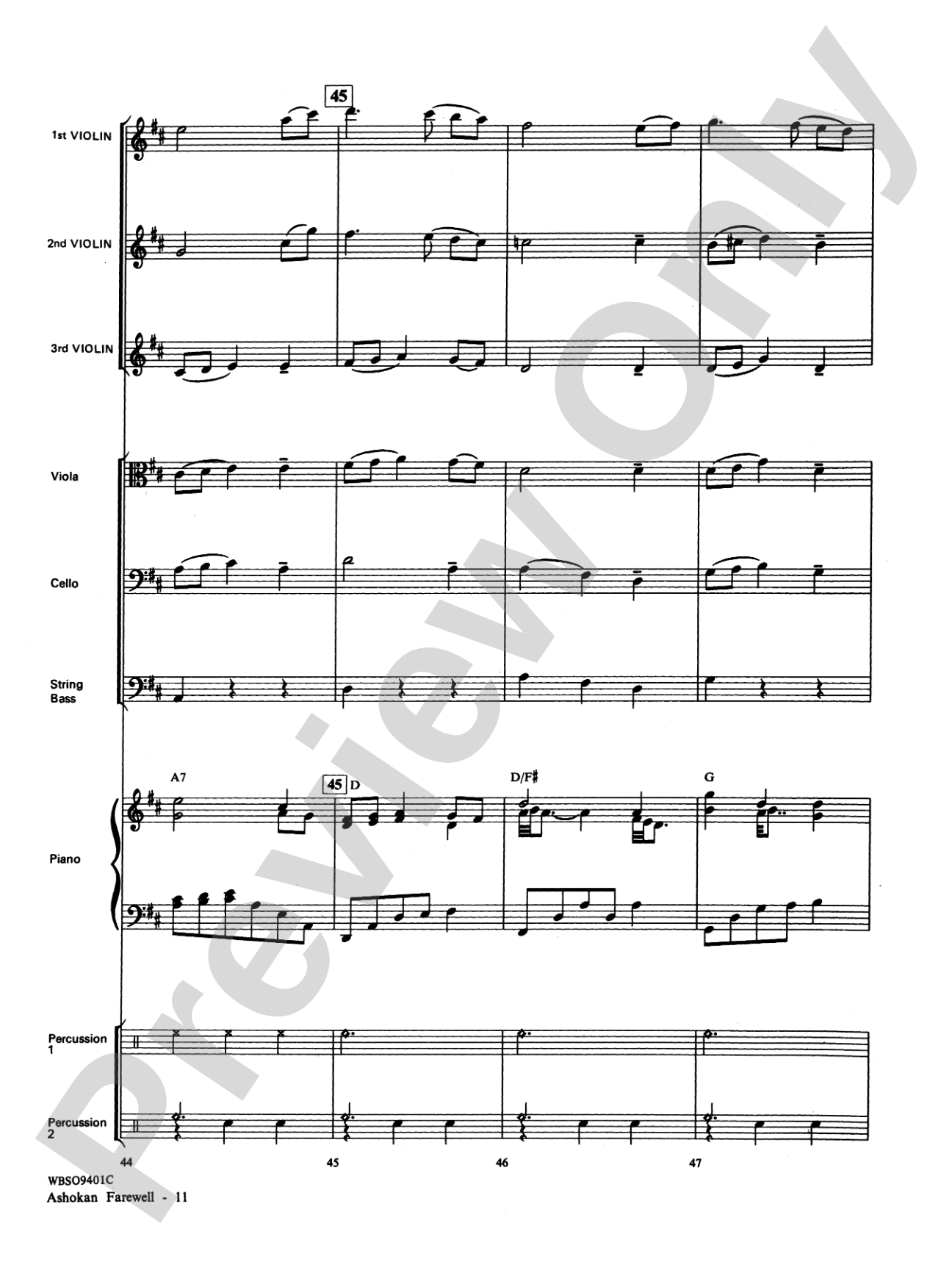
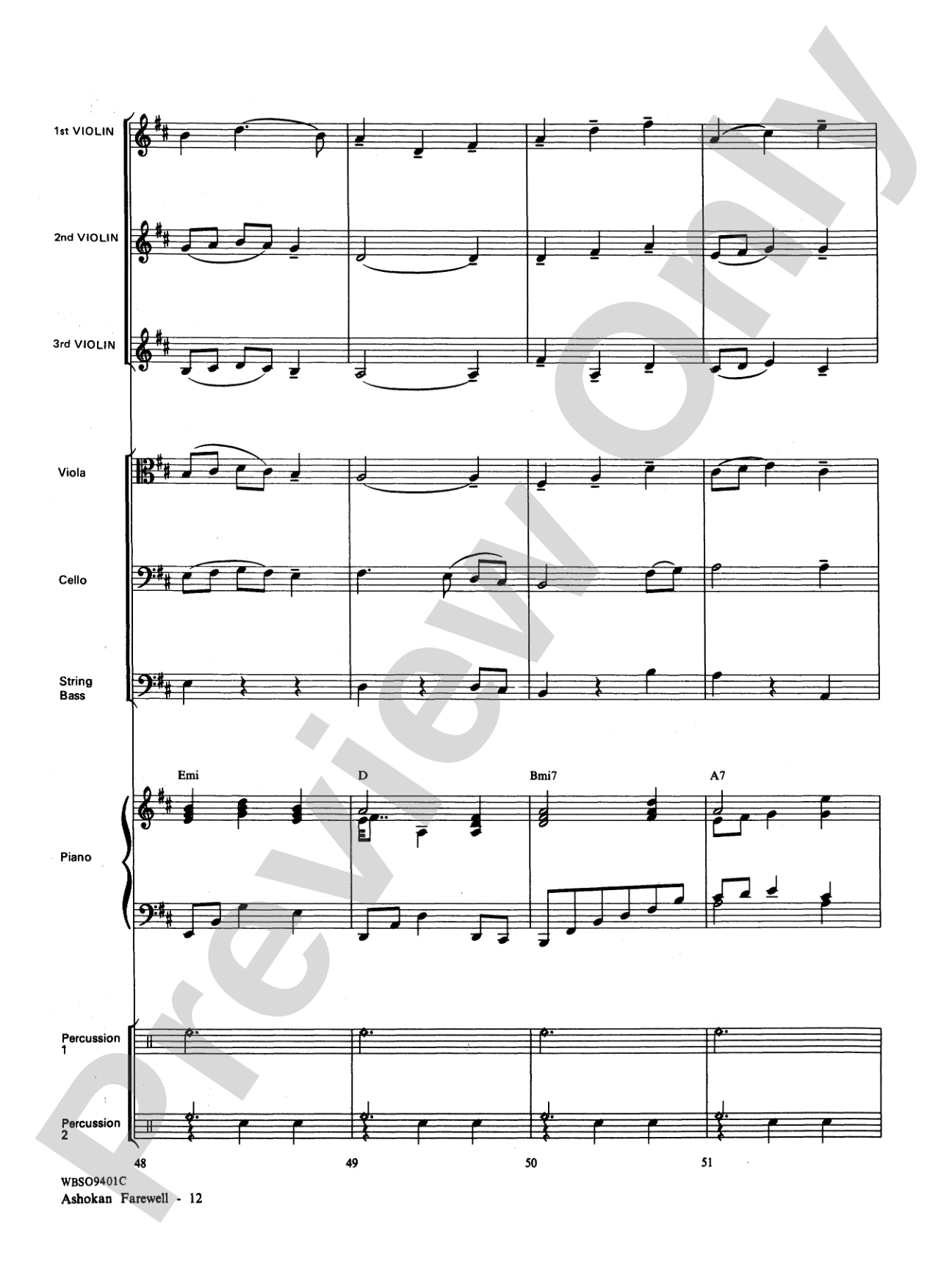
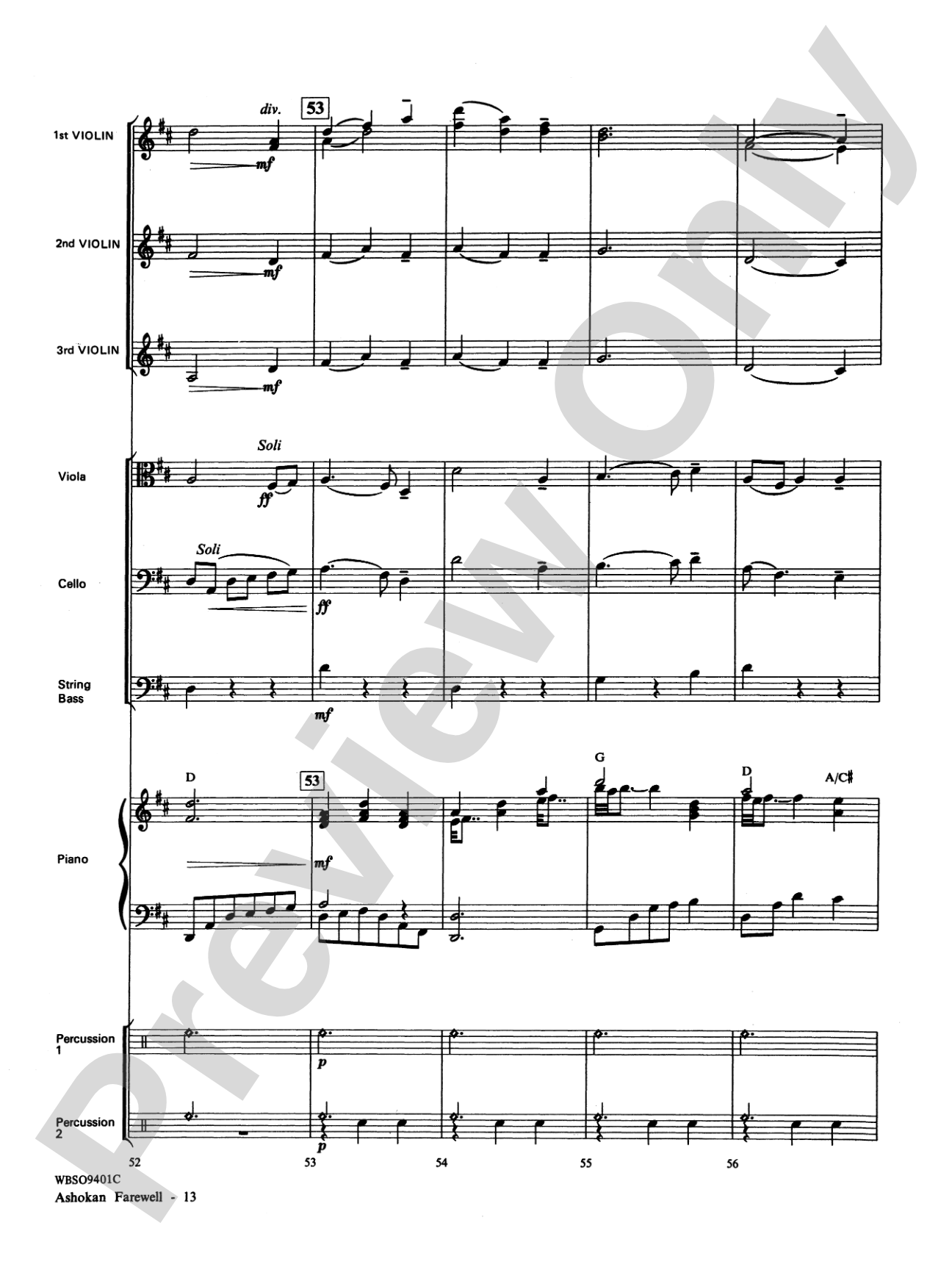
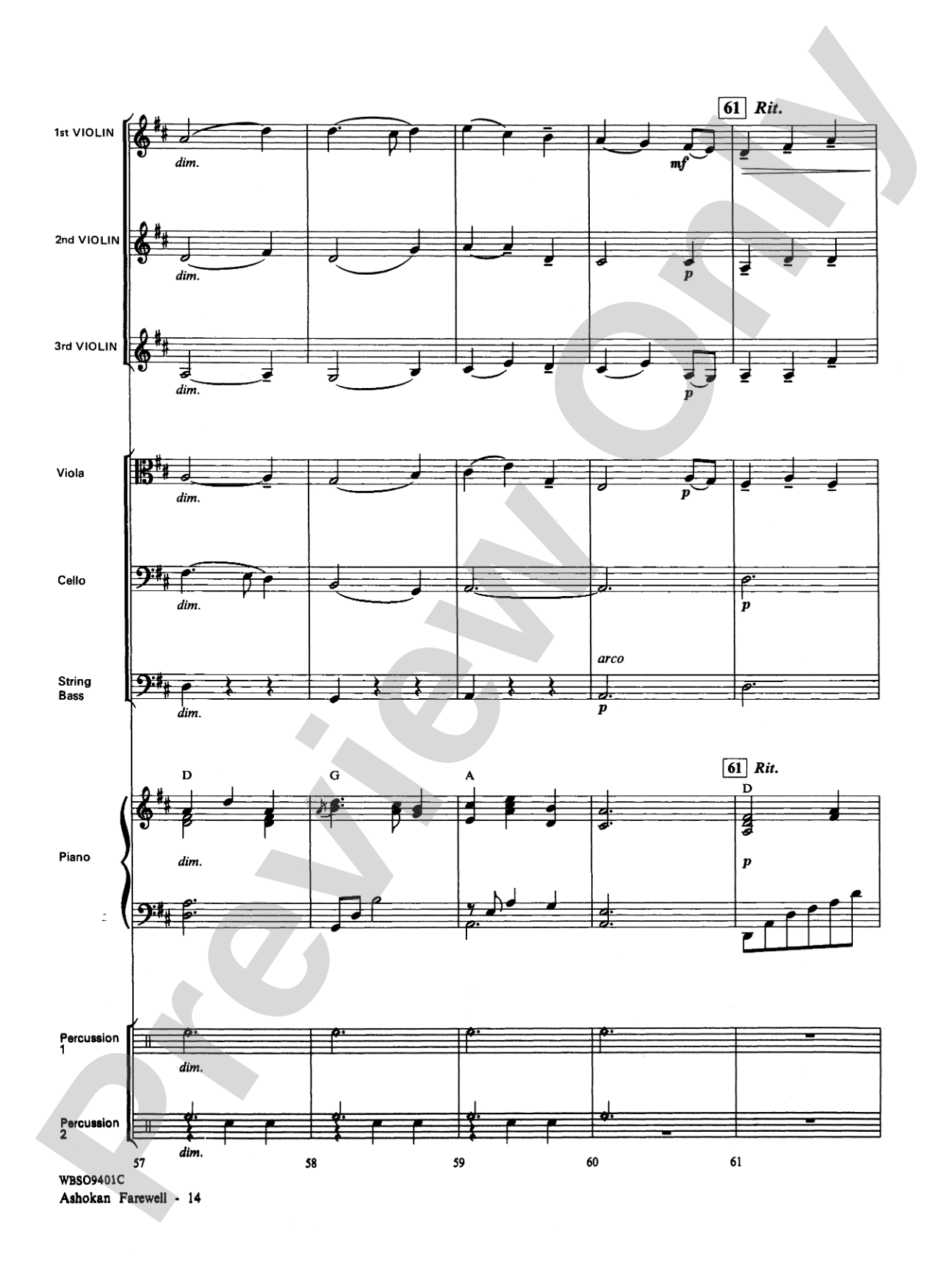
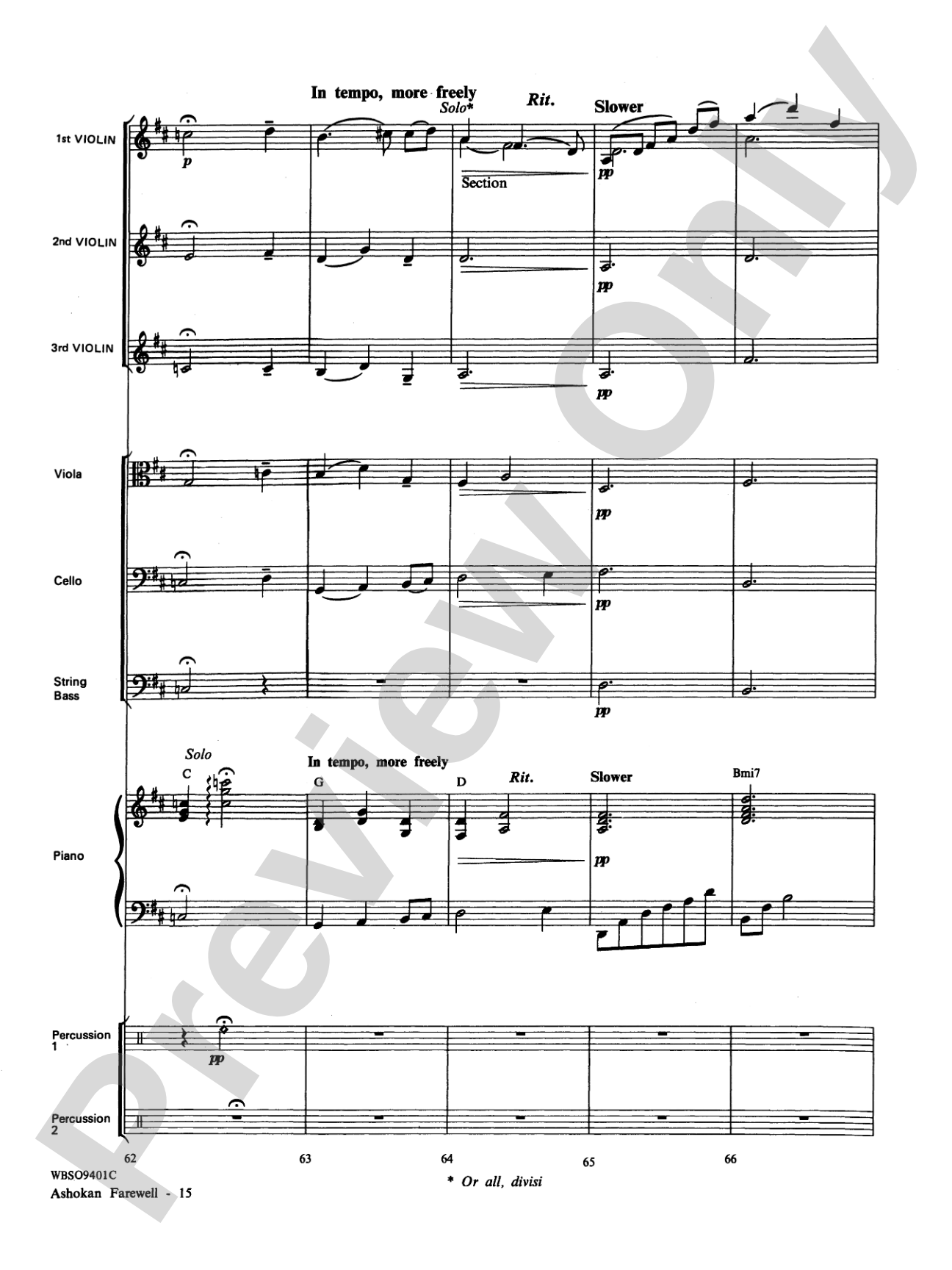
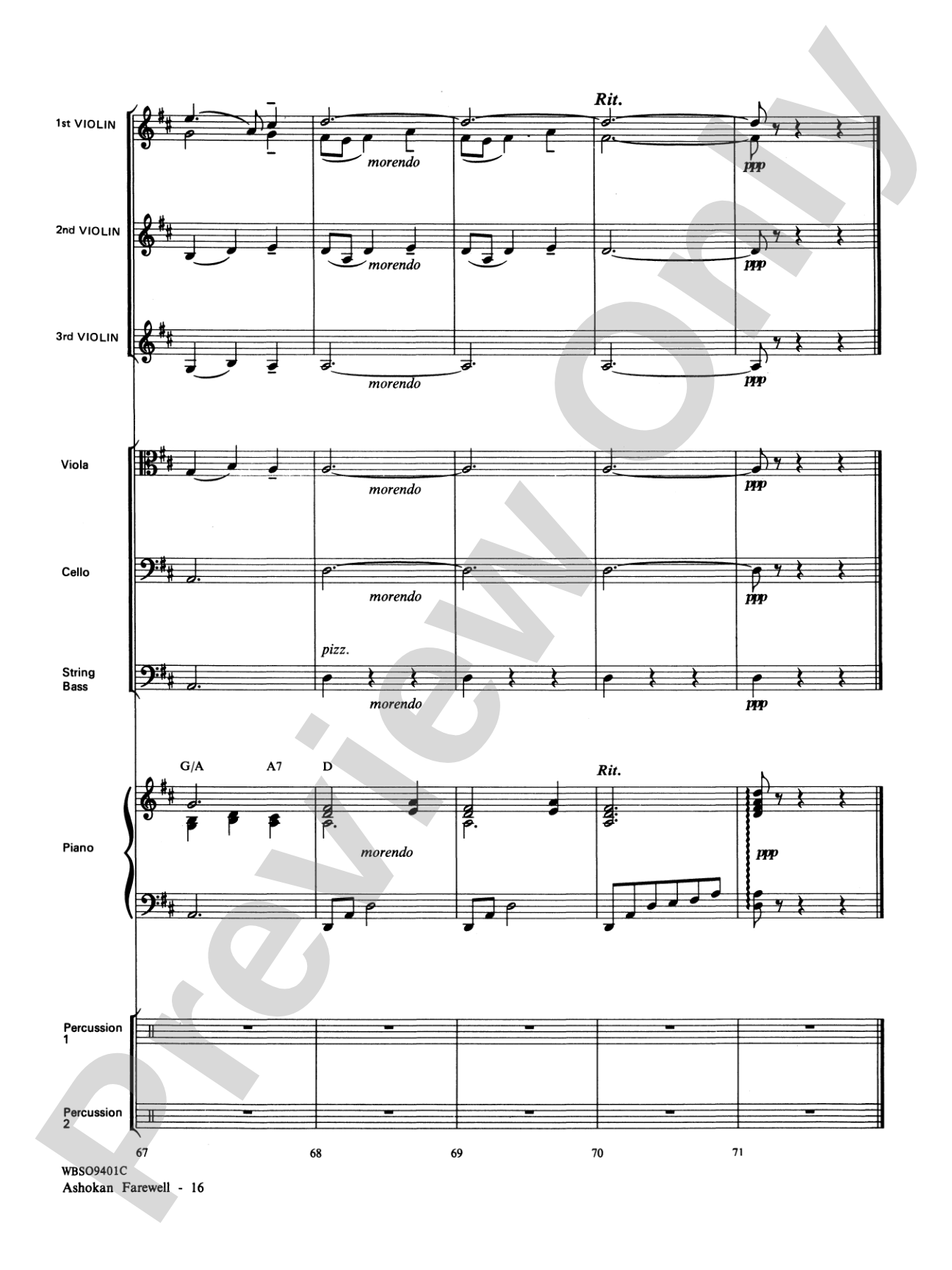

Ashokan Farewell (from "The Civil War"): String Orchestra Conductor Score & Parts
By Jay Ungar / arr. Calvin Custer
Grade: 2.5
Item: 00-PK-0002684

$60.00
One moment…
Related Items
Ashokan Farewell (from "The Civil War"): String Orchestra Conductor Score & Parts |
$60.00
|
View |
Description
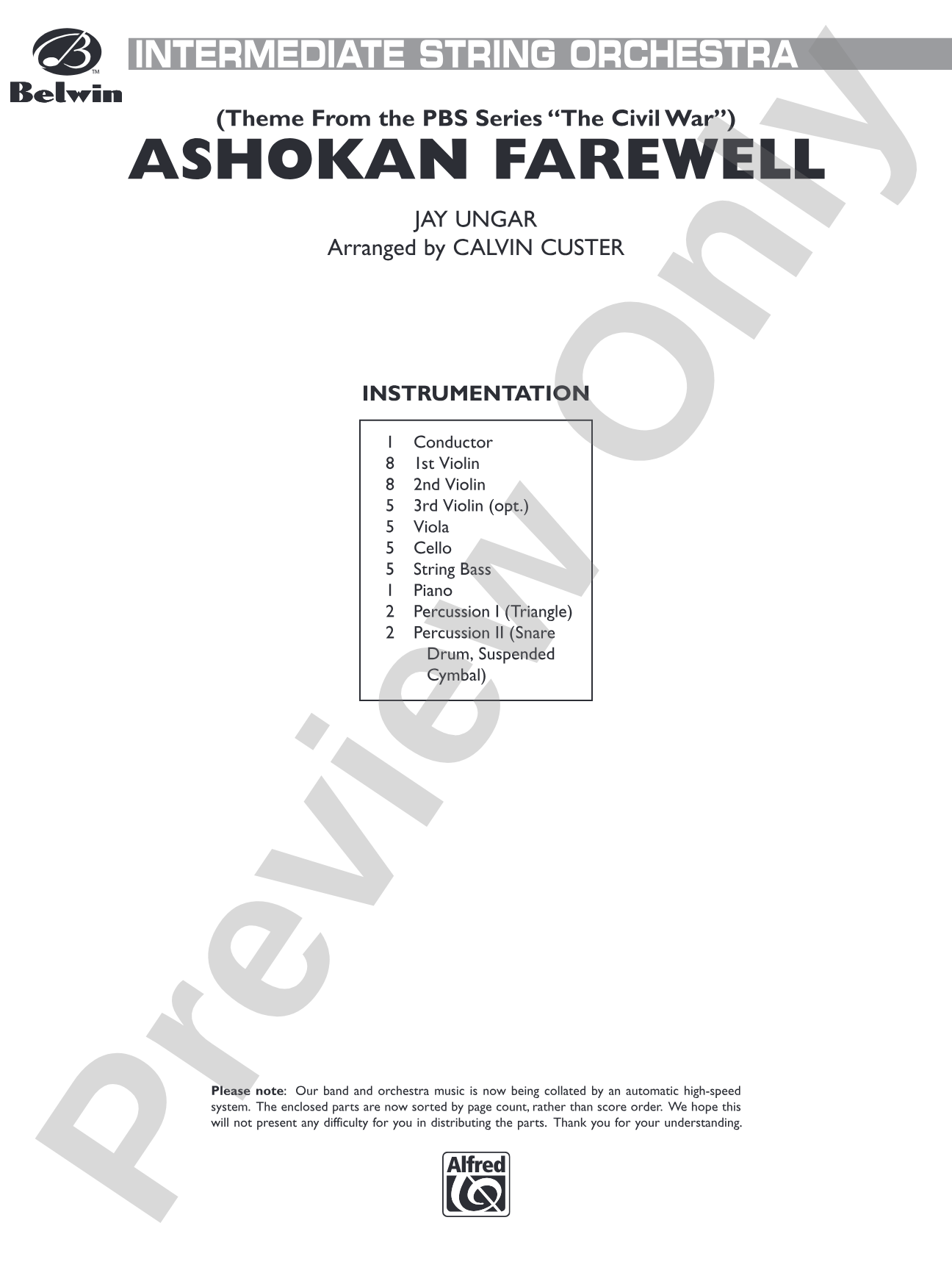
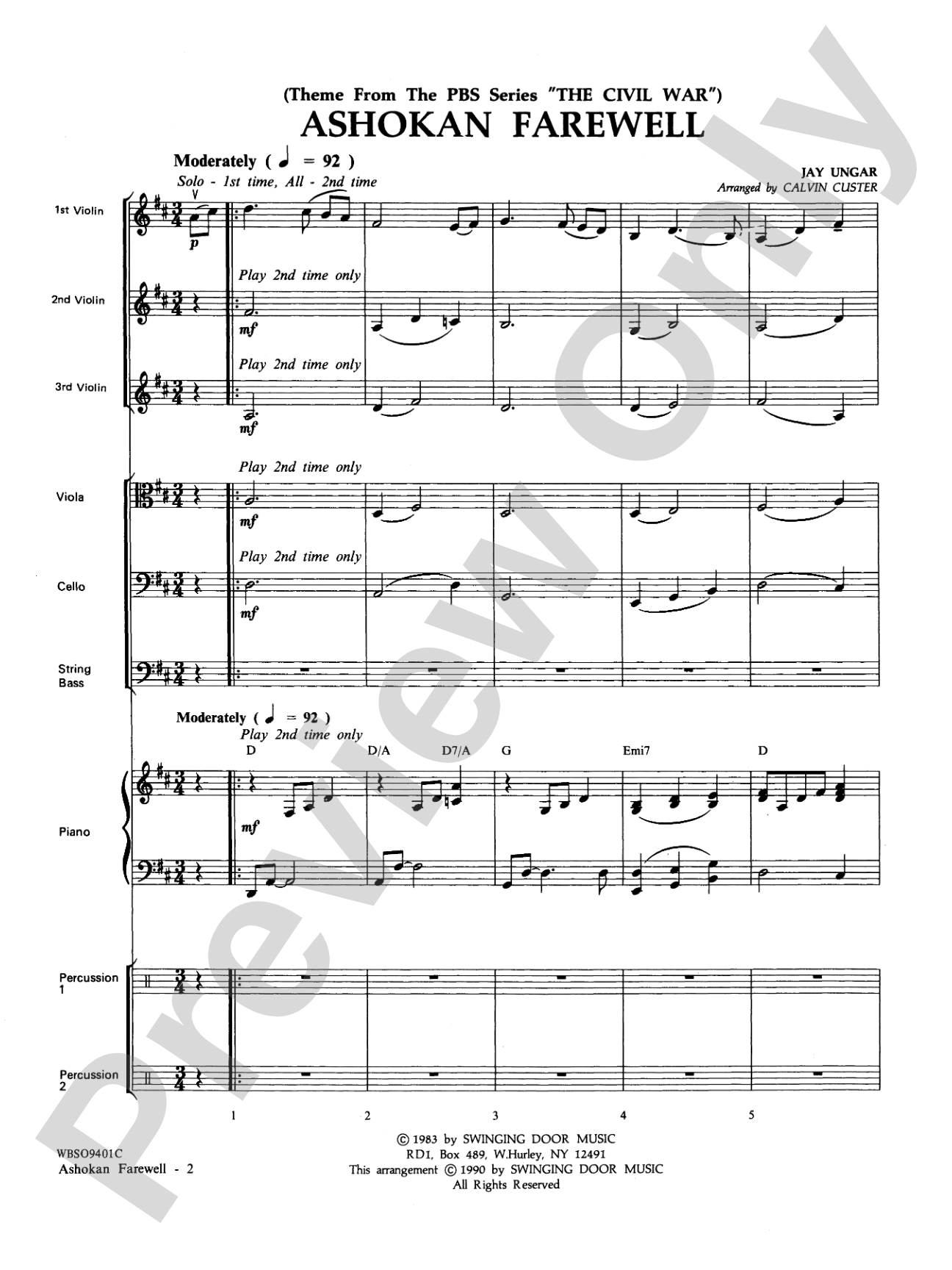
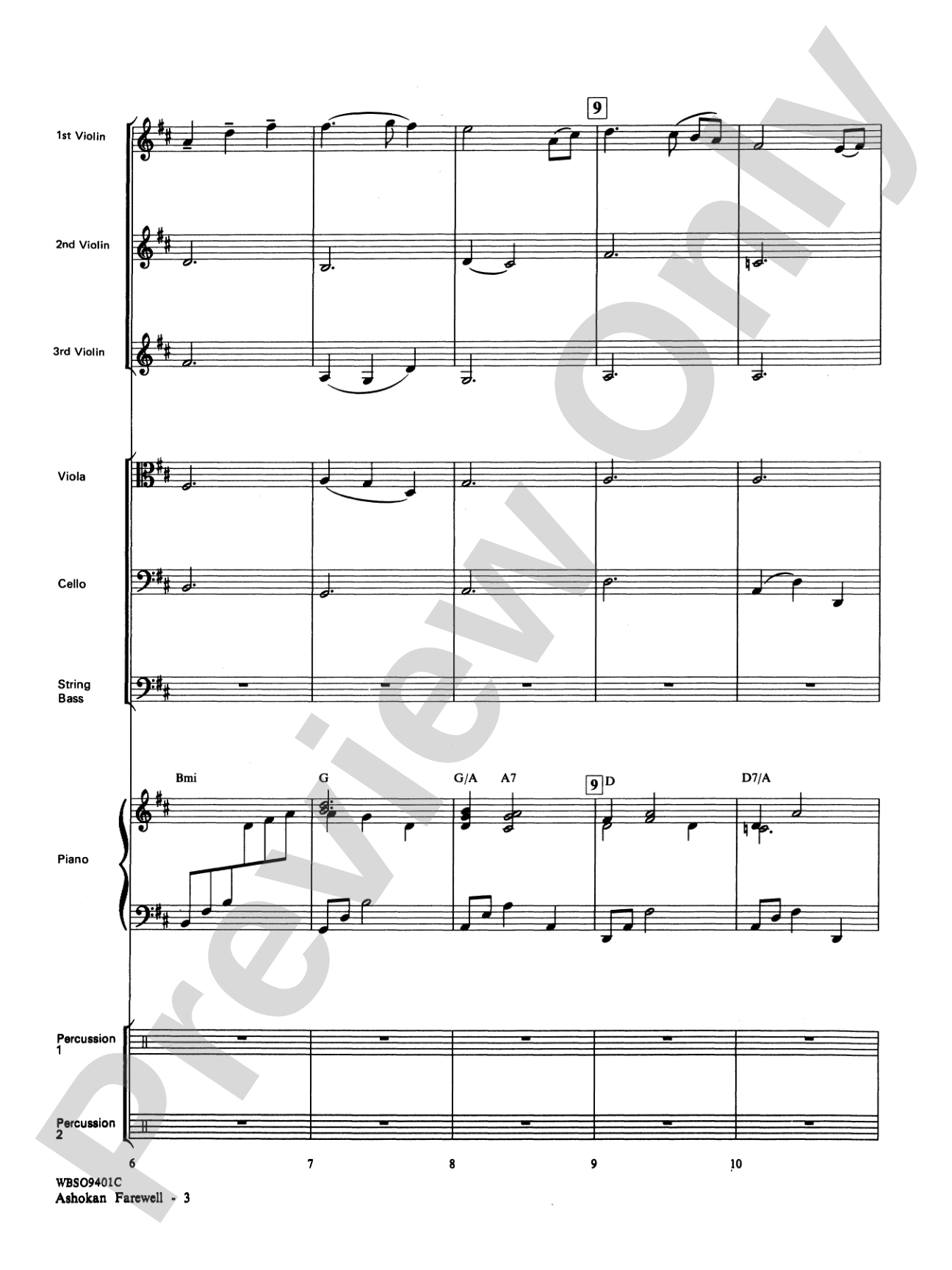
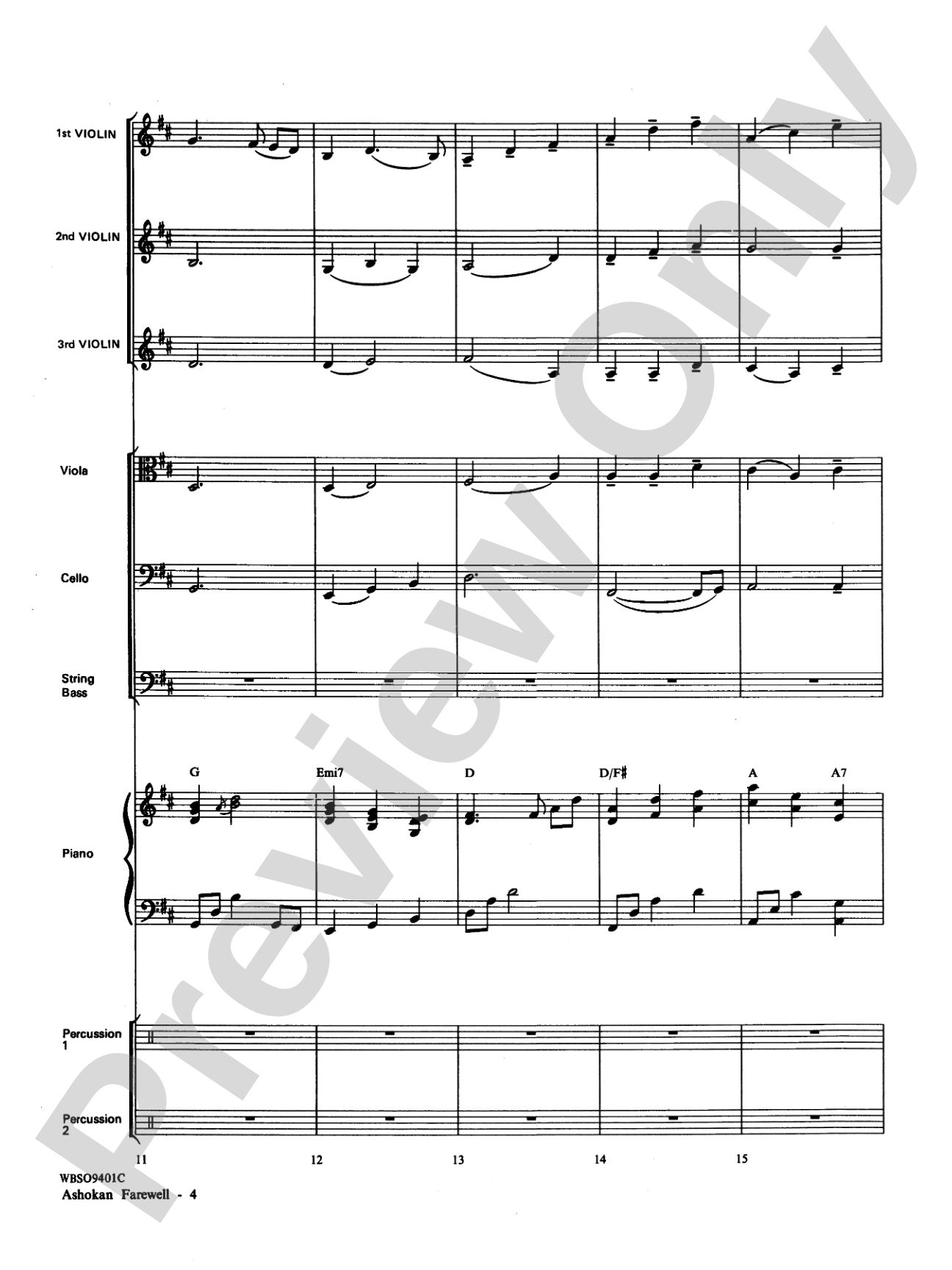
This theme to the television production of "The Civil War" is beautifully arranged by Calvin Custer for orchestra. (4:00) This title is available in MakeMusic Cloud.


Don't just read it, hear it, play along with it, and watch your students grow with it. In MakeMusic Cloud, Ashokan Farewell (from "The Civil War"): String Orchestra Conductor Score & Parts comes alive with professional accompaniment, adjustable tempo, and built-in practice tools that turn solo practice into real progress.
Open in the Player
Jump straight in and assign it today.
Start Your Free Trial
Open this title and explore the full library in minutes.
Sample Audio
1
Audio File
--:--
0:00
0:00
Sample Video
Additional Details
Series:
Pop Intermediate String Orchestra
Publisher:
Alfred Music
Page Count:
100
SKU:
00-PK-0002684
More about this title
About the Composer: Jay Ungar
Jay Ungar is an American folk musician and composer whose work bridges traditional Americana and contemporary songwriting. His composition "Ashokan Farewell" became widely known as the theme for Ken Burns's acclaimed 1990 PBS documentary "The Civil War," where its haunting melody provided the emotional anchor for the series' exploration of American history.
Why we love this
This arrangement captures the profound emotional weight of the original without requiring advanced technical demands from your players. The Grade 2.5 voicing makes it accessible to developing orchestras while preserving the melody's dignity, making it an ideal selection for concert programming that resonates with audiences of all ages.
What to expect
The melody unfolds with quiet dignity, evoking reflection and remembrance without sentimentality. There is a sense of timeless sorrow woven through, the kind of beauty that emerges from restraint and simplicity rather than dramatic flourish.
Who it's for
This is ideal for intermediate string orchestras seeking repertoire with historical significance and emotional maturity. Directors looking for a concert piece that engages both players and audiences will find this arrangement fulfills that need at a manageable technical level.
How to get the most out of it
- Shape the melody with gentle dynamic swells rather than rigid crescendos. The tune's strength lies in its simplicity, so resist the urge to over-phrase.
- Balance the first violin line so it sings clearly above the inner voices. This melody carries the entire emotional arc and must be heard.
- Allow a slight breath before the final section to reset the ensemble's focus and prepare for a measured, unhurried conclusion.
- Encourage consistent vibrato in the upper strings to warm the tone; the accompaniment figures benefit from a unified, singing approach.
How to use it
Pair this as the centerpiece of a concert exploring American themes, or program it as a contemplative interlude between more energetic works. Its 4-minute length and accessible voicing also make it a strong choice for festival or concert competitions where emotional communication matters as much as technical display.
Skills your students will build
- Sustaining long melodic lines with consistent tone and vibrato
- Balancing melody against supportive accompaniment voices
- Responding to subtle dynamic and expressive gestures from the conductor
- Playing with restraint and emotional clarity in a minor-key context