Ashokan Farewell: Piano Digital Sheet Music

Ashokan Farewell: Piano Digital Sheet Music

Jay Ungar

Item: 00-PS-0002838

Digital Download
$3.99
Description

Ashokan Farewell: Piano Digital Sheet Music isn't in MakeMusic Cloud just yet...but it could be. Let us know you'd like to see it, and you'll help shape what comes next. In the meantime, start a free trial and dive into thousands of interactive titles your students can play along with today.

Sample Audio
No sample audio found.
Sample Video
Additional Details
SKU: 00-PS-0002838

More about this title

About the Composer: Jay Ungar

Jay Ungar wrote Ashokan Farewell in 1982 as a farewell song for friends leaving a folk music camp in the Catskills. The piece emerged from a deeply personal moment and has since become one of the most recognizable American instrumental compositions, gaining widespread attention through its use in Ken Burns' documentary series.

Ungar's gift for melody, direct, emotionally accessible, and architecturally sound, makes this tune work across any instrumentation. As a violinist and composer rooted in traditional American music, he understands how a simple, well-crafted line can carry profound feeling without ornament or pretense.

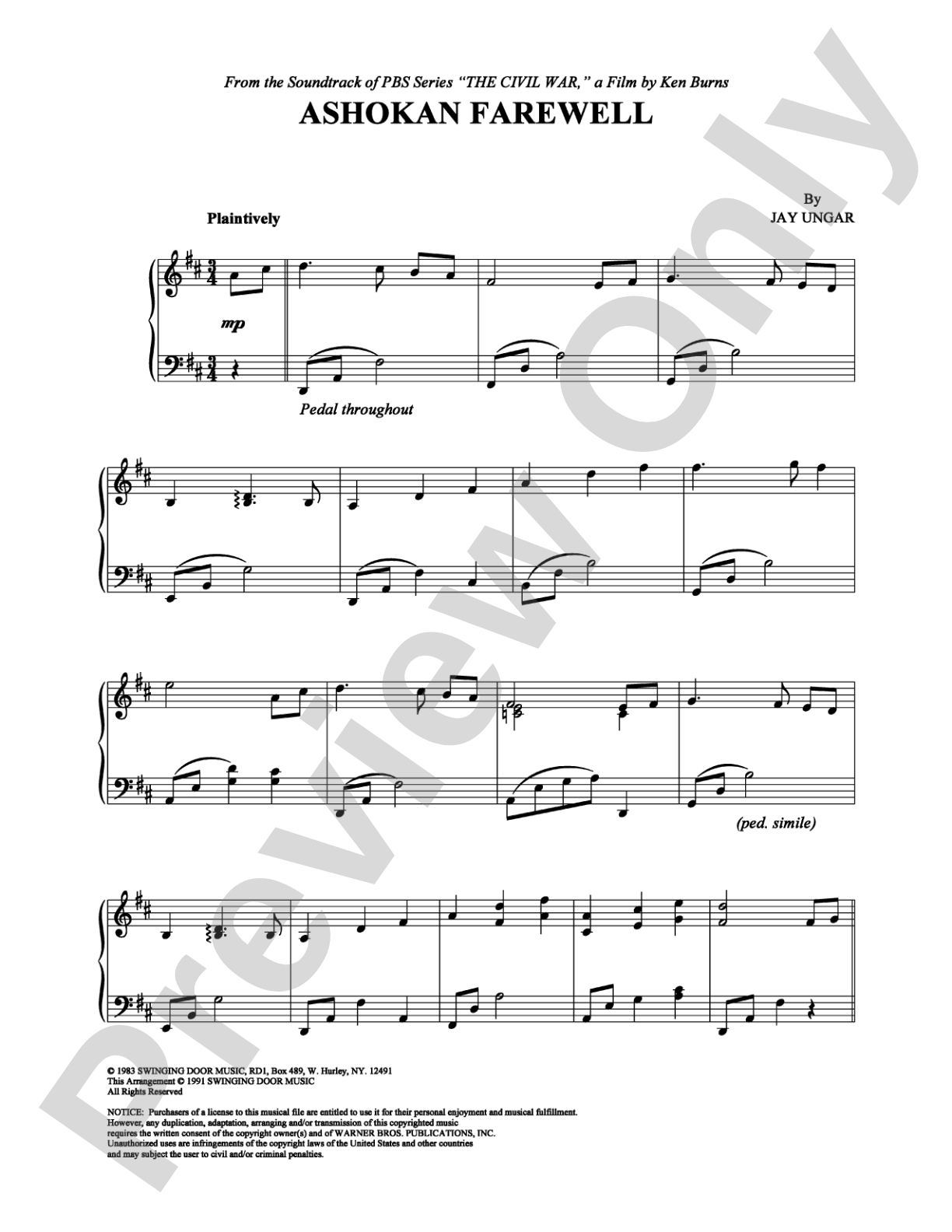
Why we love this

Ashokan Farewell transcends its documentary origins to become a deeply moving addition to any pianist's repertoire. The melody is instantly memorable without sacrificing emotional depth, and the arrangement respects both the folk roots and the contemplative sophistication that made the original unforgettable.

What to expect

Ashokan Farewell unfolds like a quiet goodbye suffused with both sadness and grace. The melody carries the weight of memory and displacement, while the piano's harmonic foundation provides gentle support that never feels sentimental. It's a piece that asks the player to be present and vulnerable.

Who it's for

Intermediate to advanced pianists seeking repertoire with emotional substance and cultural significance. This piece works equally well for recital performance, community concerts, and meaningful programming contexts where a moment of reflection serves the overall narrative.

How to get the most out of it

  • Shape the opening phrase with gentle breath and release; let the first notes settle before building any momentum forward.
  • Balance the melody clearly against accompaniment voices without pushing the accompaniment into prominence, it serves the tune, never fights it.
  • Resist the urge to slow down as you approach the ending. Many pianists hold back here emotionally, but steady pacing lets the melody's dignity come through.
  • Pedal sparingly. This piece rewards clarity over wash; change pedal with phrase shape rather than harmonic change alone.

How to use it

Program this alongside other 20th-century American works to highlight contemporary classical music that speaks to broad audiences. It also pairs well in memorials, ceremonial contexts, or recitals that explore themes of tradition and loss.

Skills your students will build

  • Sustained legato and singing tone production at the keyboard
  • Rubato and phrase-shaping in contemporary folk-influenced repertoire
  • Balance between melody and accompaniment with minimal texture
  • Interpretation of pieces rooted in folk tradition rather than formal classical structure

You May Also Like