



As Twilight Falls: String Orchestra Conductor Score & Parts
By Robert Sheldon
Grade: 3
Item: 00-PK-0005233

$49.00
Pickup currently not available
Buy Extra Parts (Digital PDF Download)
| Product | Price | Quantity |
|---|---|---|
| As Twilight Falls: Score | $9.00 | |
| As Twilight Falls: 1st Violin | $7.99 | |
| As Twilight Falls: 2nd Violin | $7.99 | |
| As Twilight Falls: 3rd Violin (Viola [TC]) | $7.99 | |
| As Twilight Falls: Viola | $7.99 | |
| As Twilight Falls: Cello | $7.99 | |
| As Twilight Falls: String Bass | $7.99 | |
| As Twilight Falls: Piano Accompaniment | $7.99 |
Parts Added to Cart!
Related Items
As Twilight Falls: String Orchestra Conductor Score |
$9.00
|
View | |
As Twilight Falls: Concert Band Conductor Score & Parts |
$55.00
|
View | |
As Twilight Falls: Flexible Band/String Ensemble Score & Parts |
$55.00
|
View | |
As Twilight Falls: Concert Band Conductor Score & Parts |
$55.00
|
View | |
As Twilight Falls: Concert Band Conductor Score |
$10.00
|
View | |
As Twilight Falls: String Orchestra Conductor Score |
$9.00
|
View | |
As Twilight Falls: Flexible Band/String Ensemble Score & Parts |
$55.00
|
View | |
As Twilight Falls: Flexible Band/String Ensemble Score |
$7.00
|
View |
Description
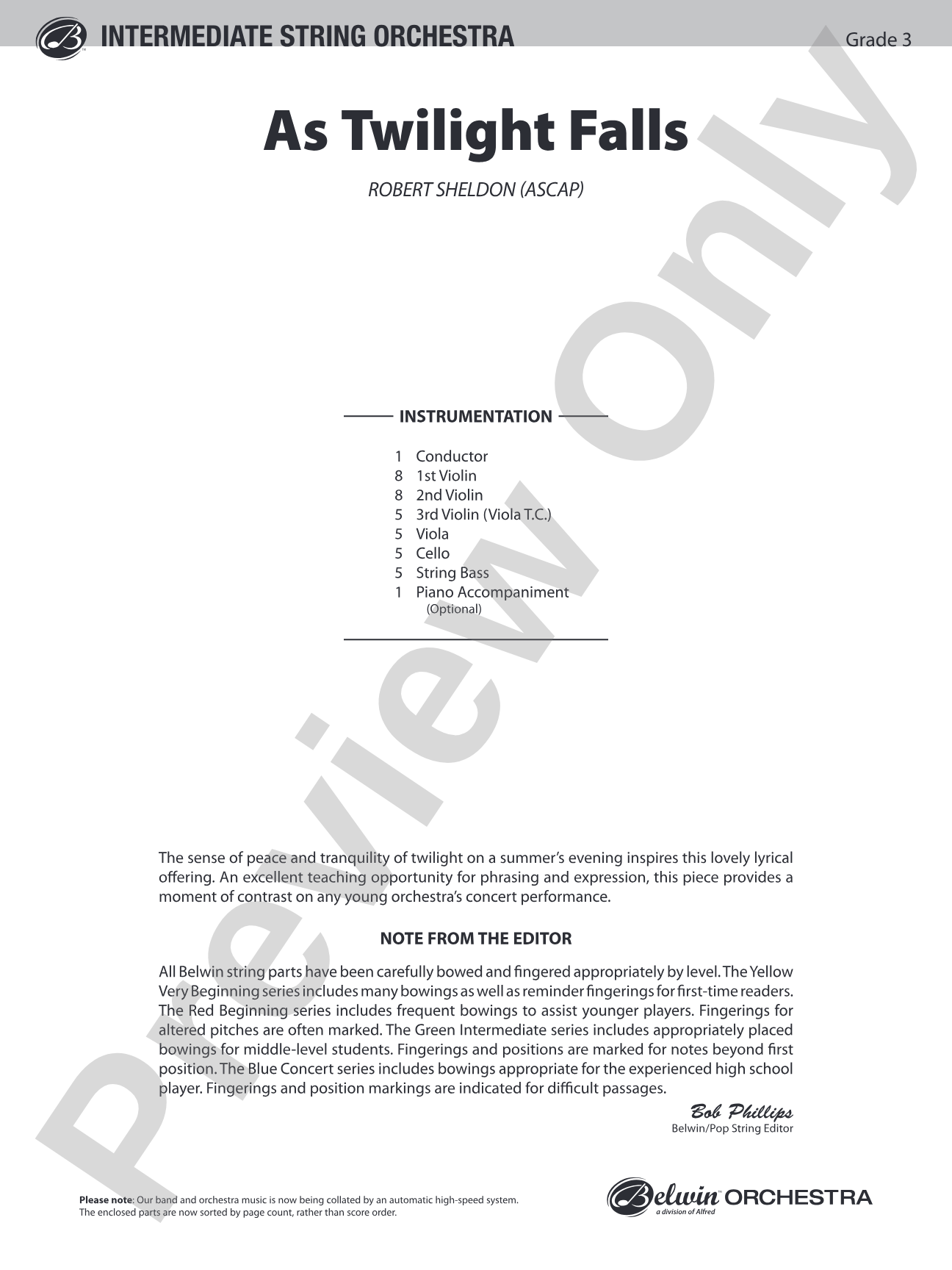
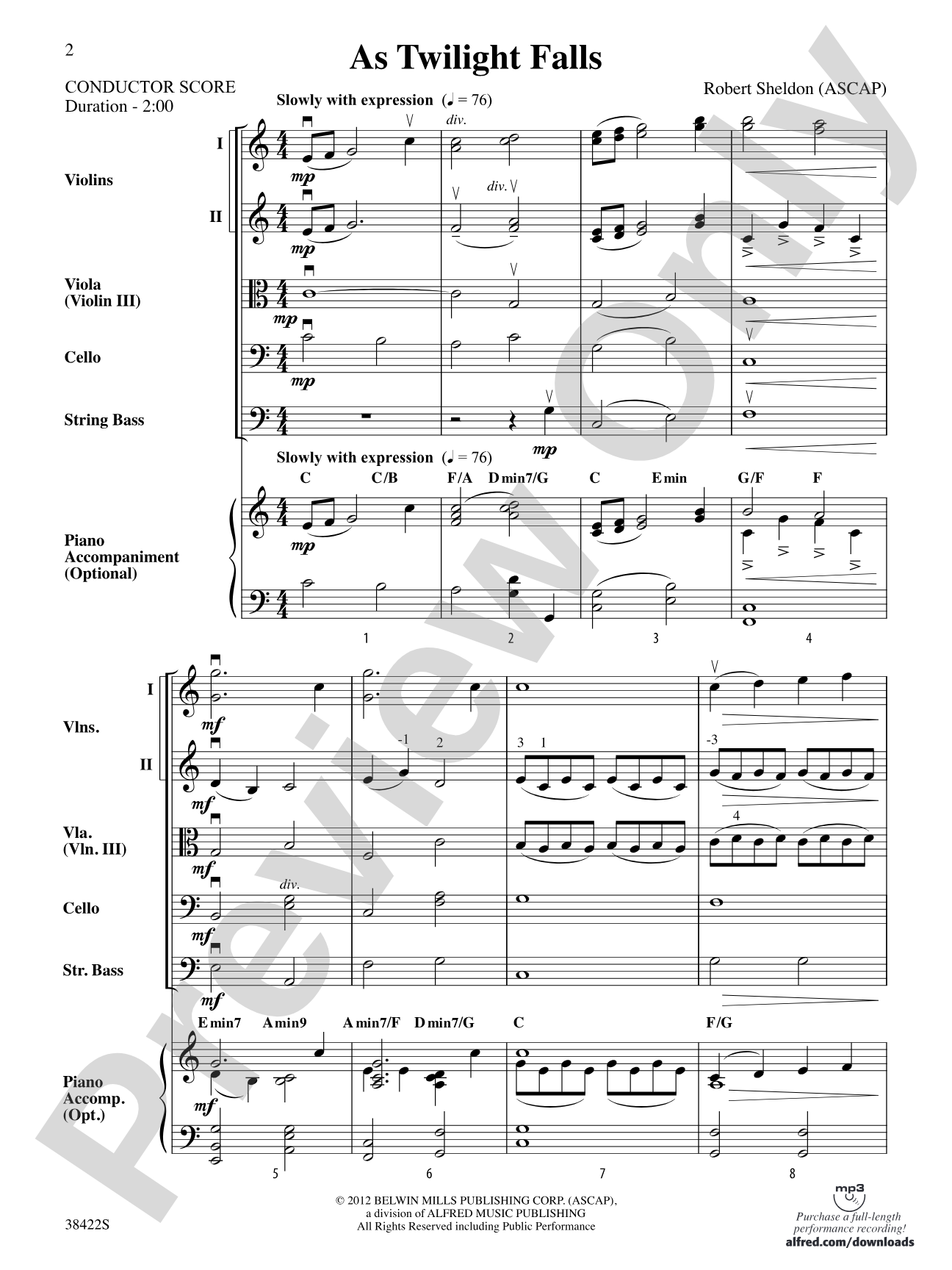
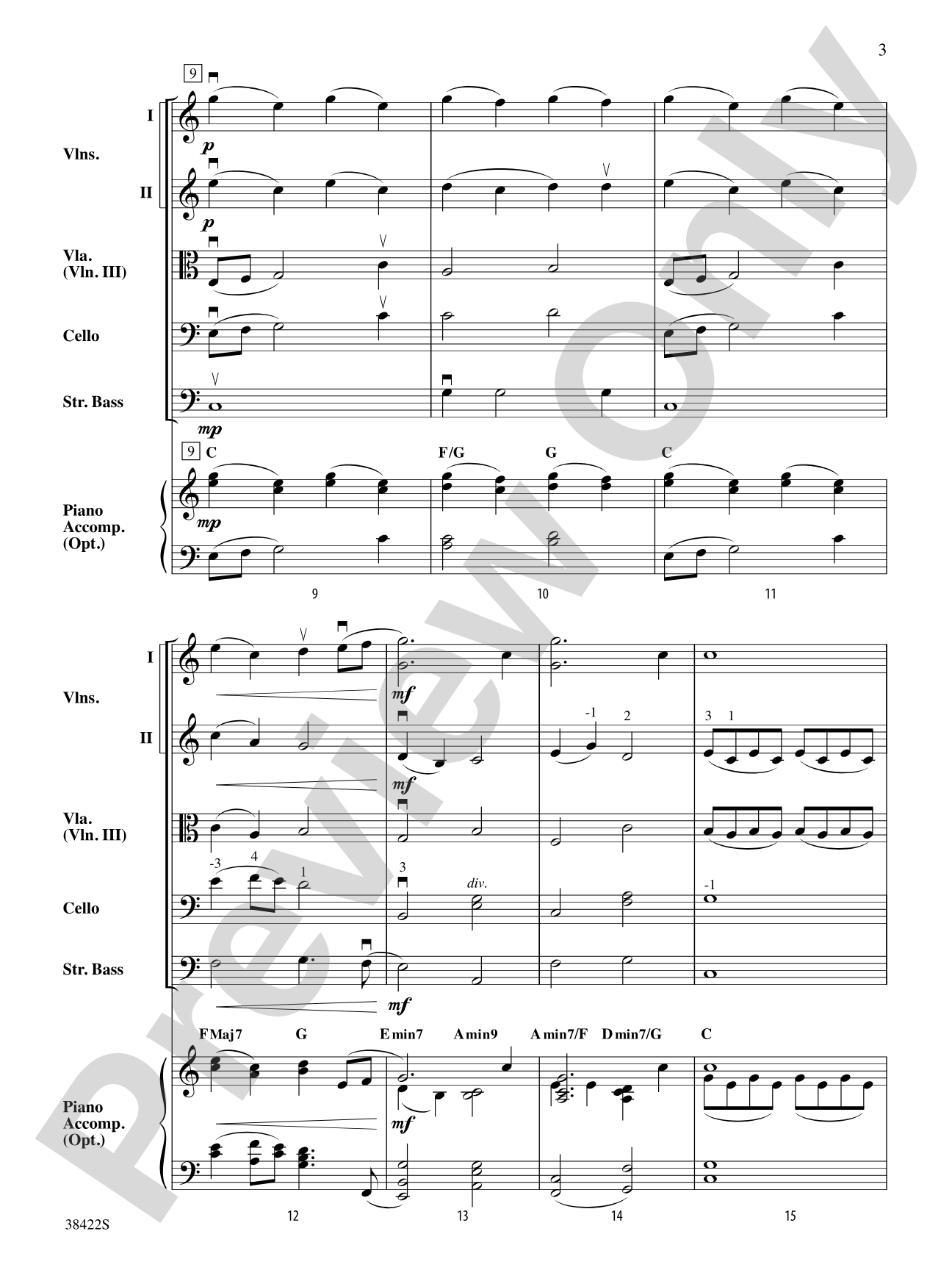
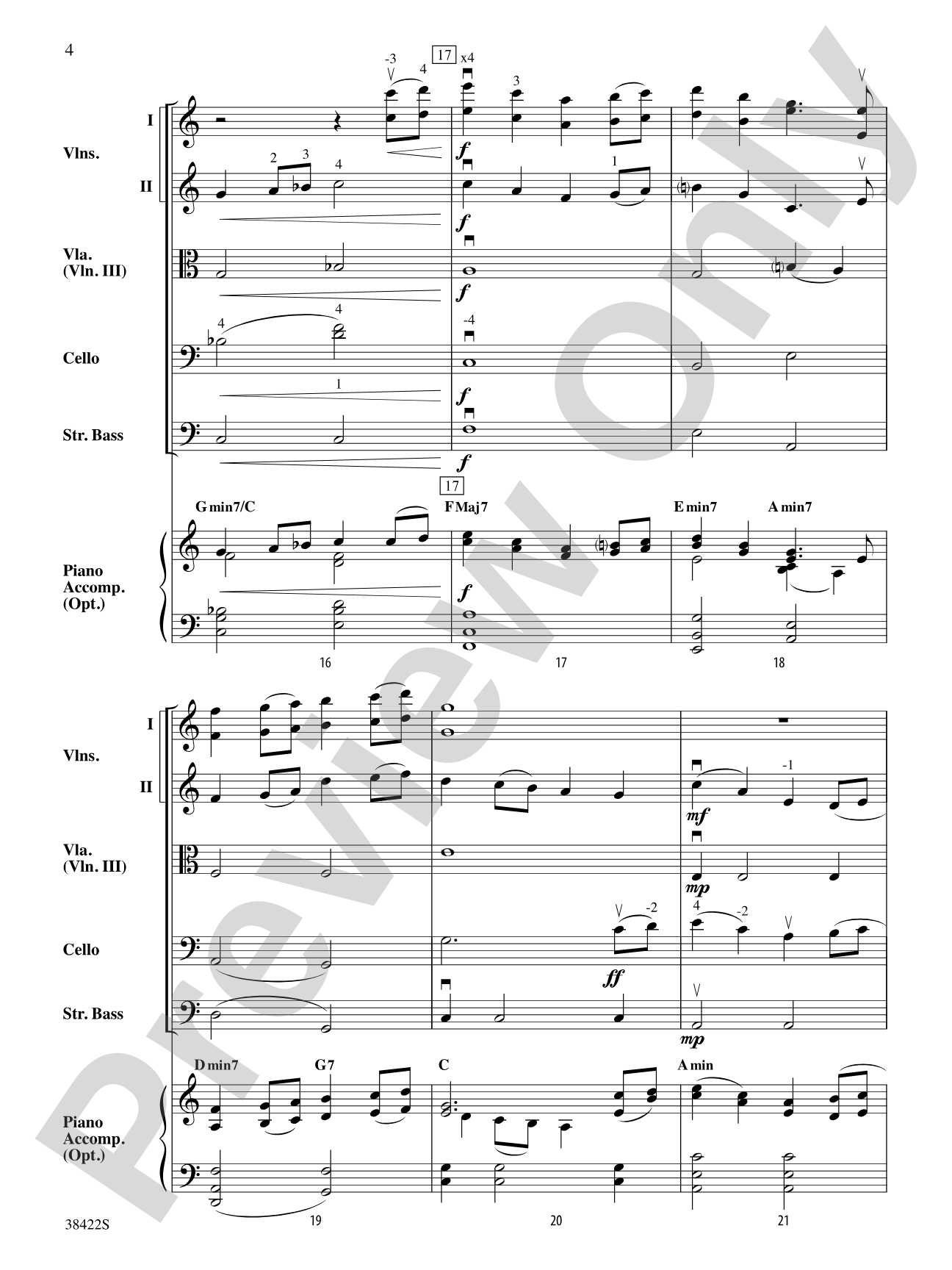
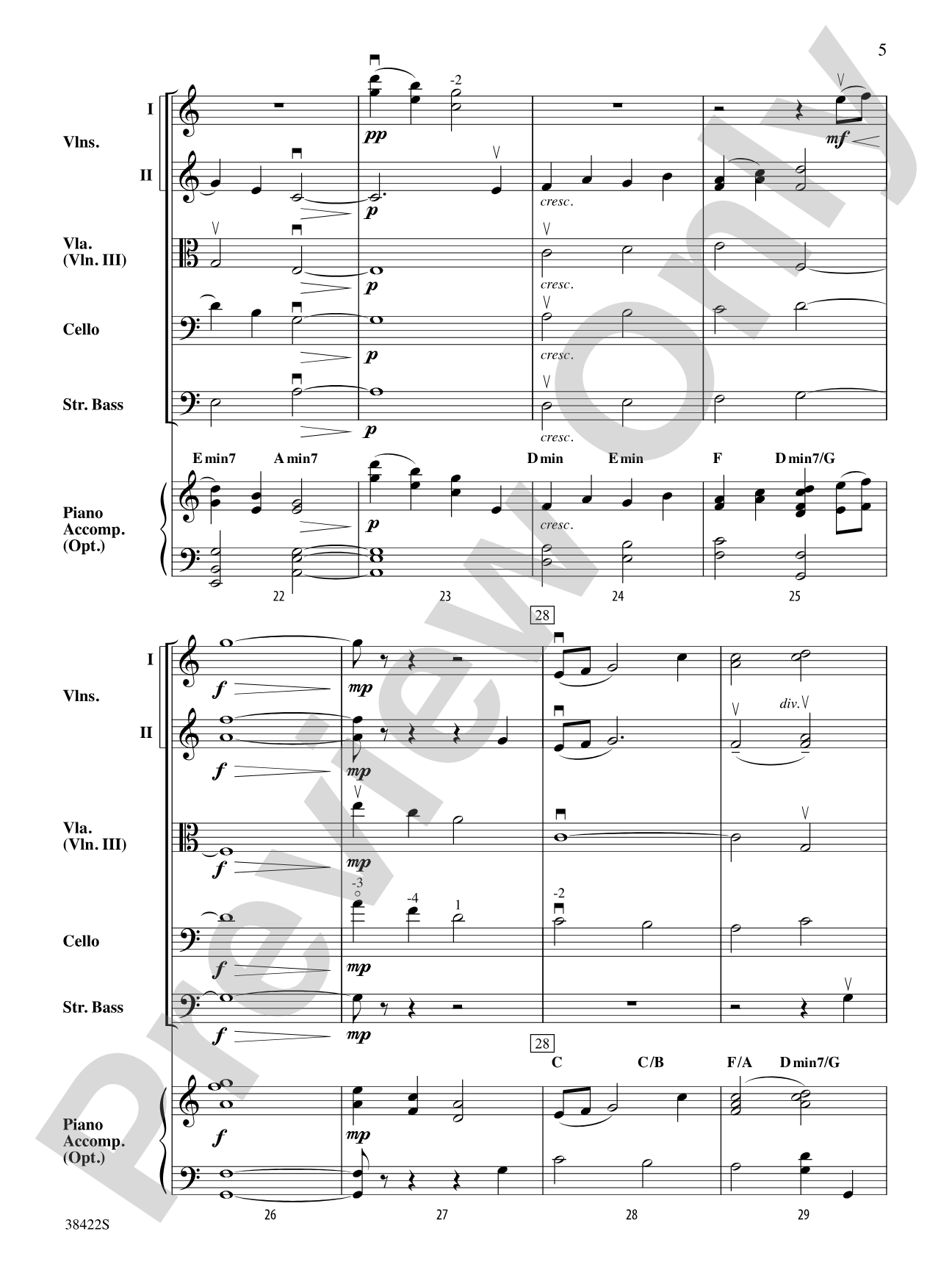
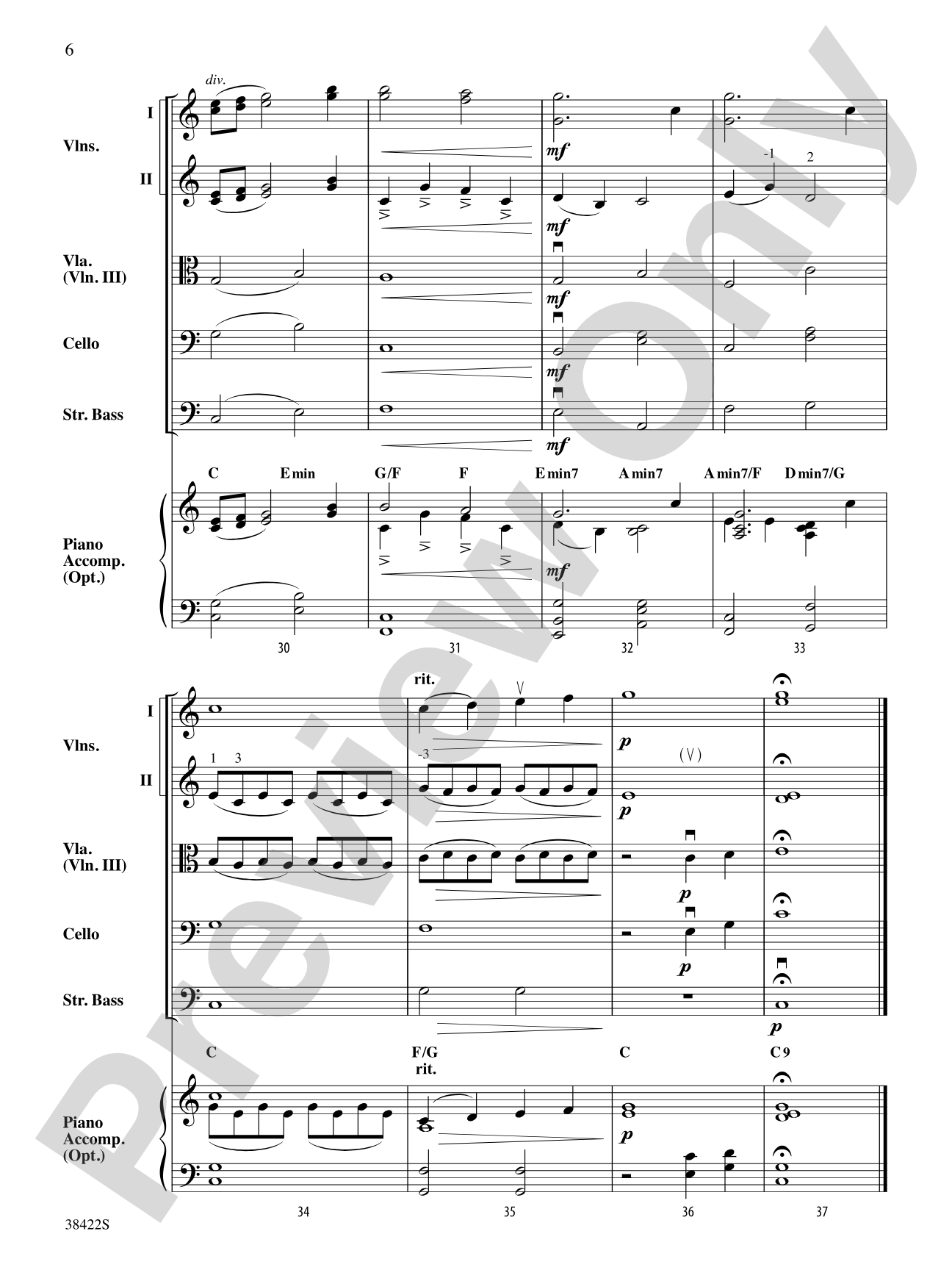
The sense of peace and tranquility of twilight on a summer's evening inspires this lovely lyrical offering. An excellent teaching opportunity for phrasing and expression, this piece provides a moment of contrast on any young orchestra's concert performance. This title is available in MakeMusic Cloud.


Don't just read it, hear it, play along with it, and watch your students grow with it. In MakeMusic Cloud, As Twilight Falls: String Orchestra Conductor Score & Parts comes alive with professional accompaniment, adjustable tempo, and built-in practice tools that turn solo practice into real progress.
Open in the Player
Jump straight in and assign it today.
Start Your Free Trial
Open this title and explore the full library in minutes.
Sample Audio
1
Audio File
--:--
0:00
0:00
Sample Video
No sample videos found.
Additional Details
Series:
Belwin Intermediate String Orchestra
Publisher:
Alfred Music
Page Count:
76
SKU:
00-PK-0005233
More about this title
About the Composer: Robert Sheldon

Robert Sheldon's compositions have earned him a place among the most frequently programmed composers in American music education. His works appear regularly on state and national contest lists, and his commissions span concert halls from Carnegie Hall to the Sydney Opera House. Sheldon has also shaped music education directly as the lead author of Sound Innovations for Concert Band.
Beyond the concert stage, Sheldon maintains an active schedule as a guest conductor, clinician, and educator. He has presented at numerous university conferences and state music education associations, and his conducting residencies have taken him across the United States and internationally to Japan, Canada, Italy, Germany, Australia, and China. His contributions to music education earned him recognition from the American School Band Director's Association, Phi Beta Mu, the American Society of Composers, Authors and Publishers, and a honorary doctorate from VanderCook College of Music in 2020.
Why we love this
Sheldon's approach to lyricism here feels earned rather than sentimental, offering young orchestras a chance to work with genuinely beautiful writing without sacrificing musical substance. The orchestration balances accessibility with sophistication, allowing less advanced sections to carry the foundational work while other parts explore layered textures. Programming this piece creates a natural breathing space in a concert while demonstrating to students that expression and control can coexist at the intermediate level.
What to expect
Peaceful and unhurried, like watching light fade across the horizon on a warm evening. The writing breathes naturally, with space between ideas and a gentle harmonic language that never feels rushed. The piece creates an atmosphere of calm reflection, neither dramatic nor overly sentimental.
Who it's for
String orchestras at the Grade 3 level seeking repertoire that teaches artistry alongside technique. This piece works well for ensembles ready to move beyond note-reading and into expressive control, as well as for programs needing a moment of lyrical contrast.
How to get the most out of it
- Shape long phrases across the entire length rather than in small musical segments; let younger players hear how Sheldon extends melody over 4, 8, or even 16 bars at a time.
- Balance the inner voices in string writing; twilight atmosphere comes from the full sonority, not just the melodic lines on top.
- Experiment with subtle tempo flexibility in passages marked for expression; slight rubato in lyrical sections can deepen the evening mood without destabilizing the ensemble.
- Rehearse dynamics in relation to one another rather than in isolation; a mezzo-piano needs context from surrounding fortes to register as soft and intimate.
How to use it
Program this as a centerpiece for a concert's second half, where it can provide the contrast and mood shift that sustains audience attention through a longer evening. It pairs particularly well before a more energetic finale, allowing the transition from contemplative to celebratory to feel intentional and complete.
Skills your students will build
- Sustaining long phrases across multiple measures
- Balancing melody and accompaniment within a full ensemble texture
- Shaping dynamics to create emotional arc rather than mechanical crescendo and diminuendo
- Listening to inner voices and understanding their role in overall sonority
- Controlling vibrato and tone color to match programmatic intent