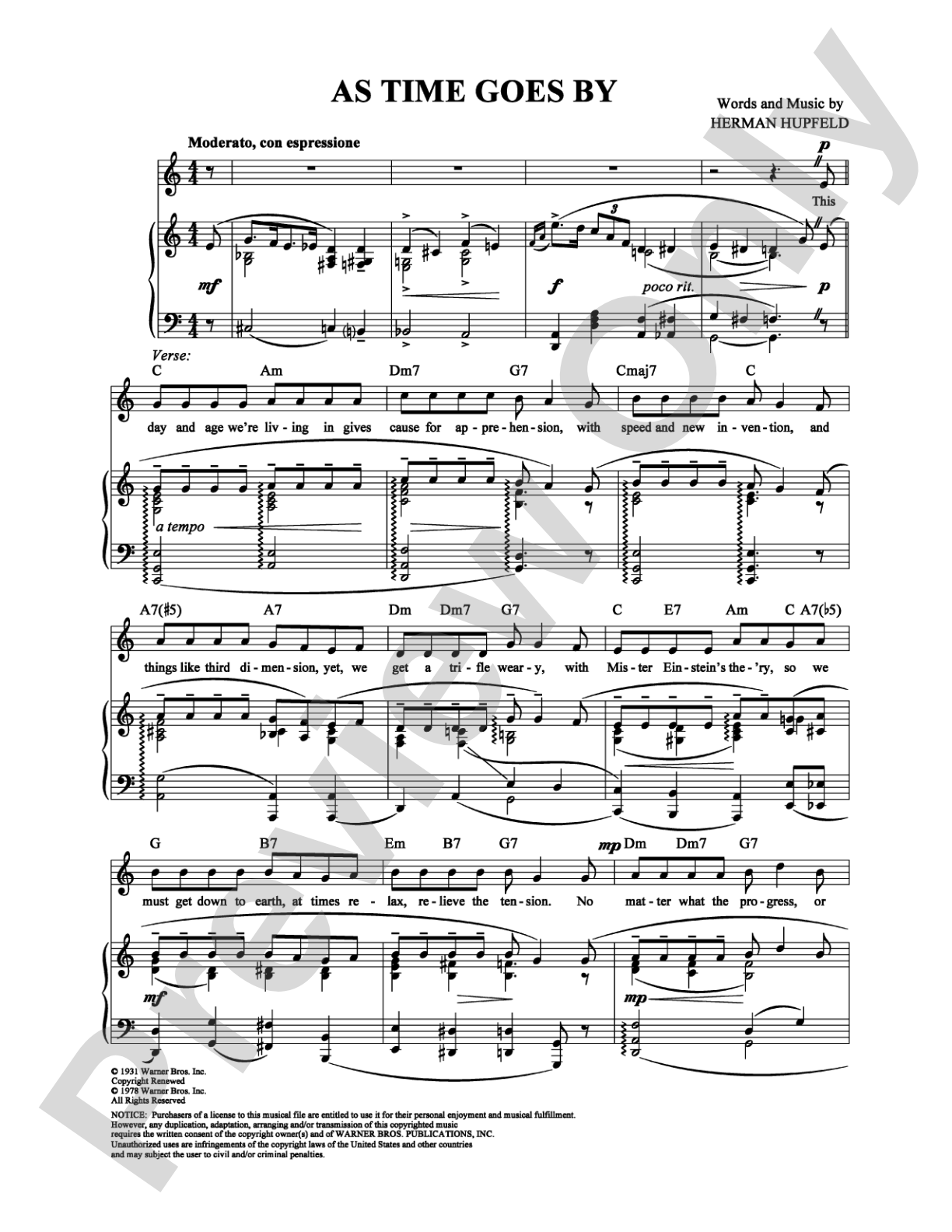
As Time Goes By: Piano/Vocal/Chords Digital Sheet Music

As Time Goes By: Piano/Vocal/Chords Digital Sheet Music

Herman Hupfeld, Dooley Wilson

Item: 00-PS-0003469

Digital Download
$2.95
Description

As Time Goes By: Piano/Vocal/Chords Digital Sheet Music isn't in MakeMusic Cloud just yet...but it could be. Let us know you'd like to see it, and you'll help shape what comes next. In the meantime, start a free trial and dive into thousands of interactive titles your students can play along with today.

Sample Audio
No sample audio found.
Sample Video
Additional Details
SKU: 00-PS-0003469

More about this title

About the Artist: Dooley Wilson

Dooley Wilson (1894, 1966) was an American actor, singer, and pianist who became iconic for his role in the 1942 film Casablanca, where he performed "As Time Goes By" at the piano. Though his film career was limited by the racial barriers of Hollywood's era, his warm baritone and skilled accompaniment made him a memorable interpreter of American standards.

Wilson's approach to this song exemplified the intimate, conversational style that defined the Great American Songbook. His version remains the definitive recording, shaping how generations of musicians understand this timeless classic.

Why we love this

This is one of those rare standards where the original artist recording is so iconic that learning the song through Dooley Wilson's arrangement gives students direct access to its authentic character. The piano/vocal/chords format works beautifully for jazz ensemble singers, music theater students, and accompanists who need to understand how to support intimate vocal storytelling without overwhelming the lyric.

What to expect

Nostalgic and reflective, with a gentle melancholy that asks the listener to sit quietly and remember. The arrangement moves with unhurried grace, allowing space for both the voice and piano to breathe between phrases.

Who it's for

Vocalists learning standard repertoire, jazz singers studying authentic interpretations of Great American Songbook classics, music theater students, and accompanists seeking a direct connection to how this iconic song was originally performed. This resource works equally well for solo recital preparation and ensemble context study.

How to get the most out of it

  • Treat the melody as spoken conversation first, sung second. The power of this song rests entirely on lyrical clarity and emotional sincerity, not vocal pyrotechnics.
  • Balance the vocal line against the piano accompaniment so the words remain the focal point. The chords provide harmonic color, not competition.
  • Explore rubato and small tempo variations that follow the natural phrasing of the text. This arrangement supports flexibility within a classic song structure.

How to use it

Include this in a jazz standards night or American songbook recital where authenticity and historical connection matter. It pairs naturally with other mid-century vocal repertoire and serves as an ideal closer to a concert program seeking an intimate, emotionally grounded final moment.

Skills your students will build

  • Phrasing standards-era lyrics with clarity and emotional intent
  • Reading and interpreting lead sheet notation (melody, chords, and lyrics)
  • Balancing vocal line with piano accompaniment
  • Understanding rubato and flexible tempo within a song structure

You May Also Like