
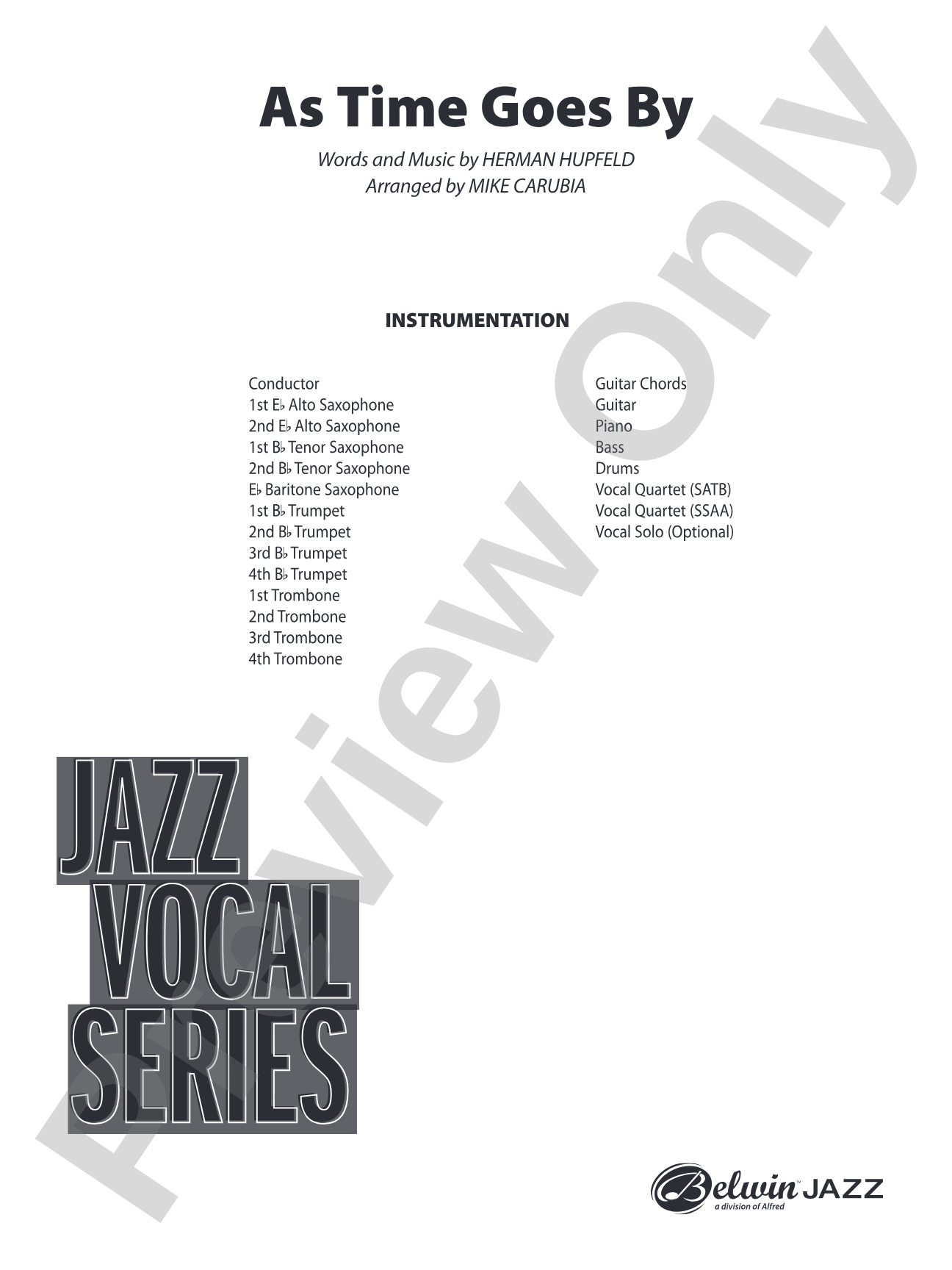
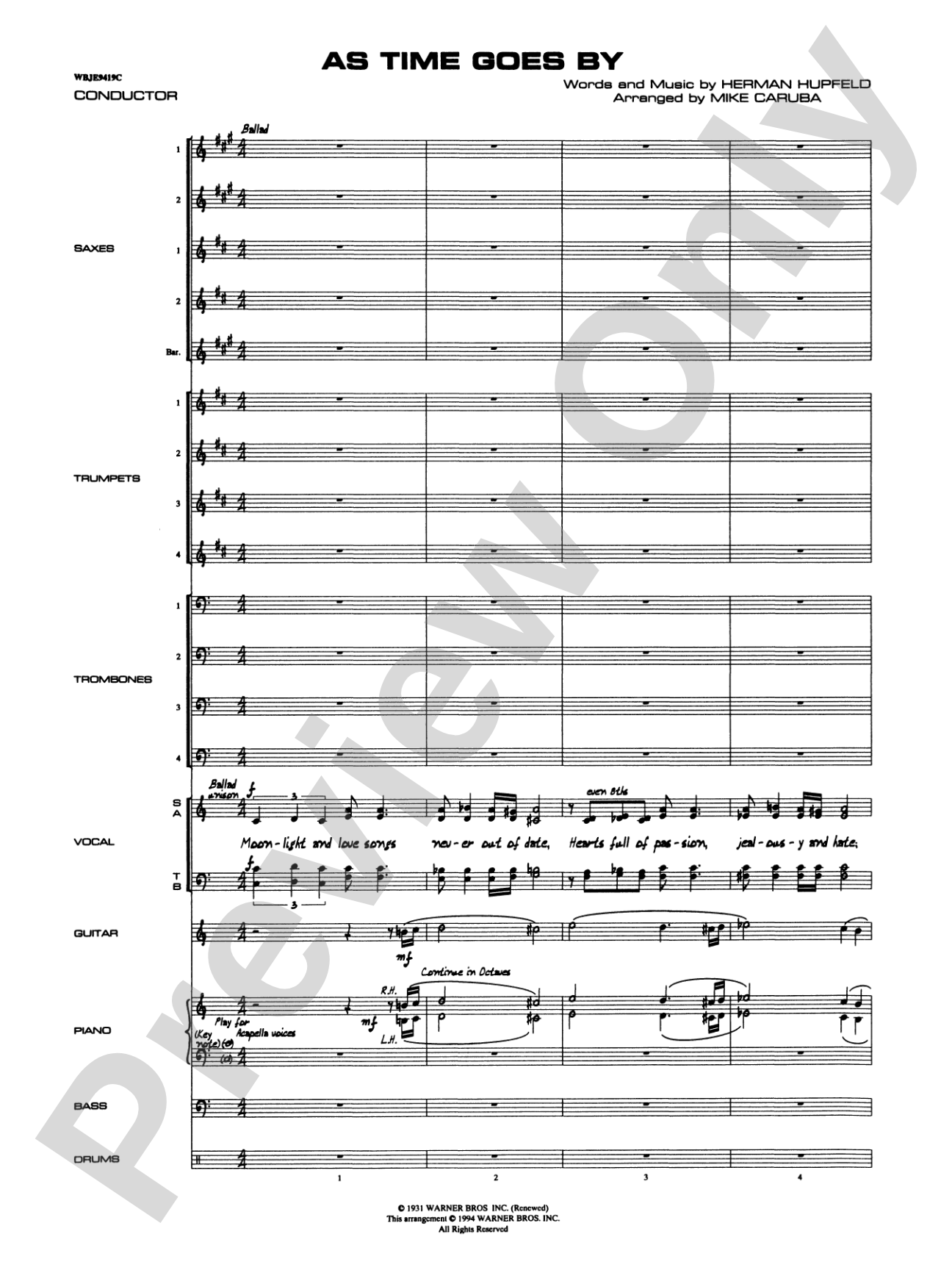
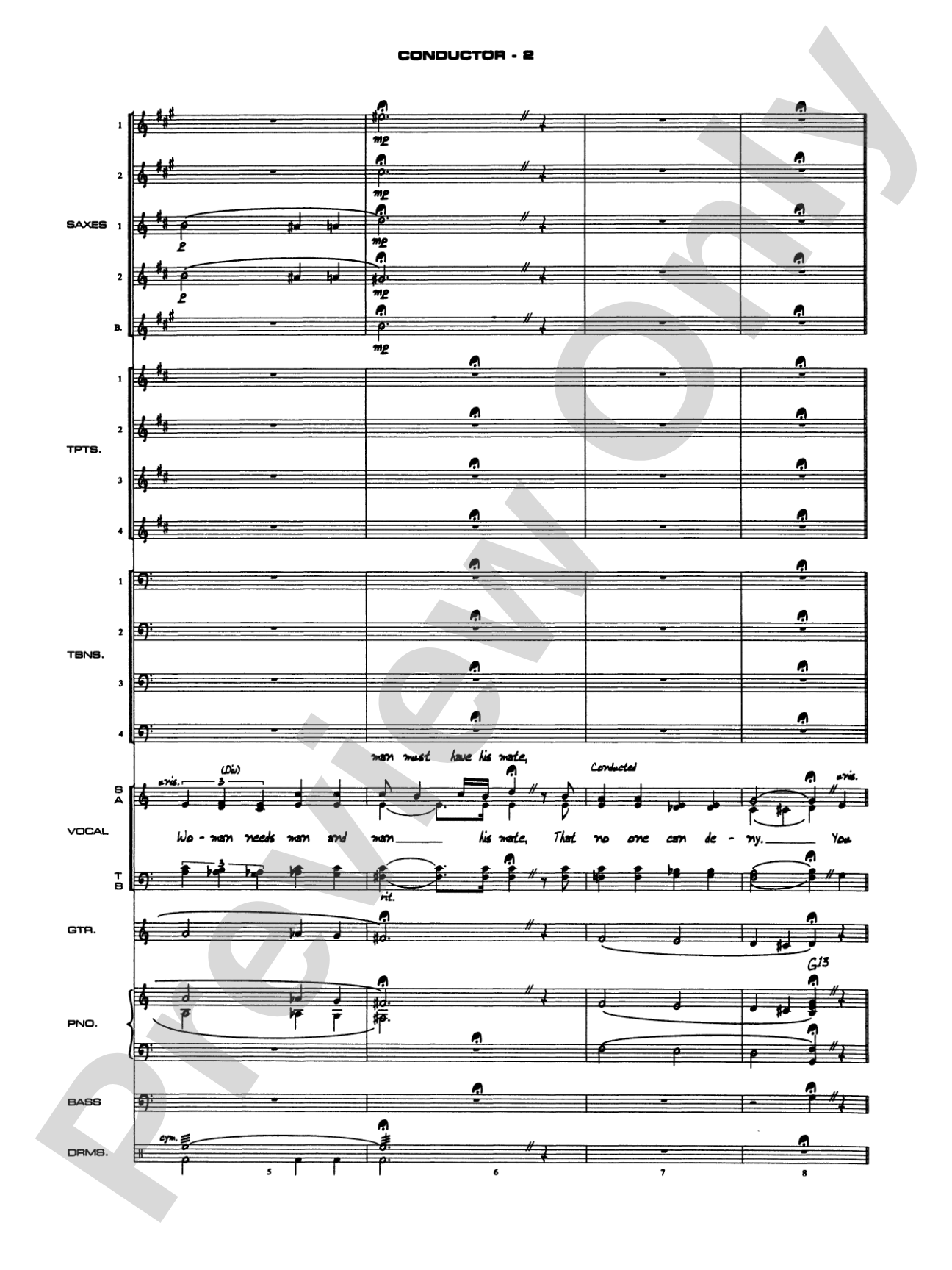
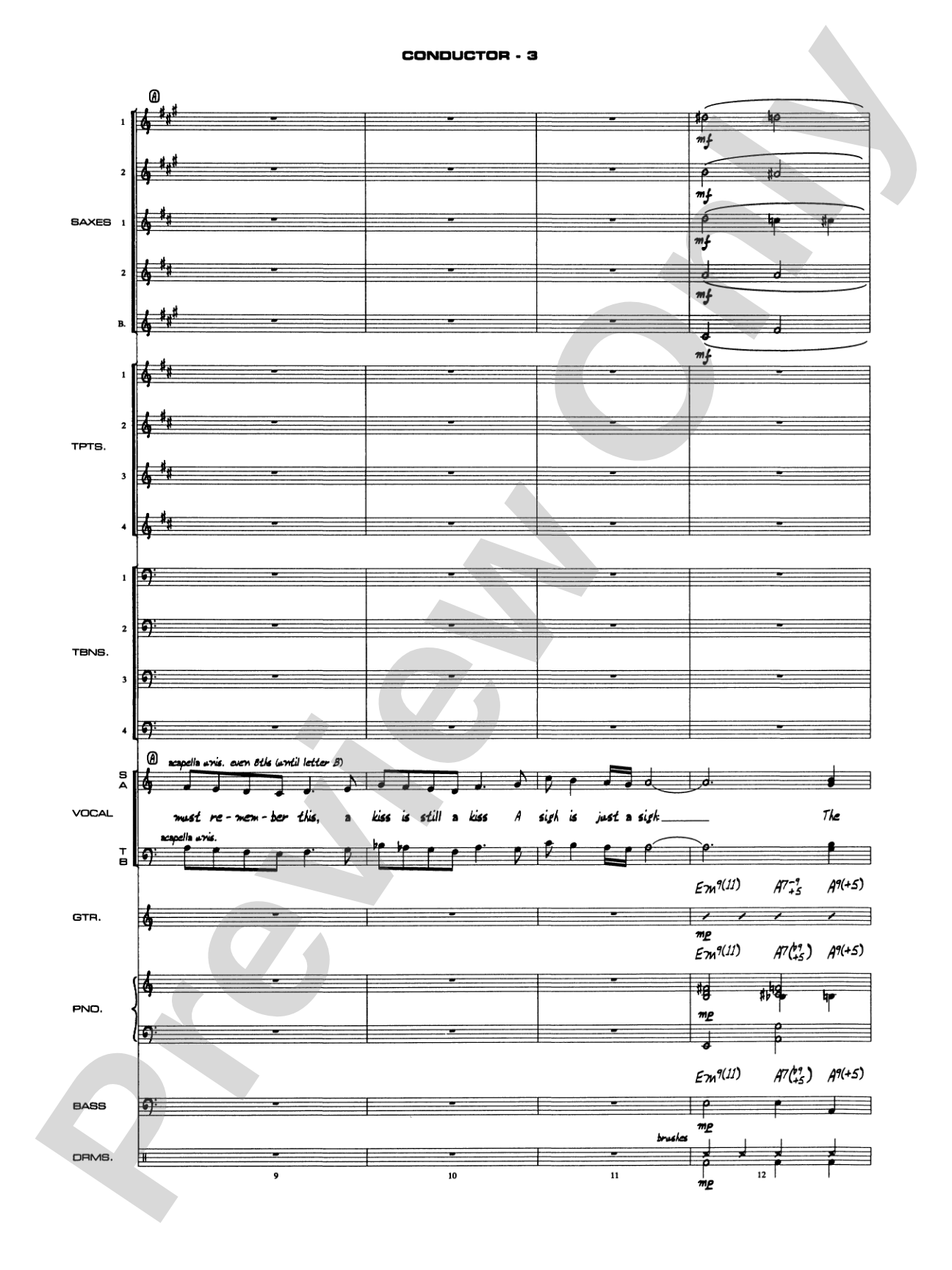
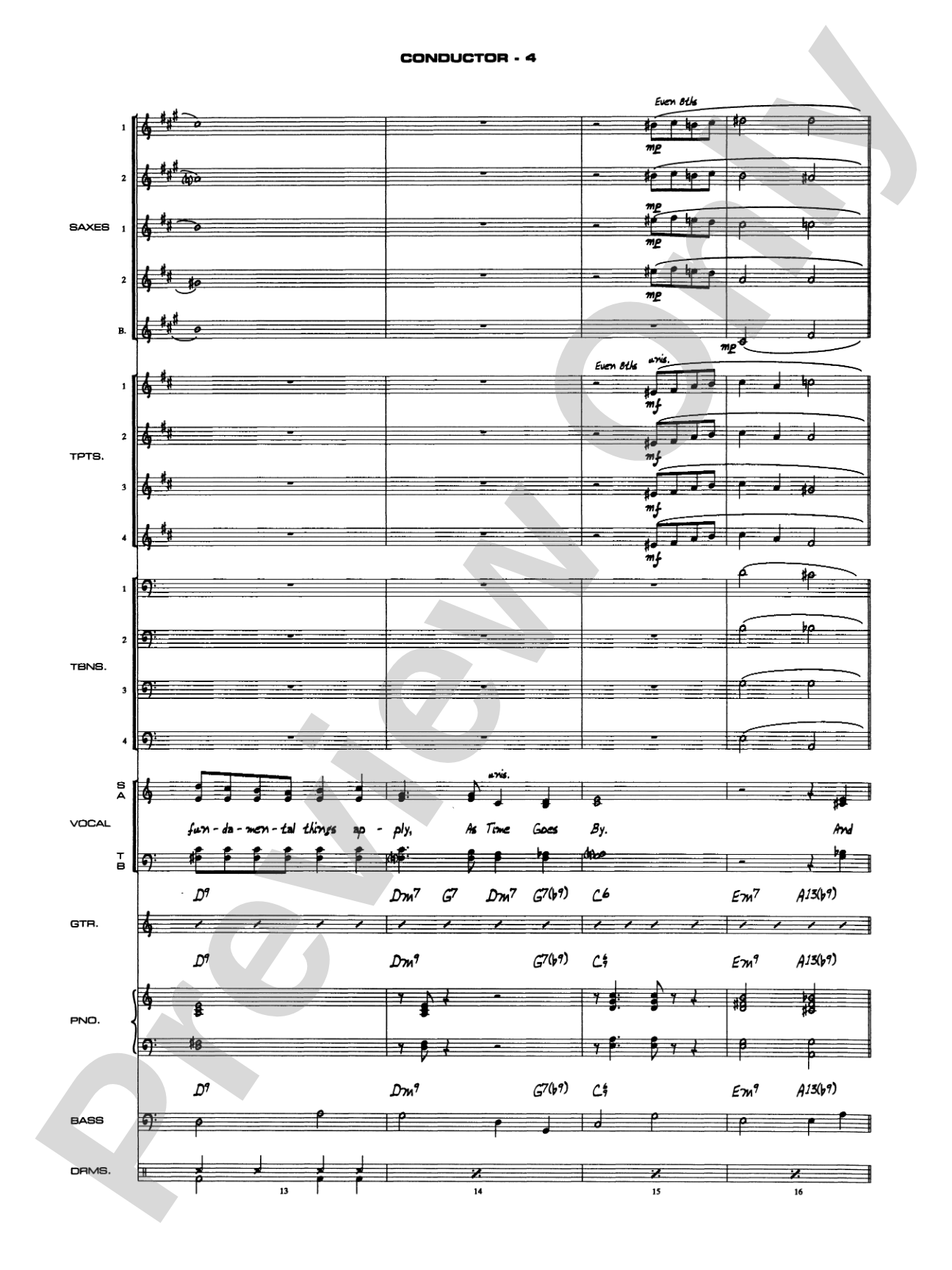
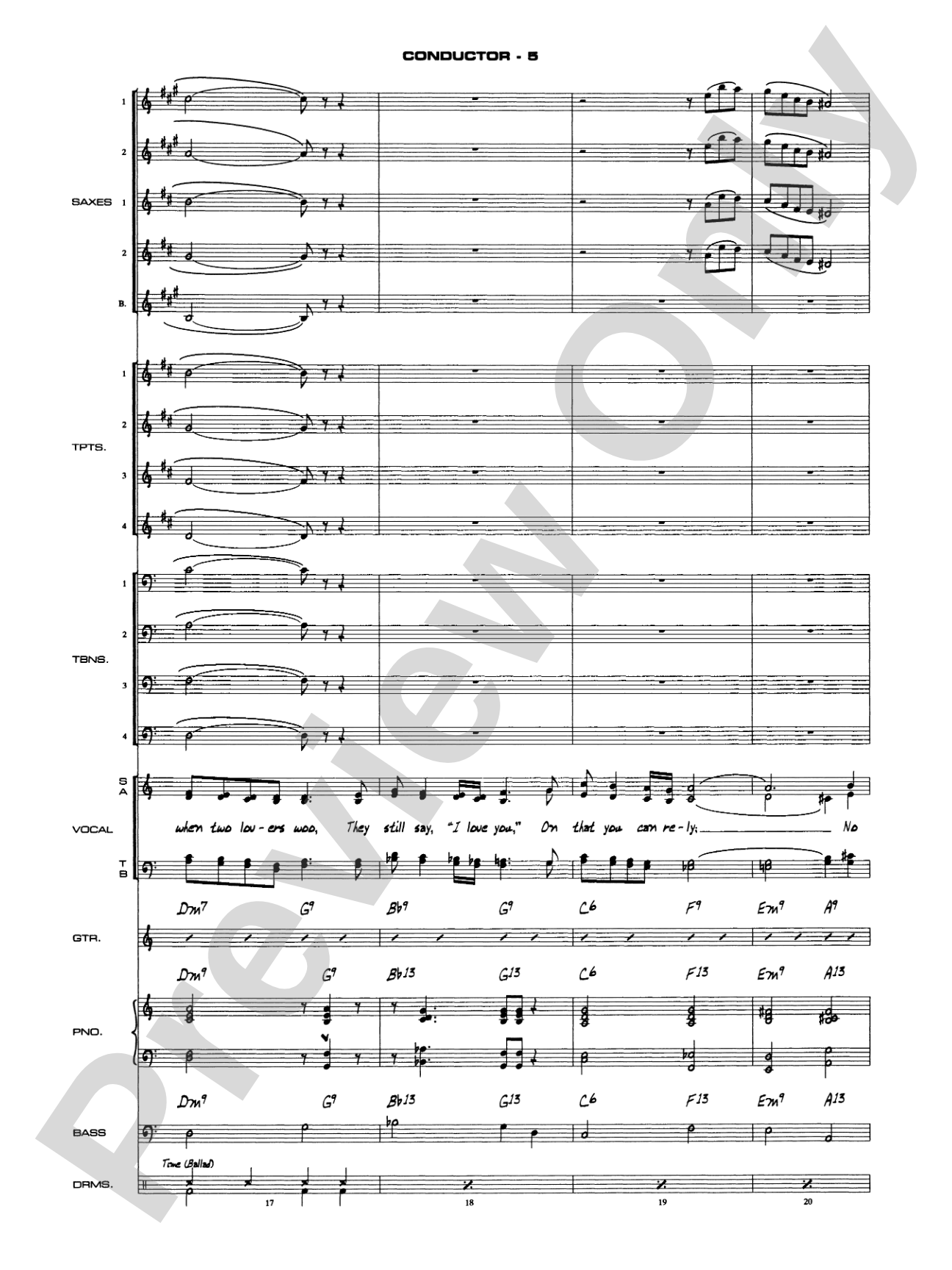
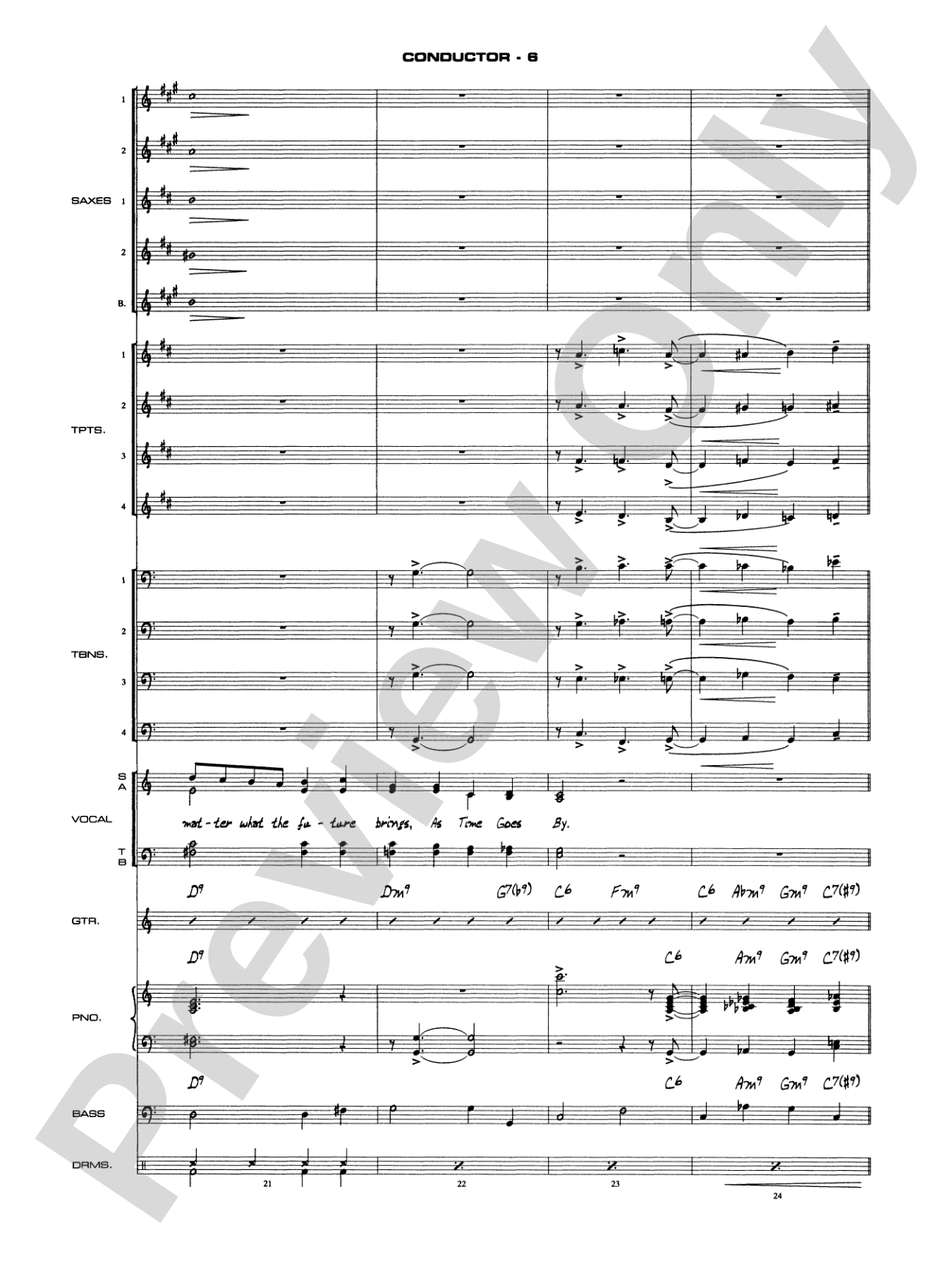
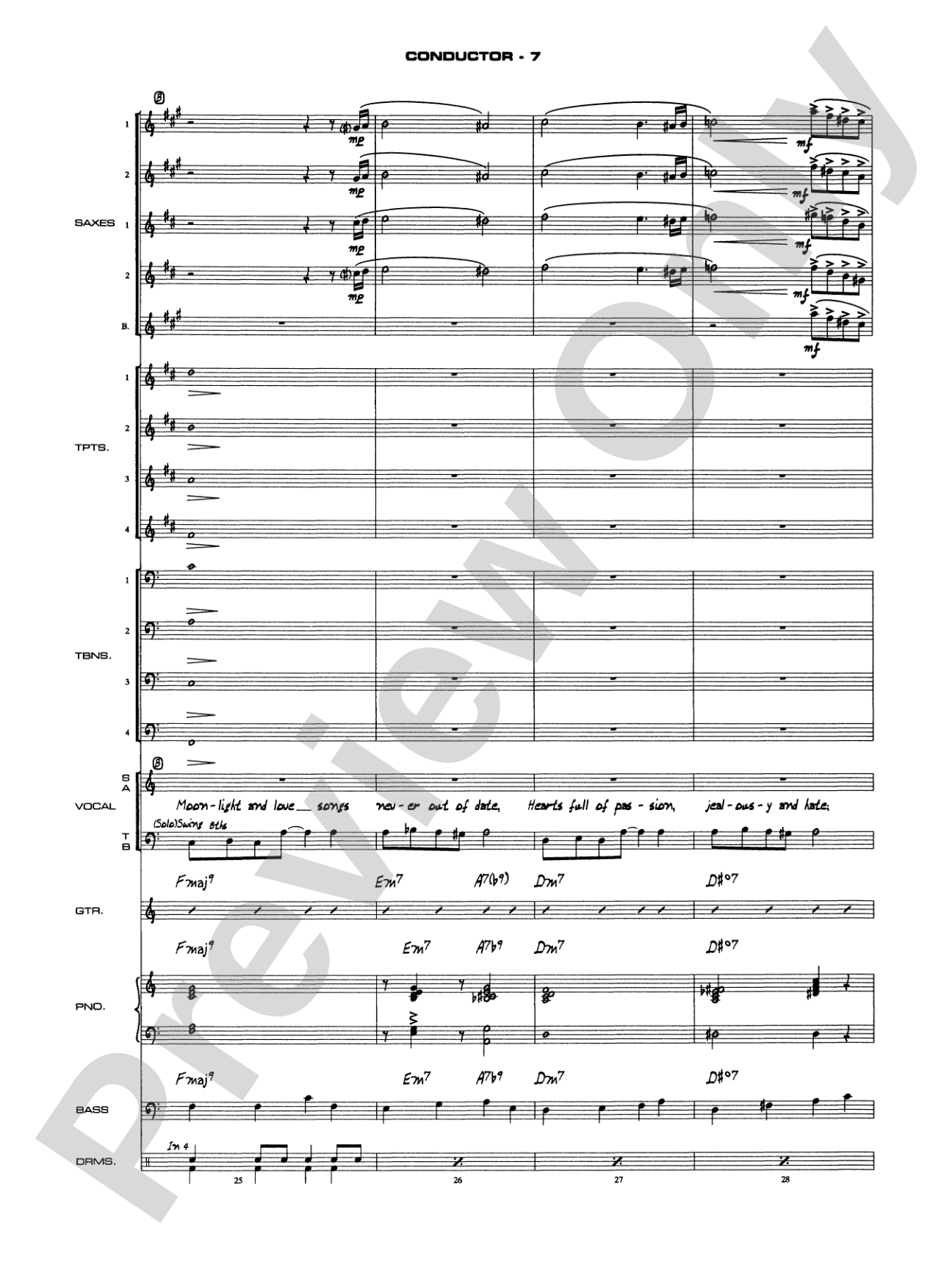
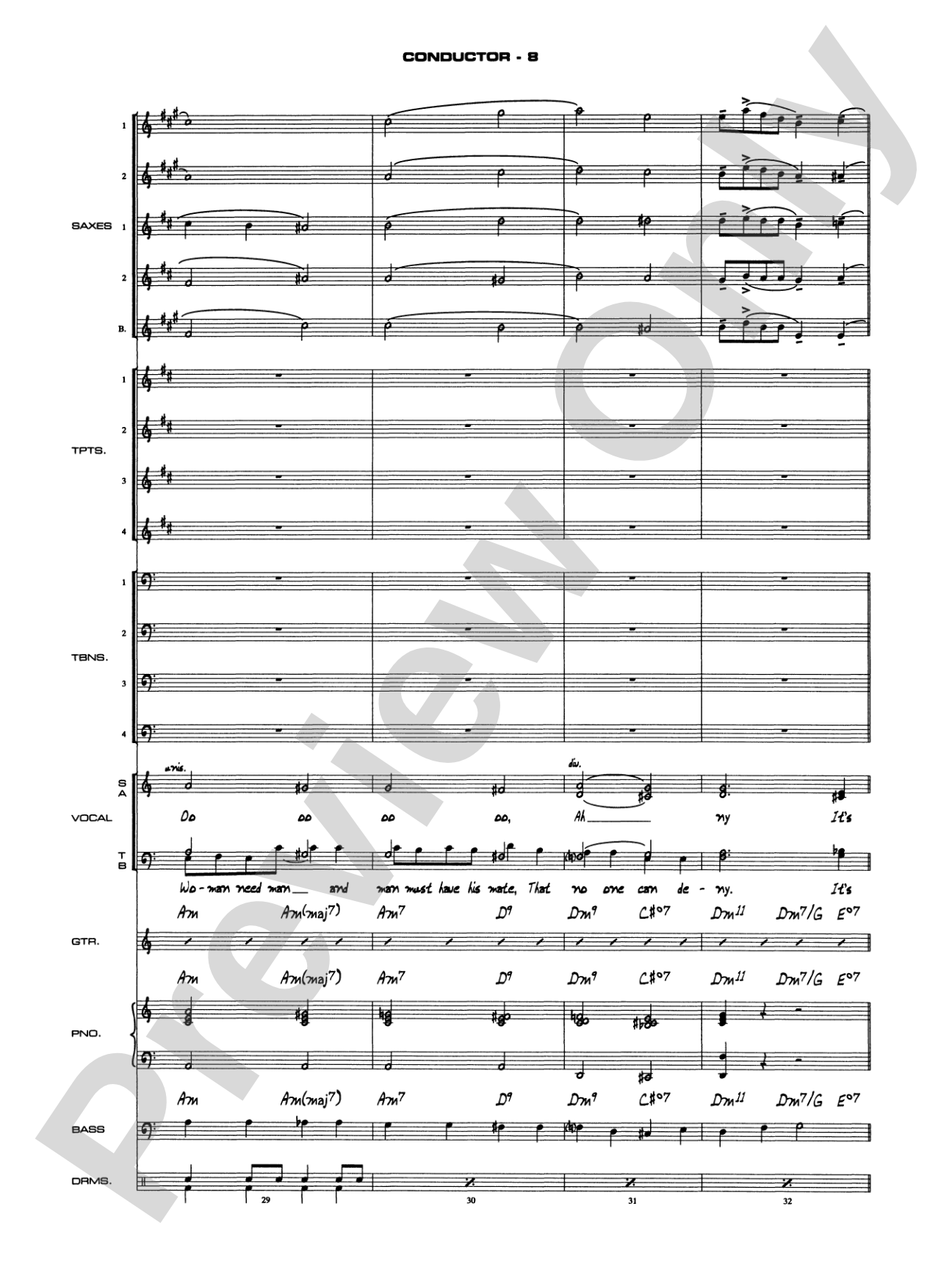
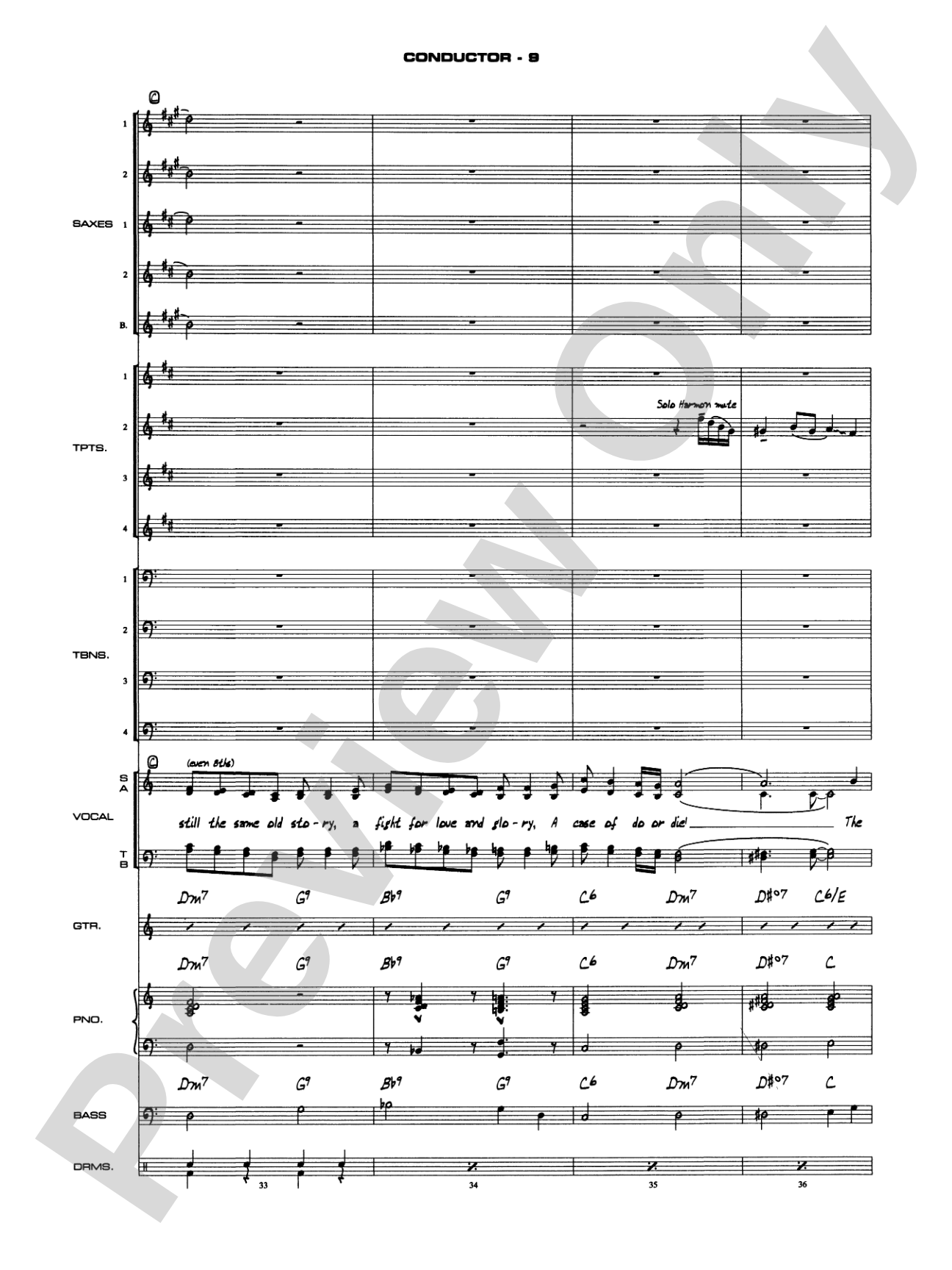
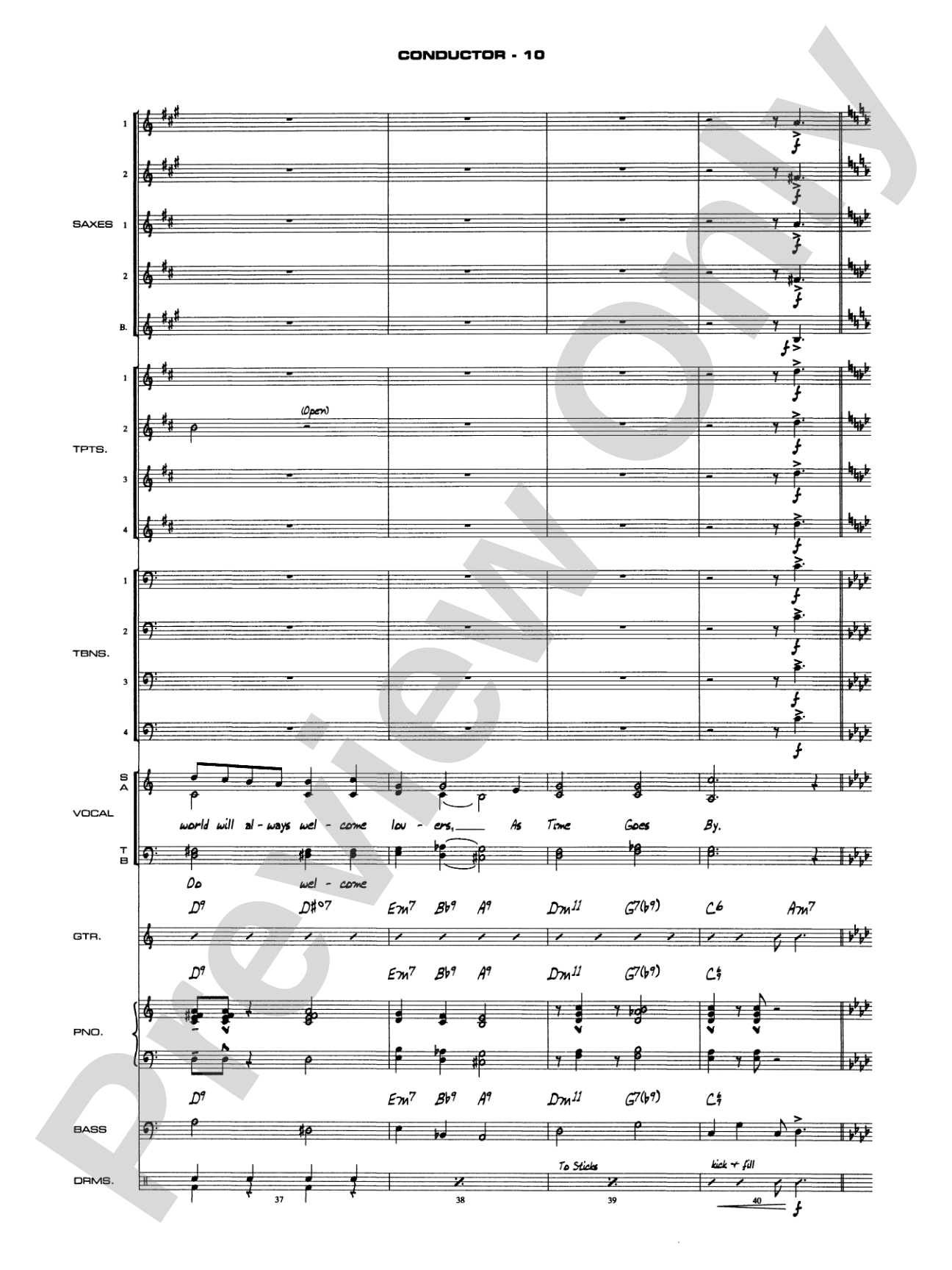
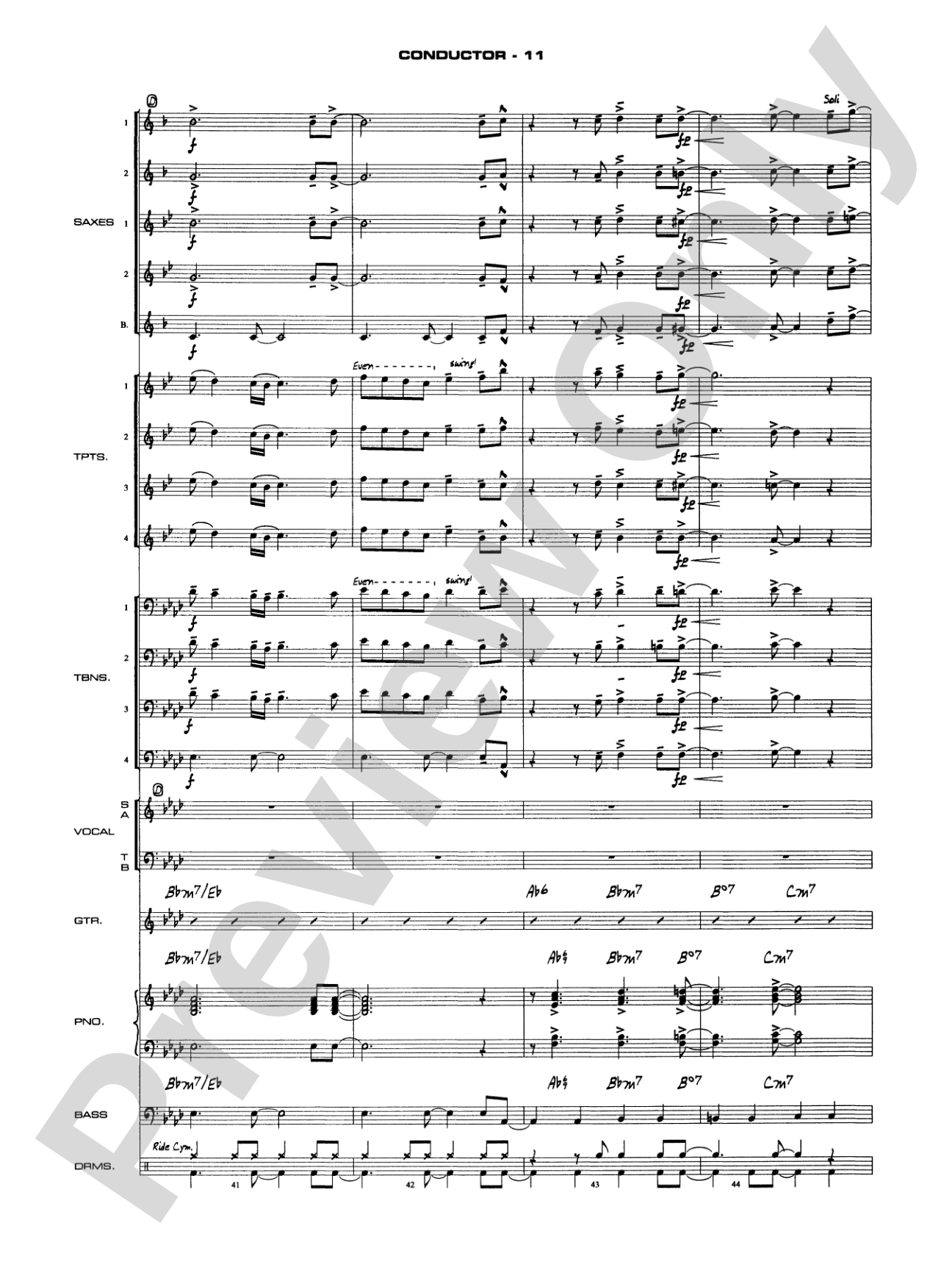
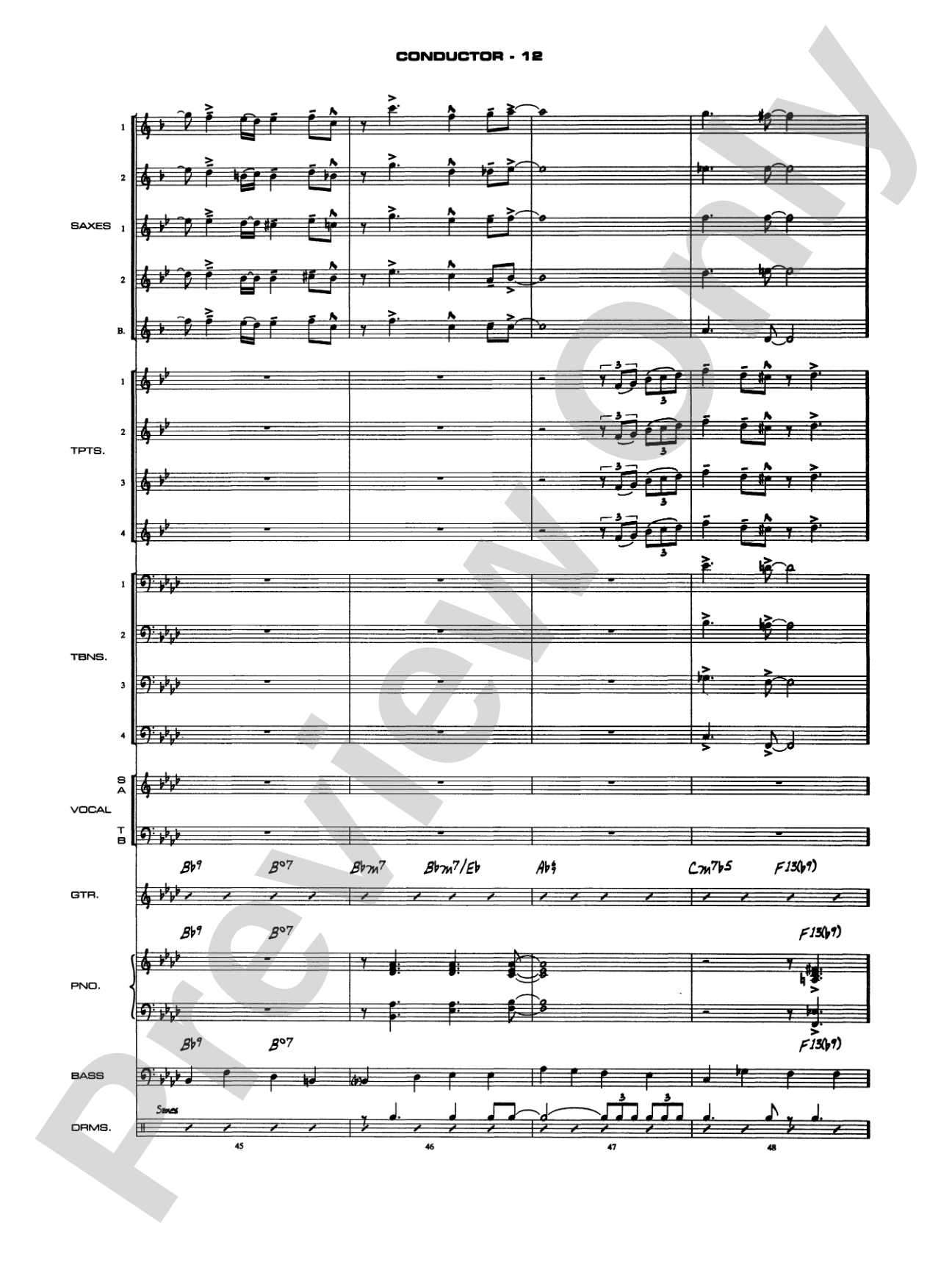
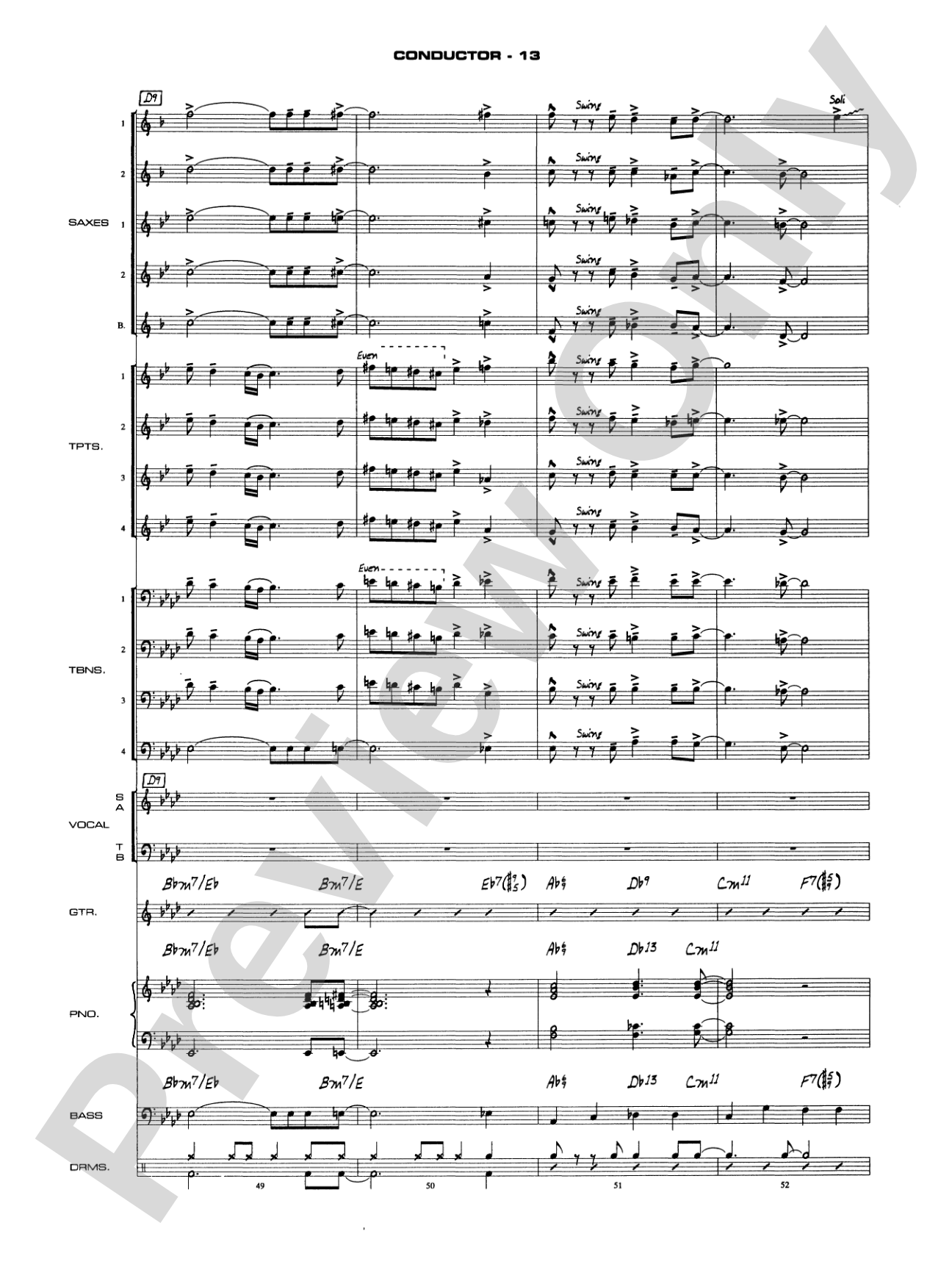
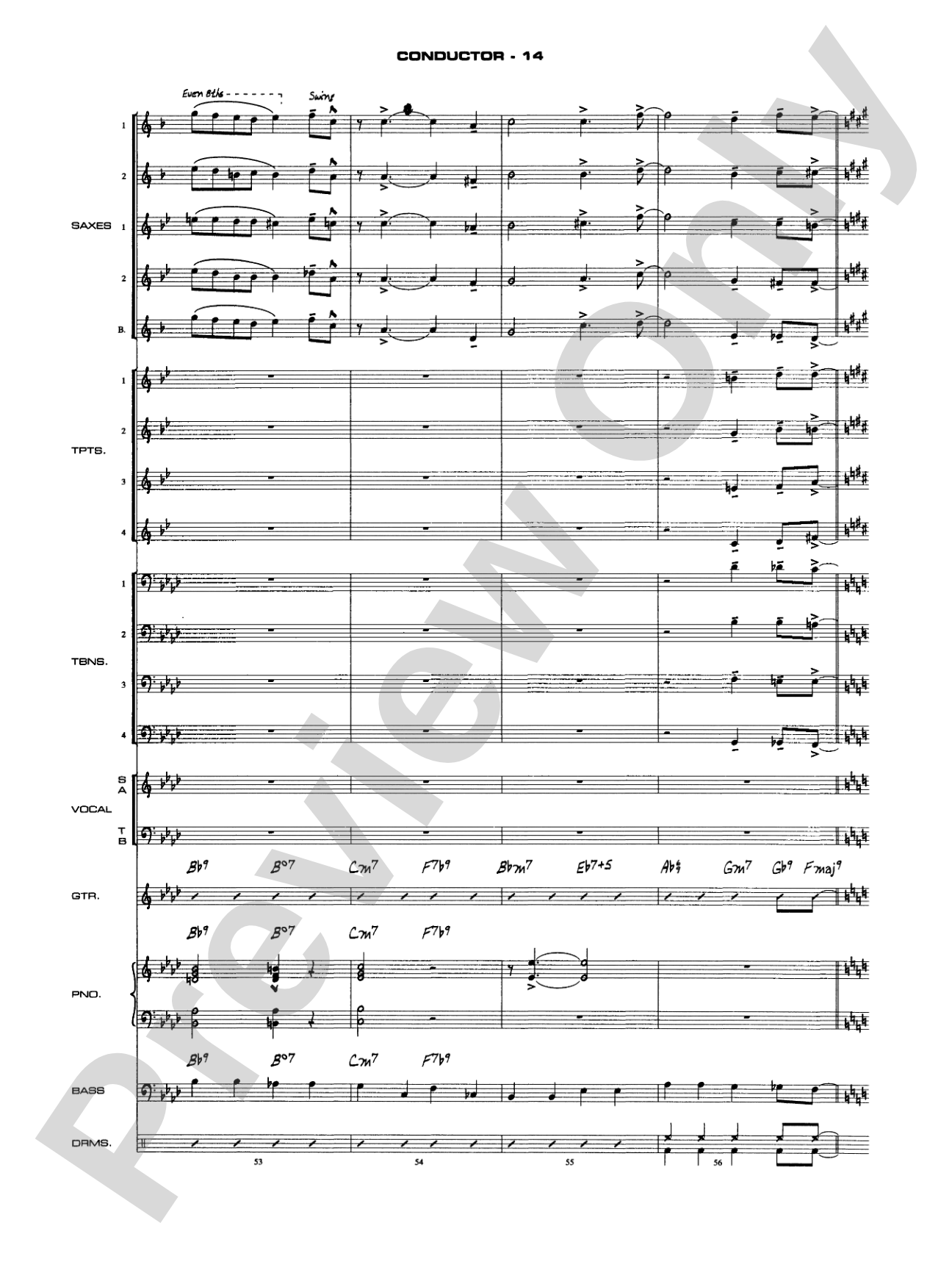
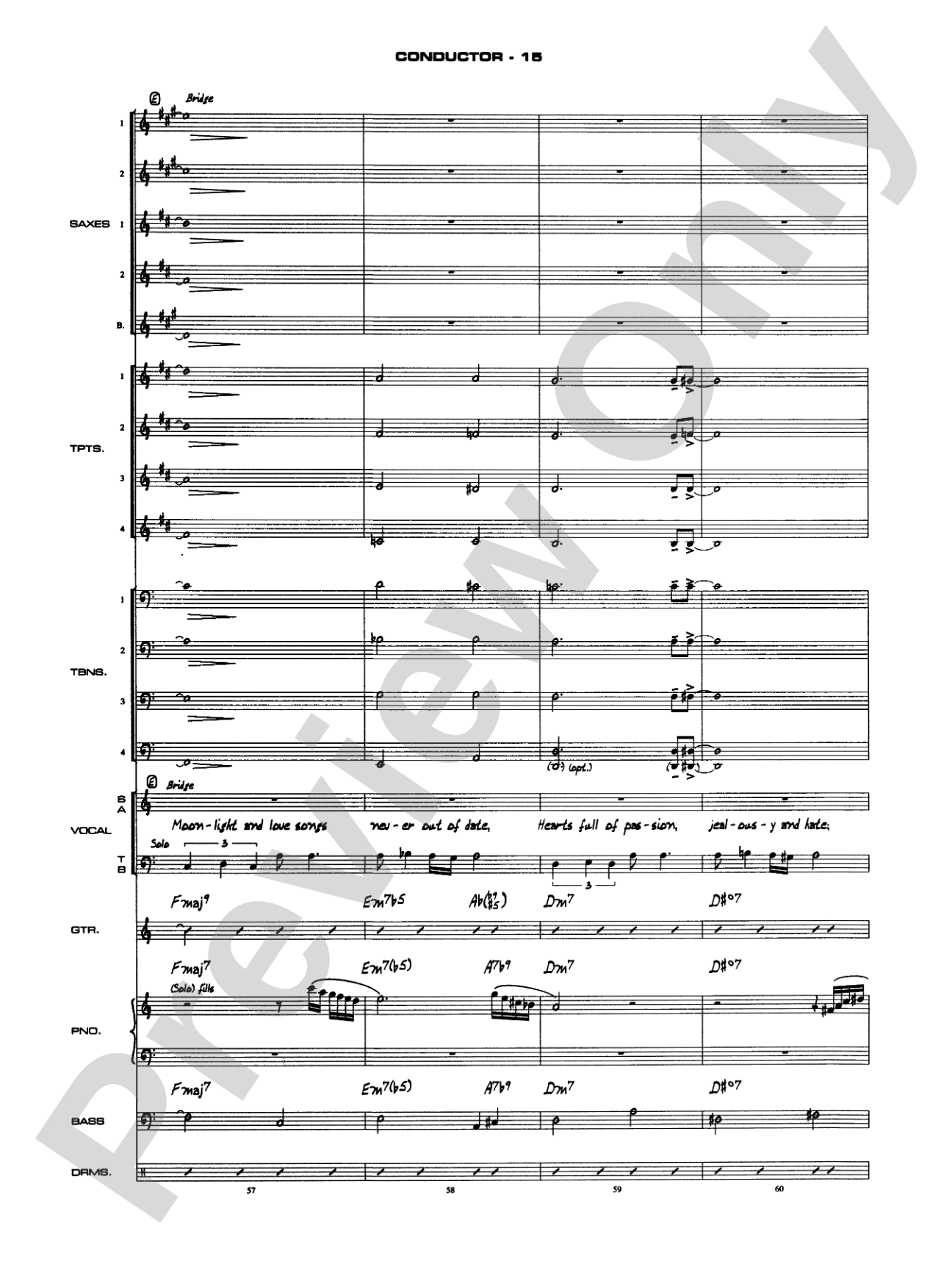
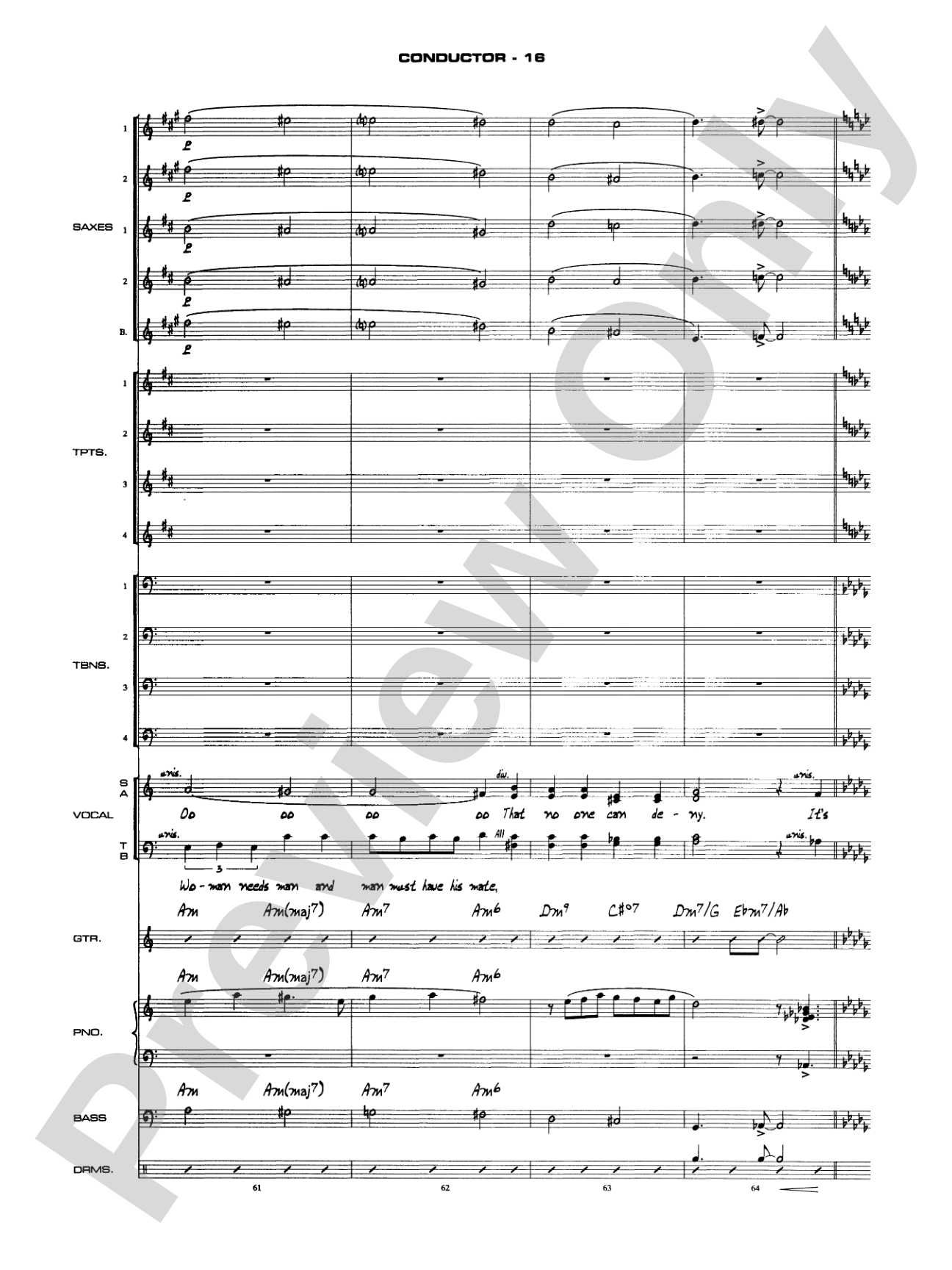
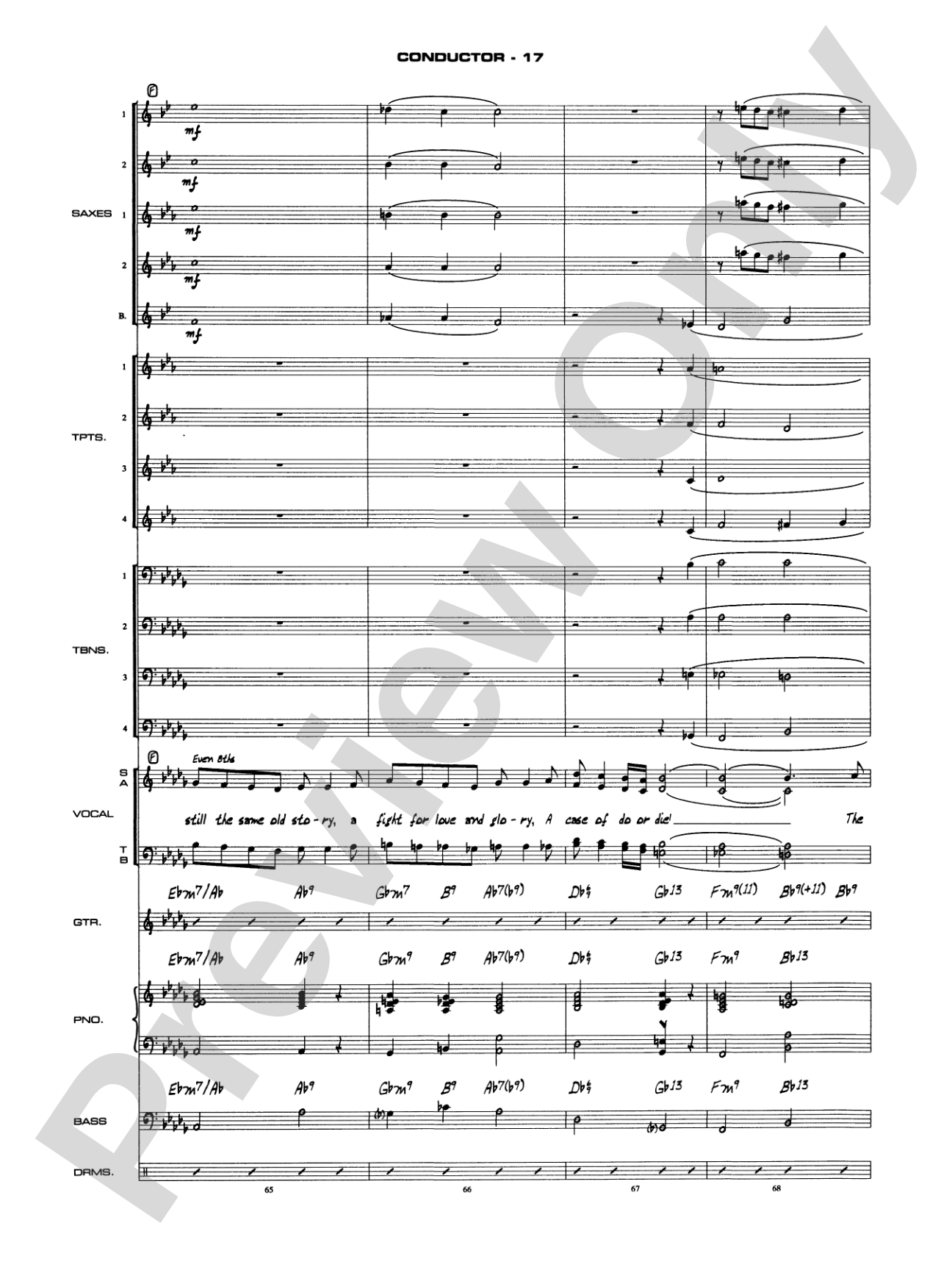
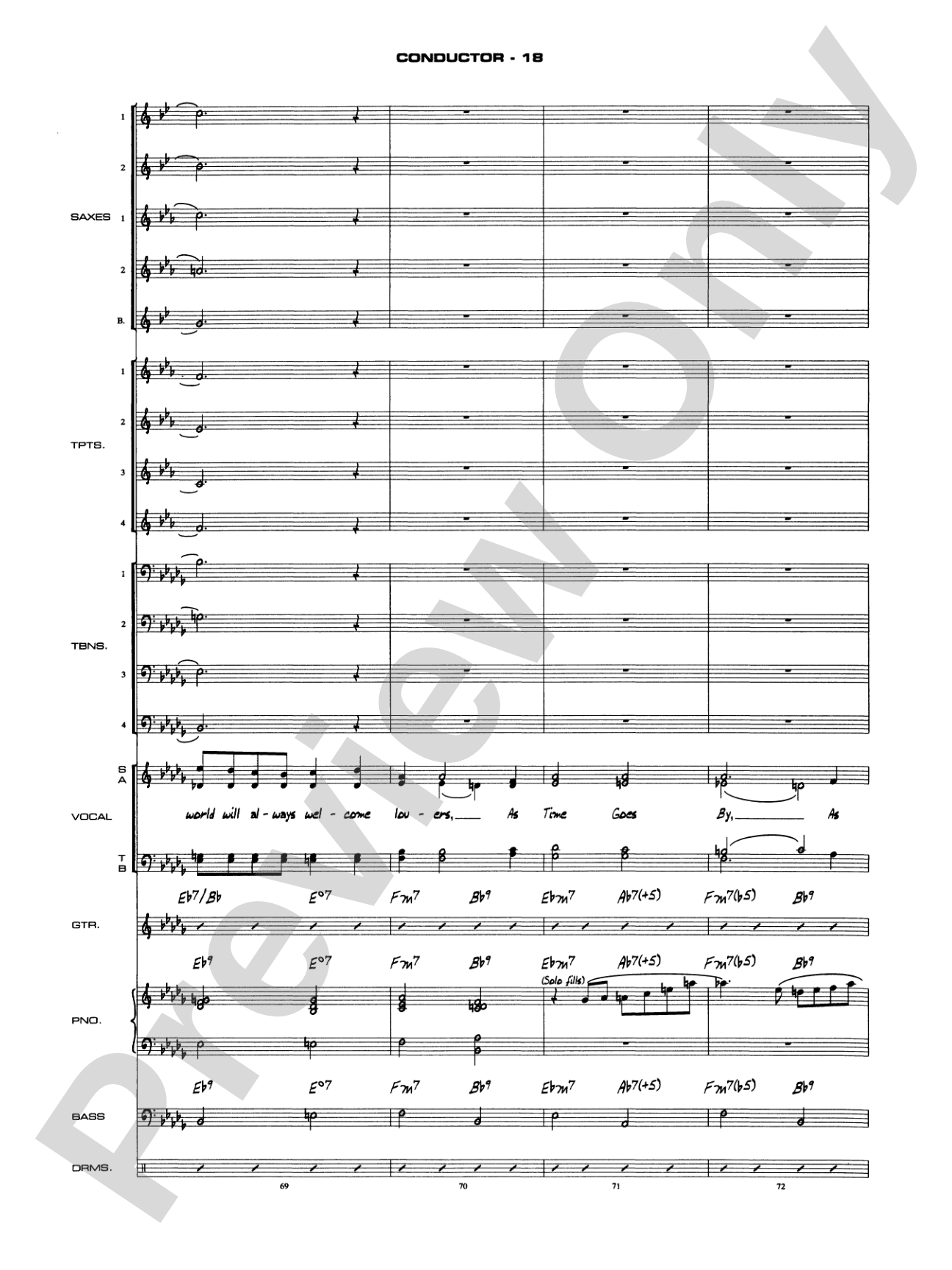
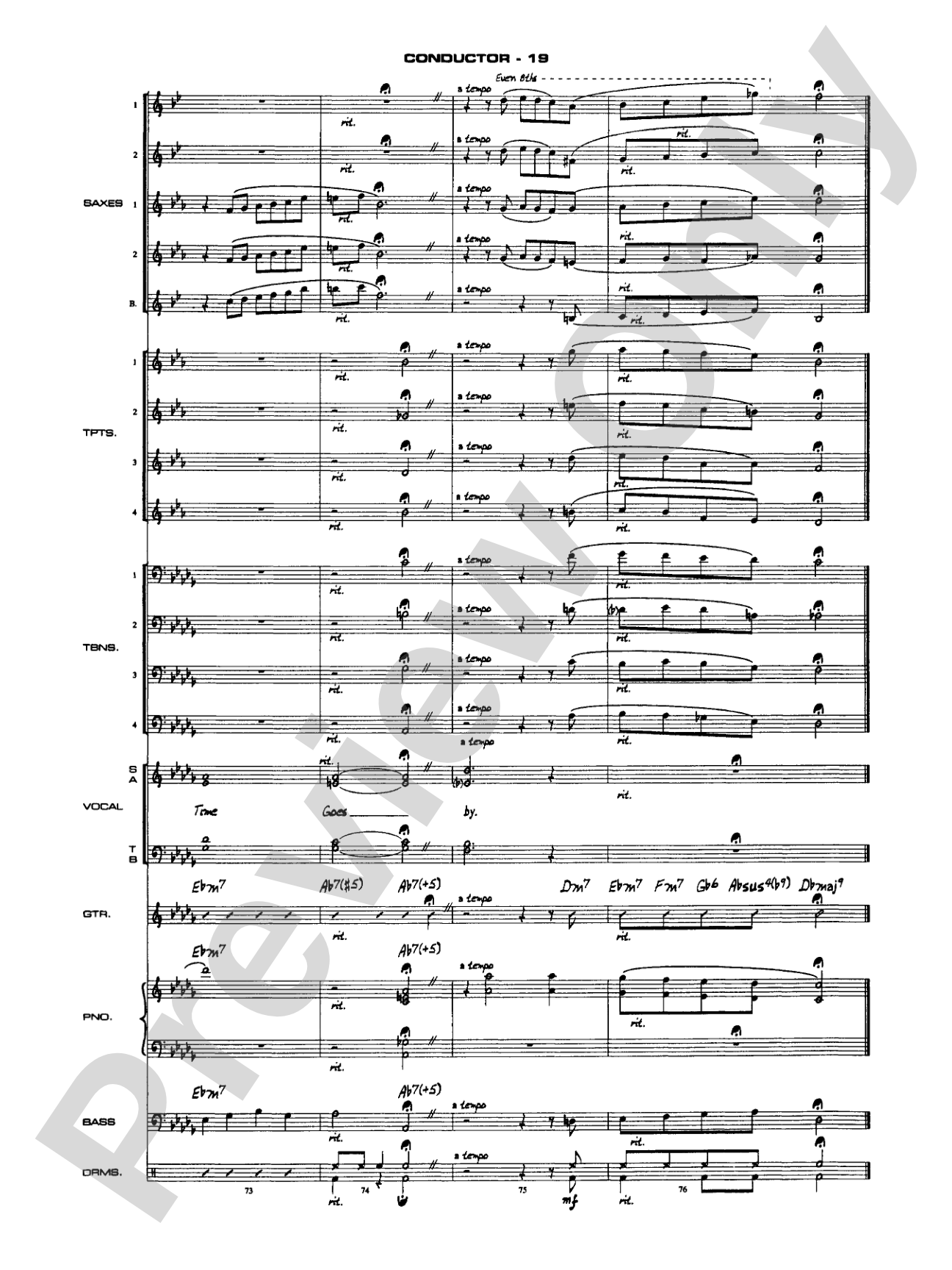

As Time Goes By: Vocal Solo with Jazz Ensemble Conductor Score & Parts
Vocal Feature - Key of C
By Herman Hupfeld / arr. Mike Carubia
Grade: 4 (Medium Advanced / Difficult)
Item: 00-PK-0004469

$54.00
One moment…
Related Items
As Time Goes By: Vocal Solo with Jazz Ensemble Conductor Score & Parts |
$54.00
|
View |
Description
As good a torch song as ever written, and now available for vocal group (SATB or SSAA) with jazz ensemble. Can be used as a vocal solo, also. Either way, it's great music! Good voice leading in the vocal parts, and the band has background figures that are just right. The band gets a chance to blow in its own right, too. Everything's there!!


Don't just read it, hear it, play along with it, and watch your students grow with it. In MakeMusic Cloud, As Time Goes By: Vocal Solo with Jazz Ensemble Conductor Score & Parts comes alive with professional accompaniment, adjustable tempo, and built-in practice tools that turn solo practice into real progress.
Open in the Player
Jump straight in and assign it today.
Start Your Free Trial
Open this title and explore the full library in minutes.
Sample Audio
No sample audio found.
Sample Video
No sample videos found.
Additional Details
Series:
Jazz Vocal Series
Publisher:
Alfred Music
Page Count:
66
SKU:
00-PK-0004469
More about this title
About the Composer: Herman Hupfeld
Herman Hupfeld (1894-1951) was an American songwriter and composer best known for "As Time Goes By," which became a standard after its appearance in the 1942 film Casablanca. Working primarily in the 1920s and 1930s, Hupfeld crafted sophisticated popular songs that blended jazz idioms with strong melodic sensibility and clever lyrical writing. His work remains central to the American songbook and continues to challenge and reward musicians across multiple genres and skill levels.
Why we love this
This arrangement captures what makes the song endure: a melody and harmonic foundation strong enough to support serious musicianship from both vocalist and ensemble. Mike Carubia's voicing respects the standard's melodic integrity while giving the jazz ensemble genuine solo space and ensemble figures that breathe naturally rather than simply padding behind the vocalist. Programming this signals to your audience and students that jazz standards are legitimate literature deserving the same rehearsal commitment as any other ensemble work.
What to expect
A song that feels both intimate and swinging, balancing the introspection of a torch ballad with the forward motion and sophistication of jazz harmony. The arrangement honors the song's nostalgic weight while refusing sentimentality, maintaining the cool elegance that made the standard timeless.
Who it's for
Jazz ensembles at the Grade 4 level with an experienced vocalist who can navigate the song's interpretive demands. The arrangement works equally well in mixed SATB or treble SSAA voicing, making it accessible to different ensemble configurations without sacrificing musical quality.
How to get the most out of it
- Shape the vocal line with the harmonic rhythm rather than against it; the arrangement's chord changes are part of the song's emotional architecture, not obstacles to overcome.
- Balance the ensemble background figures so they support without overwhelming the vocalist. These voicings are intentional and deserve clarity, but the primary focus remains the solo voice.
- Allow the ensemble's solo section its own narrative weight. This is not filler; treat it with the same musical intention you bring to the vocal statement.
How to use it
Place this as a centerpiece in a jazz concert or a pops program where you want to showcase both vocalist and ensemble. Its familiarity makes it an excellent bridge for audiences less familiar with jazz repertoire, while its musical depth rewards serious listening and repeated exposure.
Skills your students will build
- Balancing solo line with ensemble accompaniment
- Reading and executing jazz voicing conventions
- Sustaining musical intention through familiar material
- Collaborative listening between vocalist and rhythm section
- Phrasing standard repertoire with harmonic awareness