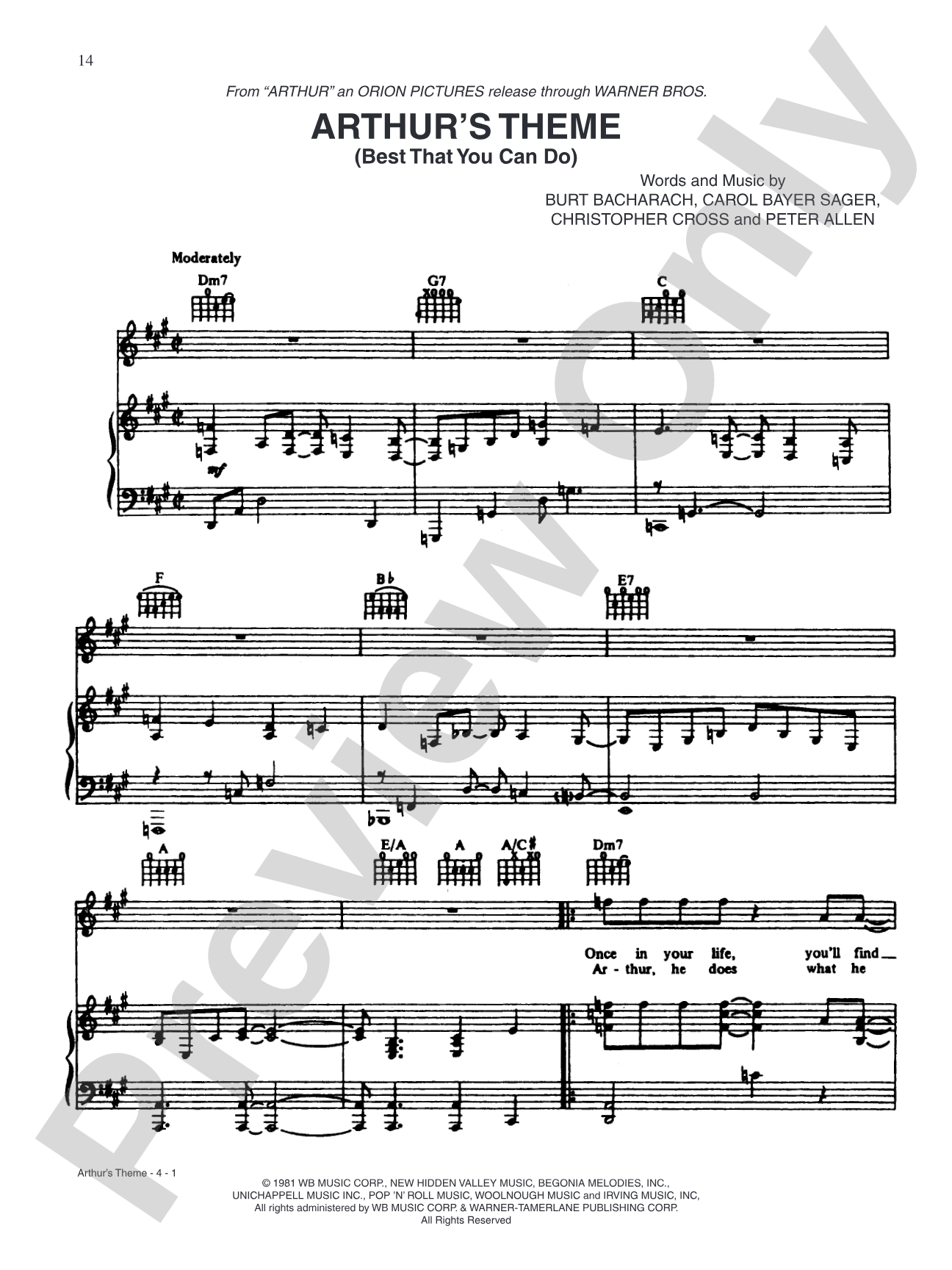
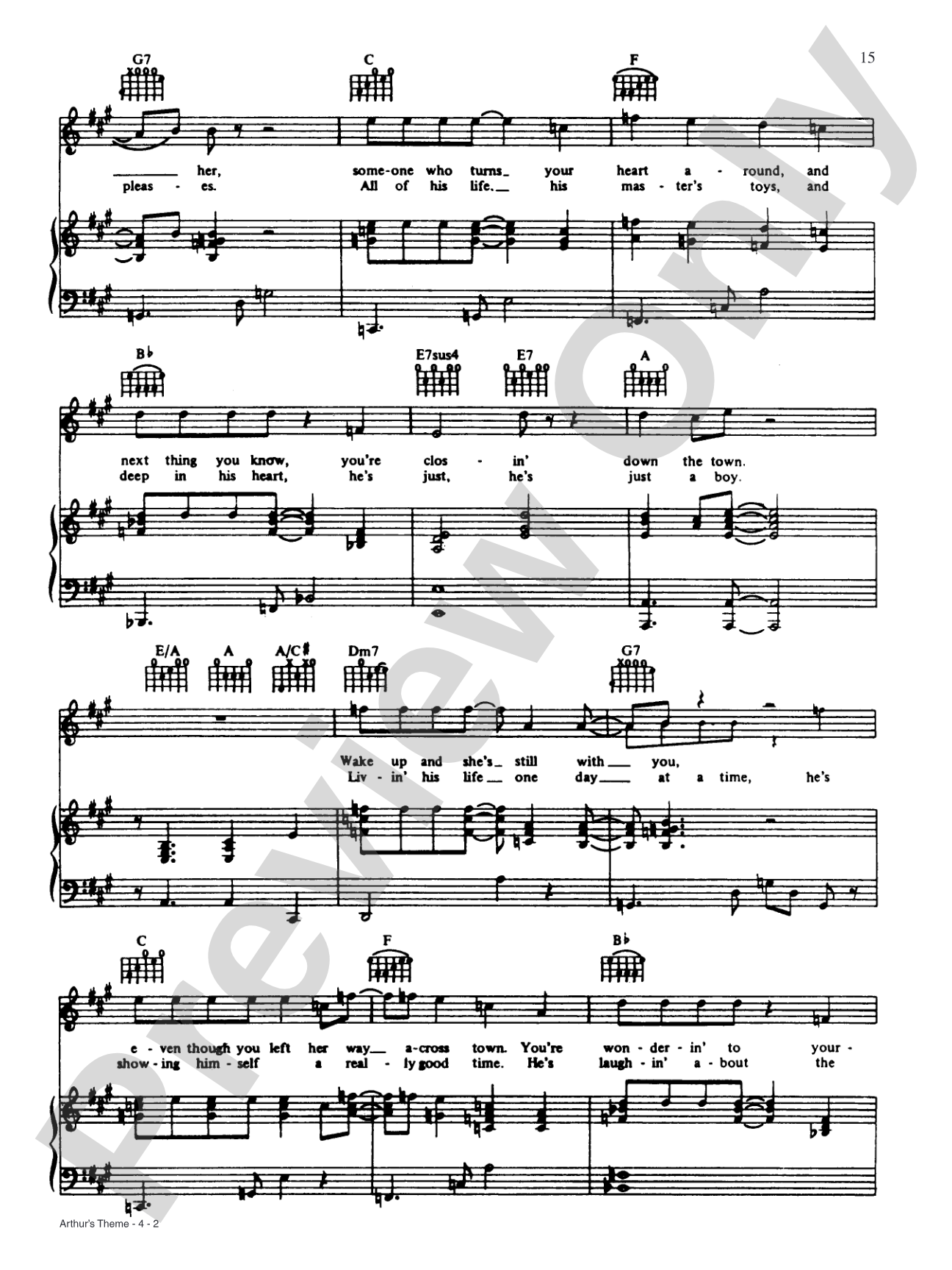
Arthur's Theme (Best That You Can Do) Sheet Music Preview

Arthur's Theme (Best That You Can Do): Piano/Vocal/Chords

Recorded by Christopher Cross

Item: 00-PIP-000107

Digital Download
$3.99

One moment…

Description

Arthur's Theme (Best That You Can Do): Piano/Vocal/Chords isn't in MakeMusic Cloud just yet...but it could be. Let us know you'd like to see it, and you'll help shape what comes next. In the meantime, start a free trial and dive into thousands of interactive titles your students can play along with today.

Sample Audio
No sample audio found.
Sample Video
Additional Details
Publisher: Alfred Music
Page Count: 6
SKU: 00-PIP-000107

More about this title

About the Artist: Christopher Cross

Christopher Cross rose to prominence in the late 1970s with a distinctive soft rock sound that blended pop sensibility with sophisticated production. His 1979 album "Christopher Cross" became a cultural phenomenon, earning multiple Grammy Awards and establishing him as a songwriter who could craft memorable melodies with genuine emotional depth.

Beyond his chart success, Cross demonstrated skill in composing for film and television. "Arthur's Theme (Best That You Can Do)" showcases his ability to write accessible yet well-crafted pop songs that resonate across audiences. His work remains relevant in music education contexts where contemporary songwriting and popular music study serve pedagogical purposes.

Why we love this

This song offers a bridge between classical voice and piano instruction and contemporary repertoire that students recognize and want to sing. The melody sits naturally in the voice, the chord changes are clear enough to guide learners through lead sheet reading, and the arrangement respects both the song's character and the capabilities of developing musicians.

What to expect

Warm and reflective, with an underlying current of hope. The melody floats above gentle harmonic movement, creating a sense of quiet confidence rather than bombast. There's a conversational intimacy here—the song speaks to rather than at the listener.

Who it's for

Singers developing their interpretation of popular repertoire and pianists looking to accompany contemporary material. This six-page arrangement works well for vocalists in later secondary grades or college settings who want to expand beyond classical or musical theatre standards into accessible pop songwriting.

How to get the most out of it

  • Treat the verses with restraint. The magic of this song lives in its understated elegance rather than vocal intensity. Let silence and space do as much work as the notes themselves.
  • Balance the piano accompaniment to support rather than overshadow the vocal line. This isn't a solo piano piece; the voice remains primary throughout.
  • Pay attention to the song's rhythmic pocket. Subtle rubato in the verses keeps the performance organic, but the chorus benefits from locking into a steady groove.
  • Shape the bridge carefully. This section offers the natural moment for vocal and dynamic expansion before the final chorus resolution.

How to use it

Include this in a concert or recital exploring how popular songwriting informs contemporary music education. It pairs well with other accessible pop material or as a bridge between classical art song repertoire and musical theatre selections. The six-page format makes it manageable for a single recital slot.

Skills your students will build

  • Reading lead sheet notation and chord symbols
  • Interpreting vocal phrasing across popular and contemporary idioms
  • Coordinating piano accompaniment with vocal line timing and expression
  • Understanding melodic shape and structural form in popular song (verse, chorus, bridge)
  • Developing stylistic awareness for contemporary music performance

You May Also Like