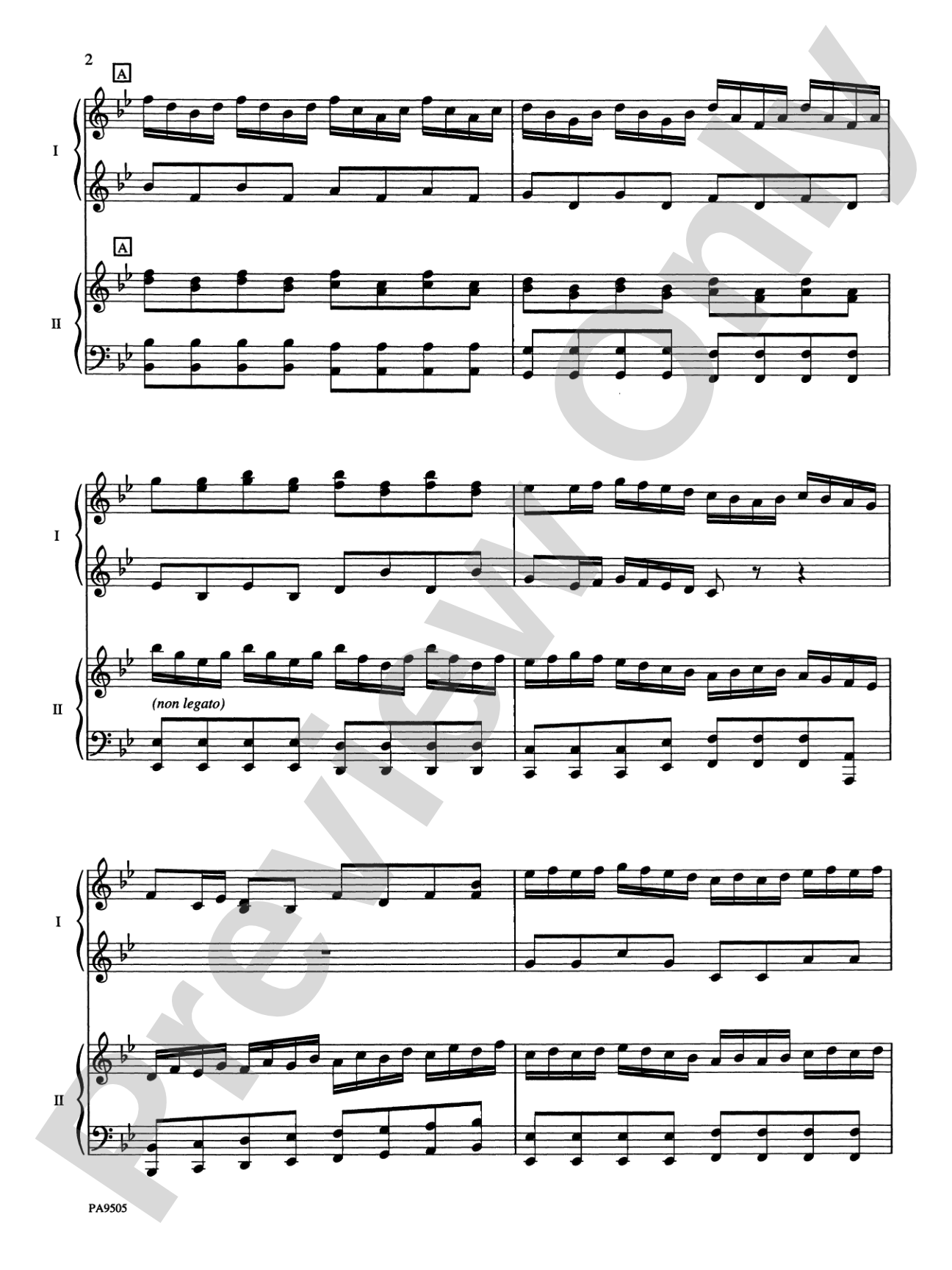
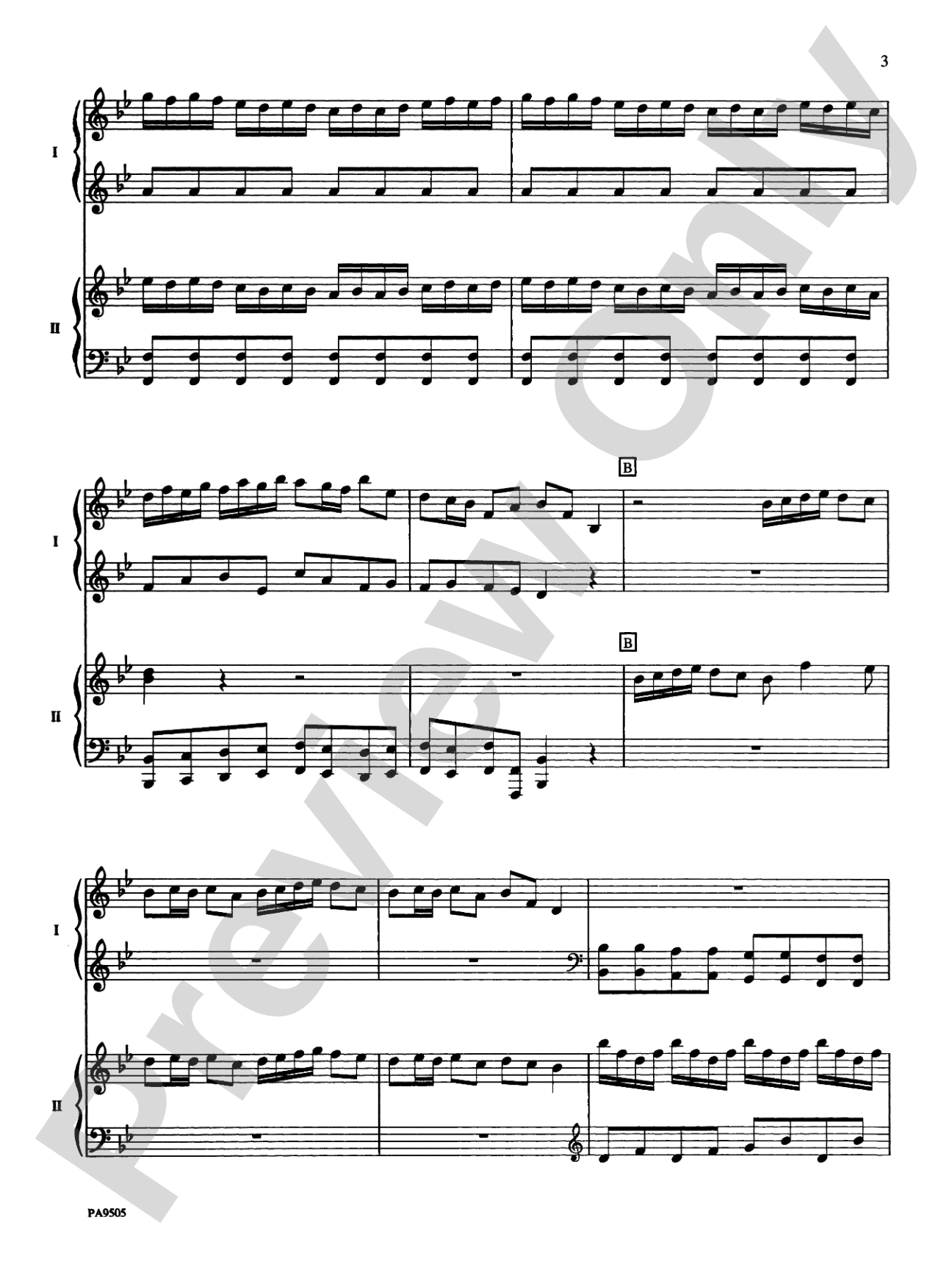
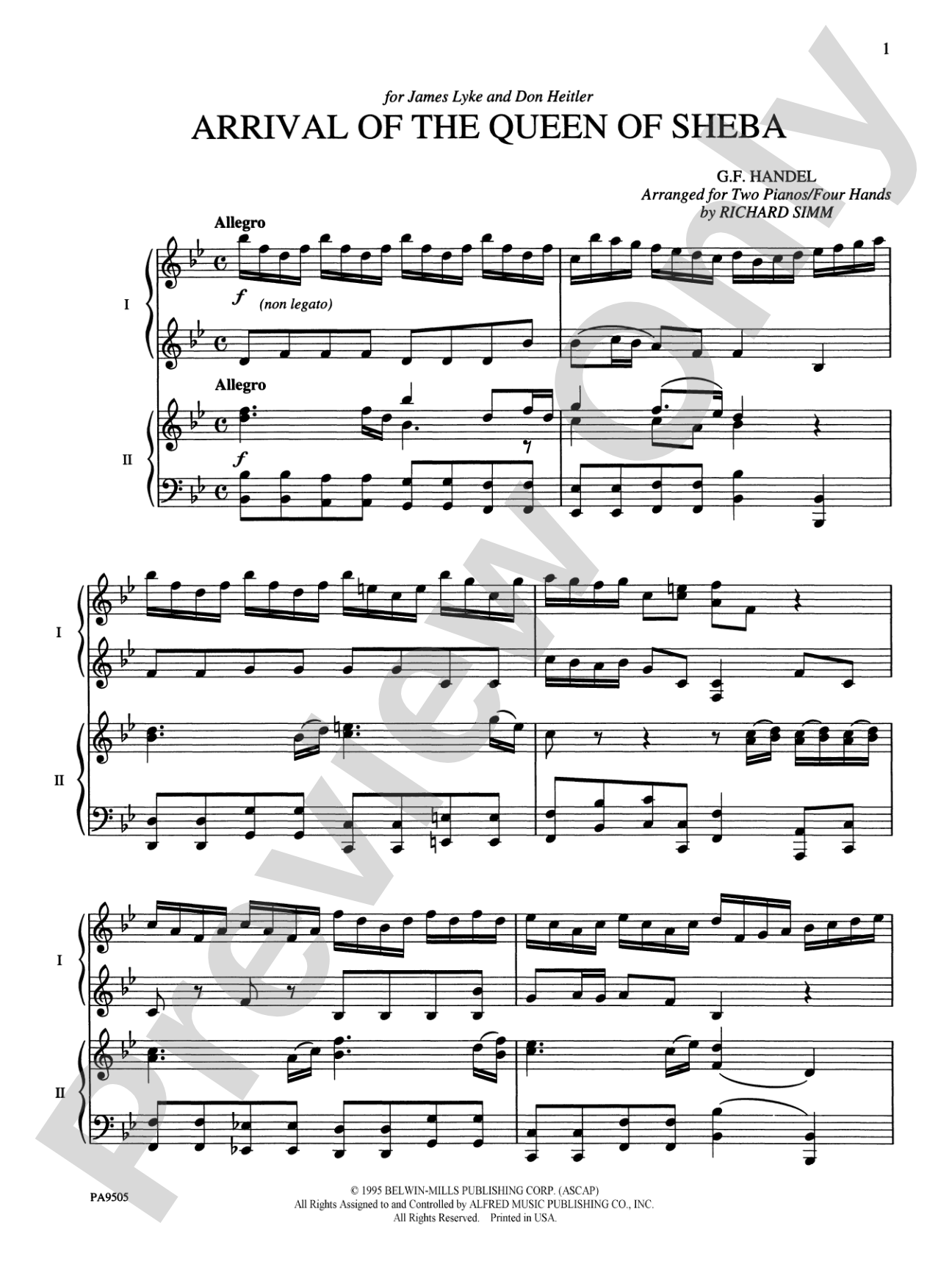
Arrival of the Queen of Sheba - Piano Duo (2 Pianos, 4 Hands) Sheet Music Preview

Arrival of the Queen of Sheba - Piano Duo (2 Pianos, 4 Hands): Piano Duets & Four Hands

By George Frideric Handel / arr. Richard Simm

Level: Late Intermediate

Item: 00-PB-0000704

Digital Download
$7.99
Description
Richard Simm adds to his successful series of two piano works this wonderful arrangement of a beloved Baroque masterpiece. The piano parts are equal in difficulty and use of the familiar theme, and both lay easily under the hands. The ensemble between instruments is also easily achieved. Sure to be a favorite of students and two piano teams! A Federation Festivals 2024-2028 selection.

Arrival of the Queen of Sheba - Piano Duo (2 Pianos, 4 Hands): Piano Duets & Four Hands isn't in MakeMusic Cloud just yet...but it could be. Let us know you'd like to see it, and you'll help shape what comes next. In the meantime, start a free trial and dive into thousands of interactive titles your students can play along with today.

Sample Audio
No sample audio found.
Sample Video
Additional Details
Series: Keyboard Ensemble Series
Publisher: Alfred Music
Page Count: 24
SKU: 00-PB-0000704

More about this title

About the Composer: George Frideric Handel

George Frideric Handel (1685–1759) was a German-born composer who spent most of his productive life in England, where he became a dominant force in Baroque music. His works span opera, oratorio, concertos, and keyboard music, and his gift for memorable melody and dramatic flair made him one of the most performed composers of his era and beyond.

Handel's influence on music education remains substantial. His melodies are instantly recognizable, his harmonic language is clear and instructive, and his structural sense provides a strong model for students learning how composers develop themes. Works like "Arrival of the Queen of Sheba" appear in repertoire at every level, from beginning arrangements to virtuoso transcriptions.

Why we love this

Simm's arrangement preserves the ceremonial grandeur and rhythmic drive of Handel's original while splitting the workload fairly between both players. Each pianist gets substantial melodic material rather than serving as accompanist, making this genuinely satisfying ensemble music that builds balanced sight-reading and collaborative skills from the start.

What to expect

Regal and energetic. The opening march has an unmistakable processional quality, with driving rhythms and a melody that feels both stately and alive. There's joy in the familiar tune, and the back-and-forth between the two pianos gives the music a conversational, almost playful character alongside its ceremonial dignity.

Who it's for

This duet works for late intermediate pianists who are ready to read a second piano part independently and balance ensemble playing. It suits recital teams, festival performers, and students preparing collaborative repertoire for high school or early collegiate level.

How to get the most out of it

  • Establish the pulse together before playing. The two pianos need to lock in rhythmically from the opening gestures; count off clearly and play the first measure or two as a unified downbeat.
  • Balance the melodic lines between pianos. Since both parts carry the familiar theme at different moments, listen across to ensure one voice never overwhelms the other.
  • Keep the sixteenth-note passages clean and even. Baroque articulation benefits from clarity; resist the urge to slow down through faster runs.
  • Shape the phrases with subtle dynamic shaping rather than sudden changes. Handel's architecture reveals itself through gentle rise and fall within each section.

How to use it

Program this alongside other Baroque keyboard works for a period-focused recital, or pair it with lighter contemporary duets to showcase range in two-piano performance. It's equally at home in a festival program or a themed concert celebrating well-known classical melodies in new arrangements.

Skills your students will build

  • Balancing ensemble lines between two independent pianists
  • Reading and playing two-piano scores with rhythmic precision
  • Phrasing and shaping Baroque melody with period-appropriate articulation
  • Listening and responding to a partner's tempo and dynamic choices

You May Also Like