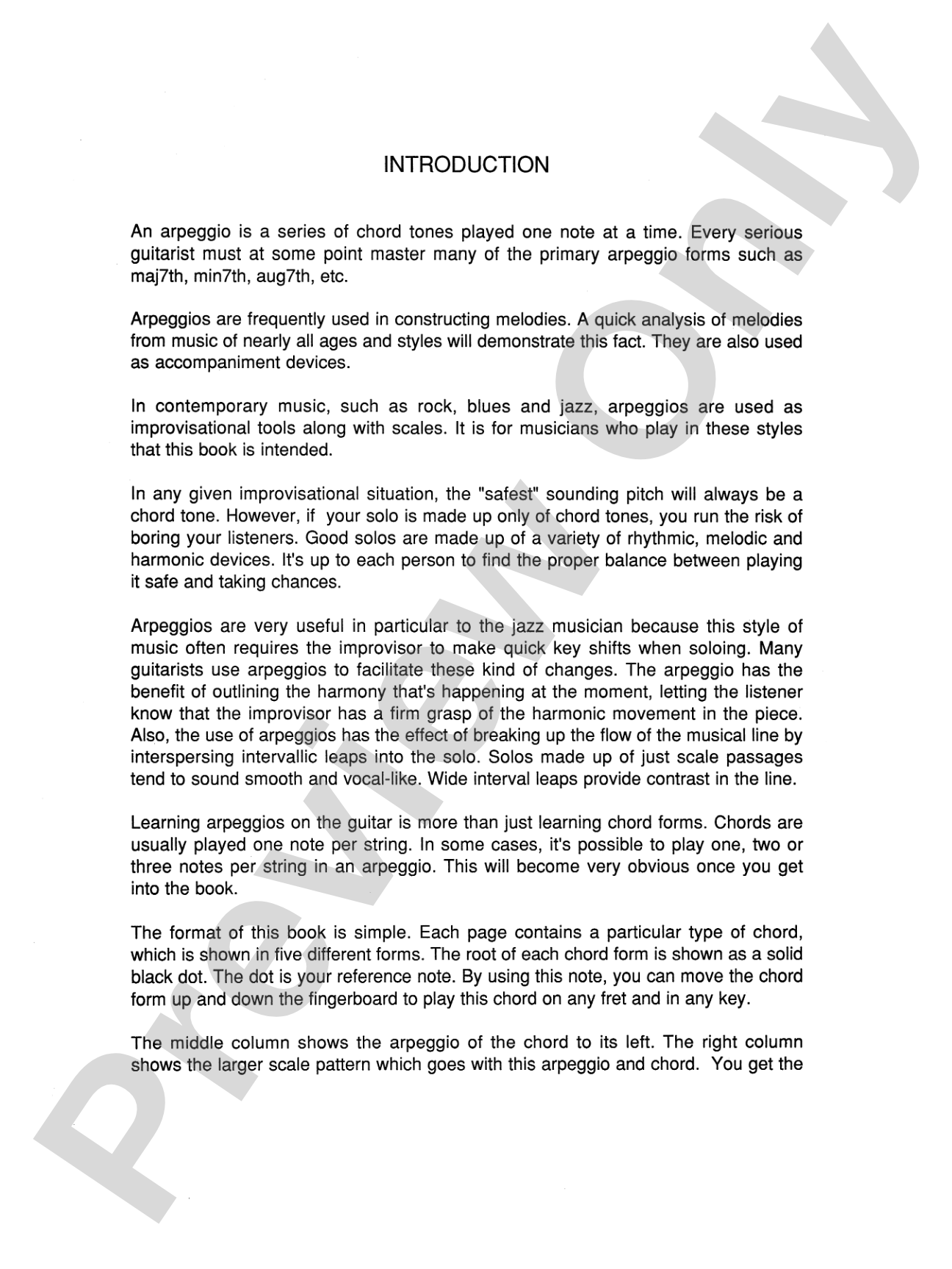
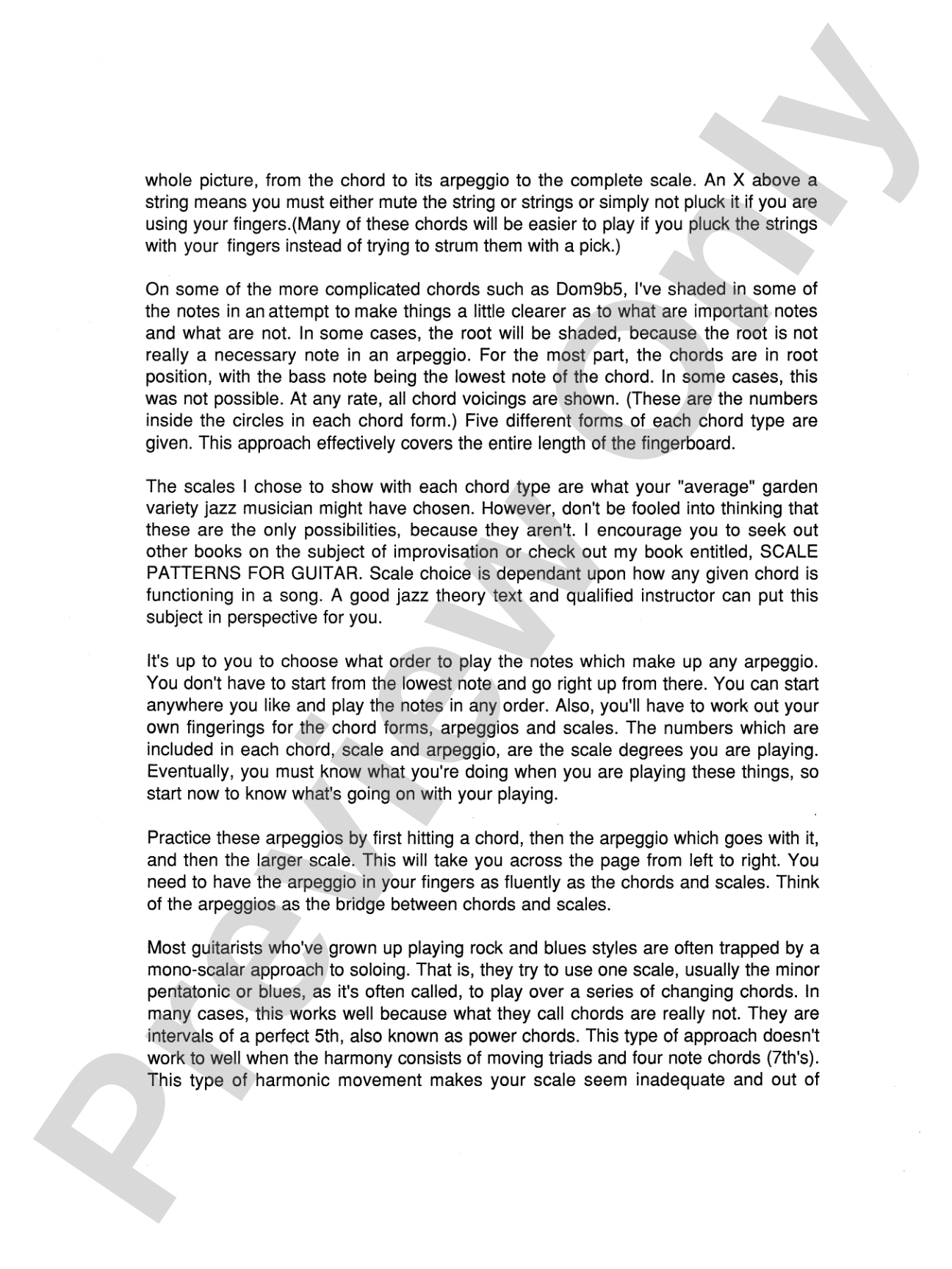
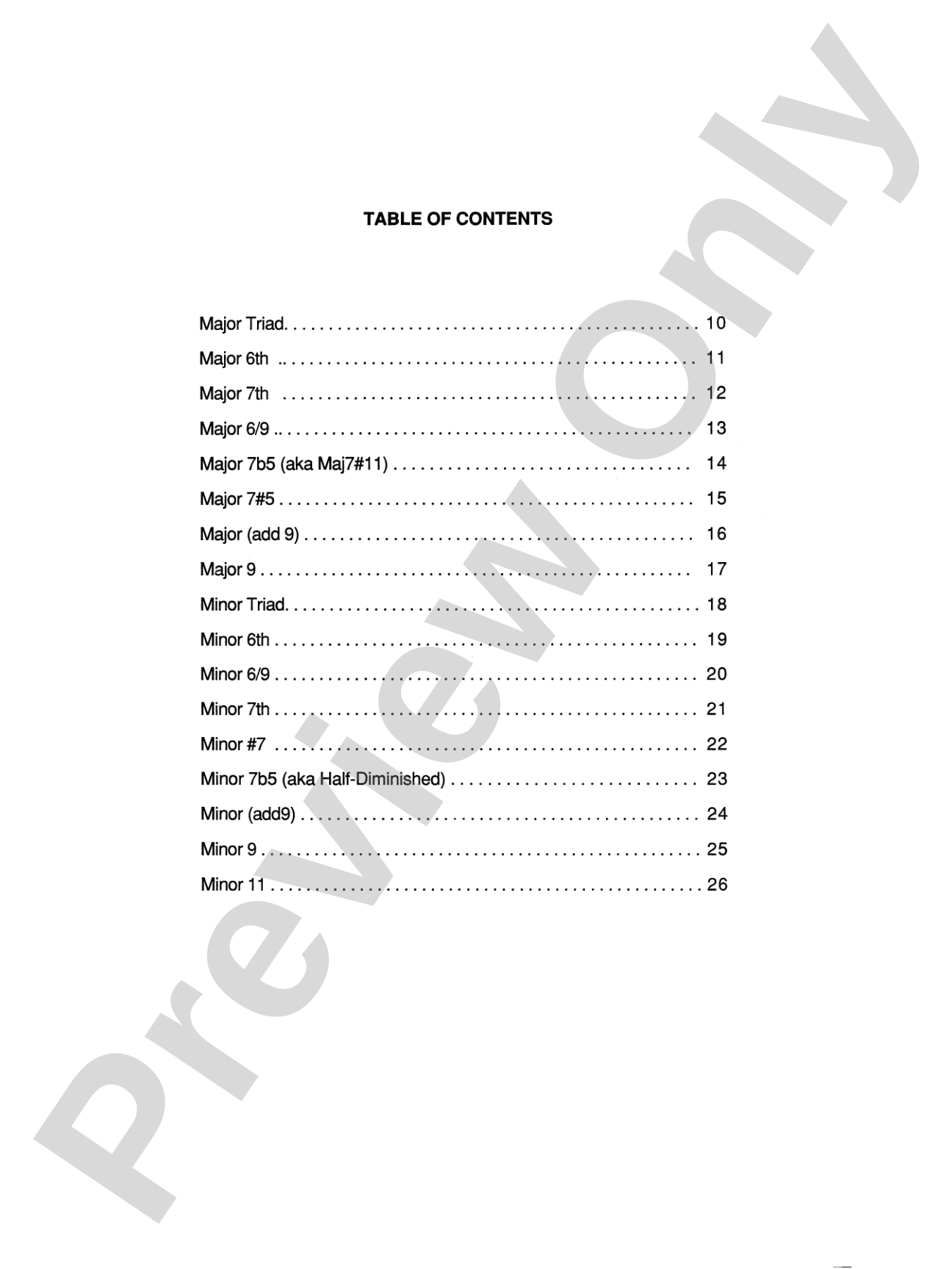
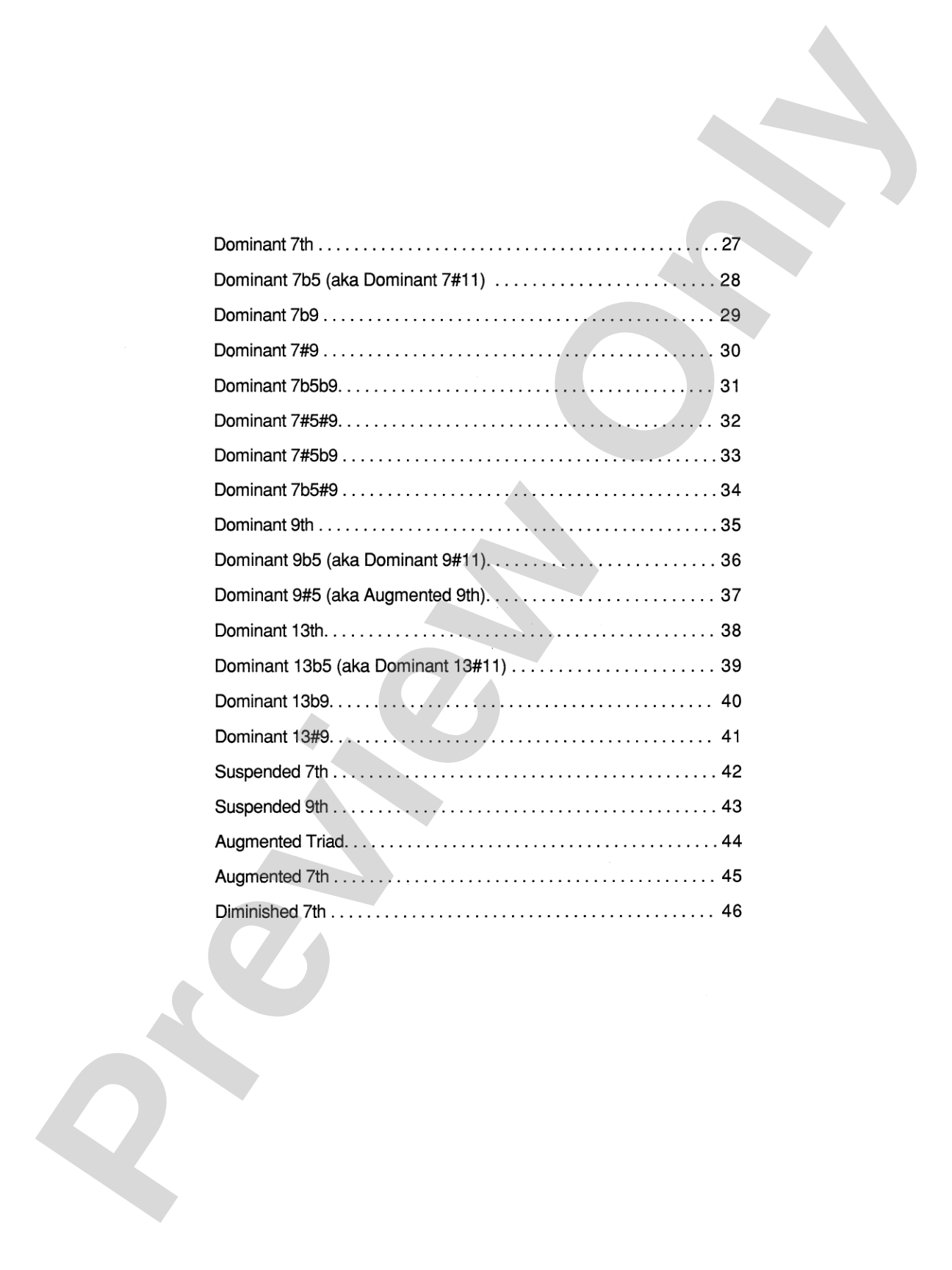
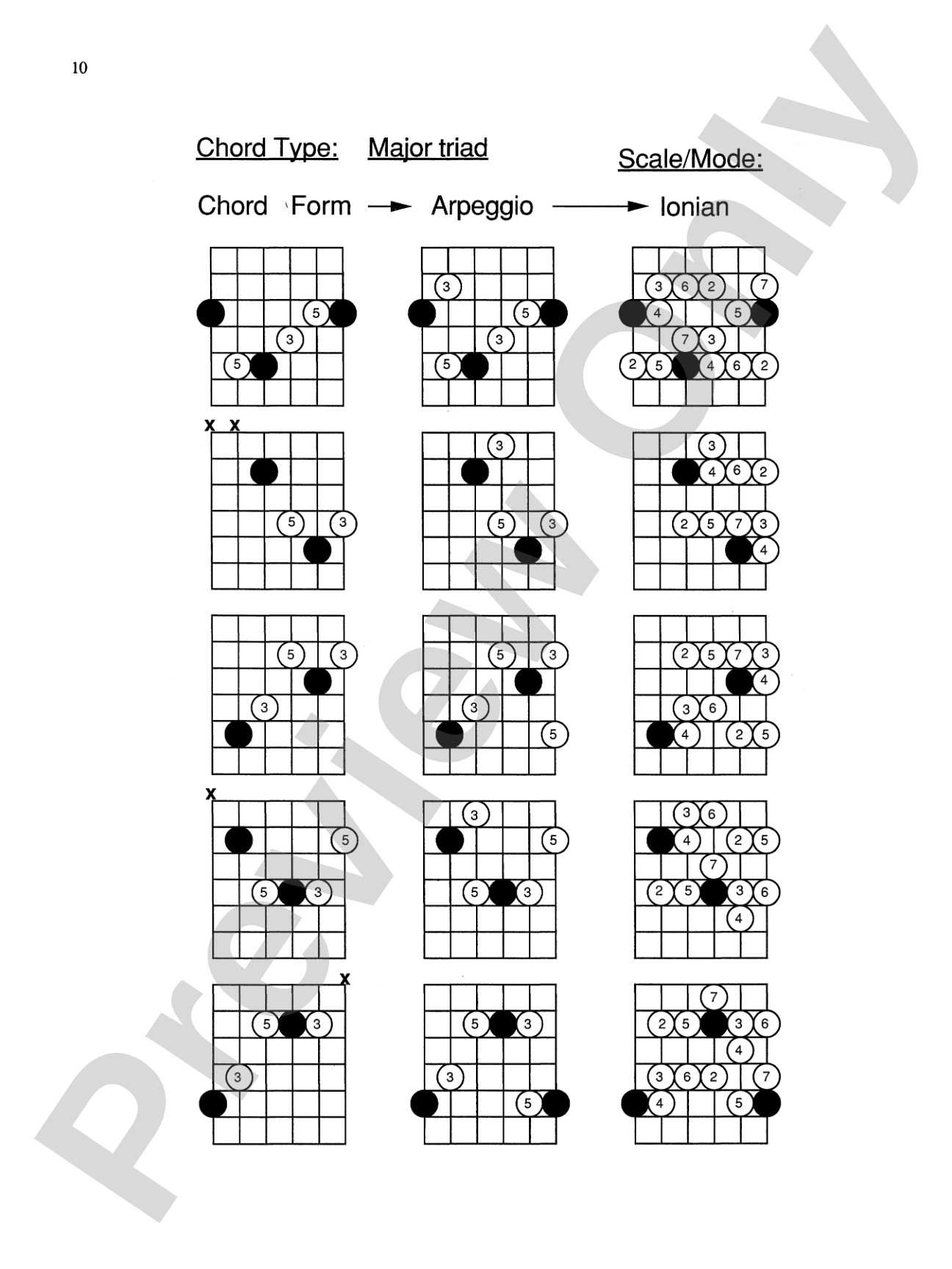
Shows each arpeggio in five positions in a simple diagram format. For every arpeggio the corresponding chord form and scale pattern are also shown. Covers all forms of the major, minor, and dominant 7th type chords.
Discover MakeMusic Cloud: thousands of interactive titles your students can play along with today.
This resource cuts through the confusion of arpeggio fingerings by presenting each pattern in five positions, so students grasp how the same shape moves across the neck. The simultaneous display of chord form and scale pattern builds the foundational connection between harmony and technique that transforms mechanical finger patterns into actual musical understanding.
What to expect
Methodical and grounded. This is not flashy technique building; it is the careful, repetitive work that quietly expands what your hands can do. Each position connects logically to the next, creating a sense of progress and mastery.
Who it's for
Guitar students moving beyond basic open chords and ready to understand how chord voicings distribute across the fingerboard. Teachers working with intermediate players who need a systematic method for building fluency across all chord types.
How to get the most out of it
Start with one position per chord type until the pattern feels automatic under the fingers, then add the next position. Rushing through all five positions at once scatters focus.
Play each arpeggio slowly enough to hear the individual notes clearly. Muddy arpeggios indicate the tempo is outpacing your technical control.
Reference the chord diagram while working each position so you anchor the arpeggio to its harmonic root, not just the physical shape.
How to use it
Assign this as foundational technical material for students preparing for improvisation, fingerstyle arrangements, or jazz contexts. The systematic approach pairs well with repertoire that demands arpeggio independence, allowing students to separate technical work from musical interpretation.
Skills your students will build
Arpeggio fingering patterns across five positions on the neck
Visualization of major, minor, and dominant 7th chord shapes and their inversions
Correlation between chord form, scale pattern, and arpeggio movement
Fretboard familiarity and interval recognition within each chord type
Fluency moving between chord voicings in different positions
You May Also Like
Scan to Complete Your Purchase
Use your phone's camera to scan the code below
You'll log in on your phone and the order will be added to your account