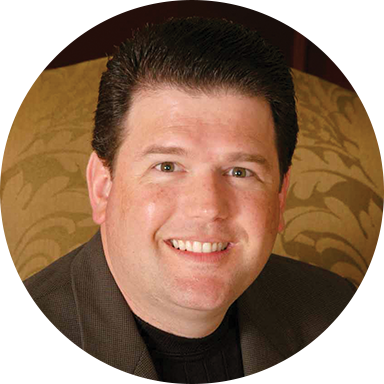
John Parker brings two decades of experience in worship music and choral pedagogy to his prolific output of sacred and educational works. Based in Austin, Texas, where he serves as Associate Pastor of Worship and Music at Austin Baptist Church, Parker combines his training in vocal performance and choral conducting (degrees from Louisiana College and Northwestern State University) with deep roots in church music practice. His catalog of over 600 published choral compositions reflects a career dedicated to serving both church and school choirs with accessible, meaningful repertoire.
Beyond composing, Parker has established himself as a clinician, lecturer, and author. He wrote How to Start a Fine Arts Academy in Your Church and has compiled numerous drama collections, making him a visible advocate for arts integration in faith communities. His work consistently prioritizes singability and theological substance, making him a trusted voice for directors seeking pieces that engage singers and congregations alike.
Why we love this
Parker's setting invites singers into genuine expression without demanding virtuosity or exhausting rehearsal time. The two-page format makes it practical for volunteer choirs and school ensembles, while the text pairing with Patti Drennan ensures the music serves the words rather than overshadowing them.
What to expect
Bright and affirming, with the confidence of well-crafted hymnody. The piece carries warmth and invitational energy, creating space for singers to feel genuinely present rather than merely executing notes.
Who it's for
This octavo suits volunteer church choirs, school ensembles new to sacred music, and any director seeking a direct, heartfelt approach to a classic hymnic text. The SATB voicing and modest page count make it accessible without feeling juvenile.
How to get the most out of it
Establish the harmonic foundation by having basses and tenors lock the chord changes during the opening rehearsals; once that anchor holds, sopranos and altos can shape their lines with more freedom.
Attend to text stress and natural speech rhythm. Let the syllabic writing guide singers toward conversational phrasing rather than a plodding, metronomic delivery.
Shape the dynamic arc across the full piece so the ending feels earned rather than abrupt. Build gradually through the middle section and pull back just enough to create contrast for the final statement.
How to use it
Pair this with other Parker settings in a service exploring gratitude and praise, or use it as an opener to a concert program where you need a piece that immediately connects with the audience. The brevity also makes it ideal for special music in worship settings where time is limited.
Skills your students will build
Singing SATB voice parts with rhythmic independence
Connecting musical phrasing to text stress and syntax
Balancing blend across four parts in homophonic texture
Sustaining line integrity in hymn-like settings
You May Also Like
Scan to Complete Your Purchase
Use your phone's camera to scan the code below
You'll log in on your phone and the order will be added to your account