
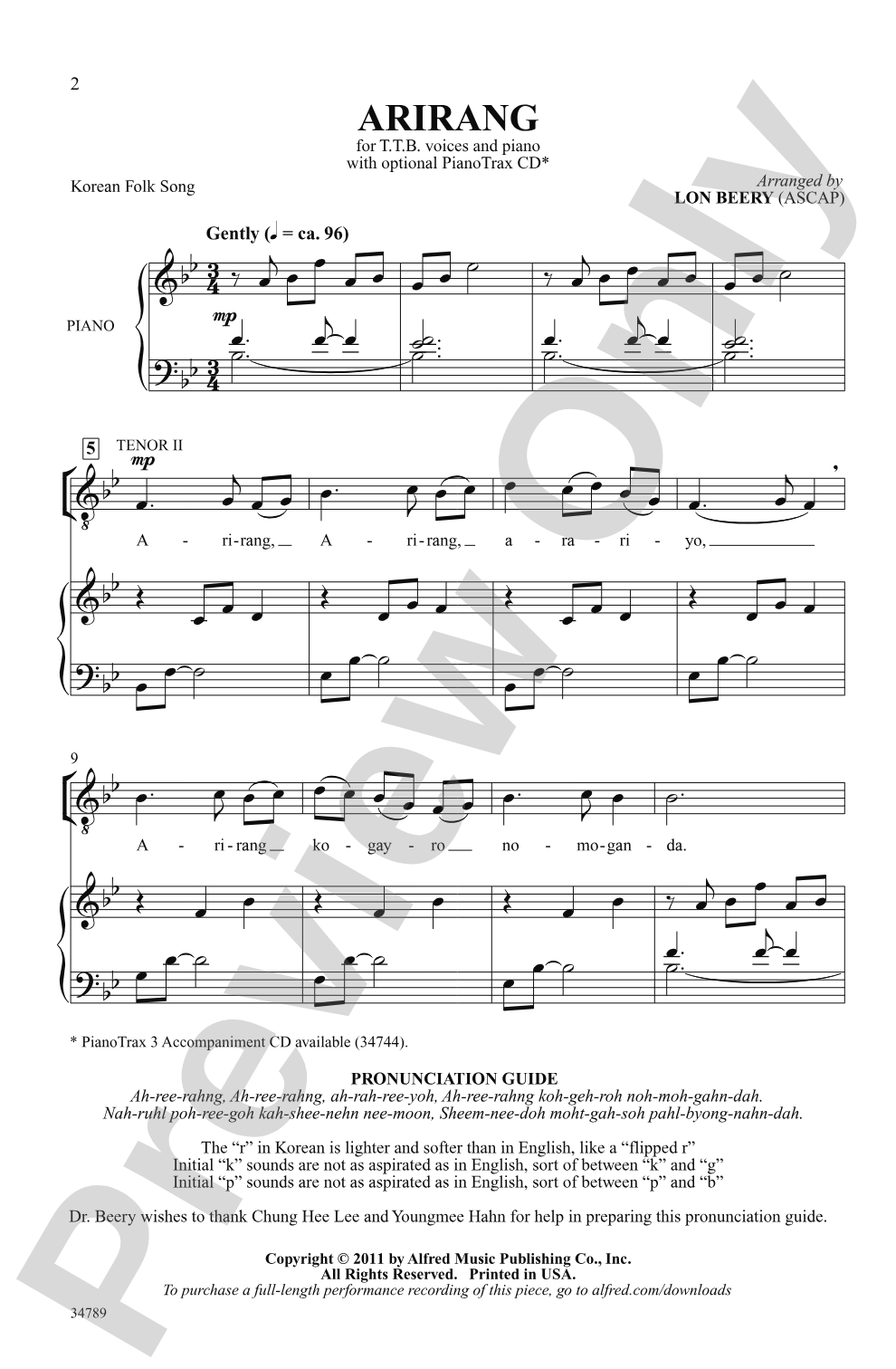
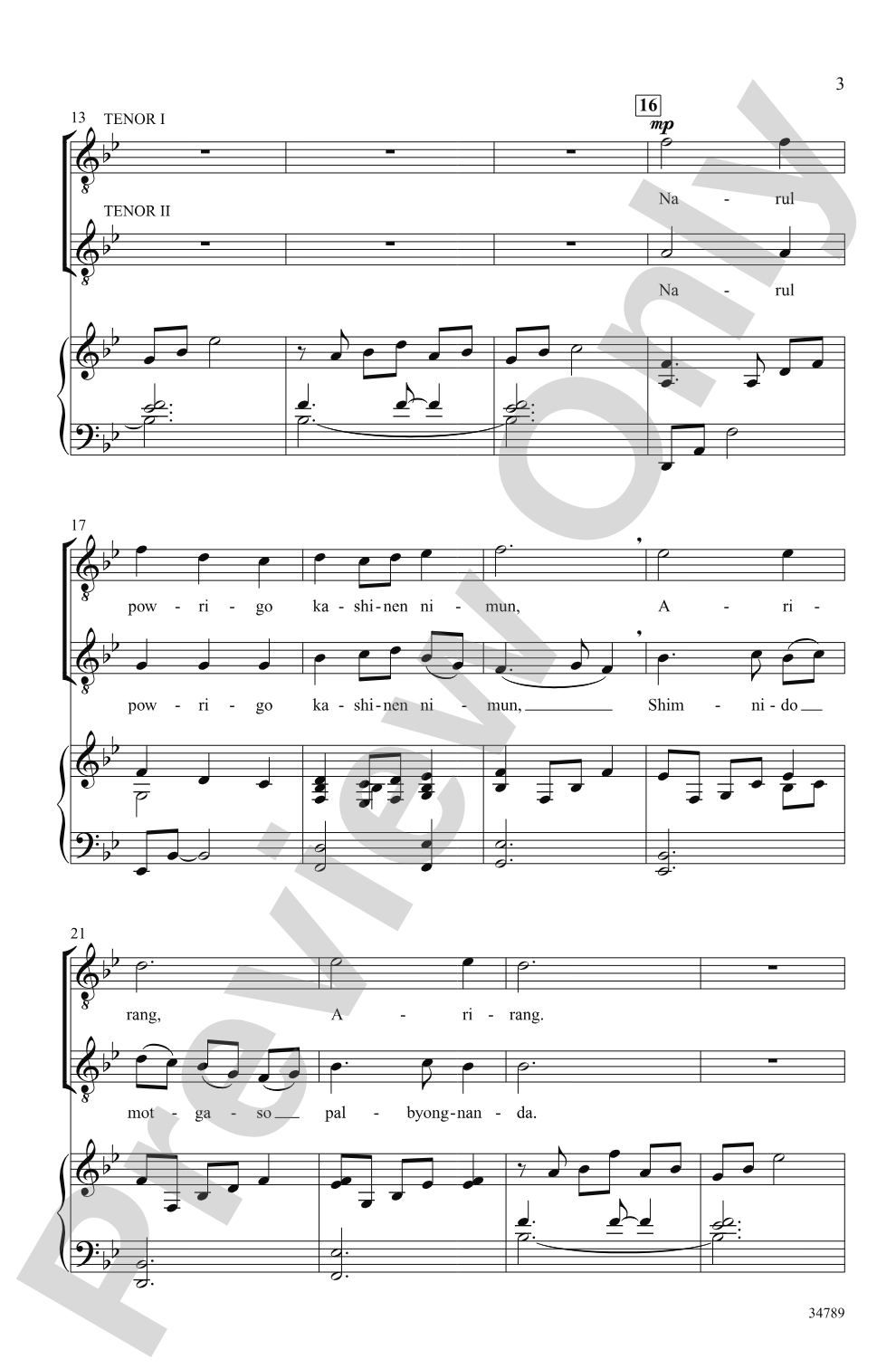

Arirang (Korean Folk Song): TTB Choral Octavo
Arr. Lon Beery
Item: 00-PO-0000884
$2.05
Minimum order quantity: 20 copies
Pickup currently not available
Description
Tender, expressive singing for changed and changing male voices. This setting of the familiar pentatonic folk melody is a standout, honoring the beauty of its origin while adding a contemporary touch. Accompaniment available on PianoTrax 3 CD (00-34744).


Arirang (Korean Folk Song): TTB Choral Octavo isn't in MakeMusic Cloud just yet...but it could be. Let us know you'd like to see it, and you'll help shape what comes next. In the meantime, start a free trial and dive into thousands of interactive titles your students can play along with today.
Request This Title
Tell us you want it.
Start Your Free Trial
Explore everything that's ready to play right now.
Sample Audio
1
Audio File
--:--
0:00
0:00
Sample Video
No sample videos found.
Additional Details
Series:
Alfred Choral Designs
Publisher:
Alfred Music
Page Count:
8
SKU:
00-PO-0000884
More about this title
About the Arranger: Lon Beery

Lon Beery directs six choruses at Spry Middle School in Webster, New York, where he works with approximately 500 students across multiple ensembles. His choral compositions and arrangements, numbering over 50 published works, appear in catalogs from Alfred Music, BriLee, and other publishers. His TTBB composition I Believe was performed by the U.S. Army Chorus at President Ronald Reagan's internment service in California, and his work has earned multiple ASCAP Standard Awards.
Beery is a frequent presenter at state, regional, and national conferences through ACDA and MENC, and has contributed articles to the Choral Journal and Music Educators Journal. He currently serves as the Middle School Chair for New York ACDA, bringing his classroom experience directly into leadership roles within the profession.
Why we love this
Beery's arrangement respects the pentatonic simplicity that makes Arirang instantly recognizable while infusing it with contemporary harmonic language that engages changing voices without overwhelming them. The writing sits comfortably in the male voice range during that awkward transition period, giving singers something singable and genuinely beautiful to work with rather than music that feels like a compromise. It's substantial enough for festival competition yet accessible enough to be a real tool for building confidence in evolving singers.
What to expect
The tender, expressive quality of this arrangement invites singers into the meditative beauty of the original folk melody while the contemporary harmonic touches keep the sound fresh and engaging for modern ensembles. There's a quiet dignity in the piece that respects both the cultural source and the developmental moment of the singers performing it. The result is music that feels both grounded and alive.
Who it's for
This octavo is designed for middle school and high school choirs working with changed and changing male voices, including groups that blend treble and lower voices in flexible configurations. Directors seeking multicultural repertoire that offers authentic musical content without condescension will find a genuine standout here. It works equally well for contest preparation, concert programming, or ensemble-building in a co-ed or all-male choir setting.
How to get the most out of it
- Let the pentatonic melody breathe; the folk origin thrives on simplicity, so resist over-interpretive phrasing in favor of clear, direct line singing.
- Balance the parts so the primary melodic voice carries without the accompaniment layers obscuring the original tune's contour.
- Find the natural speech rhythm of the text to anchor singers during the harmonic transitions, especially helpful for those navigating changing voices.
- Use the recorded accompaniment on PianoTrax 3 CD (00-34744) to lock in ensemble precision during rehearsal, then gradually shift to unaccompanied singing to build independence.
How to use it
Program this as a centerpiece for world music or multicultural concert themes, where its accessible melodic character creates a natural bridge for audiences unfamiliar with Korean folk traditions. It pairs well alongside other international folk arrangements in a diversified choral concert, offering a moment of focused listening without requiring extensive programmatic context. The piece also stands strongly in contest or festival settings where contemporary arrangements of folk material are valued.
Skills your students will build
- Singing in pentatonic tonality and recognizing non-Western harmonic structures
- Blending treble and lower voices in flexible voicings (TB, TTB, TBB, TTBB configurations)
- Maintaining expressive phrasing across harmonic changes
- Developing independence in an ensemble where parts move at different rates
- Building confidence during voice change transitions through accessible, confident music