
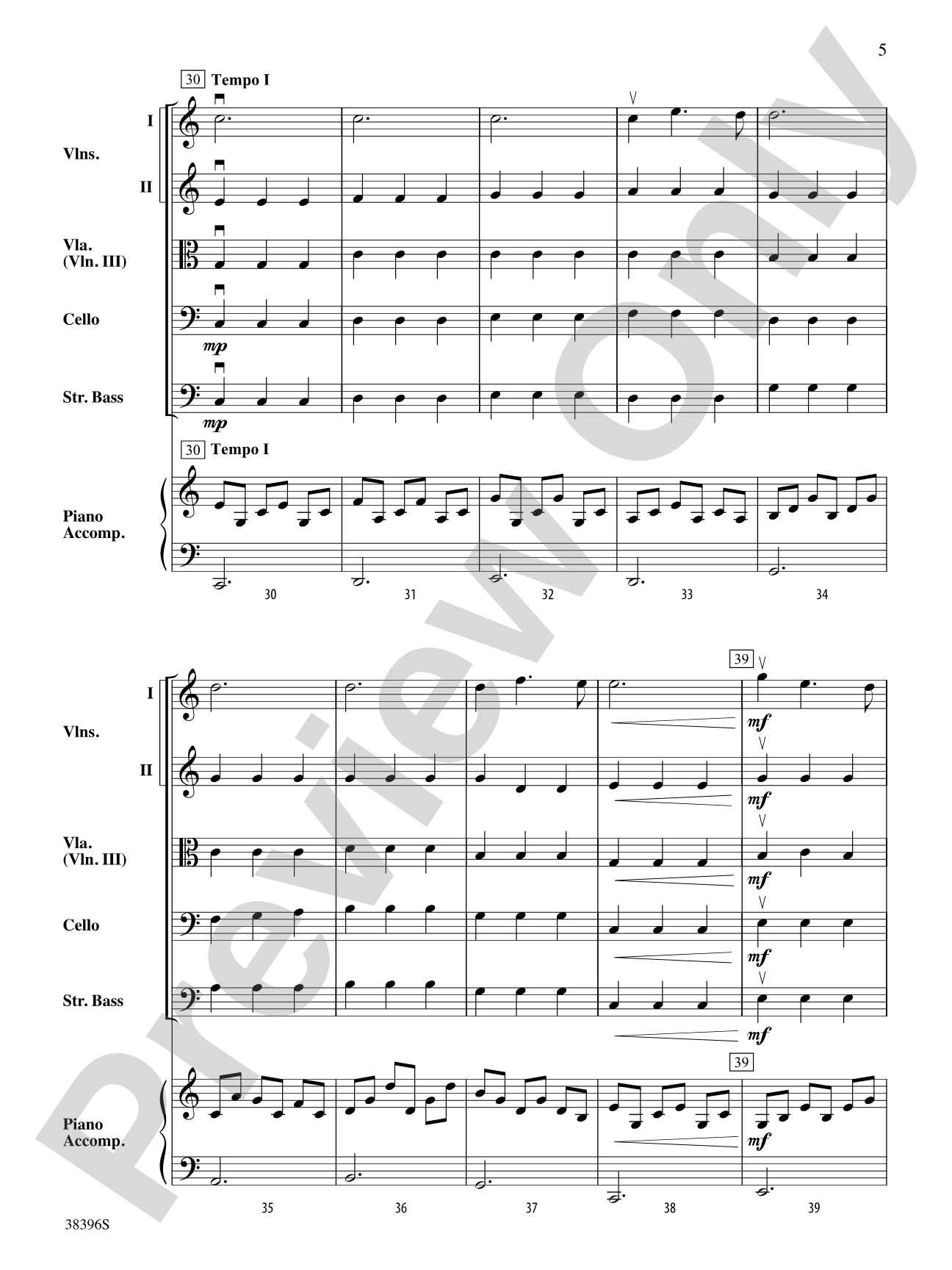
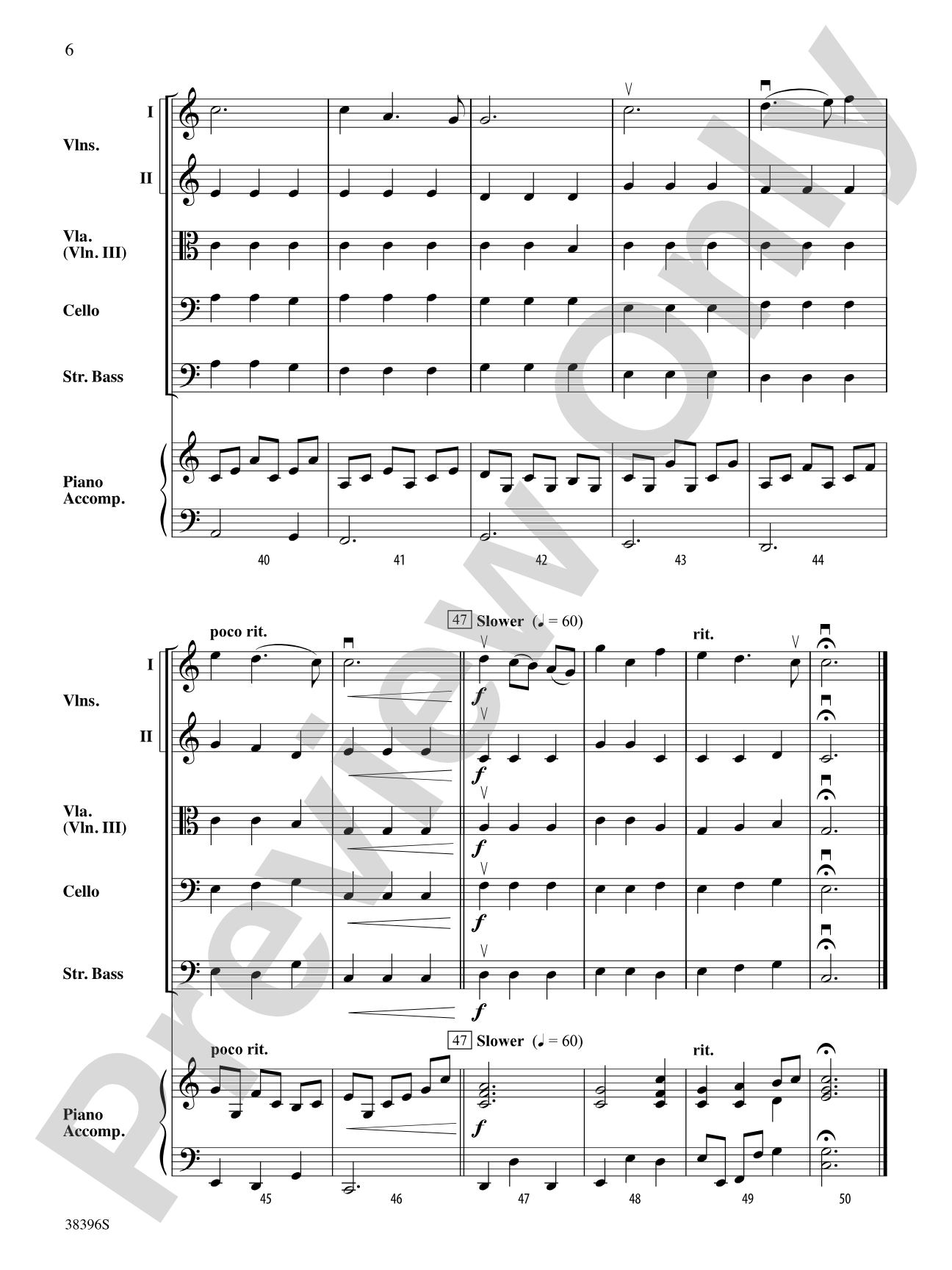



Arioso: Score
Attributed to George Frideric Handel / arr. Douglas E. Wagner
Grade: 2
Item: 00-PR-0003776
$8.00
Pickup currently not available
Description
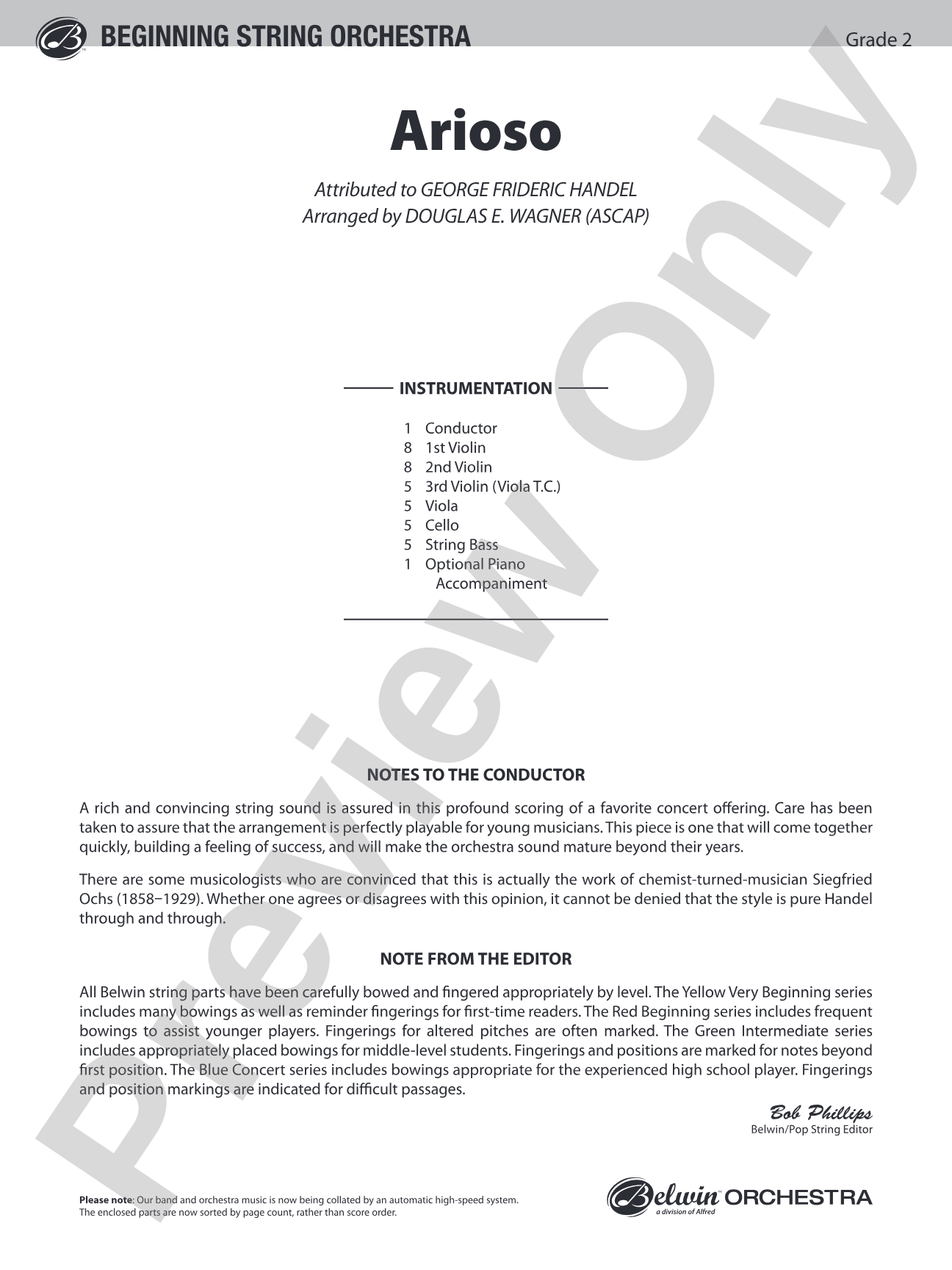
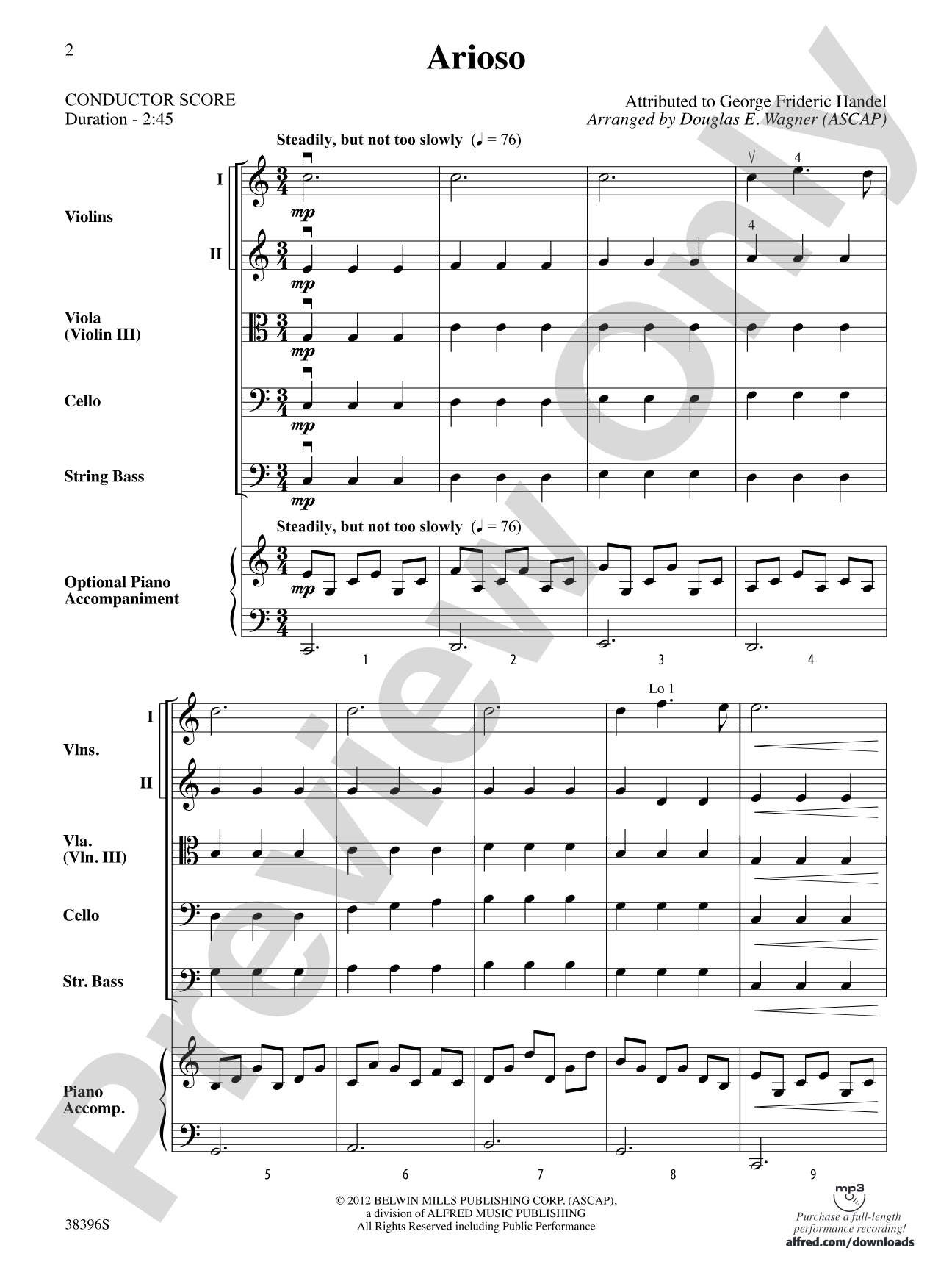
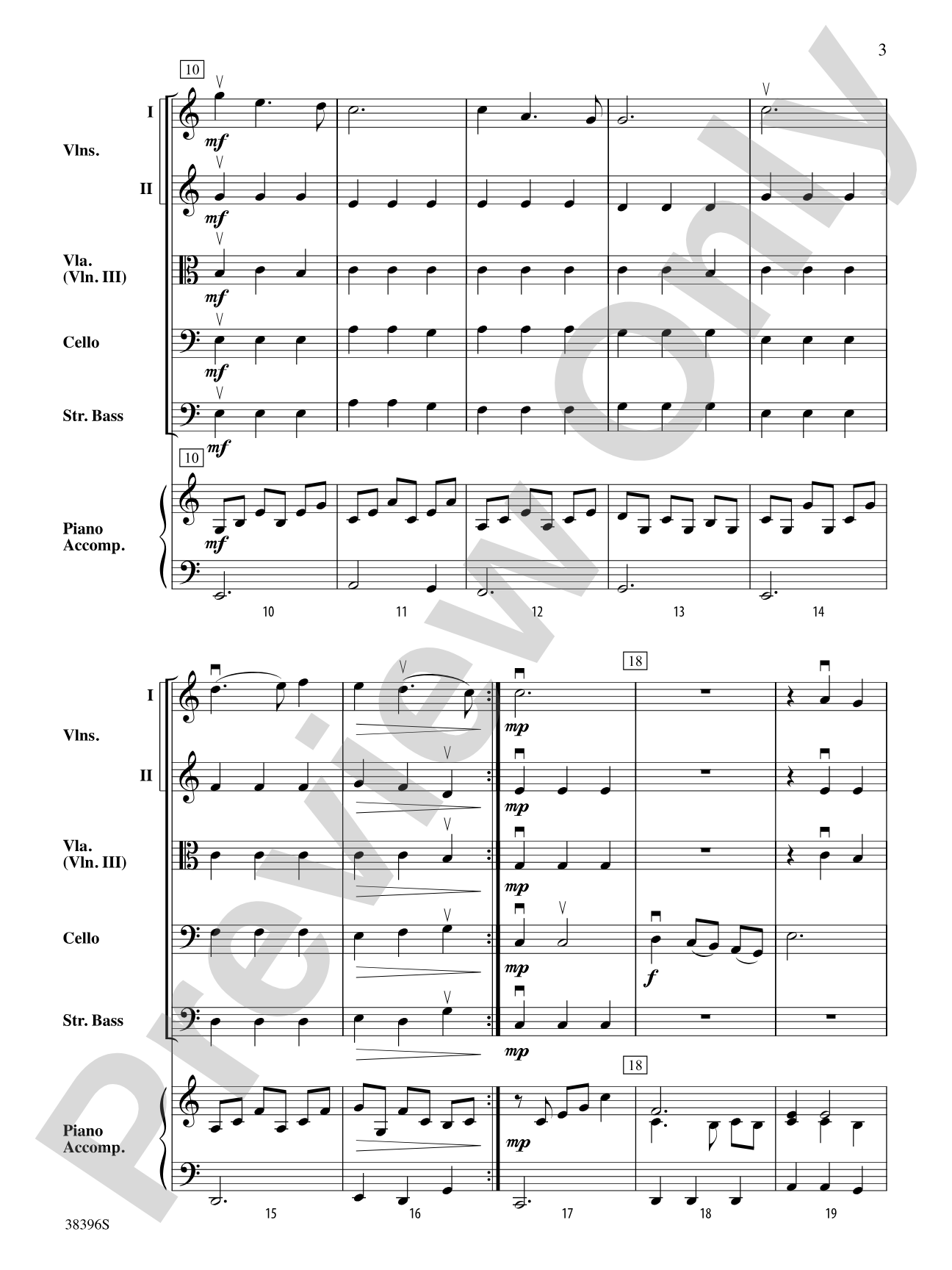
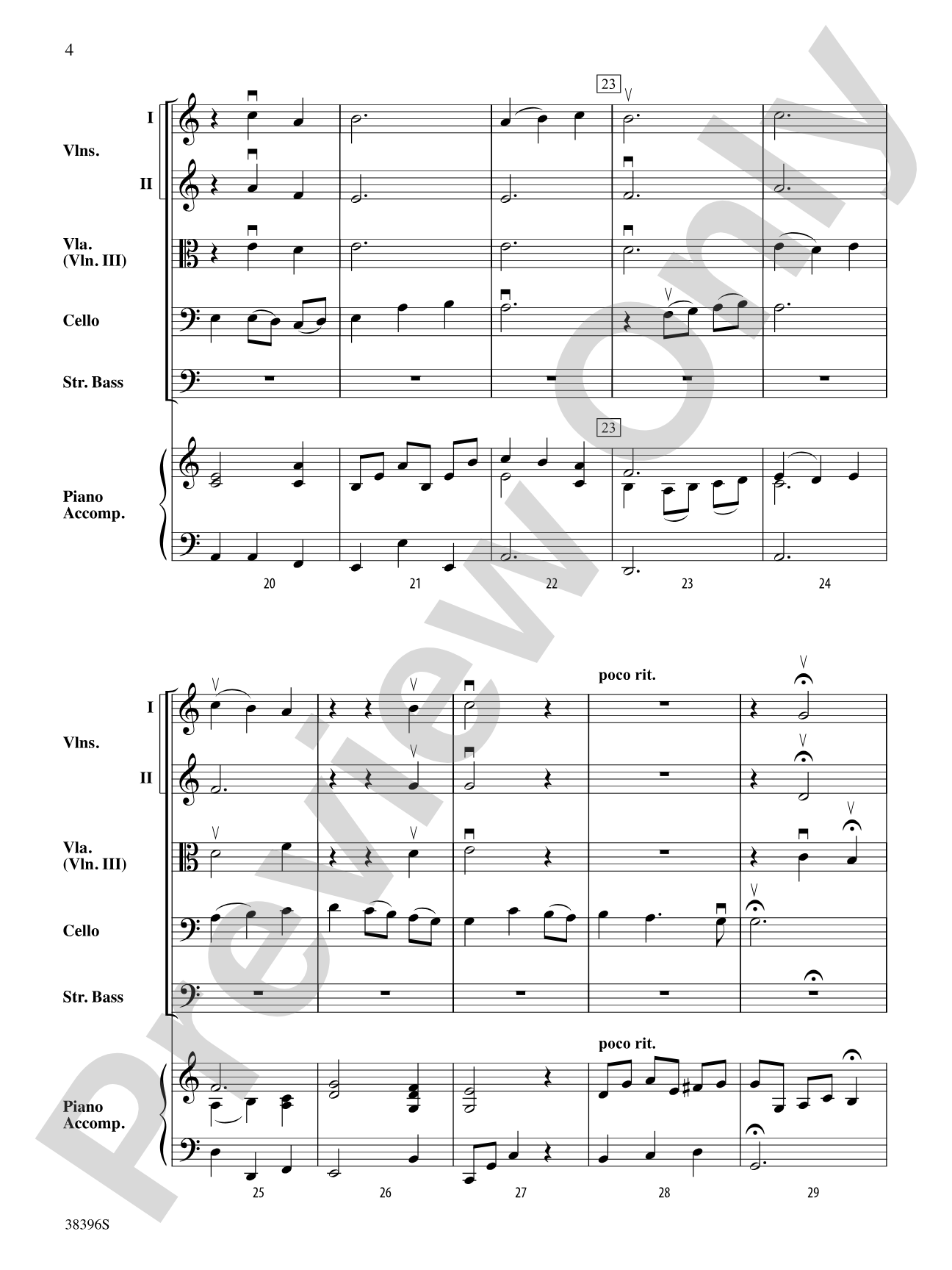
A rich and convincing string sound is assured in this profound scoring of a favorite concert offering. Care has been taken to assure that the arrangement is perfectly playable for young musicians. This piece is one that will come together quickly, building a feeling of success, and will make the orchestra sound mature beyond their years.


Don't just read it, hear it, play along with it, and watch your students grow with it. In MakeMusic Cloud, Arioso: Score comes alive with professional accompaniment, adjustable tempo, and built-in practice tools that turn solo practice into real progress.
Open in the Player
Jump straight in and assign it today.
Start Your Free Trial
Open this title and explore the full library in minutes.
Sample Audio
1
Audio File
--:--
0:00
0:00
Sample Video
No sample videos found.
Additional Details
Series:
Belwin Beginning String Orchestra
Publisher:
Alfred Music
Page Count:
76
SKU:
00-PR-0003776
More about this title
About the Composer: George Frideric Handel
George Frideric Handel (1685-1759) composed across virtually every genre of his era, from opera and oratorio to instrumental works that defined the Baroque sound. His ability to craft memorable melodies and rich harmonic textures made his music immediately appealing to audiences then and now, which is why his compositions remain central to music education.
Handel's output was staggering in both volume and quality. He worked in England, Italy, and Germany, absorbing musical styles from each region and synthesizing them into a voice that was unmistakably his own. For string orchestras, his music offers the perfect balance: deeply musical substance wrapped in accessible, performable scoring.
Why we love this
Wagner's arrangement preserves the lyrical elegance that makes Handel's Arioso so memorable while respecting the capabilities of young orchestral musicians. The scoring builds confidence quickly because students work with clear, singable lines and balanced parts that allow every section to be heard. This is the kind of piece that proves to an orchestra that they can sound genuinely sophisticated without wrestling through impractical passagework.
What to expect
Serene and dignified, the Arioso unfolds with the unhurried grace of Baroque expression. The piece creates an atmosphere of calm introspection, with warm, blended string tones sustaining phrases that feel substantial and mature. There's a completeness to the musical statement that leaves an audience genuinely moved.
Who it's for
String orchestras at the Grade 2 level will find this arrangement exactly calibrated for their abilities. Young players benefit from tackling a Baroque masterwork that sounds rich and authoritative without demanding virtuosity. It's ideal for orchestras seeking to build musicianship through repertoire that connects them to music history.
How to get the most out of it
- Shape the opening melody with a gentle swell in dynamics; avoid making it static even though the tempo is slow. Let the phrase breathe naturally.
- Balance the inner voices carefully in the harmonic sections. The violas and cellos should support without overwhelming the first violins.
- Keep the bow changes smooth and unhurried. This Baroque piece benefits from legato playing, but rushed bowing will undermine the repose of the work.
- Use the ensemble's maturity here. Handel's music rewards stillness and control. Resist the urge to add extra expression; the composition does that work for you.
How to use it
This work earns a prominent spot on a concert program, either as a centerpiece offering or paired with other Baroque selections to anchor a thematic set. Its moderate length and direct appeal make it accessible to general audiences while satisfying musicians' desire to perform something of genuine artistic weight. It's also well-suited for festival competition, where judges reward both the musicianship and the appropriately scaled arrangement.
Skills your students will build
- Sustained legato playing and consistent tone production across longer phrases
- Baroque style conventions including ornamentation and proper harmonic balance
- Reading and executing dynamic shaping in slow tempos
- Ensemble listening and blend in non-unison passages
- Musicality and phrasing at an introductory level with masterwork repertoire