
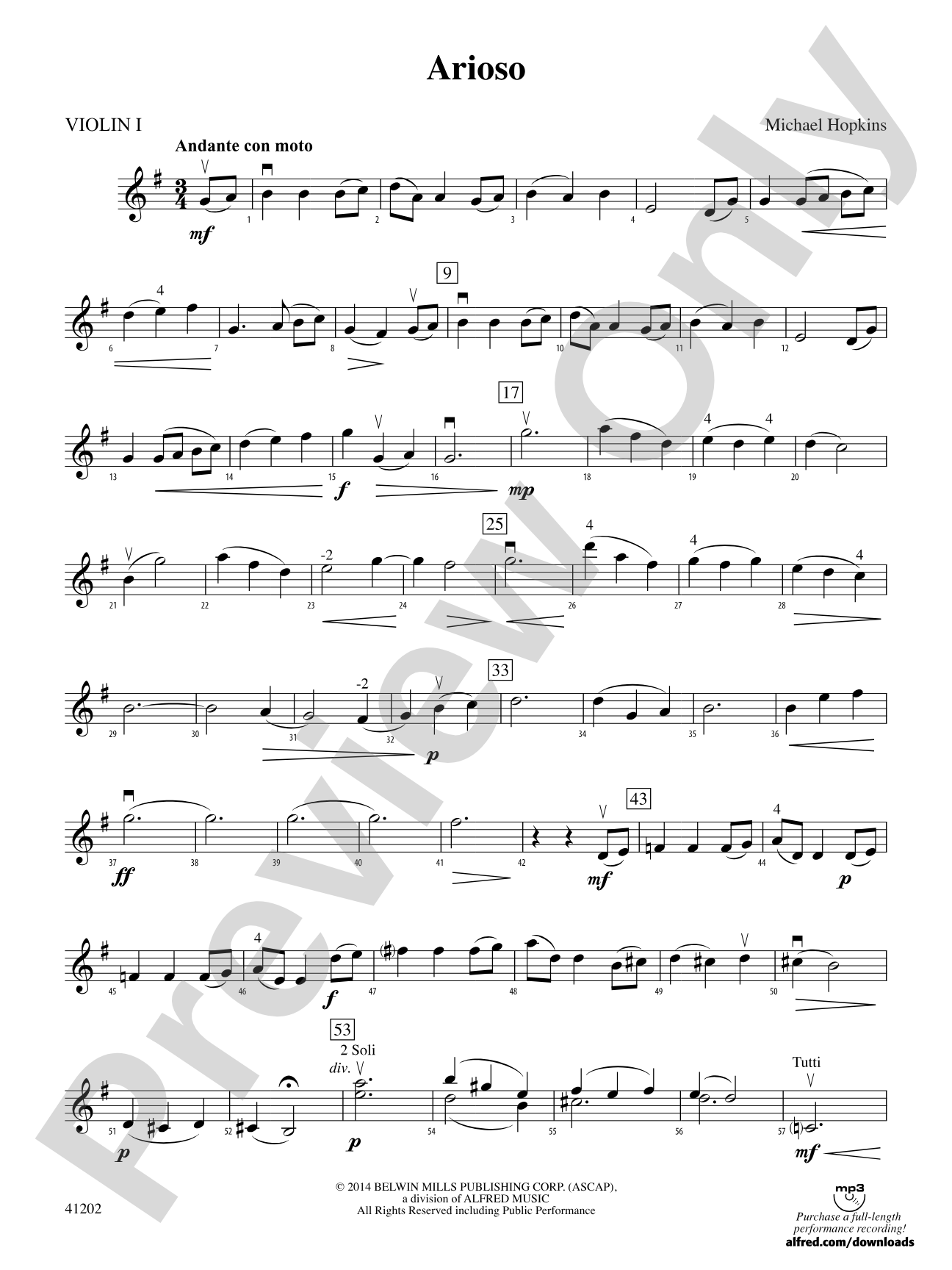

Arioso: 1st Violin
By Michael Hopkins
Grade: 3
Item: 00-PC-0016329_VN1
$5.99
Pickup currently not available
Description
This beautiful and lyrical work will give your students an opportunity to develop long legato bows. The piece features rich, lush, romantic harmonies and is a great piece for working on expression, balance, blend, and bow control. (4:20) This title is available in MakeMusic Cloud. A Federation Festivals 2020-2024 selection.


Don't just read it, hear it, play along with it, and watch your students grow with it. In MakeMusic Cloud, Arioso: 1st Violin comes alive with professional accompaniment, adjustable tempo, and built-in practice tools that turn solo practice into real progress.
Open in the Player
Jump straight in and assign it today.
Start Your Free Trial
Open this title and explore the full library in minutes.
Sample Audio
1
Audio File
--:--
0:00
0:00
Sample Video
No sample videos found.
Additional Details
Series:
Belwin Intermediate String Orchestra
Publisher:
Alfred Music
Page Count:
144
SKU:
00-PC-0016329_VN1
More about this title
About the Composer: Michael Hopkins

Michael Hopkins brings deep expertise in string pedagogy to his compositional work. As Professor and Chair of Music Education at the University of Michigan, he teaches orchestration, string techniques, and music education research while maintaining an active presence as a guest conductor and clinician at festivals across the country. His scholarly contributions appear regularly in peer-reviewed journals including the Journal of Research in Music Education and American String Teacher, and he authored The Art of String Teaching, a foundational resource for string educators at all levels.
With over 70 published compositions and arrangements for orchestra, Hopkins writes from firsthand knowledge of what works in the rehearsal room. His background conducting university and secondary orchestras in multiple states, combined with his founding direction of the Burlington Chamber Orchestra, informs every note he writes. He understands the technical demands students face and designs his works to build genuine musicianship rather than simply fill a program slot.
Why we love this
This piece strikes the balance every conductor seeks: musically rewarding without overwhelming intermediate players. Hopkins builds legato bow control through genuine musical expression rather than mechanical drill, and the romantic harmonies give students something worth sustaining. The 4:20 duration makes it substantial enough to anchor a concert program or festival entry without requiring excessive rehearsal time.
What to expect
Arioso carries the warmth of late Romantic harmony without requiring virtuosic passage work. The piece unfolds with generous phrases that encourage singers' breath thinking in string players, creating a sustained, soaring quality throughout. Lush vertical sonorities reward careful balance and invite the listener into intimate, contemplative space.
Who it's for
String orchestras at the intermediate level will find this piece rewarding and accessible. It works well for conductors who want to deepen student understanding of bow control, blend, and expressive playing without introducing advanced technical demands. Both concert and festival contexts suit this work equally.
How to get the most out of it
- Establish a consistent bow speed across the entire orchestra before tackling dynamic shadings. Students need the foundational stroke control before they can shape phrases effectively.
- Listen for the cello and bass lines to sit slightly forward in the mix. These voices carry harmonic weight and deserve clarity even as upper voices blend.
- Record a sectional rehearsal of just one passage to let students hear their own intonation tendencies. Self-awareness builds faster than conductor feedback alone.
- Conduct with clear, deliberate preparation gestures. Legato writing demands precise ensemble entries, and vague conducting defeats the purpose of this kind of lyrical work.
How to use it
Use this as the emotional anchor of a concert, perhaps pairing it with a more energetic contemporary work or a standard orchestral overture. Its inclusion in the Federation Festivals 2020-2024 repertoire list makes it an intelligent choice for groups working toward festival performance, offering a piece that develops core skills while earning recognition from adjudicators.
Skills your students will build
- Sustaining long legato bowstrokes across multiple measures
- Balancing and blending within the string section
- Shaping lyrical phrases with dynamic control
- Maintaining consistent bow pressure for even tone production
- Responding to expressive conducting gestures
- Reading and interpreting romantic-era harmonic language