
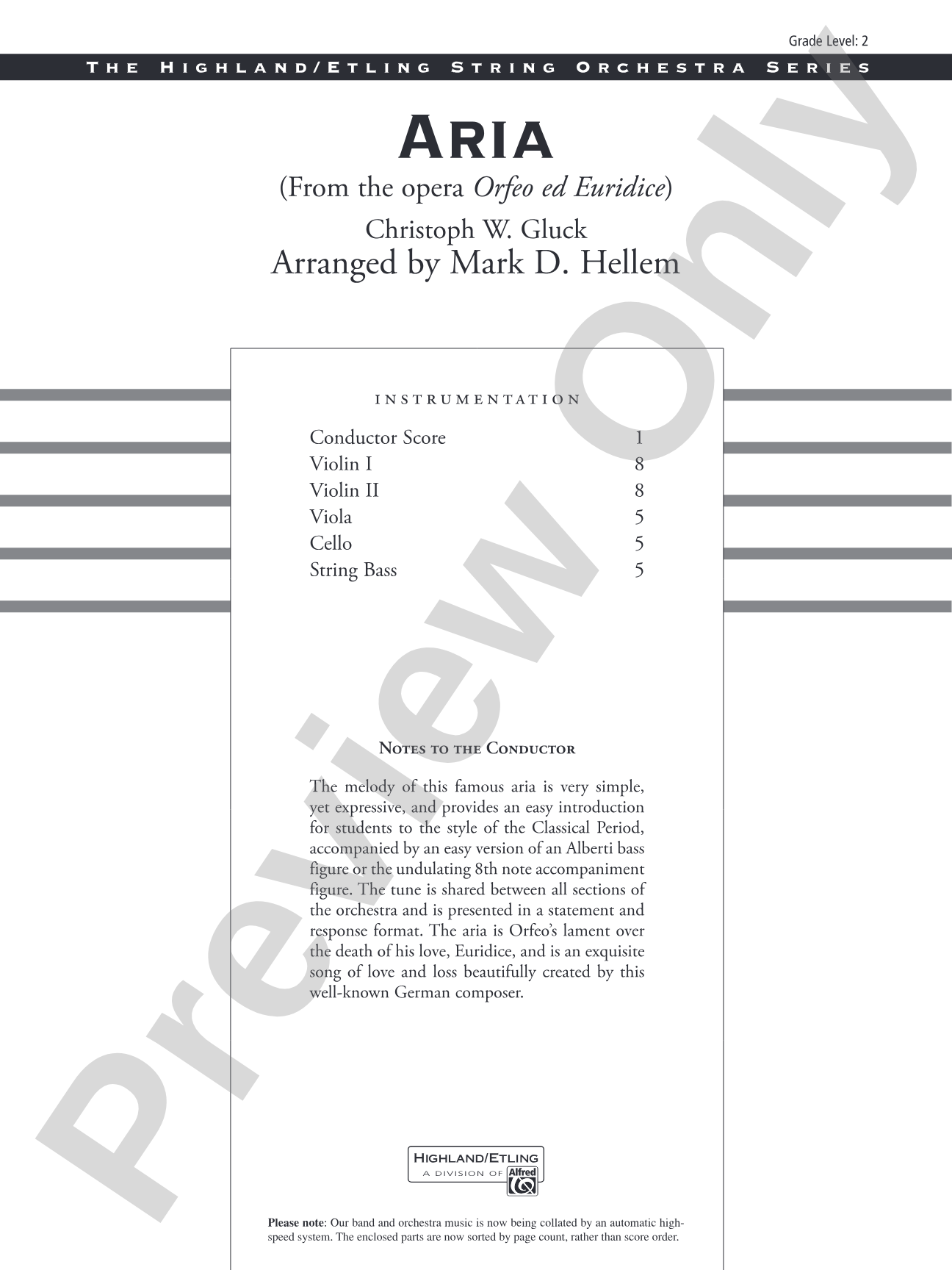

Aria (from the opera Orfeo ed Euridice): String Orchestra Conductor Score & Parts
By Christoph Willibald Gluck / arr. Mark D. Hellem
Grade: 2
Item: 00-PK-0004759

$45.00
Pickup currently not available
Buy Extra Parts (Digital PDF Download)
Parts Added to Cart!
Description
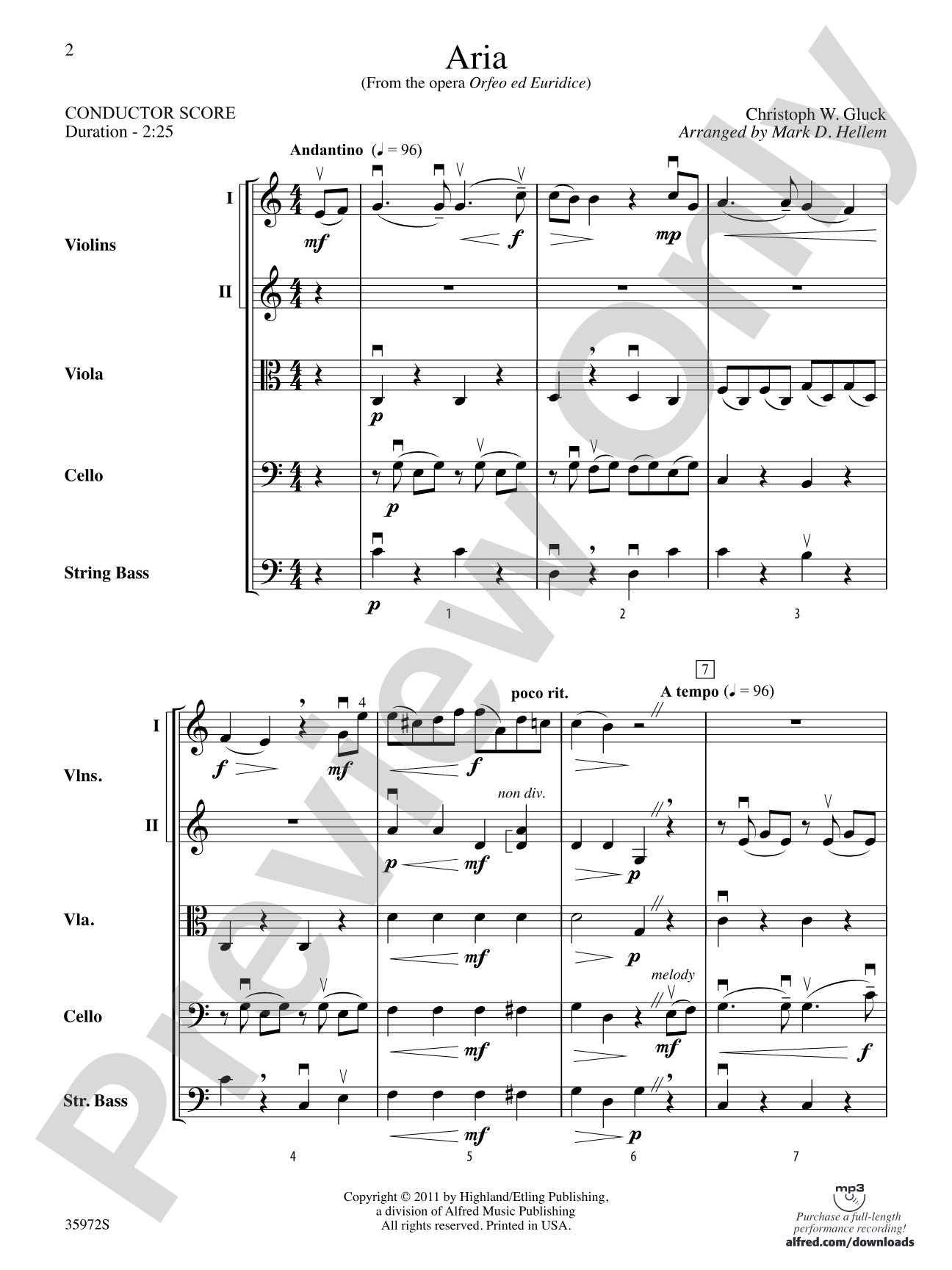
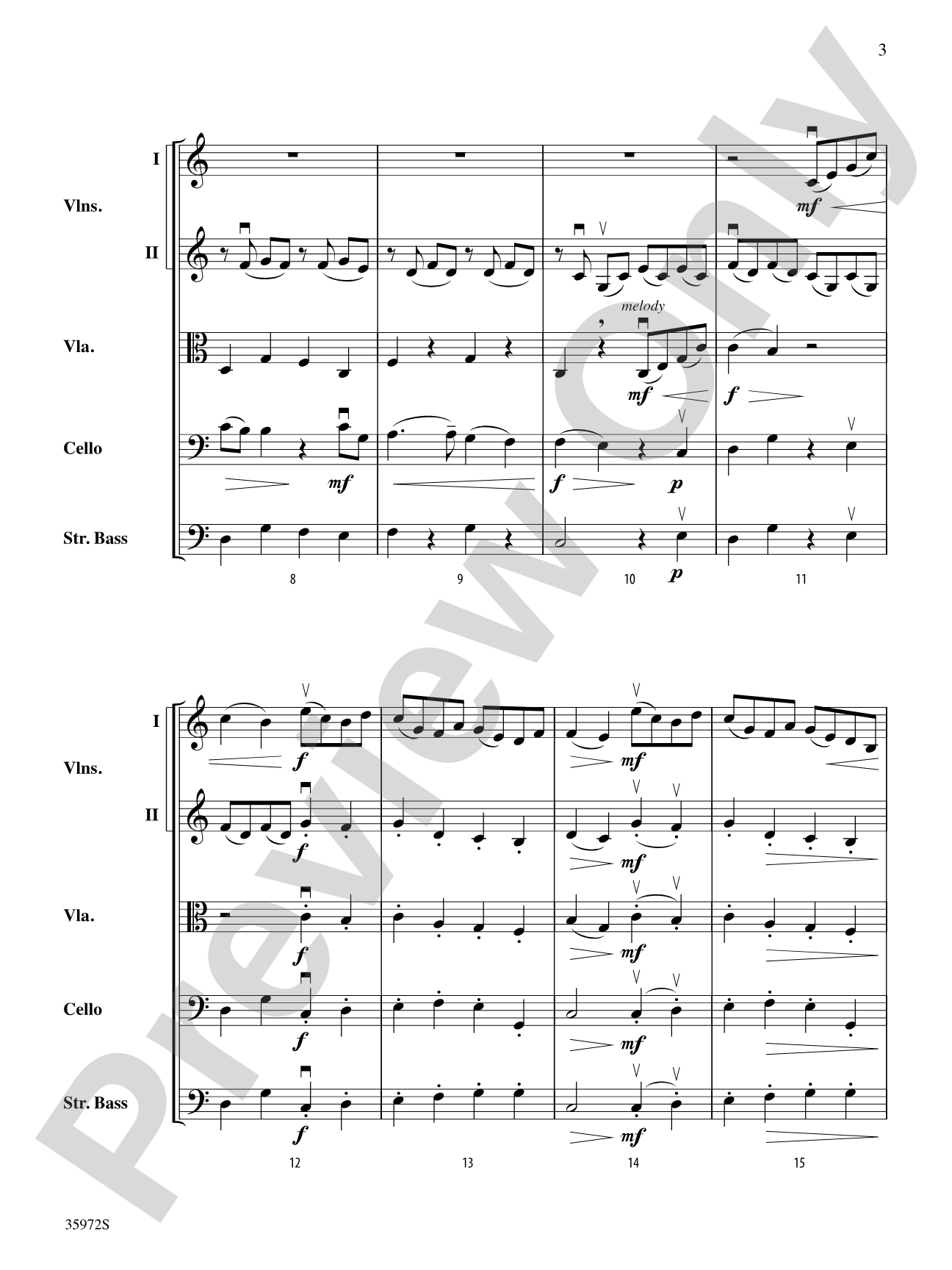
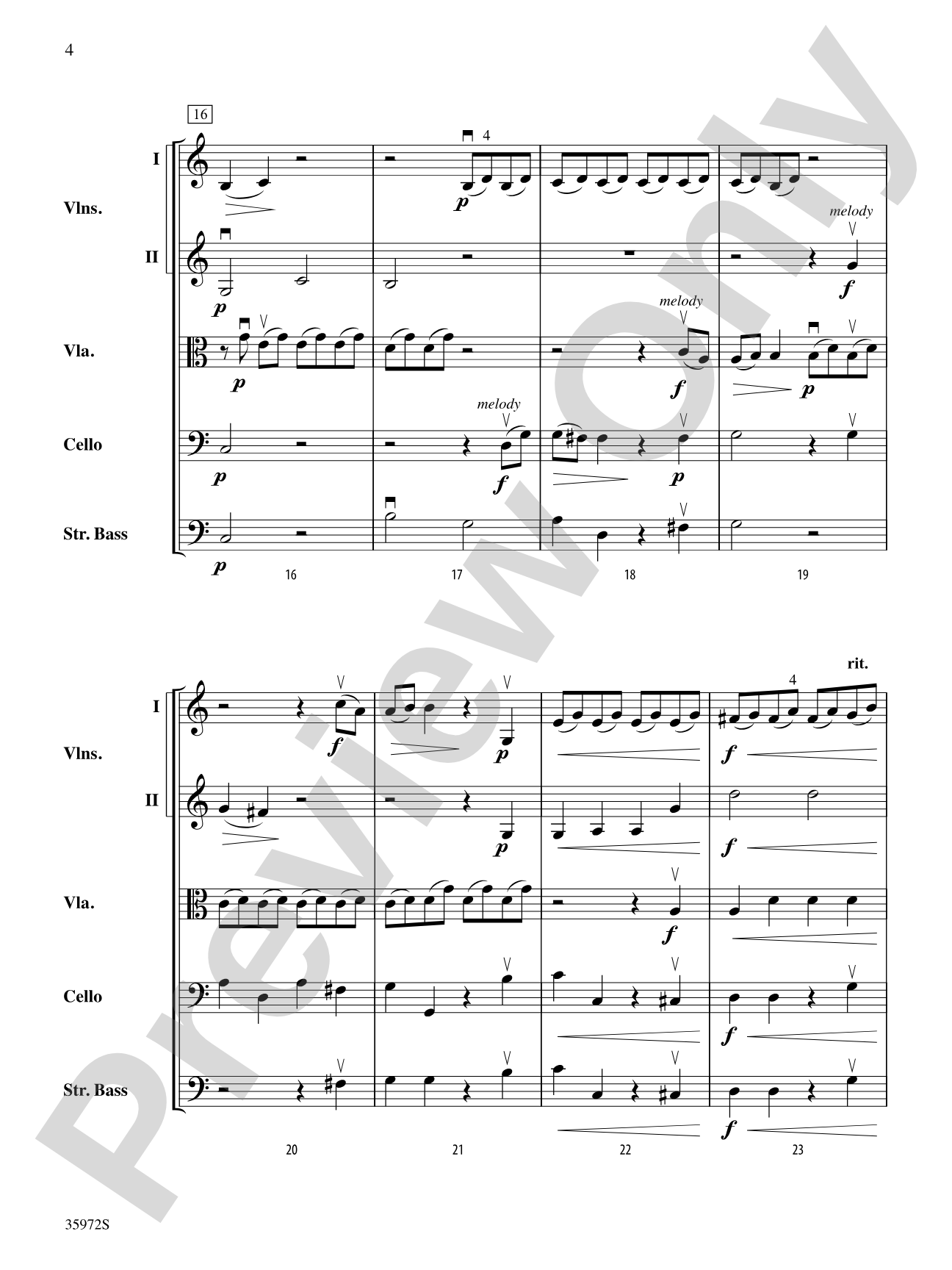
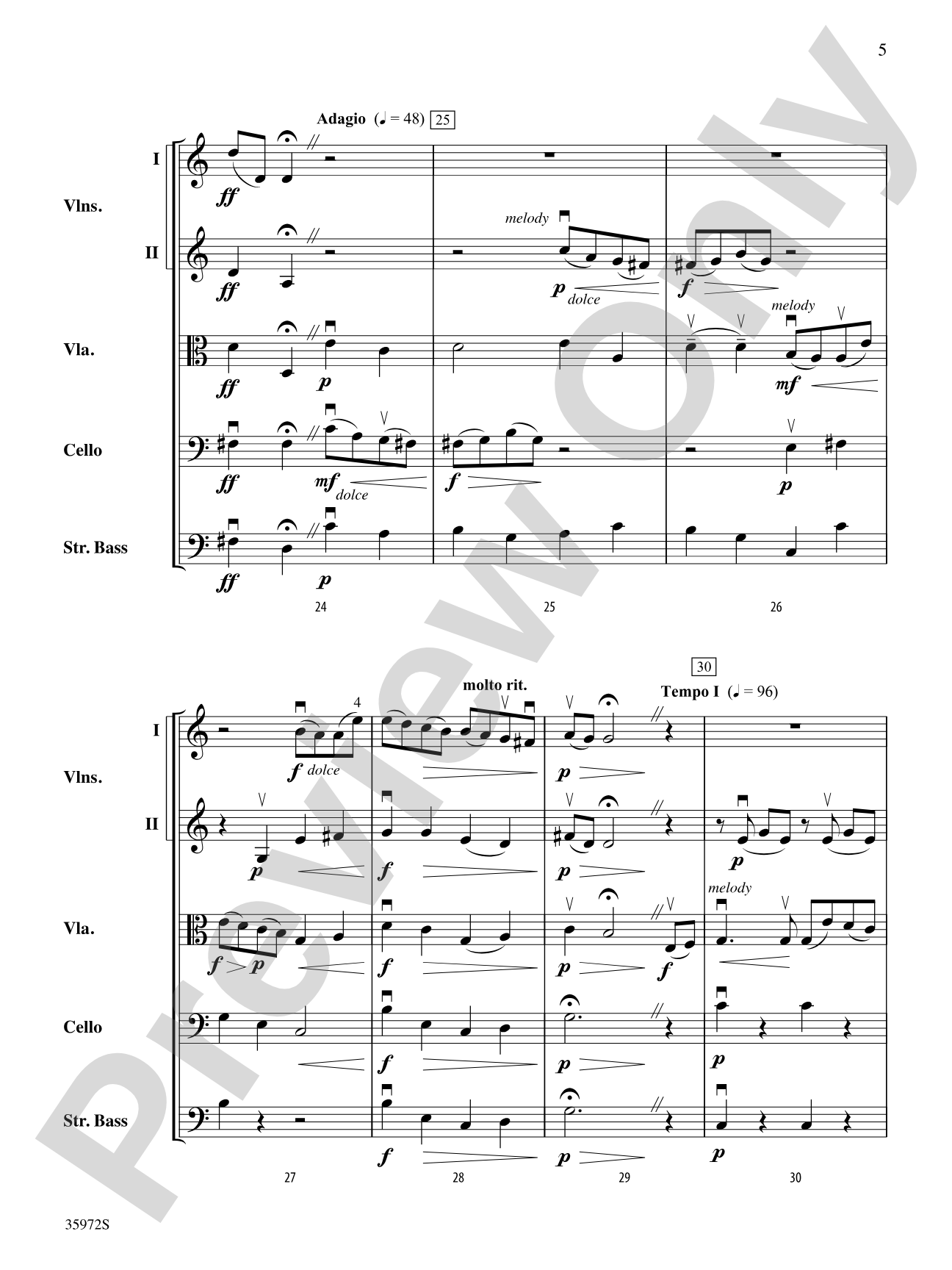
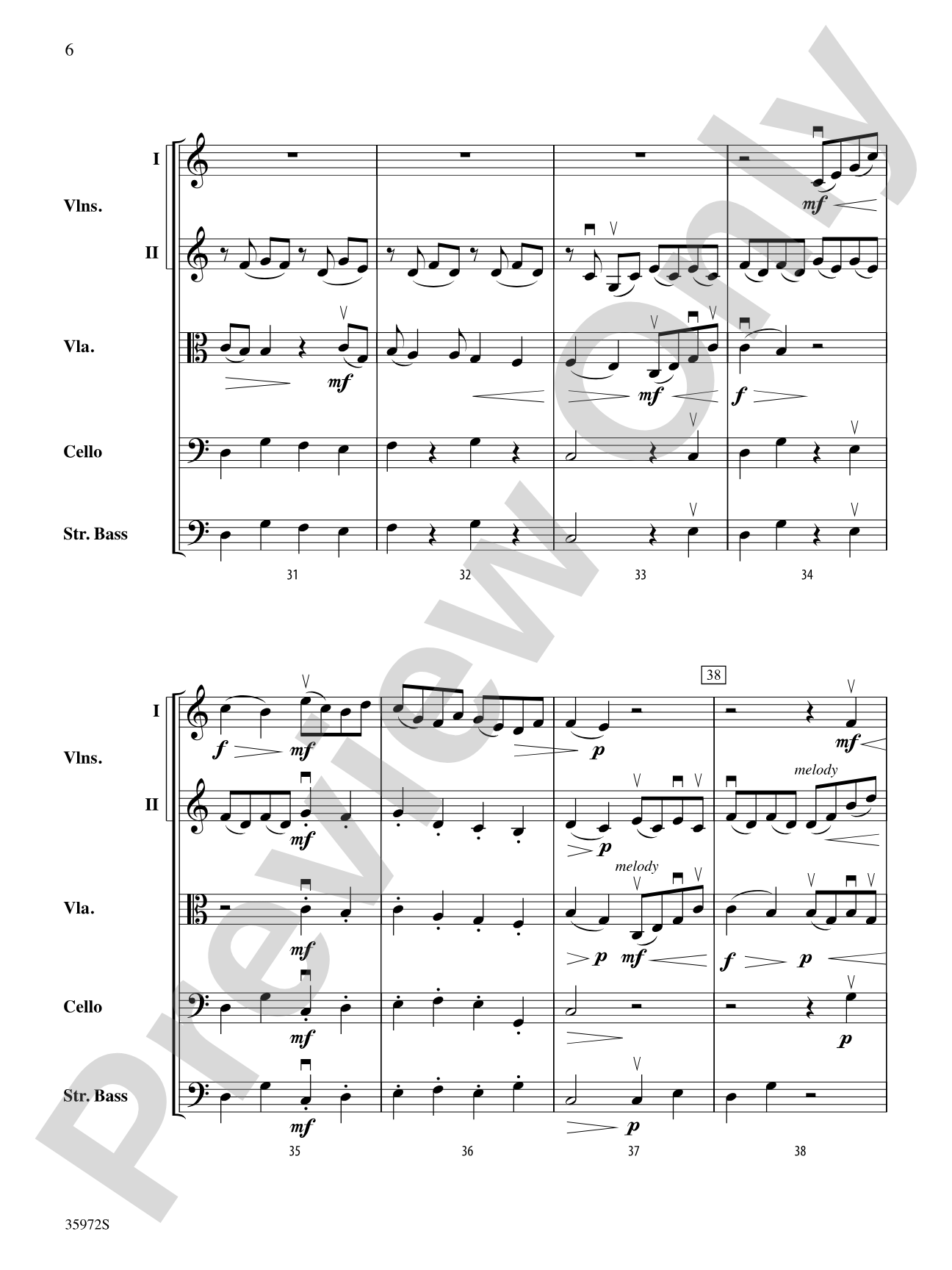
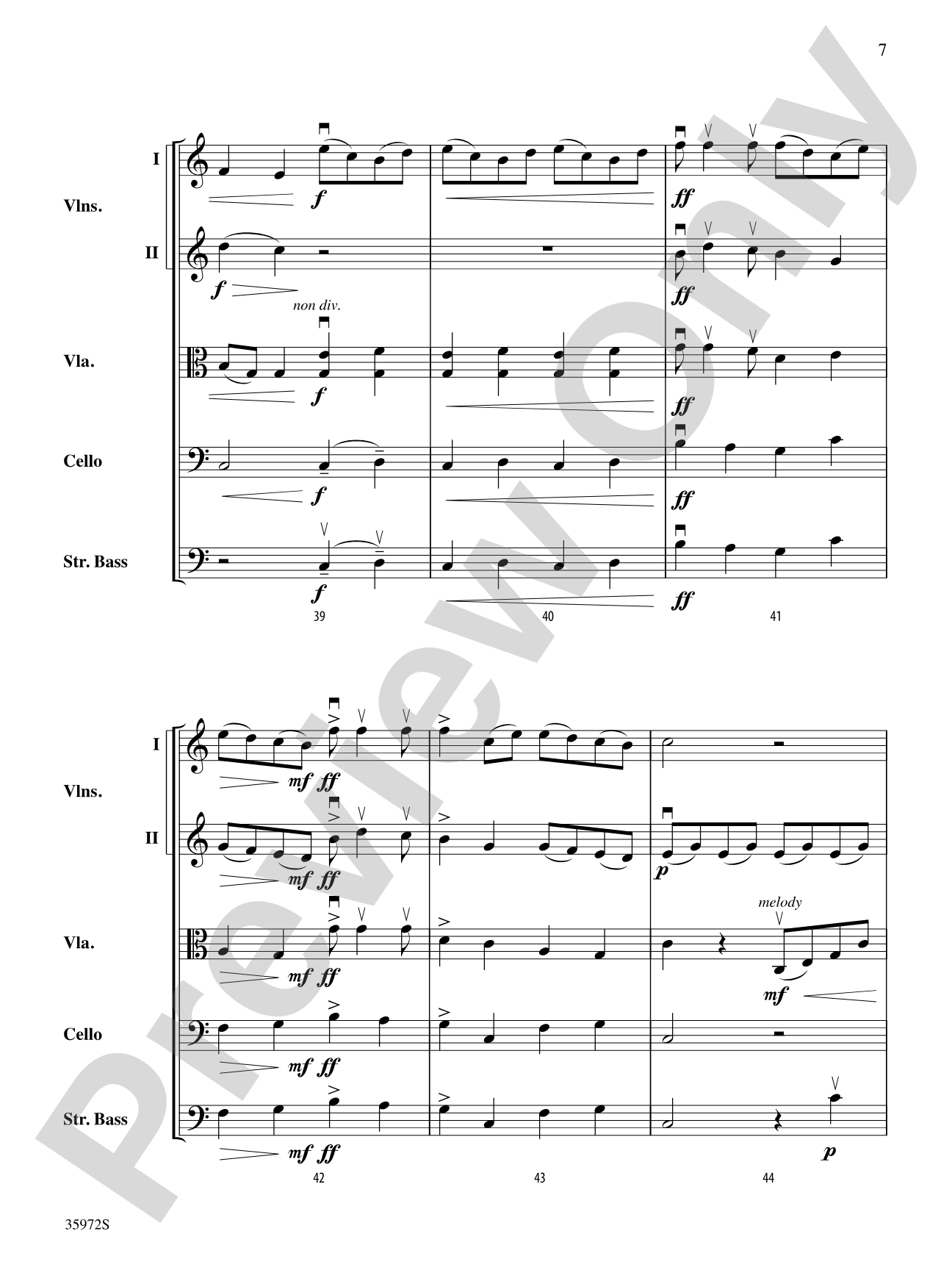
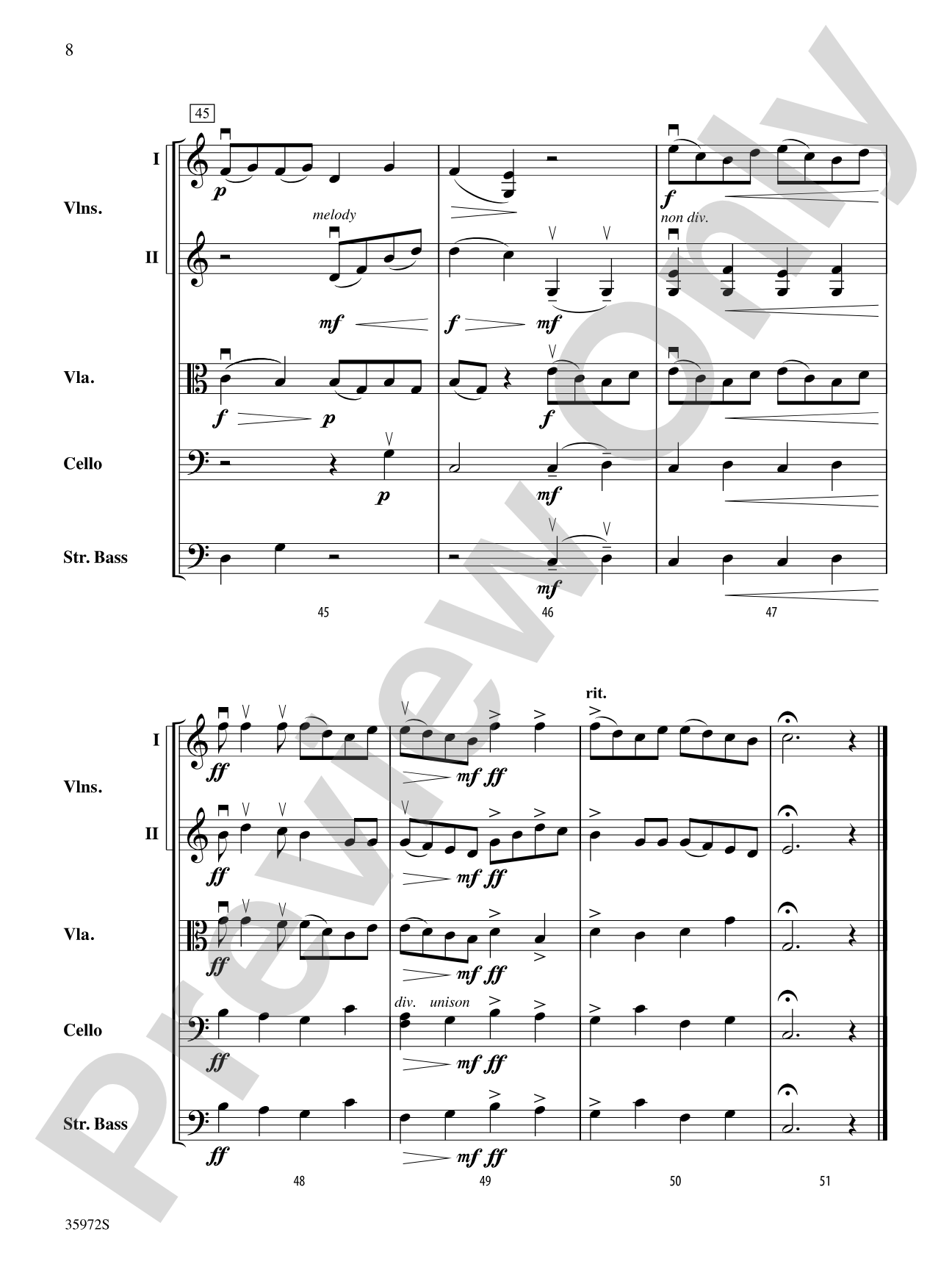
The melody of this famous aria is very simple, yet expressive and provides an easy introduction for students to the style of the Classical period, accompanied by an easy version of an Alberti bass figure or the undulating eighth note accompaniment figure. The tune is shared between all sections of the orchestra and is presented in a statement-and-response format.


Don't just read it, hear it, play along with it, and watch your students grow with it. In MakeMusic Cloud, Aria (from the opera Orfeo ed Euridice): String Orchestra Conductor Score & Parts comes alive with professional accompaniment, adjustable tempo, and built-in practice tools that turn solo practice into real progress.
Open in the Player
Jump straight in and assign it today.
Start Your Free Trial
Open this title and explore the full library in minutes.
Sample Audio
1
Audio File
--:--
0:00
0:00
Sample Video
No sample videos found.
Additional Details
Series:
Highland/Etling String Orchestra
Publisher:
Alfred Music
Page Count:
62
SKU:
00-PK-0004759
Instrumentation:
string
More about this title
About the Composer: Christoph Willibald Gluck
Christoph Willibald Gluck (1714-1787) was an opera composer whose reforms fundamentally changed how composers approached the relationship between music and drama. He believed that music should serve the text and emotional content of a scene rather than exist primarily to showcase vocal virtuosity, a philosophy that set him apart from many of his contemporaries. His operas, including Orfeo ed Euridice (1762), stripped away excessive ornamentation in favor of clarity, directness, and expressive power.
Gluck's influence on music education extends well beyond the opera house. His melodies are singable and memorable; his harmonic language is clear and elegant. For student musicians encountering Classical-era orchestration, Gluck's work demonstrates how simplicity and structural clarity create profound emotional effect.
Why we love this
This arrangement introduces students to genuine Classical style through a melody so direct and expressive that it teaches more about musical storytelling than pages of theory could. The Alberti bass accompaniment is equally important as the melody itself; students learn that the orchestra's foundation is as carefully crafted as what the audience hears on top. At Grade 2, it sits at an ideal sweet spot where young players feel the weight of a masterwork without drowning in technical demands.
What to expect
The melody floats with an almost ethereal quality, expressing deep emotion through simple, pure lines. The undulating accompaniment figures create a sense of gentle motion, as though the entire orchestra is breathing together, supporting the story unfolding above.
Who it's for
This score and parts fit beginning to early-intermediate string orchestras ready to explore the Classical period with actual concert-quality repertoire. It works equally well for festival or contest performance, where the clarity of Gluck's writing and the accessibility of the Grade 2 level allow students to focus on ensemble precision and musicality rather than survival.
How to get the most out of it
- Shape the phrase continuously even though the tune passes between sections. Each group that takes the melody must understand its place within a larger arc rather than playing their own isolated moment.
- Balance the Alberti bass so it supports without overwhelming. The figure is constant; make sure it lives quietly underneath, not competing with whoever carries the tune.
- Listen across the ensemble during statement-and-response passages. When one section states and another responds, the two must breathe as a unified conversation, not two separate events.
- Let the simplicity do the work. Resist the urge to add vibrato, ritardando, or extra expression. Gluck's restraint is its own kind of eloquence.
How to use it
Open a concert with this piece to establish an elegant tone and signal that your ensemble takes Classical repertoire seriously. Pair it with other arrangements from the Highland/Etling series to build a cohesive program, or position it between larger modern works to provide contrast and historical grounding. Its Festival-ready status makes it especially useful for January and February programming.
Skills your students will build
- Playing lyrical, sustained lines with consistent phrasing across an entire orchestra
- Reading and executing Alberti bass figures and repeated eighth-note accompaniment patterns
- Balancing melody against accompaniment
- Understanding statement-and-response form and how different sections contribute to musical dialogue
- Ensemble listening and tuning within a sustained harmonic context