Aria from the Goldberg Variations: Viola Sheet Music Preview

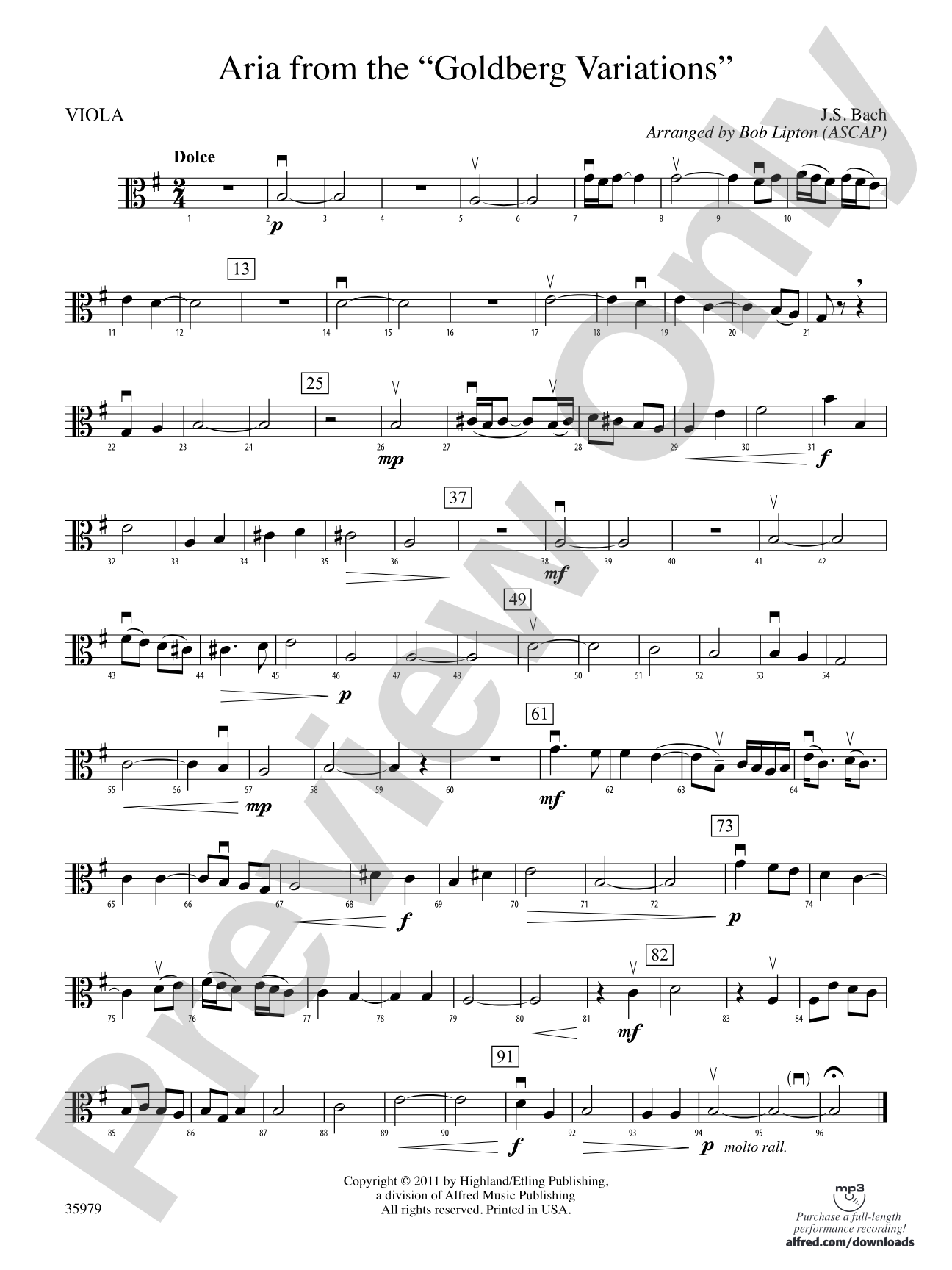
Aria from the Goldberg Variations: Viola

By Johann Sebastian Bach / arr. Bob Lipton

Grade: 2.5

Item: 00-PC-0015054_VA1

Digital Download
$5.99
Description
Now, not just for piano players! String players can also have the experience of playing this elegant and gorgeous piece. Written in 3/4 instead of the original 6/8 and with easy written-out ornaments, this arrangement will make developing groups sound mature beyond their years. This title is available in MakeMusic Cloud.

Don't just read it, hear it, play along with it, and watch your students grow with it. In MakeMusic Cloud, Aria from the Goldberg Variations: Viola comes alive with professional accompaniment, adjustable tempo, and built-in practice tools that turn solo practice into real progress.

Sample Audio
0:00
0:00
Sample Video
Additional Details
Series: Highland/Etling String Orchestra
Publisher: Alfred Music
Page Count: 62
SKU: 00-PC-0015054_VA1
Instrumentation: string

More about this title

About the Composer: Johann Sebastian Bach

Johann Sebastian Bach (1685-1750) stands as one of the most influential composers in Western music history. His mastery of counterpoint, harmonic innovation, and structural perfection established foundations that composers continue to build upon today. Bach's works span sacred vocal music, keyboard works, and instrumental ensembles, each demonstrating his ability to blend mathematical precision with profound emotional depth.

Why we love this

This arrangement gives developing string orchestras direct access to one of the Baroque's most refined melodies without overwhelming them technically. Bob Lipton's choice to rewrite the time signature and simplify the ornaments preserves Bach's elegance while respecting what Grade 2.5 players can actually execute musically. The result sounds sophisticated and mature, which builds student confidence and reminds them why they're learning strings in the first place.

What to expect

Stately and lyrical, like walking through a formal garden in spring. The melody unfolds with unhurried grace, inviting players into a world where every note matters and silence is as musical as sound. There's an inherent dignity here that lets young string players experience the dignity of Baroque refinement.

Who it's for

String orchestras working at Grade 2.5 who are ready for repertoire that sounds more polished than it is technically demanding. This piece works well for groups preparing for contest or festival settings, or for programs that want to include genuine masterworks without assigning pieces beyond their current abilities.

How to get the most out of it

  • Shape the phrasing in long, connected arcs rather than phrase-by-phrase. String players often default to starting fresh with each bow, but this melody breathes as one continuous line.
  • Balance the written-out ornaments so they enhance the melody without calling attention to themselves. They should feel decorative, not flashy.
  • Sustain the accompaniment parts with steady tone and minimal vibrato so the principal melody floats clearly above. Many players at this level will want to vibrate constantly; encourage restraint here.
  • Attend to dynamic shape within the parts you don't think are important. Even sustained chords shift subtly in the original, and capturing that refinement elevates the whole sound.

How to use it

Pair this with other Baroque works at a similar level to create a thematic concert segment, or program it as a contrasting centerpiece between faster or more rhythmically driven pieces. It also serves as an excellent choice for contest festivals where judges appreciate musical maturity paired with appropriate difficulty.

Skills your students will build

  • Sustaining long melodic lines across multiple phrases without loss of continuity
  • Executing written-out ornaments with clarity and control
  • Reading and playing in 3/4 time with consistent phrasing
  • Balancing melody and accompaniment in an ensemble setting
  • Understanding style and interpretation in Baroque idiom

You May Also Like