

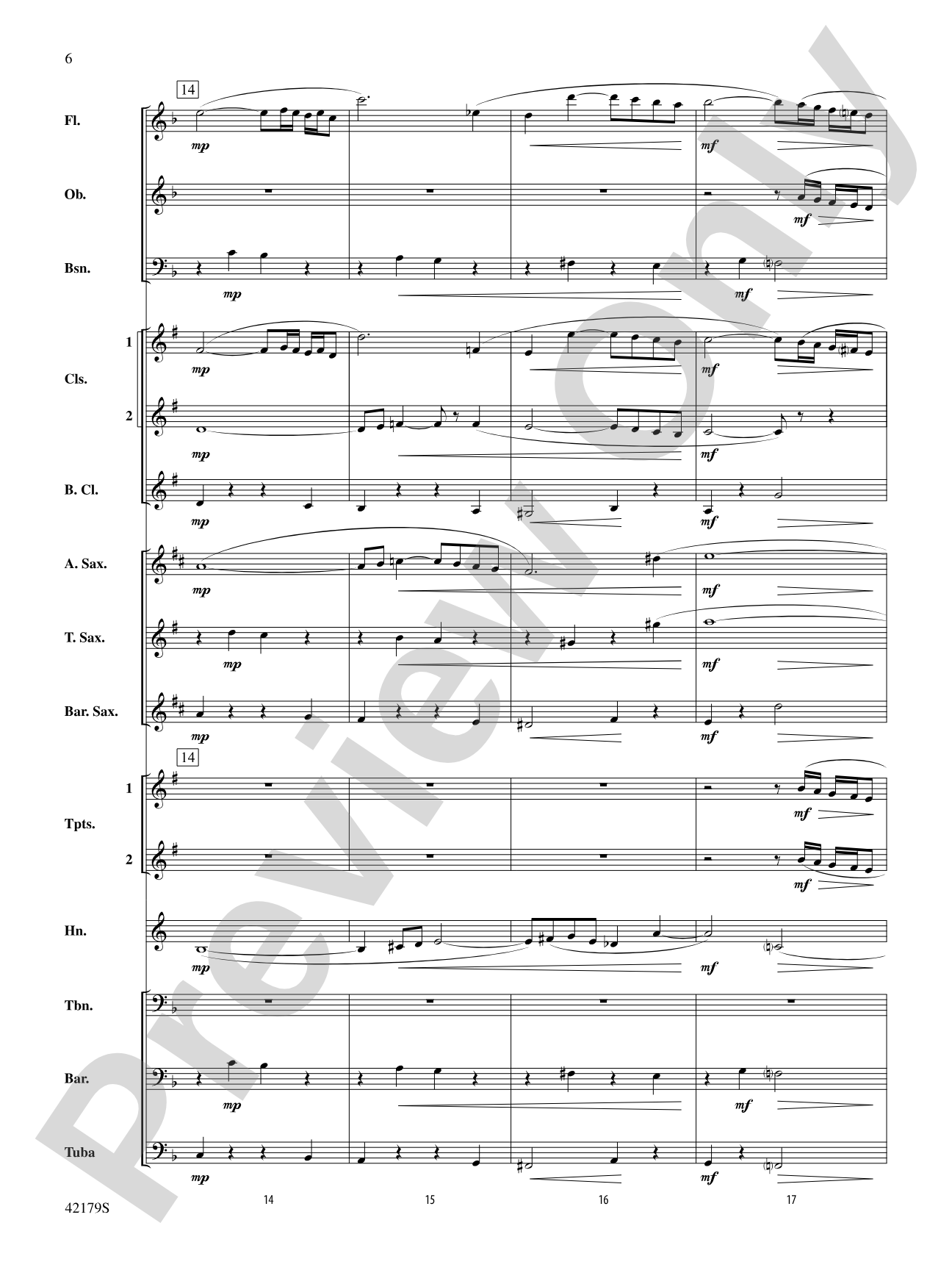
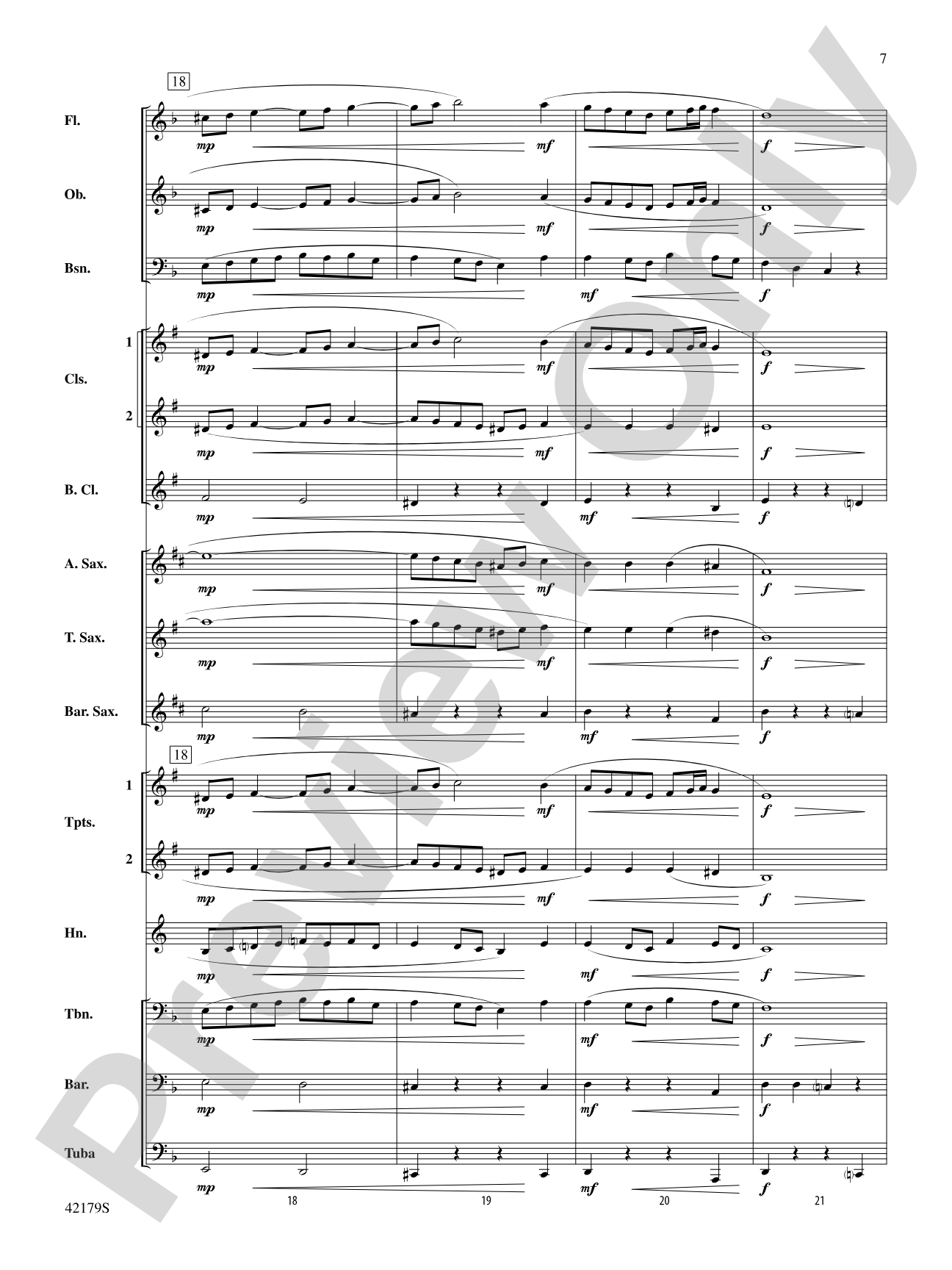
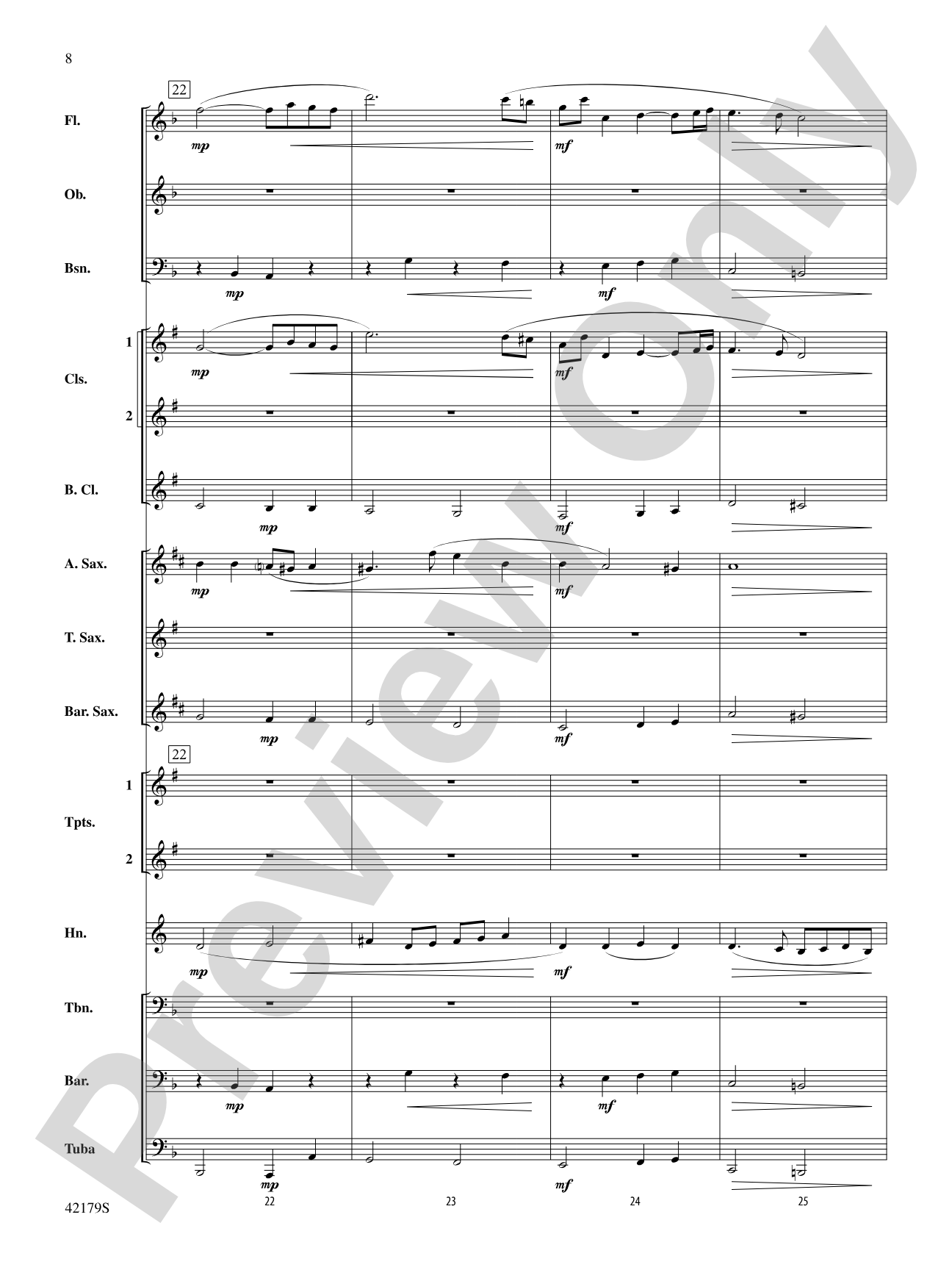
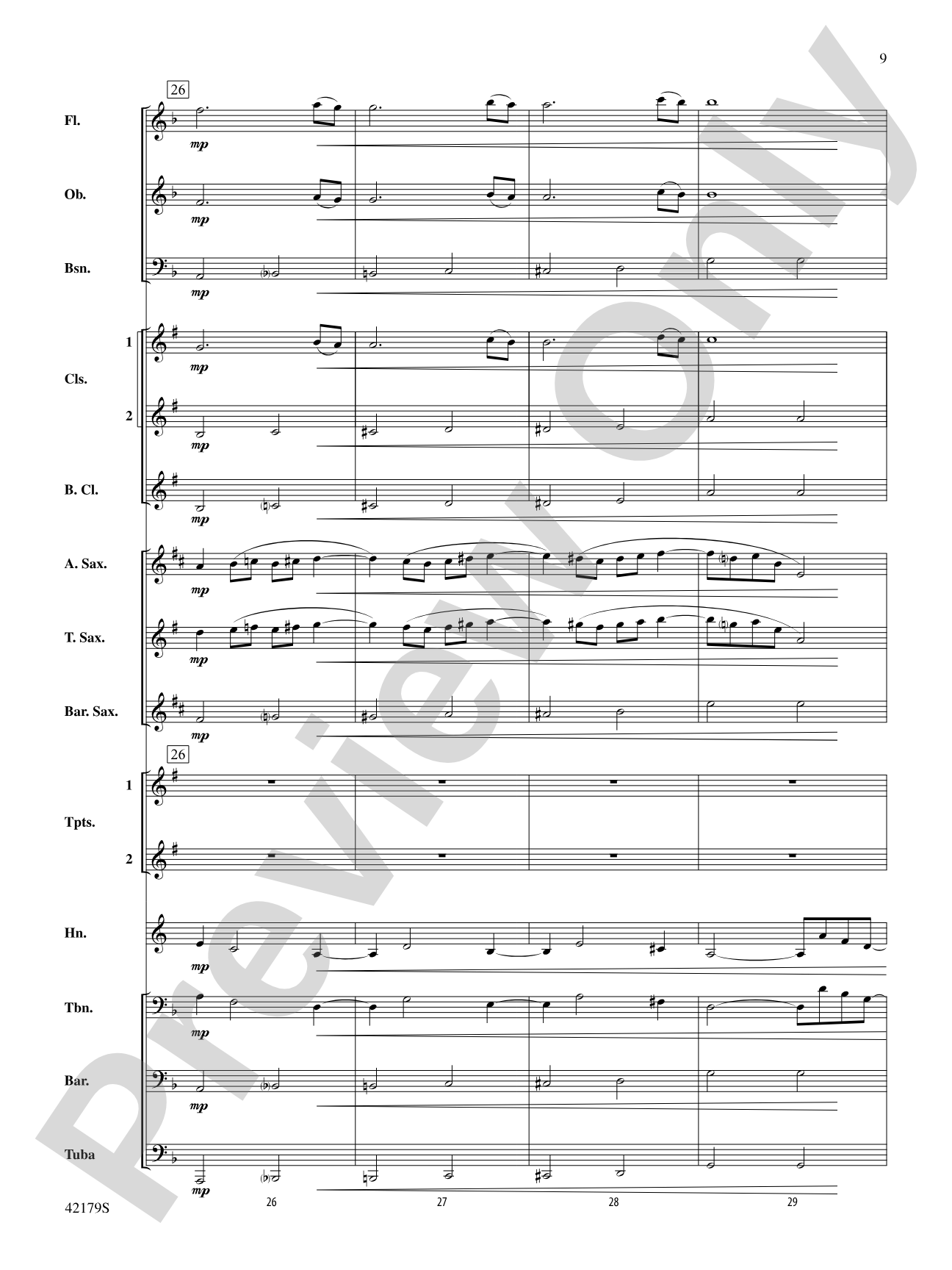
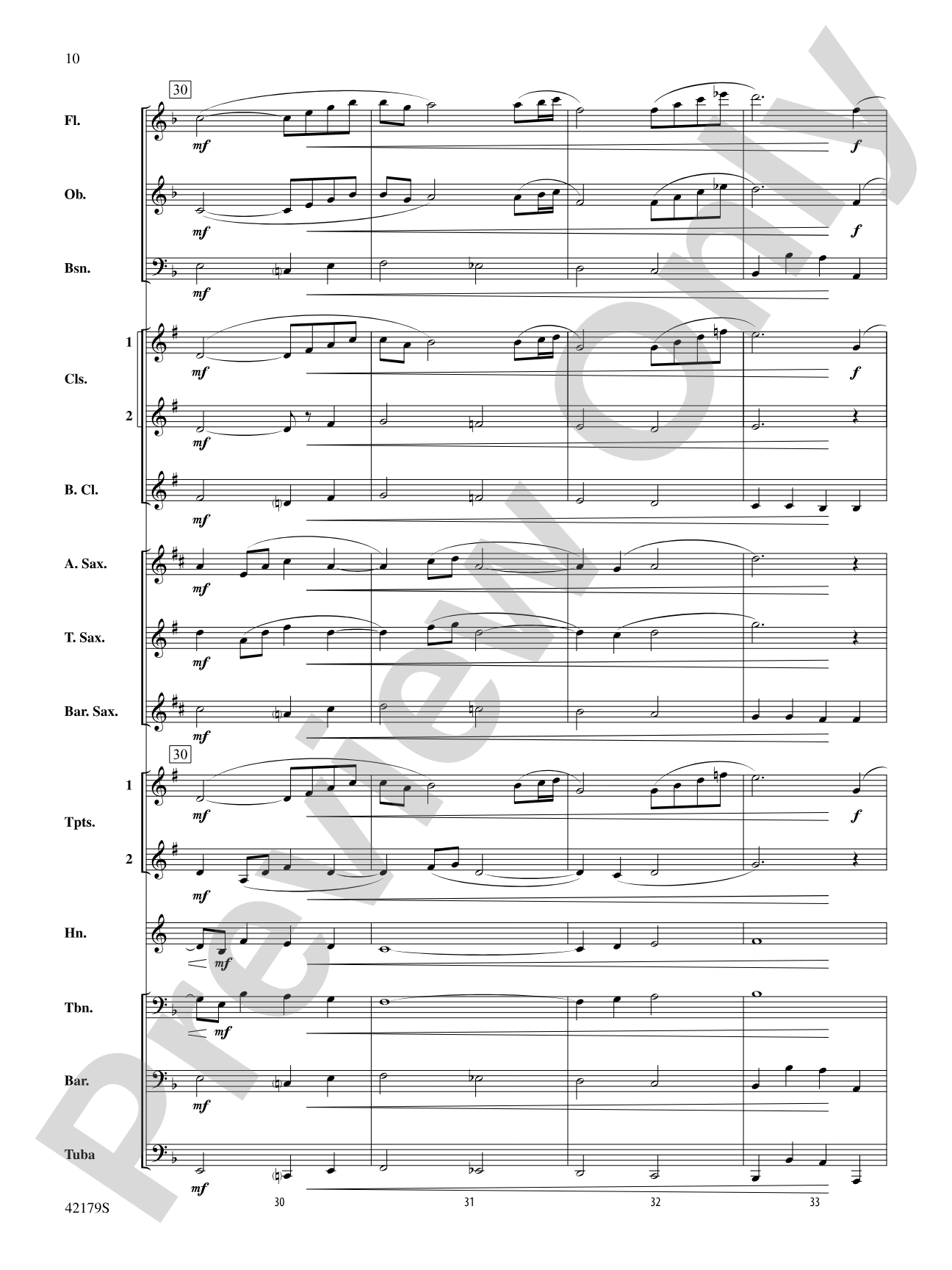
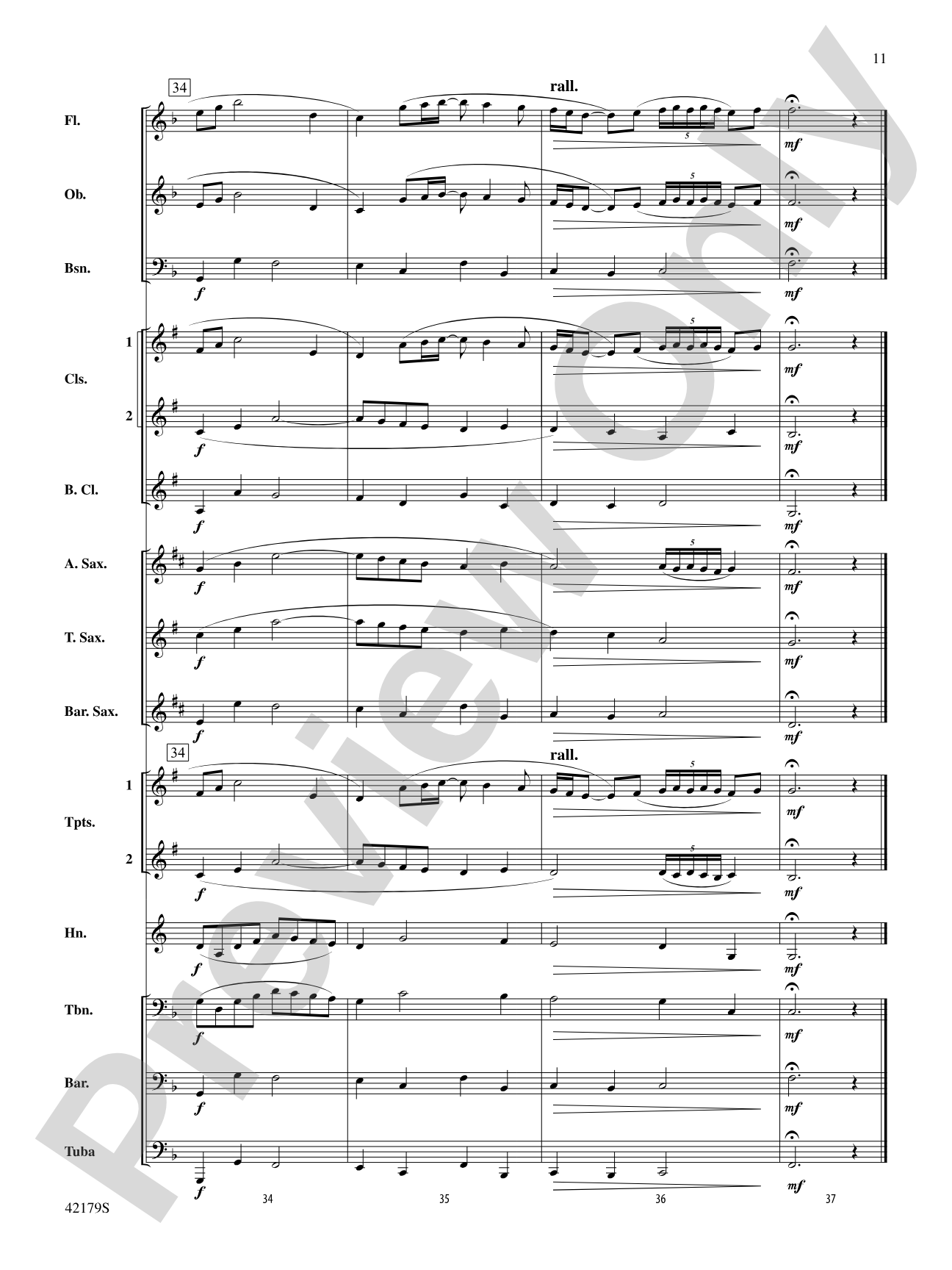

Aria: Concert Band Conductor Score & Parts
(de la suite No. 3)
By Johann Sebastian Bach / arr. Jack Bullock
Grade: 2.5 (Easy to Medium Easy)
Item: 00-PK-0006296

$62.00
Pickup currently not available
Buy Extra Parts (Digital PDF Download)
| Product | Price | Quantity |
|---|---|---|
| Aria: Score | $10.00 | |
| Aria: Flute | $3.00 | |
| Aria: Oboe | $3.00 | |
| Aria: Bassoon | $3.00 | |
| Aria: 1st B-flat Clarinet | $3.00 | |
| Aria: 2nd B-flat Clarinet | $3.00 | |
| Aria: B-flat Bass Clarinet | $3.00 | |
| Aria: E-flat Alto Saxophone | $3.00 | |
| Aria: B-flat Tenor Saxophone | $3.00 | |
| Aria: E-flat Baritone Saxophone | $3.00 | |
| Aria: 1st B-flat Trumpet | $3.00 | |
| Aria: 2nd B-flat Trumpet | $3.00 | |
| Aria: 1st F Horn | $3.00 | |
| Aria: 1st Trombone | $3.00 | |
| Aria: Baritone T.C. | $3.00 | |
| Aria: Baritone B.C. | $3.00 | |
| Aria: Tuba | $3.00 |
Parts Added to Cart!
Description
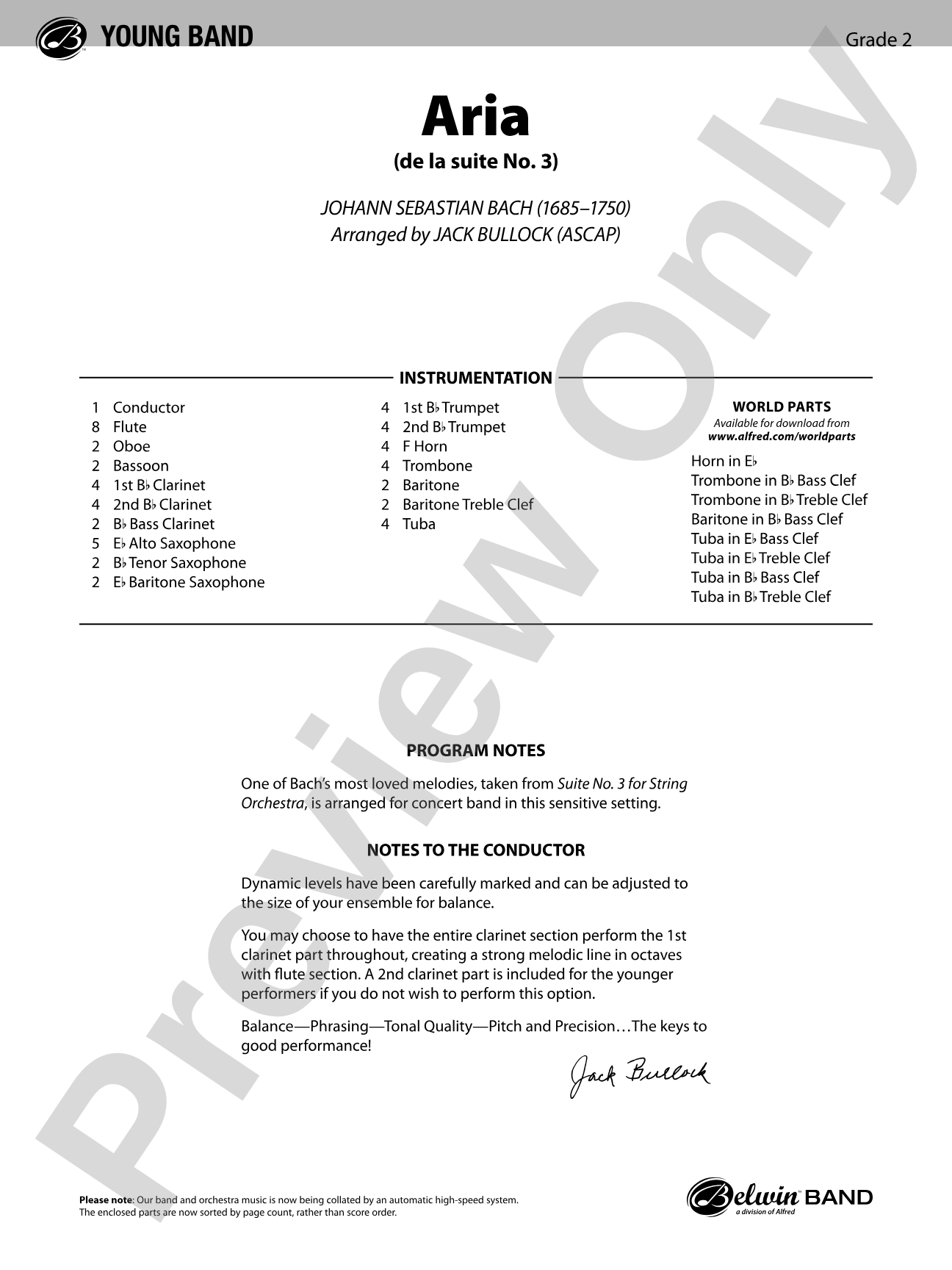
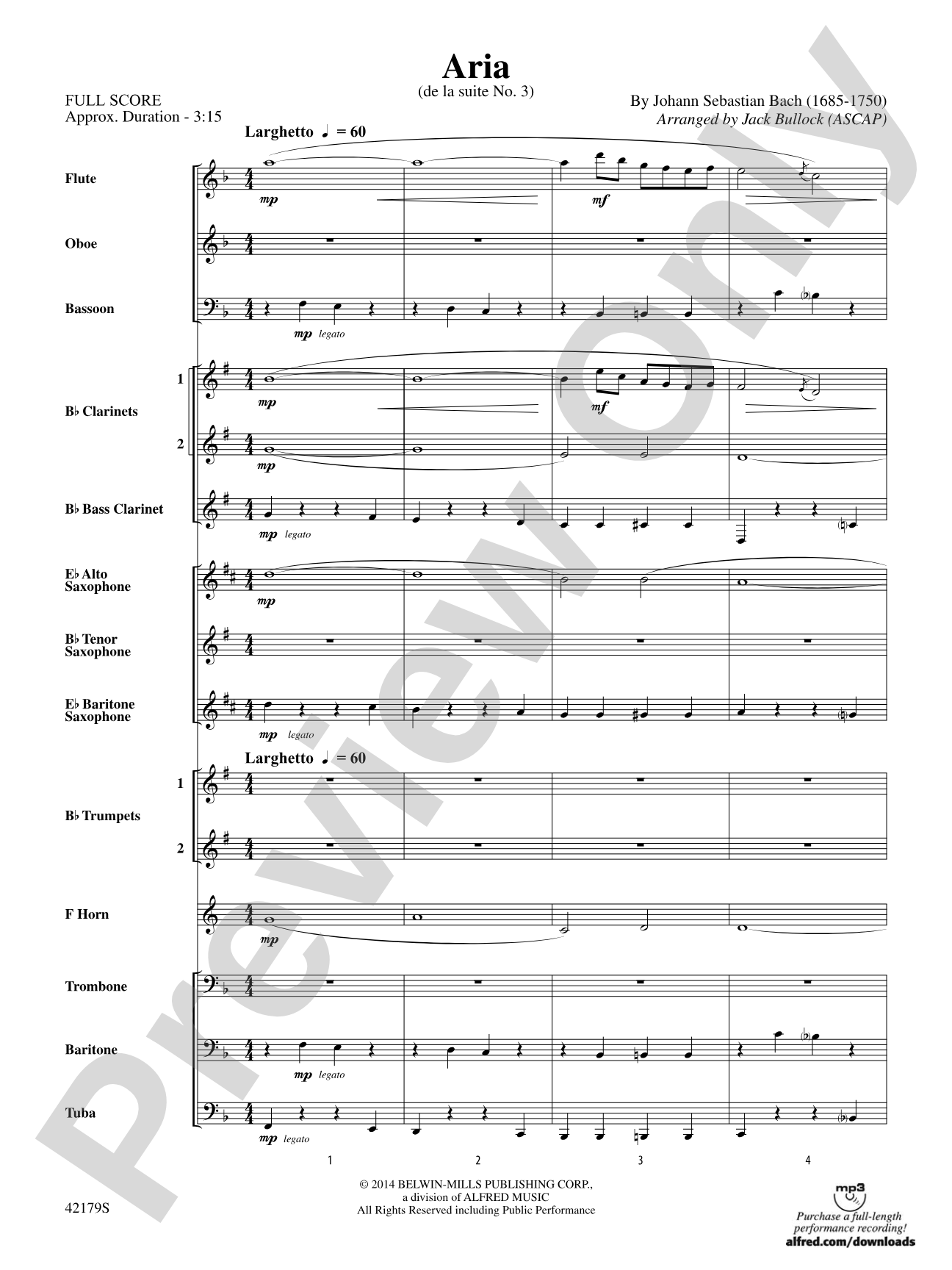
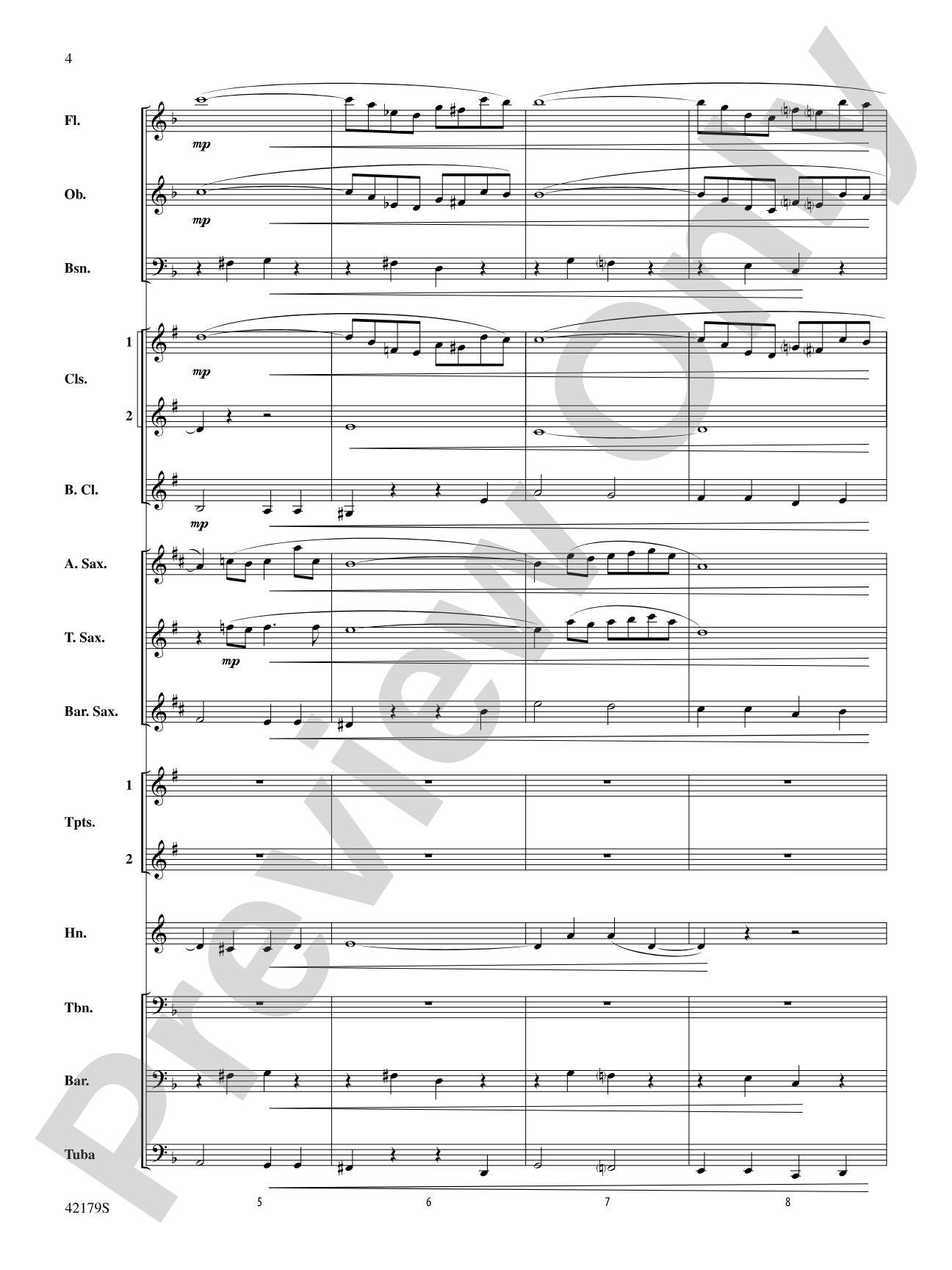
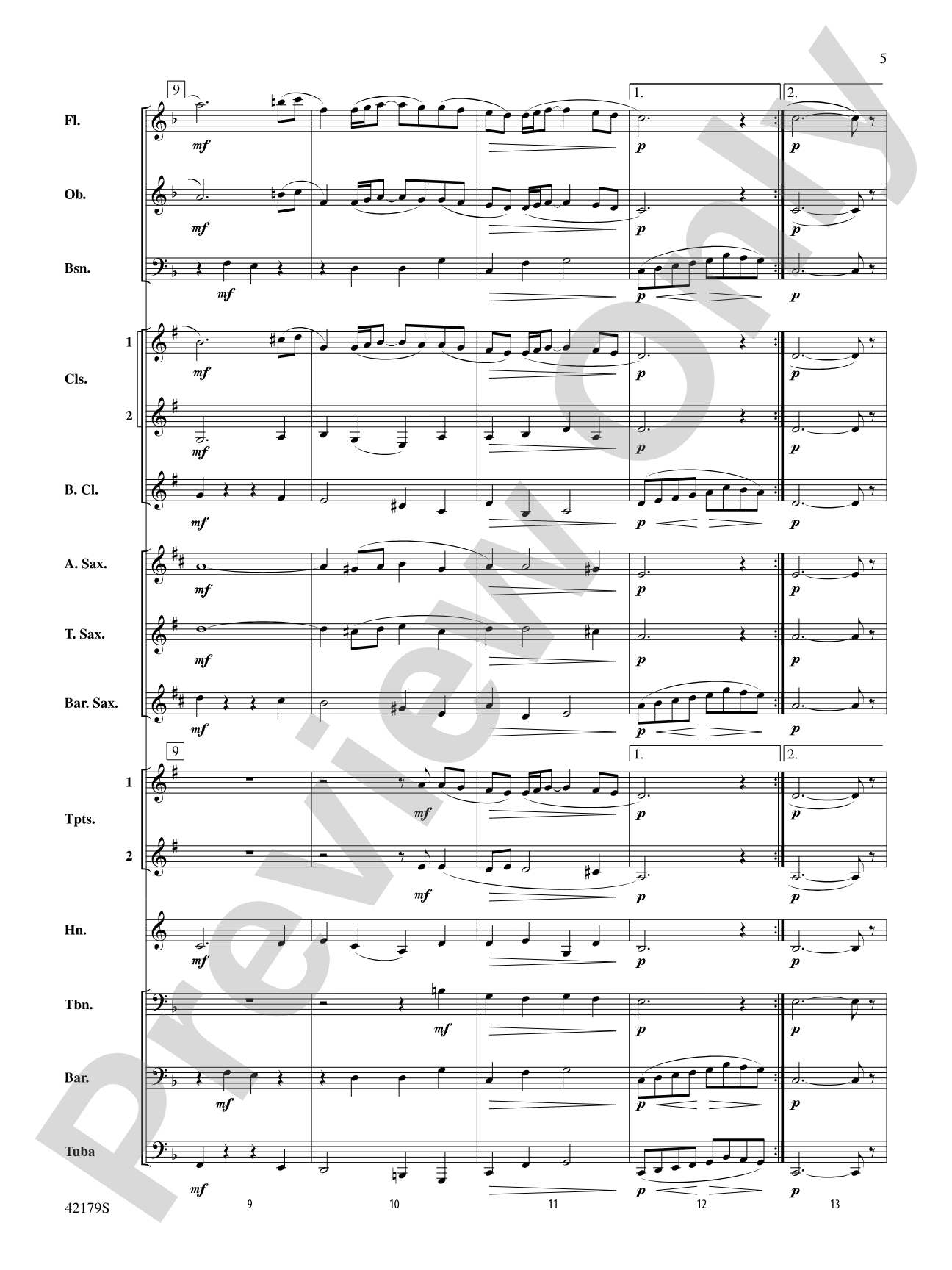
One of Bach's most loved melodies, taken from Suite No. 3 for String Orchestra is arranged in this sensitive setting without percussion. There are absolutely no technical concerns so you have the opportunity to make serious music with this emotional ballad. (3:15)


Don't just read it, hear it, play along with it, and watch your students grow with it. In MakeMusic Cloud, Aria: Concert Band Conductor Score & Parts comes alive with professional accompaniment, adjustable tempo, and built-in practice tools that turn solo practice into real progress.
Open in the Player
Jump straight in and assign it today.
Start Your Free Trial
Open this title and explore the full library in minutes.
Sample Audio
1
Audio File
--:--
0:00
0:00
Sample Video
No sample videos found.
Additional Details
Series:
Belwin Young Band
Publisher:
Alfred Music
Page Count:
110
SKU:
00-PK-0006296
More about this title
About the Composer: Johann Sebastian Bach
Johann Sebastian Bach (1685-1750) stands as one of the most prolific and influential composers in Western music history. His mastery of counterpoint, harmonic language, and structural design shaped the course of music for centuries; his works remain foundational to music education and performance across all instruments and ensembles.
Bach composed across every major genre of his era except opera, leaving behind over 1,000 works. His Suite No. 3 in D Major for String Orchestra, from which this Aria is drawn, showcases the elegant melodic gift and harmonic sophistication that makes his music endlessly rewarding for both students and audiences.
Why we love this
Jack Bullock's arrangement preserves the lyrical purity of Bach's melody while stripping away technical obstacles, letting young musicians focus on phrasing, balance, and expressive playing rather than finger gymnastics. The absence of percussion creates an intimate soundscape that rewards careful listening and deliberate musicianship. This is the kind of piece that shows students what it means to make something profound without complexity.
What to expect
Serene and contemplative. The melody unfolds with the unhurried elegance of a hymn, supported by warm harmonies that invite the listener into quiet reflection. There's an almost sacred quality to the progression, a sense of something timeless and deeply felt.
Who it's for
Band directors seeking accessible Baroque literature that challenges students musically without demanding advanced technical skill. This arrangement works well for groups at the Grade 2-2.5 level who are ready to explore expressive playing and part independence.
How to get the most out of it
- Shape each phrase as a single breath. Identify the natural peaks and valleys of the melody, and guide the ensemble toward them with subtle dynamic shaping rather than obvious swells.
- Balance the harmonic voices so the melody emerges clearly without harsh dominance. This is an arrangement that reveals its beauty through blend and transparency.
- Establish a warm, singing tone across the entire band. Without percussion to anchor the rhythm, the wind players carry responsibility for both forward motion and emotional character.
- Allow the final cadence time and space. Resist the urge to rush; let the ensemble experience the resolution fully, then hold the silence that follows.
How to use it
Pair this with lighter contemporary works to create contrast in a concert program, or use it as an opening movement to center an audience before moving into more energetic pieces. It also serves as an excellent contest or festival selection, where its musical restraint and clarity of line stand out.
Skills your students will build
- Sustained phrasing and breath control across longer melodic lines
- Dynamic balance and blend within an ensemble without rhythmic props
- Part independence and harmonic awareness
- Expressive tone production and musical sensitivity to a slow tempo