
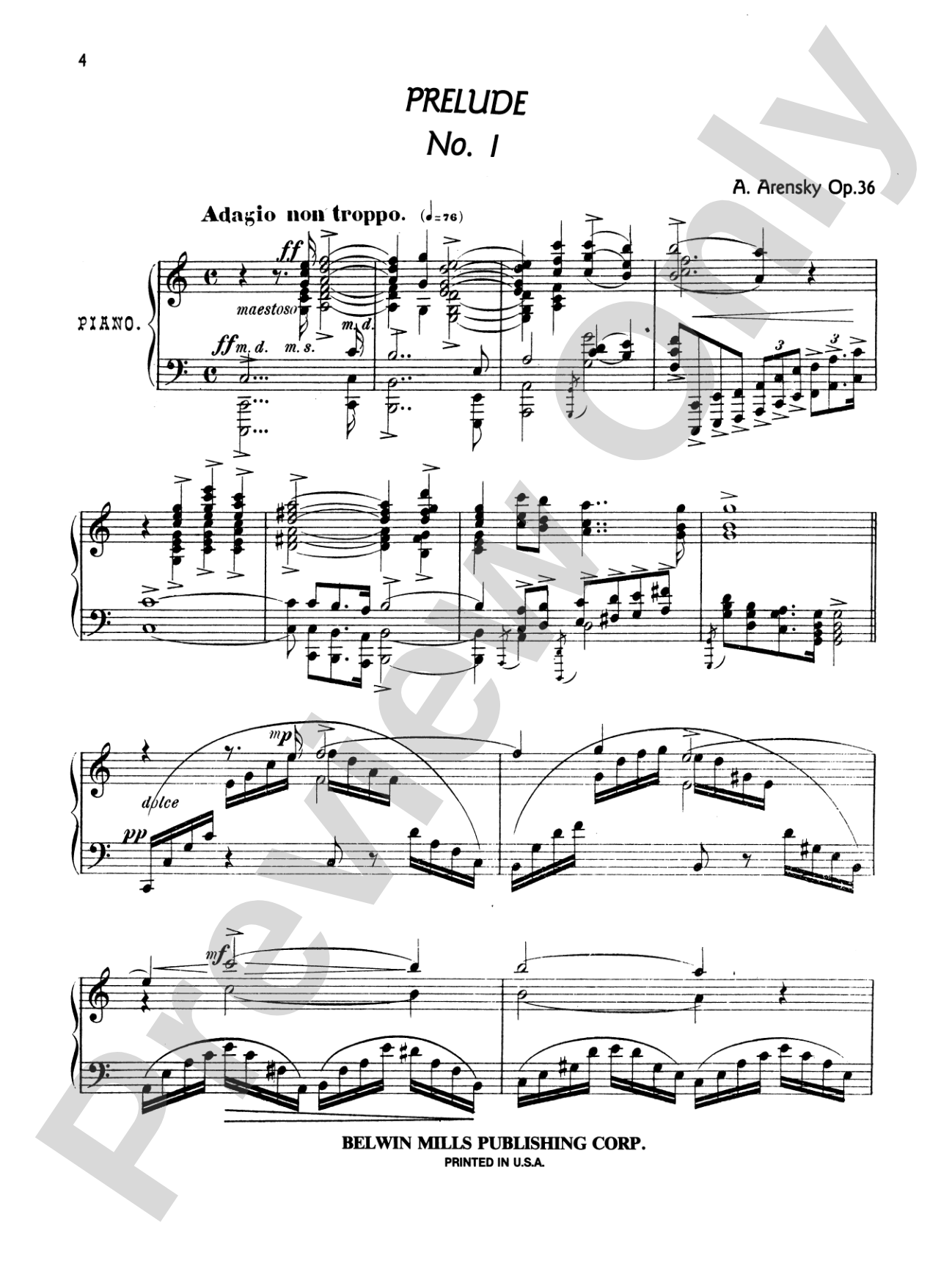
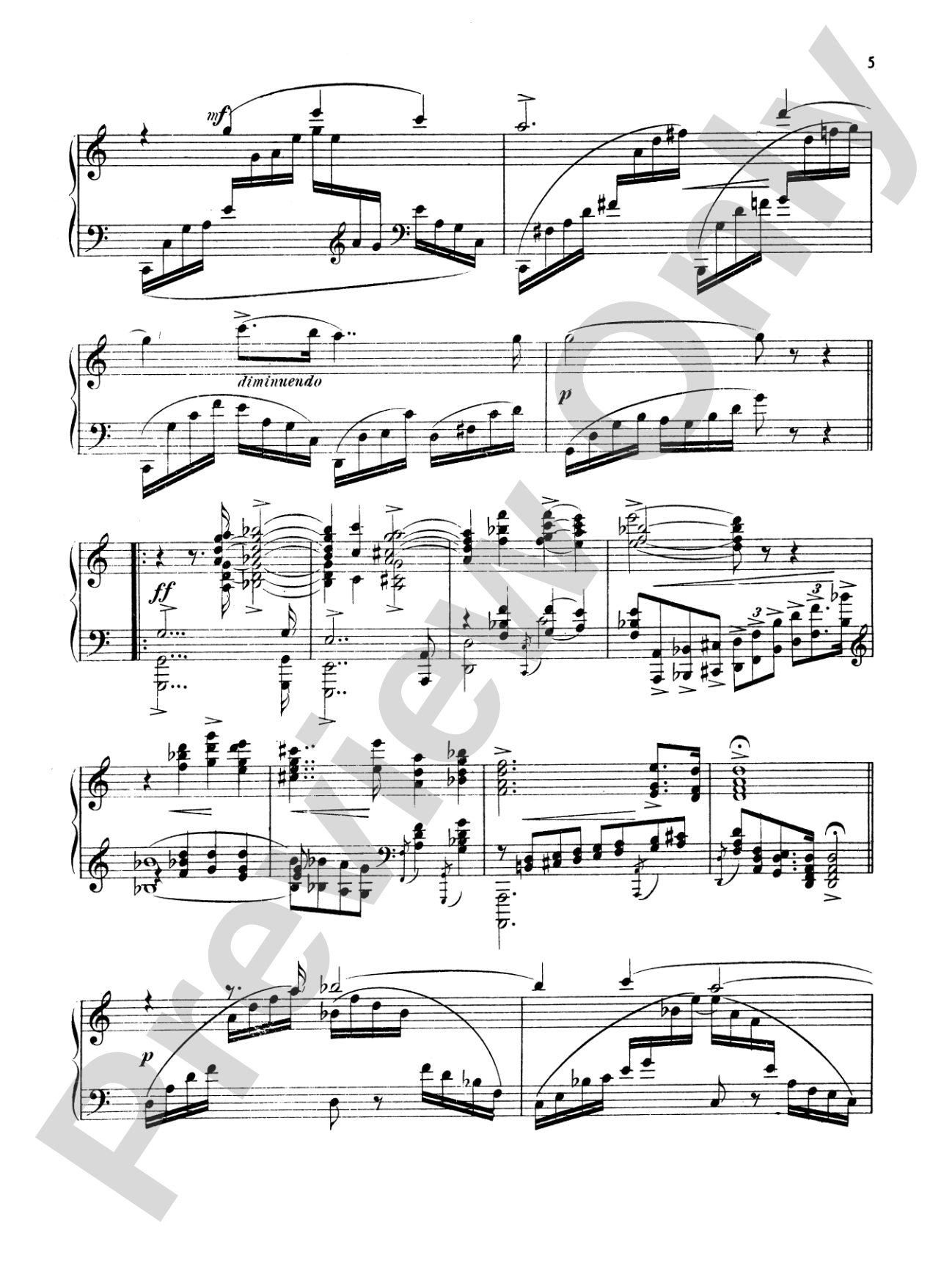
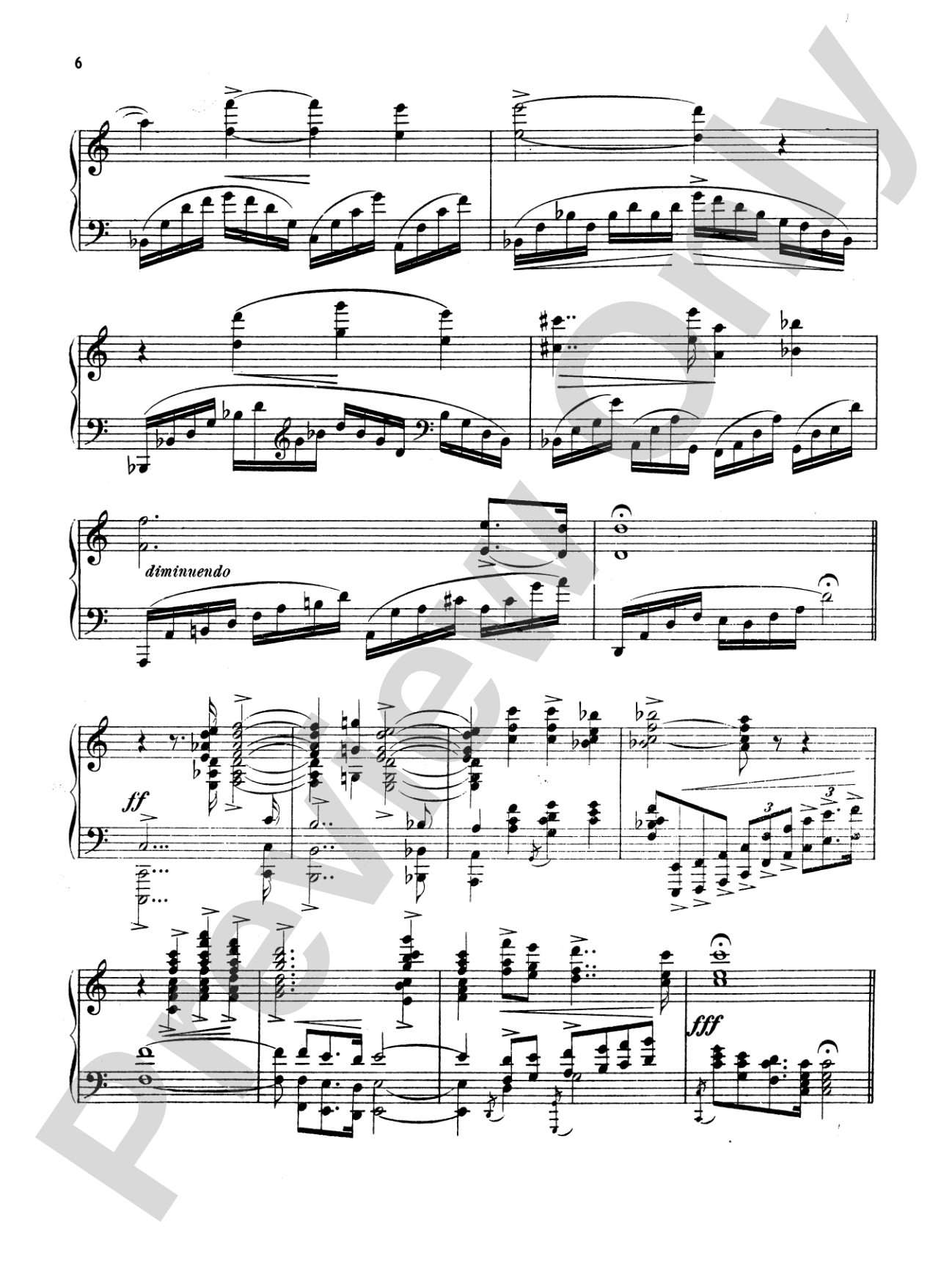
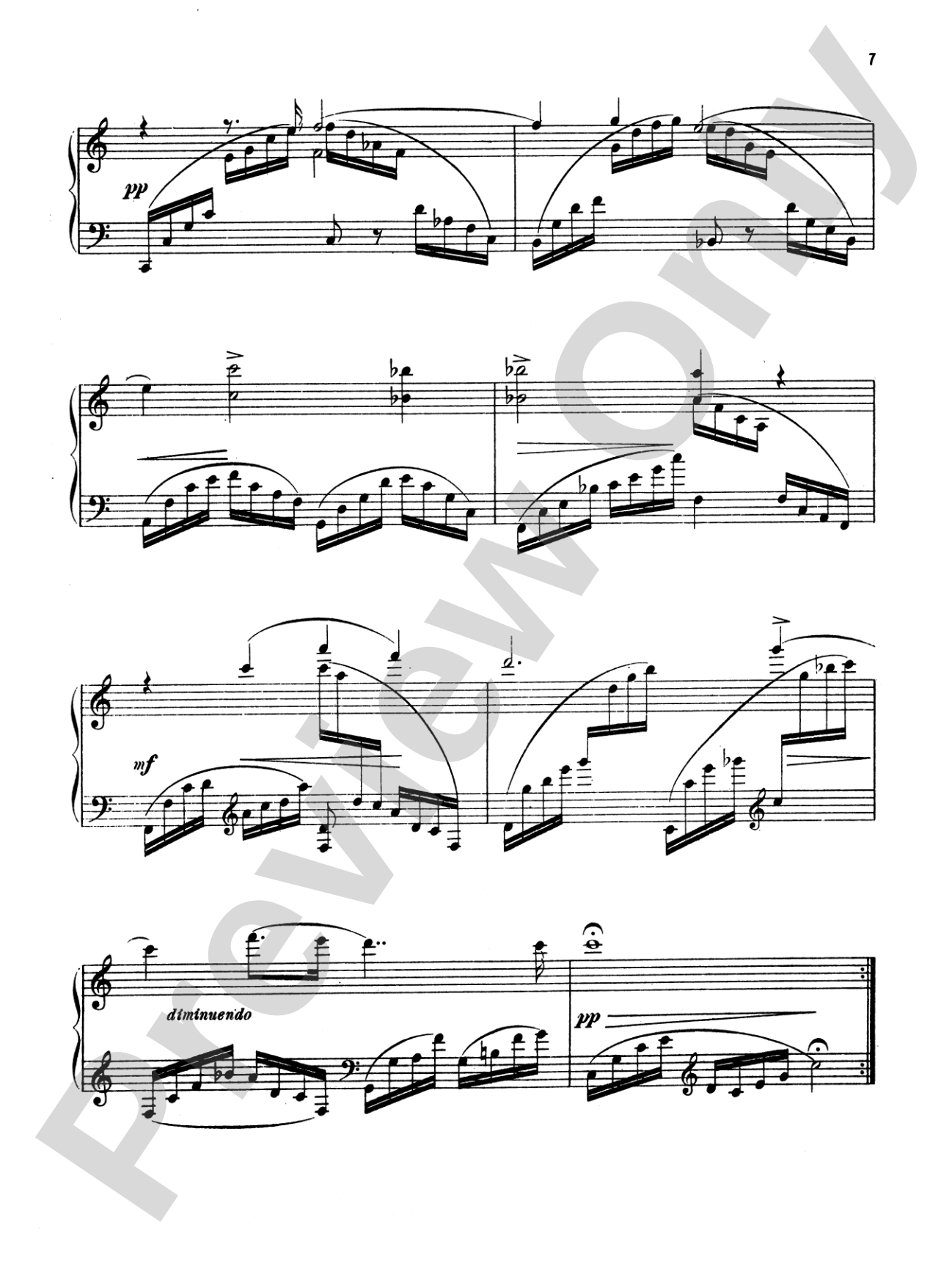

Arensky: Twenty-four Morceau Characteristiques, Op. 36: Piano Book
By Anton Arensky
Level: Intermediate / Advanced
Item: 00-PK-0003901

$19.99
Pickup currently not available
Buy Extra Parts (Digital PDF Download)
Parts Added to Cart!
Related Items
Twenty-Four Morceau Characteristiques, Opus 36: Piano Book |
$19.95
|
View |
Description
No. 1, Prelude * No. 2, La Toupie * No. 3, Nocturne * No. 14, Petite Ballade * No. 5, Consolation * No. 6, Duo * No. 7, Valse * No. 8, In Modo Antico * No. 9, Papillon * No. 10, Ne M'oubliez Pas * No. 11, Barcarolle * No. 12, Intermezzo * No. 13, Etude * No. 14, Scherzino * No. 15, Le Ruisseau dans la Foret * No. 16, Elegie * No. 17, Le Reve * No. 18, Inquietude * No. 19, Reverie du Printemps * No. 20, Mazurka * No. 21, Marche * No. 22, Tarantelle * No. 23, Andante Con Variazioni * No. 24, Aux Champs.


Don't just read it, hear it, play along with it, and watch your students grow with it. In MakeMusic Cloud, Arensky: Twenty-four Morceau Characteristiques, Op. 36: Piano Book comes alive with professional accompaniment, adjustable tempo, and built-in practice tools that turn solo practice into real progress.
Open in the Player
Jump straight in and assign it today.
Start Your Free Trial
Open this title and explore the full library in minutes.
Sample Audio
No sample audio found.
Sample Video
No sample videos found.
Additional Details
Series:
Kalmus Edition
Publisher:
Alfred Music
Page Count:
28
SKU:
00-PK-0003901
More about this title
About the Composer: Anton Arensky
Anton Arensky (1861, 1906) was a Russian pianist and composer whose gift for melody and structural clarity made him a bridge between Romantic lyricism and modernist sensibility. Though overshadowed by his contemporaries Tchaikovsky and Rimsky-Korsakov, Arensky earned respect as a conservatory director and chamber musician whose works reveal sophisticated harmonic language and genuine emotional depth.
His smaller piano works showcase the craftsmanship that defined his career. Arensky understood the instrument intimately, writing idiomatic passages that reward careful practice while remaining accessible to serious amateurs. These character pieces reveal a composer equally at home with salon elegance and genuine introspection.
Why we love this
These twenty-four character pieces offer something rare in the intermediate-advanced repertoire: genuine musical substance without the virtuosic demands that can overshadow artistry. Each piece is short enough to learn quickly yet substantial enough to reward careful interpretation, making this collection invaluable for building a recital program or introducing students to Romantic salon music with real compositional craft.
What to expect
Arensky's miniatures evoke the world of Russian aristocratic drawing rooms and European ballrooms, where elegance and sentiment held equal weight. Waltzes spin with unforced grace, nocturnes unfold with tender introspection, and even the lighter character pieces carry a distinctly lyrical sensibility that rewards listening as much as playing.
Who it's for
Intermediate to advanced pianists seeking character pieces that develop interpretive maturity alongside technical security. This collection suits students preparing for recitals, young professionals building their performance library, and teachers searching for music that bridges salon tradition and concert artistry.
How to get the most out of it
- Treat each piece as a self-contained miniature with its own expressive world rather than rushing through them as studies; the titles guide your interpretive choices.
- Balance the collection's harmonic richness with clarity in the middle register, where Arensky often layers accompaniment and melody.
- Explore the variety in touch and pedaling across pieces; the Nocturne and Elegie demand sustained resonance while the Tarantella and Scherzino benefit from crisp articulation.
- Use the dance forms (Valse, Mazurka, Tarantelle) as opportunities to establish strong metric pulse without metronomic rigidity.
How to use it
Program these pieces as thematic sets on a recital; three or four related character pieces (the nocturnes, dances, or nature-inspired works) create cohesion while showcasing range. A single well-chosen piece also serves as an elegant recital opener or a refined encore.
Skills your students will build
- Romantic harmonic language and voice leading across a range of key areas
- Lyrical phrasing and cantabile playing in the melodic line
- Pedal technique for creating tonal color and sustaining harmonic sonorities
- Stylistic awareness of salon music conventions (dance forms, character types, structural clarity)
- Quick score learning and programming intuition through exposure to diverse miniature forms