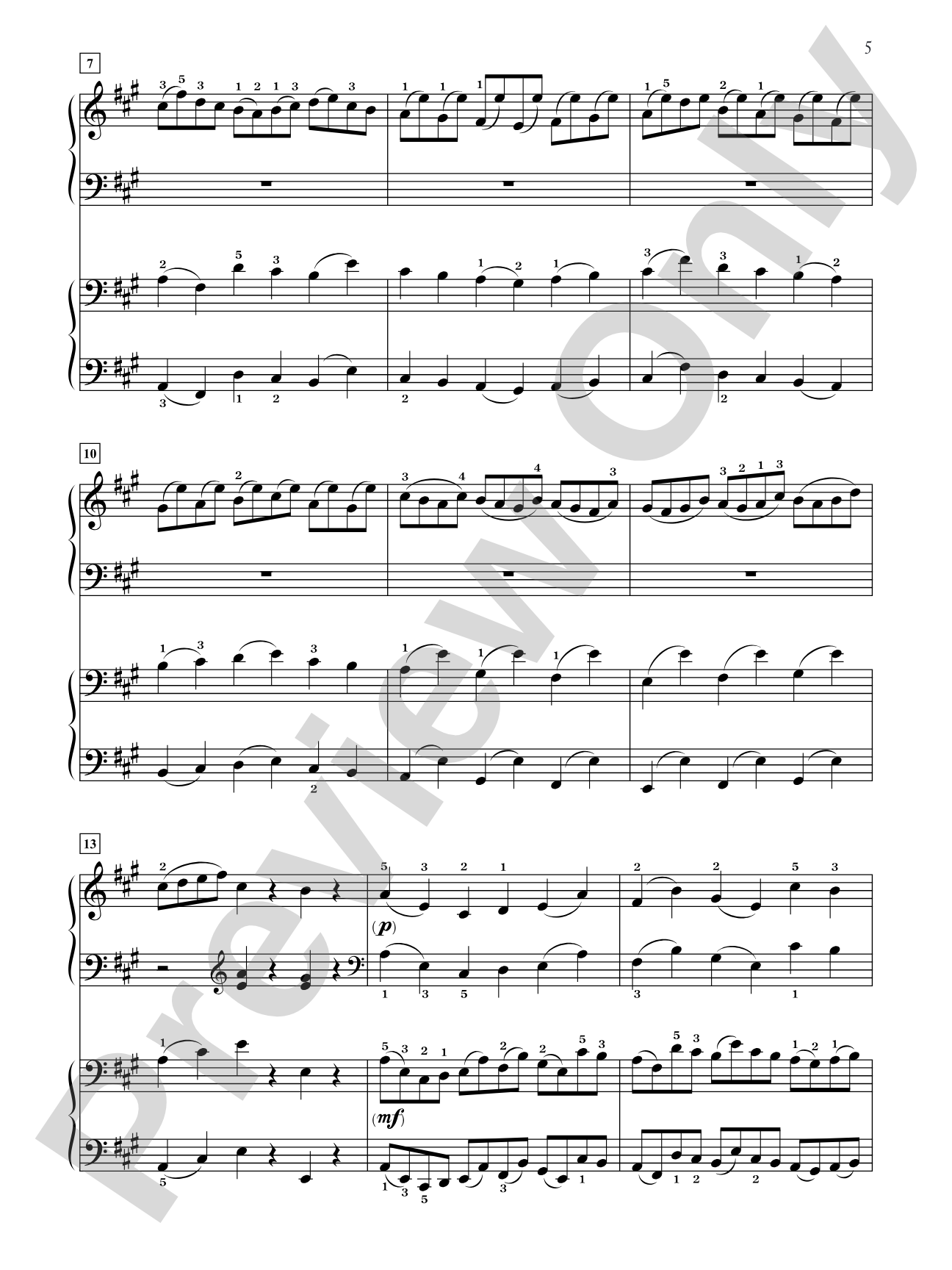
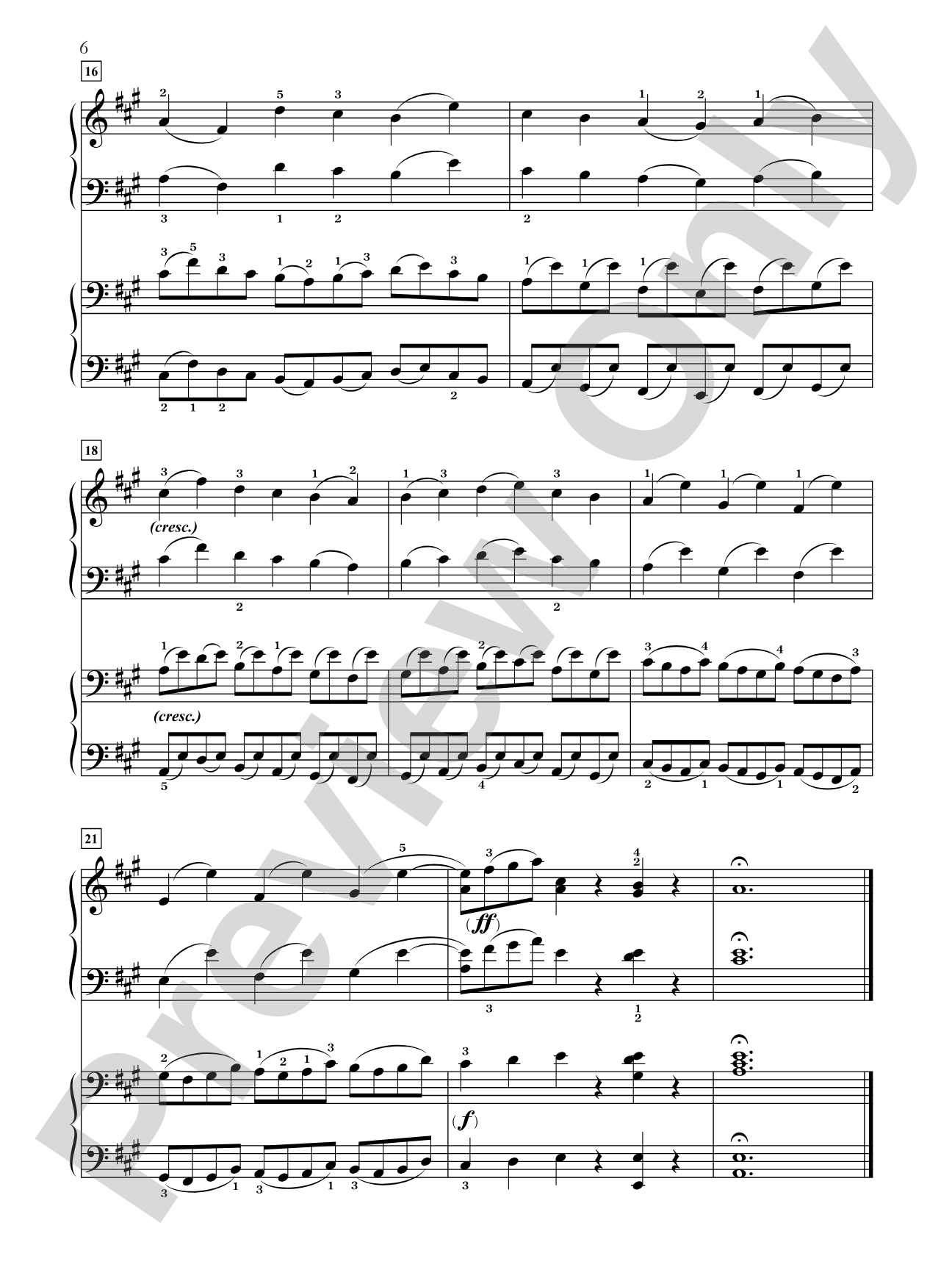
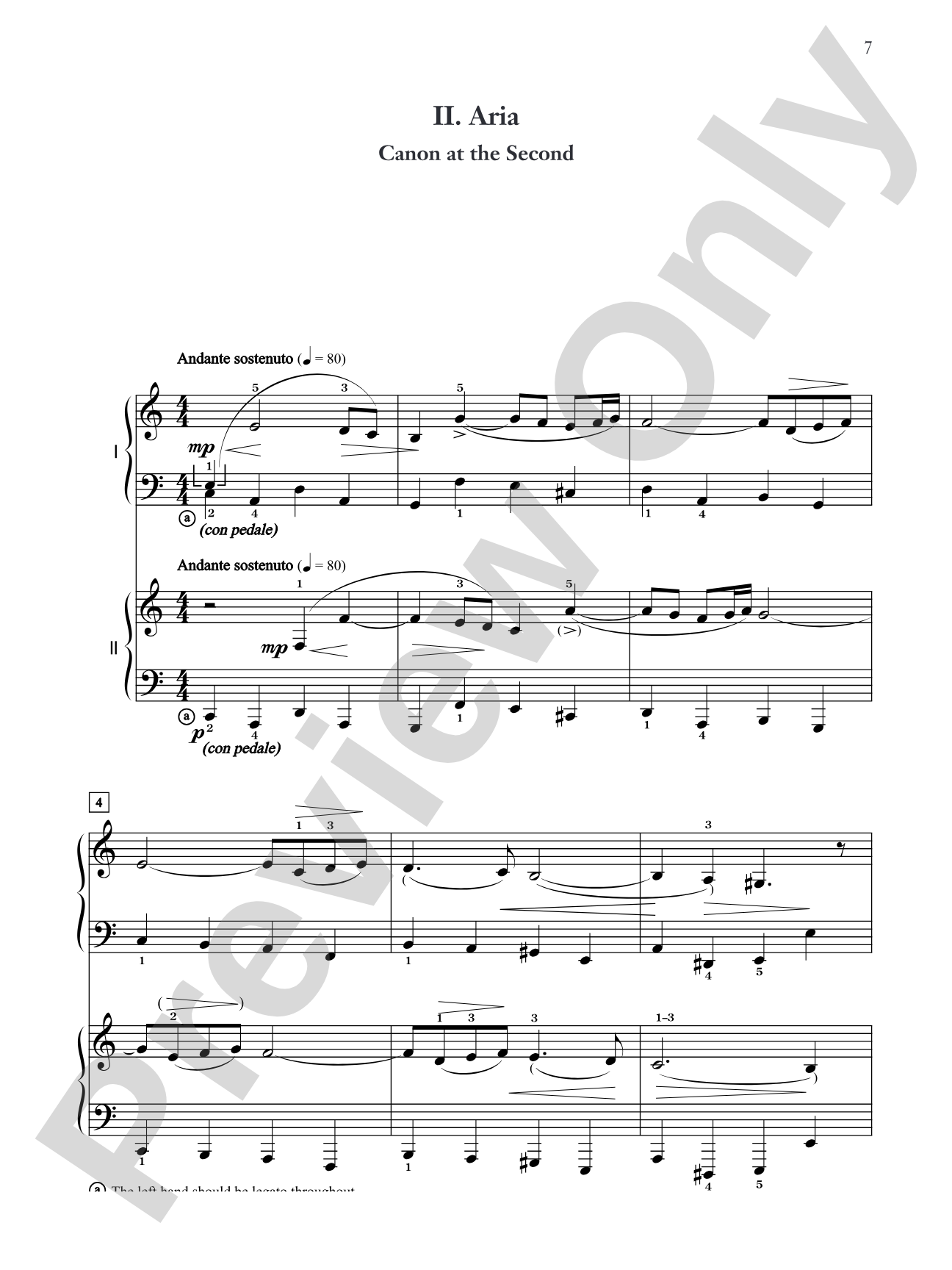
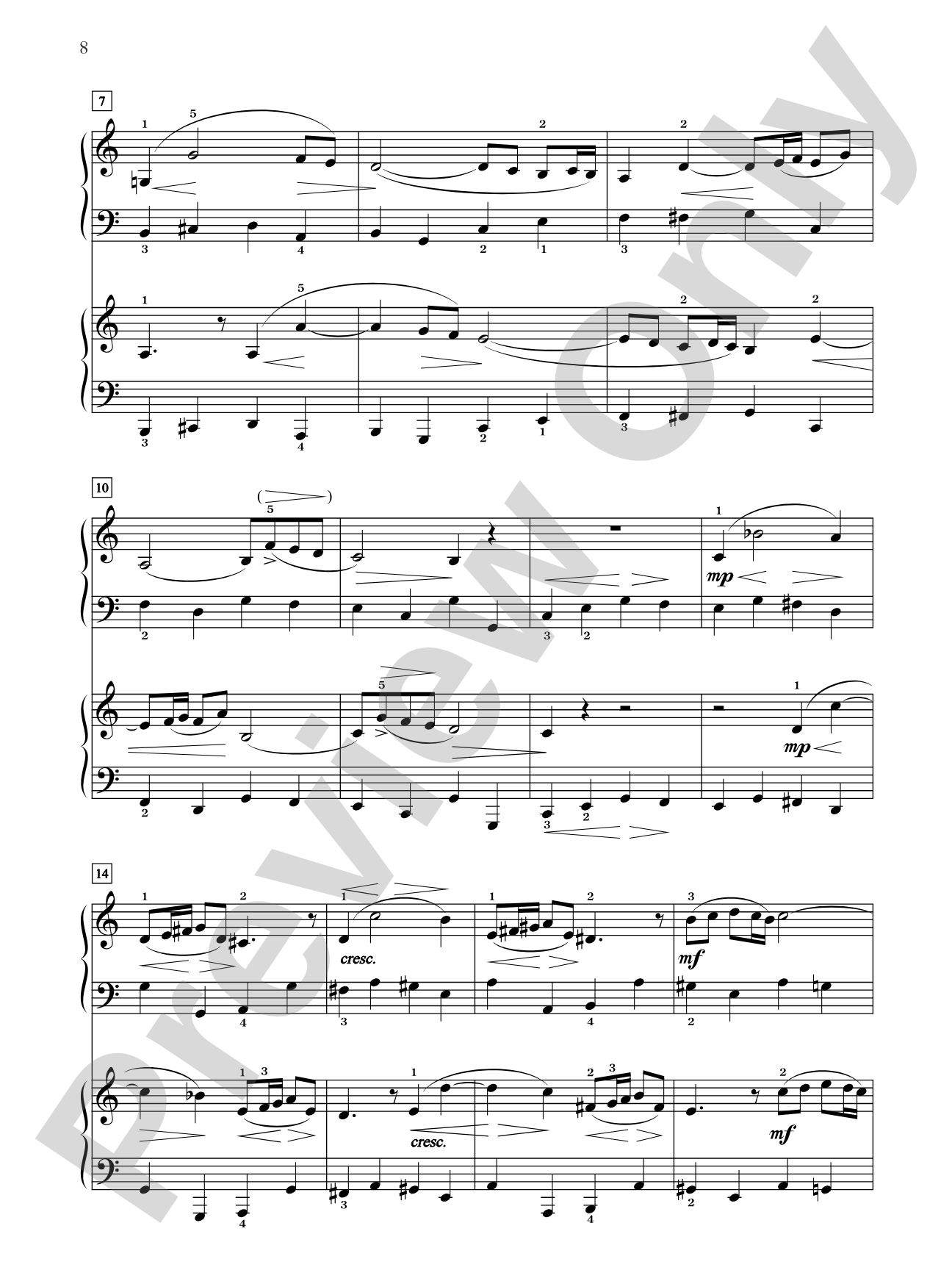
Arensky: Children's Suite (Canons), Opus 65 - Piano Duo (2 Pianos, 4 Hands) Sheet Music Preview

Arensky: Children's Suite (Canons), Opus 65 - Piano Duo (2 Pianos, 4 Hands): Piano Duets & Four Hands

By Anton Arensky / ed. Maurice Hinson and Allison Nelson

Level: Early Advanced

Item: 00-PB-0000596

Digital Download
$9.99
Description
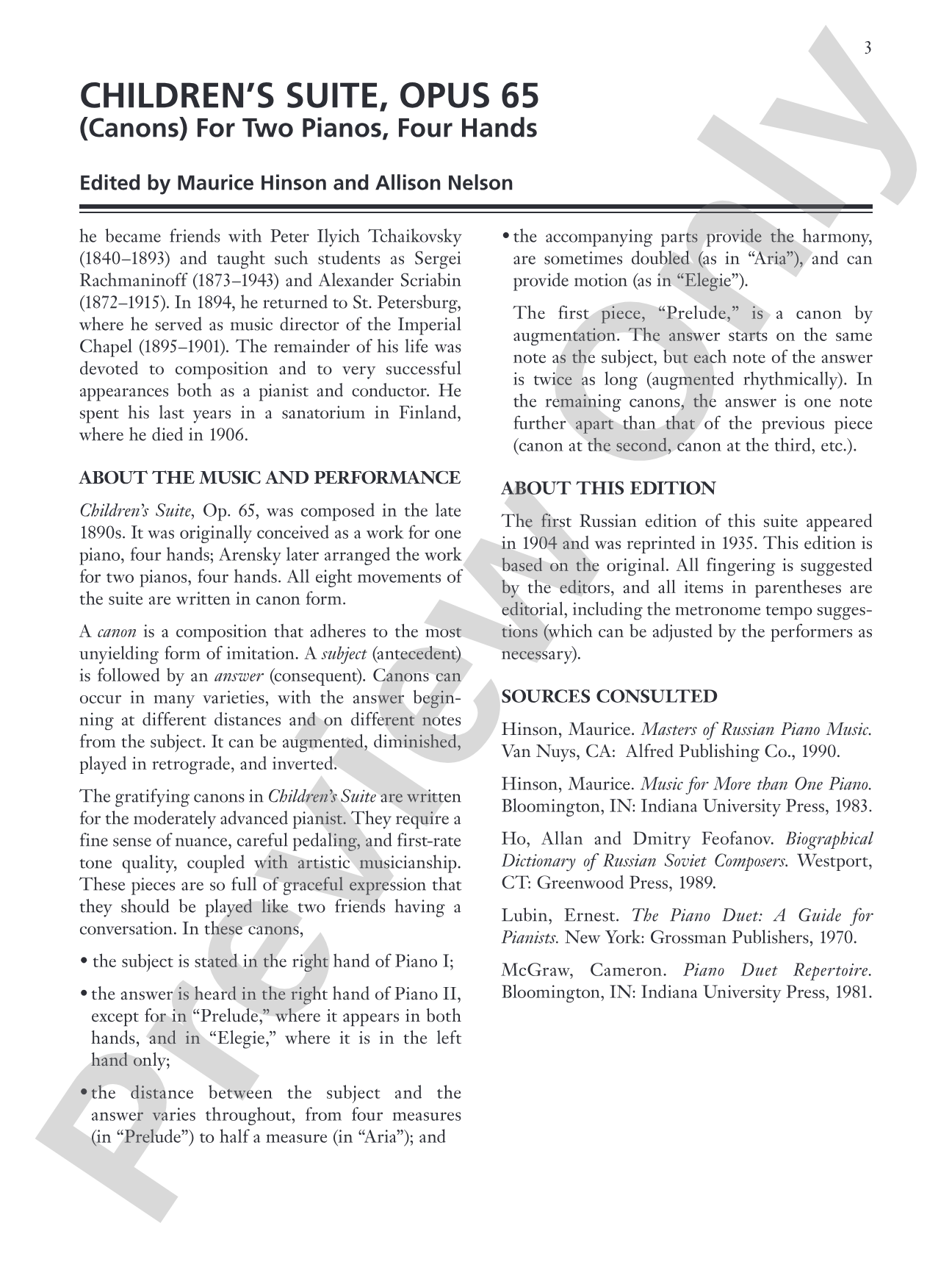
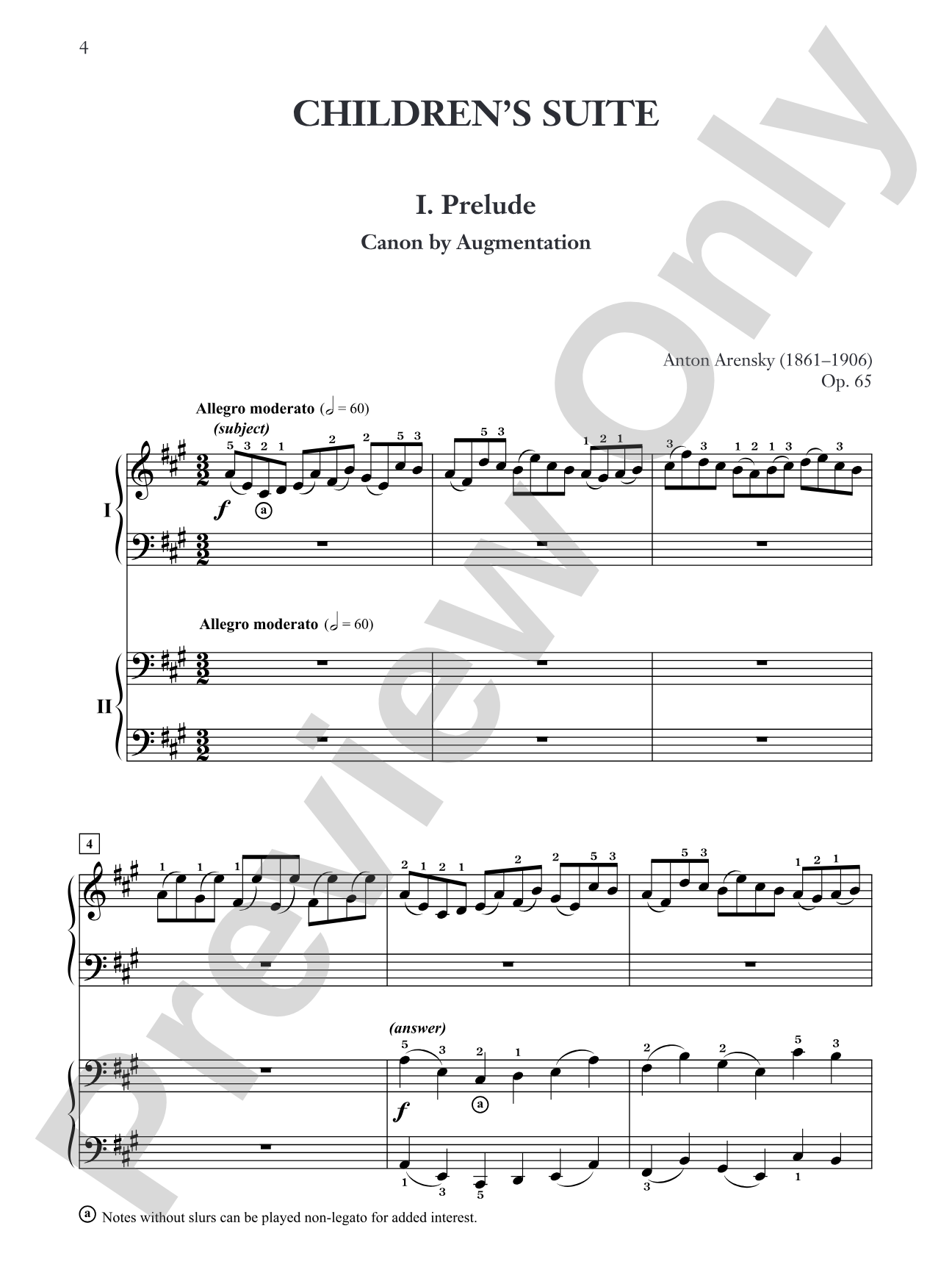
Children's Suite (Canons), Op. 65 was composed in the late 1890s. All eight movements of the suite are written in canon form and are accessible to pianists at the early advanced level. This edition includes editorial fingering and tempo suggestions, as well as background historical information. A Federation Festivals 2024-2028 selection.

Arensky: Children's Suite (Canons), Opus 65 - Piano Duo (2 Pianos, 4 Hands): Piano Duets & Four Hands isn't in MakeMusic Cloud just yet...but it could be. Let us know you'd like to see it, and you'll help shape what comes next. In the meantime, start a free trial and dive into thousands of interactive titles your students can play along with today.

Sample Audio
No sample audio found.
Sample Video
Additional Details
Series: Alfred Masterwork Edition
Publisher: Alfred Music
Page Count: 36
SKU: 00-PB-0000596

More about this title

About the Composer: Anton Arensky

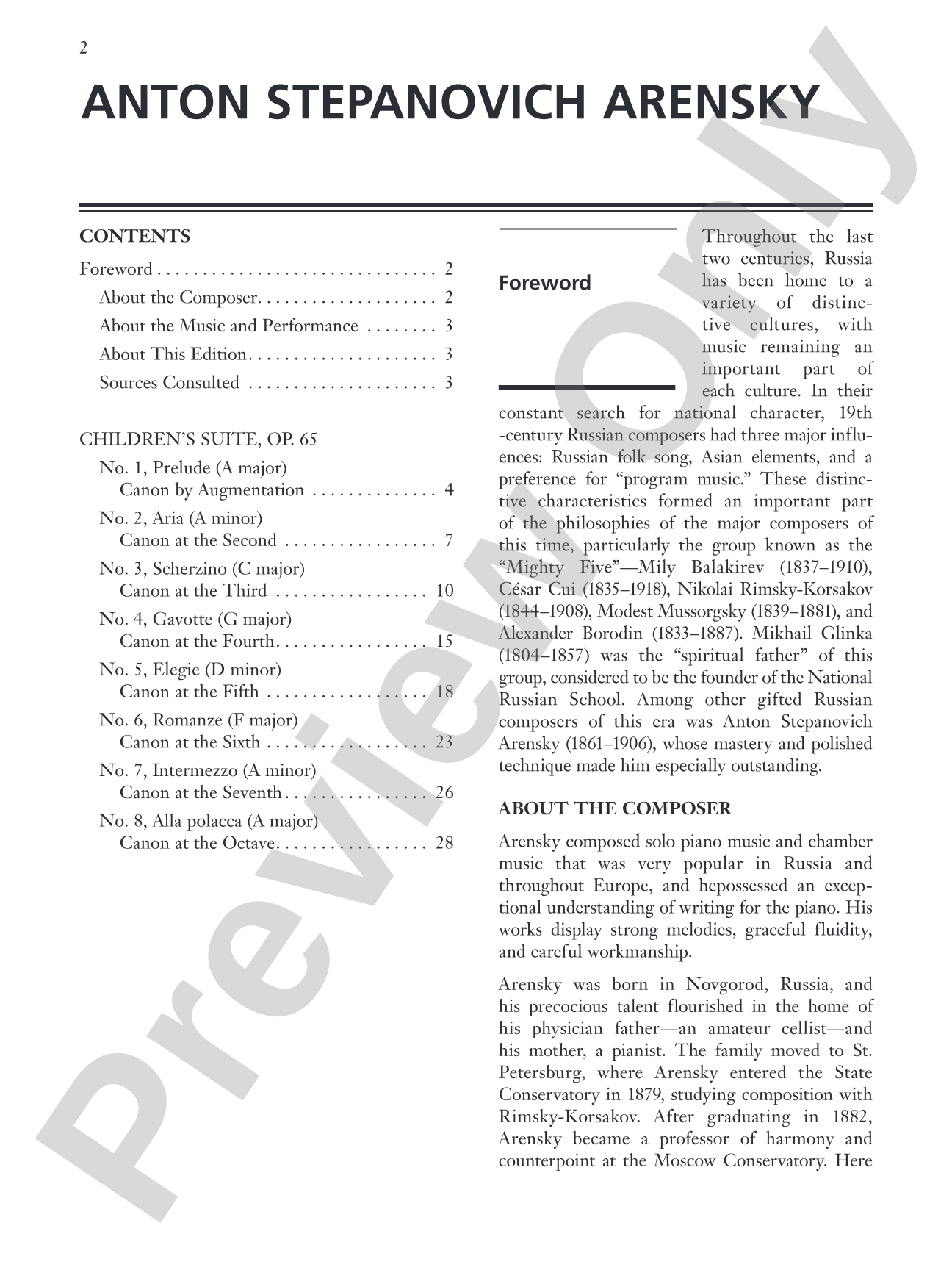
Anton Arensky (1861-1906) was a Russian composer and pianist who bridged the gap between Tchaikovsky's generation and the early twentieth century. He held the directorship of the Imperial Chapel in St. Petersburg and composed with remarkable facility across orchestral, chamber, and keyboard genres. His gift for melody and structural clarity made him particularly skilled at writing for students, and his output of pedagogical works remains essential to piano curricula worldwide.

Arensky's canon writing stands apart from his contemporaries for its singing lines and harmonic sophistication. Rather than treating the form as a compositional exercise, he treated it as a vehicle for genuine musical expression. The Children's Suite exemplifies this philosophy, making sophisticated musical ideas accessible to developing pianists.

Why we love this

Eight movements in strict canon form could easily devolve into academic drudgery, but Arensky's melodic gift keeps each piece singing. The early advanced level is honest; these are challenging enough to demand focus and precision, yet rewarding enough that students feel they're playing real music, not technical studies. Programming this suite builds reputation with festival adjudicators while genuinely strengthening your students' musicianship.

What to expect

Arensky's canons shimmer with a distinctly Russian melodic warmth, never frigid or mathematically cold. Each movement has a distinct character and mood, moving between lyrical passages and rhythmic playfulness, with the two interlocking voices creating a sense of musical conversation rather than mechanical imitation.

Who it's for

This suite belongs on the stands of advanced elementary and intermediate pianists preparing for competitions, festival performances, or recitals that need substance. It also serves pianists working toward ABRSM, RCM, or other certification exams that value canon literature.

How to get the most out of it

  • Establish a clear hierarchical relationship between the two piano parts before rehearsal begins. One voice typically leads; mark those phrases so both pianists hear the architecture underneath the canonic texture.
  • Record yourselves at a slow tempo first. Listening back reveals where independence falters and where the two lines lose their individual character.
  • Work the pedal separately for each piano. Canon writing often obscures when to change the pedal; plan this together so neither pianist has to guess.
  • Drill the canonic entries in isolation. Play the first piano alone, then add the second at its entry point, repeating until the timing feels instinctive.

How to use it

Slot this into a concert where you want to highlight technical achievement without sacrificing musicality. A movement or two works beautifully in a "Romantic Piano Favorites" program, or program the entire suite for pianists ready to show real interpretive depth. The Federation Festivals selection status makes it an intelligent choice for students preparing for adjudicated events.

Skills your students will build

  • Reading and executing strict canon form in real time
  • Maintaining melodic independence while listening across parts
  • Coordinating two pianists at the keyboard with precision timing
  • Balancing tone and voice leading in contrapuntal textures
  • Interpreting editorial fingering and tempo guidance from a scholarly edition

You May Also Like