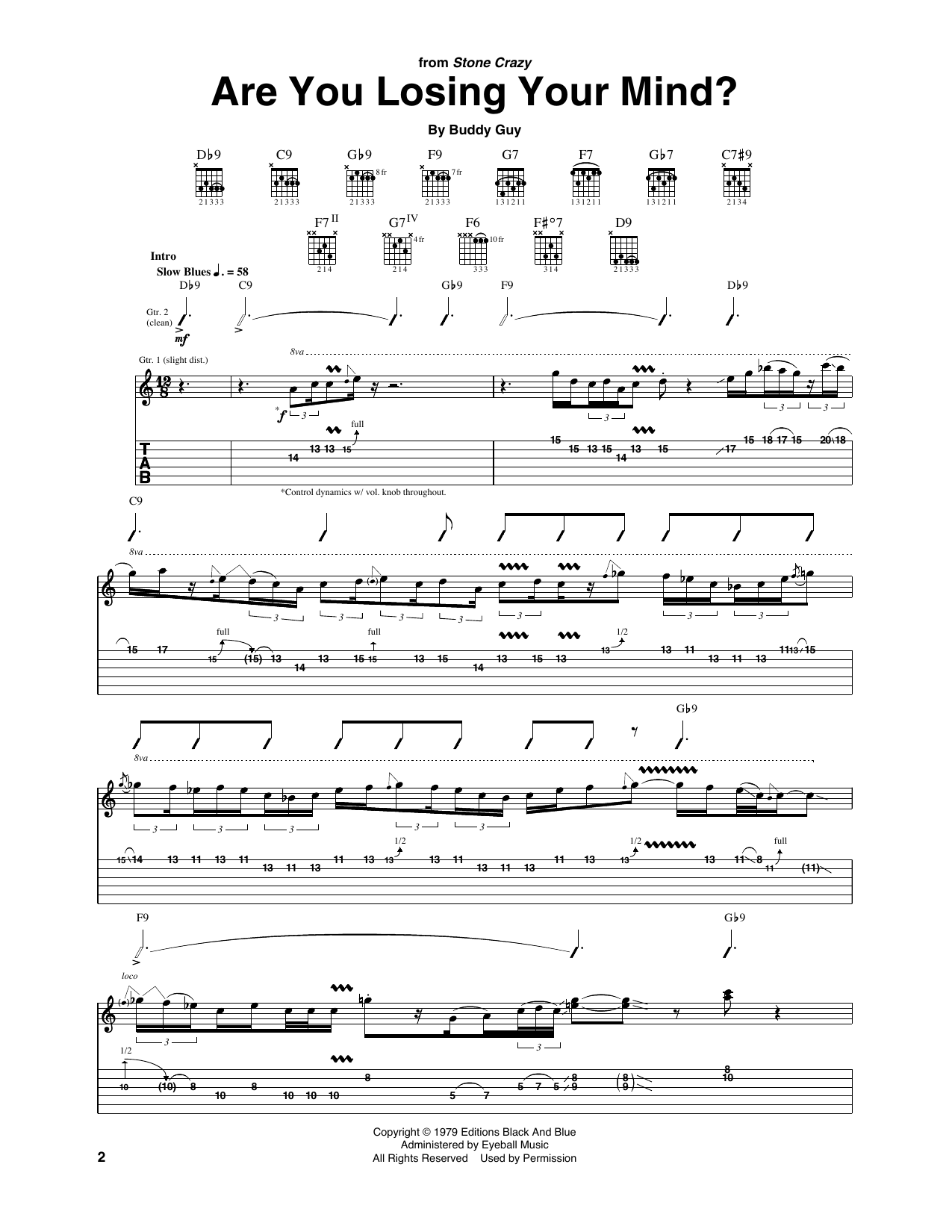
Buddy Guy stands as one of the most influential electric blues guitarists of the modern era, bridging the gap between traditional Chicago blues and the rock and roll revolution. His virtuosic technique, expressive bending, and willingness to push the instrument beyond conventional boundaries have shaped how countless players approach the blues, making him an essential reference point for any guitarist serious about understanding the genre's vocabulary.
Why we love this
This tab captures one of Guy's signature moments, giving students direct access to the technical and stylistic choices that define his approach to the instrument. Learning from transcriptions of his actual playing accelerates development in ways that generic exercises simply cannot match, and the 14 pages provide enough material to spend real time with his phrasing and sound.
What to expect
Raw and conversational. The playing feels like a dialogue between Buddy and the band, full of controlled fire and emotional directness. Bend and double-stop work sits alongside moments of melodic simplicity, creating a masterclass in when to play and when to let the listener breathe.
Who it's for
Guitar students ready to move beyond beginner material and hungry to understand how a master approaches phrasing, dynamics, and tone in the blues idiom. This works equally well for performers building a working repertoire and for classroom study of blues performance practice.
How to get the most out of it
Study the recorded version before diving into the tab. Buddy's timing sits in conversation with the rhythm section rather than locked to a click, and the tab alone won't convey those critical dynamic relationships.
Pay close attention to his use of partial bends and quarter-tone variations. These nuances separate compelling blues playing from technically correct but lifeless renderings.
Work the rhythm section parts into your practice. The interplay between guitar and bass creates the groove, so play along with the original recording to internalize the pocket.
Don't rush the subtle sections. Where Buddy pulls back and uses space, let the silence breathe. Restraint is part of his mastery.
How to use it
Use this as a repertoire reference during blues history units or as a serious solo vehicle for advanced guitarists in jazz or contemporary music ensembles. It also serves as an invaluable transcription study for guitarists developing their own improvisational voice.
Skills your students will build
Expressive bending and intonation control in single-note and double-stop contexts
Reading and performing from professional guitar tab notation
Understanding phrase structure and call-and-response phrasing typical of Chicago electric blues
Groove awareness and rhythmic flexibility within a blues pocket
Tone shaping through technique choices (attack, sustain, dynamics)
You May Also Like
Scan to Complete Your Purchase
Use your phone's camera to scan the code below
You'll log in on your phone and the order will be added to your account