
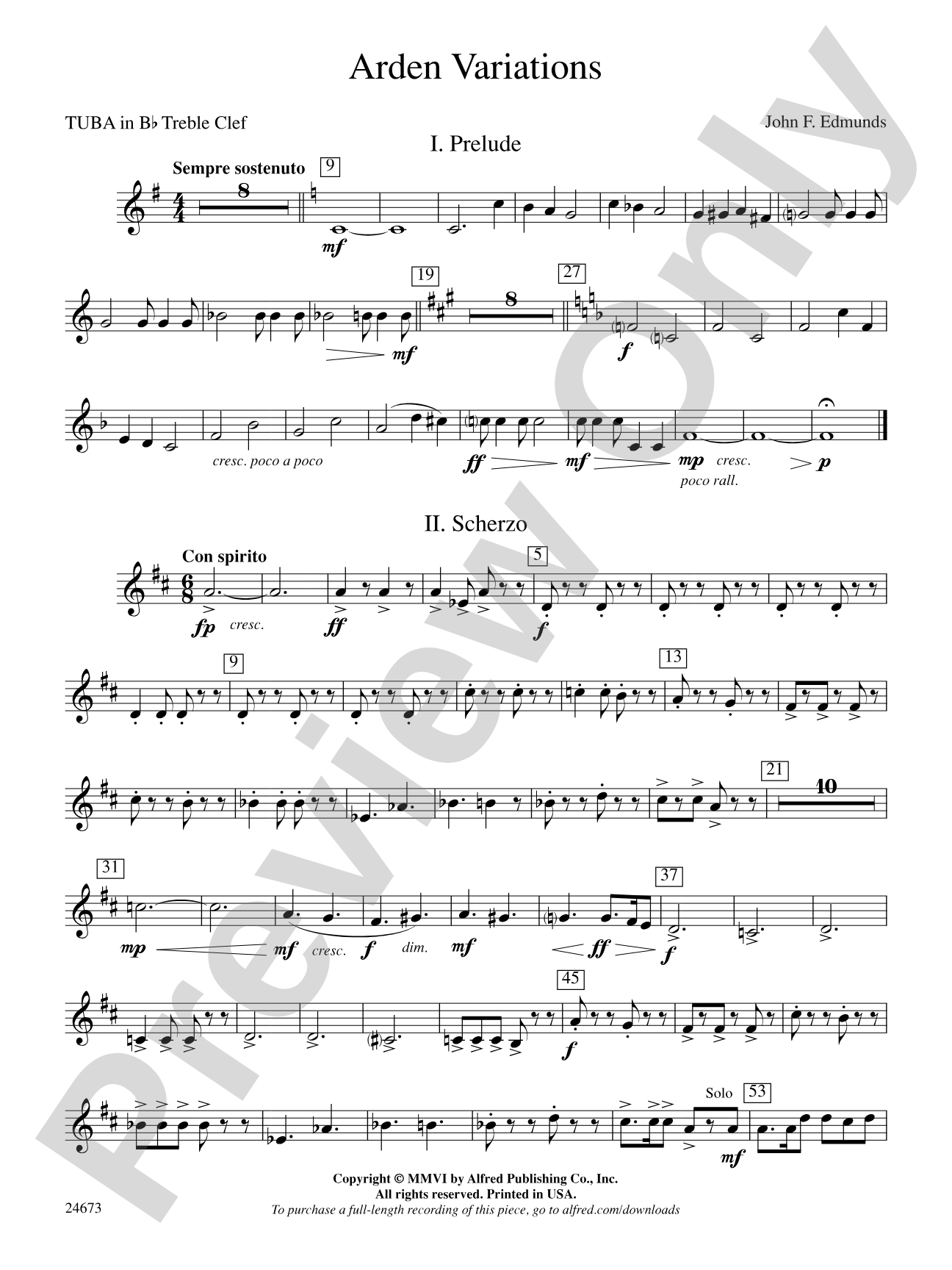
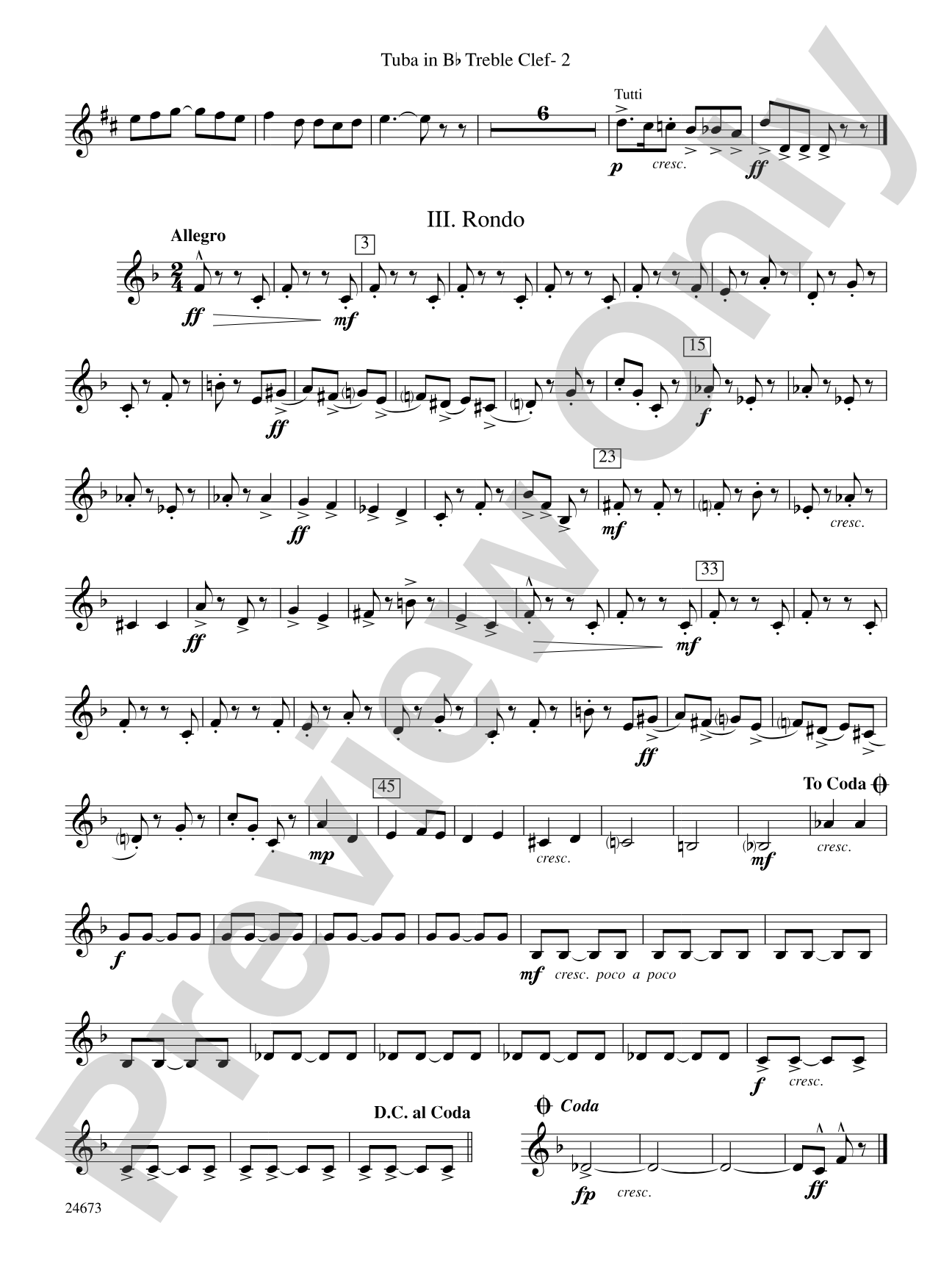

Arden Variations: (wp) B-flat Tuba T.C.
By John F. Edmunds
Grade: 4 (Medium Difficult)
Item: 00-PC-0000841_wpTBBTC
$3.00
Pickup currently not available
Description
Arden Variations is a theme and variations form in three movements, each replete with melodic, harmonic, and rhythmic variations on the simple 8-measure chorale theme of the opening Prelude. Originally intended as an analytical study for students in the composer's Advanced Harmony course at Louisiana State University, the piece seemed to demand further development as each new harmonic device was introduced. Its frequent distant-key modulations and varied rhythmic excursions keep the simple melody alive and interesting throughout its six-and-a-half minute length. (6:30)


Don't just read it, hear it, play along with it, and watch your students grow with it. In MakeMusic Cloud, Arden Variations: (wp) B-flat Tuba T.C. comes alive with professional accompaniment, adjustable tempo, and built-in practice tools that turn solo practice into real progress.
Open in the Player
Jump straight in and assign it today.
Start Your Free Trial
Open this title and explore the full library in minutes.
Sample Audio
1
Audio File
--:--
0:00
0:00
Sample Video
Additional Details
Series:
Alfred Concert Band
Publisher:
Alfred Music
Page Count:
302
SKU:
00-PC-0000841_wpTBBTC
More about this title
About the Composer: John F. Edmunds

John F. Edmunds built his career across multiple roles in American music education: as a secondary and college band director, staff arranger, and composer with over 100 published works for band. He spent significant time on the faculty at Louisiana State University as a Professor of Music, where he also served as a mentor to composition students, and earlier held positions at the University of Texas at Austin, including work as Assistant Director of Bands and staff arranger for the UT-Austin band program.
Eduards' contributions to band literature have been recognized consistently through ASCAP special awards throughout his career. He holds degrees from Florida State University and the University of Florida, and brings the perspective of someone who has worked across both university and secondary school settings.
Why we love this
Edmunds creates a genuinely pedagogical work here without sacrificing musical substance. The theme and variations form gives directors a piece that teaches harmonic language and orchestration naturally through the music itself, making it ideal for ensembles ready to tackle more sophisticated harmonic vocabulary. The contest and festival designation means you get a piece with real musical depth that also meets adjudication expectations.
What to expect
An intellectual journey wrapped in musical substance. The opening chorale establishes a calm foundation, then unfolds with increasing sophistication as harmonies stretch into distant keys and the melodic outline gets reshaped through rhythm and color. The six-and-a-half-minute arc never feels long because each variation arrives as a genuine discovery.
Who it's for
Conductors leading Grade 4 ensembles ready for greater harmonic complexity and form awareness. This work suits bands with solid fundamentals who can handle key changes and shifting orchestrations while maintaining ensemble cohesion.
How to get the most out of it
- Balance the changing orchestrations carefully across movements. As the harmonic devices shift and new voicings emerge, resist the impulse to let the upper voices dominate; instead, let the arrangement breathe by adjusting sectional weights to highlight what each variation emphasizes.
- Mark the distant-key modulations in your score before rehearsals begin. Flag these moments for your students so they hear the harmonic journey and understand why the familiar theme sounds fresh each time it returns.
- Shape the rhythmic variations with precision. When the piece ventures into new rhythmic territory, the contrast works only if the original chorale rhythm was locked in earlier; precision here pays off dramatically.
How to use it
Program this as a centerpiece on a concert where you want to showcase your ensemble's maturity without diving into contemporary complexity or extreme difficulty. It works well on contest and festival programs specifically because judges hear clear form and intentional compositional choices. Consider pairing it with a Baroque arrangement and a lighter contemporary work to create a program that shows range and control.
Skills your students will build
- Listening for and tracking harmonic devices (distant-key modulations, voice leading)
- Maintaining ensemble precision during frequent key changes
- Balancing sectional roles as orchestration shifts through each variation
- Understanding theme and variations form through direct experience
- Responding to subtle rhythmic shifts while preserving melodic contour