
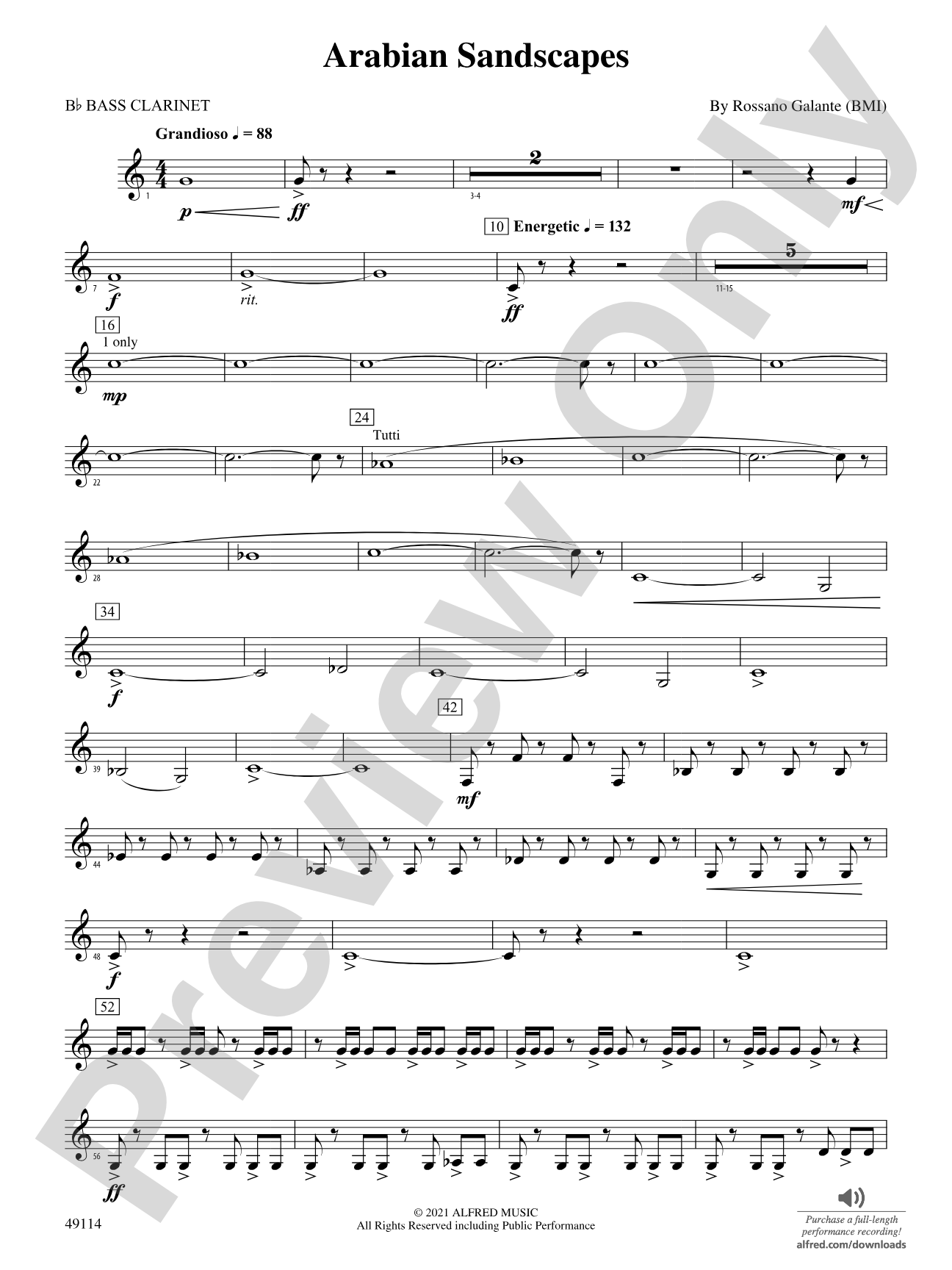

Arabian Sandscapes: B-flat Bass Clarinet
By Rossano Galante
Grade: 4 (Medium Advanced)
Item: 00-PC-0018688_BC
$3.00
Pickup currently not available
Description
Arabian Sandscapes by Rossano Galante is a stunning work that opens with a bold, unison statement of the main theme by the brasses. After the introduction, a rhythmic ostinato follows in the winds, which, by adding the horns and trumpets, creates an even more heroic feel. The piece then yields to a lyrical, plaintive theme for a contrasting section of this emotional work. A recapitulation of the main theme drives the piece to a riveting climax depicting the faraway lands of Arabia. (5:20) This title is available in MakeMusic Cloud.


Don't just read it, hear it, play along with it, and watch your students grow with it. In MakeMusic Cloud, Arabian Sandscapes: B-flat Bass Clarinet comes alive with professional accompaniment, adjustable tempo, and built-in practice tools that turn solo practice into real progress.
Open in the Player
Jump straight in and assign it today.
Start Your Free Trial
Open this title and explore the full library in minutes.
Sample Audio
1
Audio File
--:--
0:00
0:00
Sample Video
Additional Details
Series:
Alfred Concert Band
Publisher:
Alfred Music
Page Count:
286
SKU:
00-PC-0018688_BC
More about this title
About the Composer: Rossano Galante

Rossano Galante studied trumpet performance at SUNY Buffalo, graduating in 1992, and was among nineteen international applicants selected that year for the University of Southern California's prestigious Film Scoring Program, where he studied under the late Jerry Goldsmith. Since relocating to California in 1999, he has established himself as a composer and orchestrator, collaborating with Academy Award-nominated composers and contributing orchestration work to over eighty studio films spanning blockbuster franchises and acclaimed independent productions.
Beyond his film work, Galante maintains an active presence in concert music, receiving commissions from bands and orchestras worldwide. His published catalog exceeds sixty-eight compositions across multiple publishers including Alfred, Schirmer, Hafabra, C.L. Barnhouse, Musikverlag Frank, and Dehaske/Curnow, demonstrating his versatility across both cinematic and concert band idioms.
Why we love this
Galante understands how to build dramatic arc across a concert band canvas. The structural clarity here—bold unison brass statement into rhythmic ostinato, then contrasting lyrical section, then recapitulation climax—gives conductors and students a masterclass in form and orchestration. This is the kind of work that feels cinematic without demanding a Hollywood budget from your rehearsal.
What to expect
Arabian Sandscapes conjures vast, shimmering landscapes through sound. The opening brass declaration feels ancient and commanding; as the orchestration thickens with wind rhythms and brass color, the texture becomes almost hypnotic. The lyrical interlude offers emotional depth and vulnerability before the final drive builds toward a vivid, heroic vision.
Who it's for
Grade 4 concert bands ready to tackle a work with genuine dramatic ambition and sophisticated orchestration. This suits ensembles preparing for festivals and contests, as well as programs seeking a substantial standalone concert piece with cultural flavor and strong musical storytelling.
How to get the most out of it
- Lock the rhythmic ostinato in the winds early. This is the motor of the piece; once it sits solidly, the heroic brass statements land with authority.
- Shape the lyrical middle section with deliberate breath and phrasing in the melodic voices. The contrast only works if the band truly yields to the plaintive quality.
- Balance brass timbre across sections during the recapitulation. The main theme sits with horns and trumpets layered together; clarity of individual lines prevents a wash of sound.
- Emphasize the unison opening with precision and unified articulation across the brass choir. This sets the tonal identity for everything that follows.
How to use it
Program this as a centerpiece concert work or festival selection where you want to showcase your band's maturity and dynamic range. The five-minute-twenty-second duration makes it an ideal anchor for a mixed program, and the multicultural aesthetic pairs well alongside other world-influenced band literature or as a bridge between classical and contemporary concert works.
Skills your students will build
- Layered orchestration and texture blending across sections
- Maintaining rhythmic precision in ostinato-driven passages
- Dynamic contrast and phrasing in lyrical material
- Sectional balance and voice independence during complex tutti passages
- Understanding formal structure (introduction, development, recapitulation) through listening and performance