Arabian Nights Sheet Music Preview

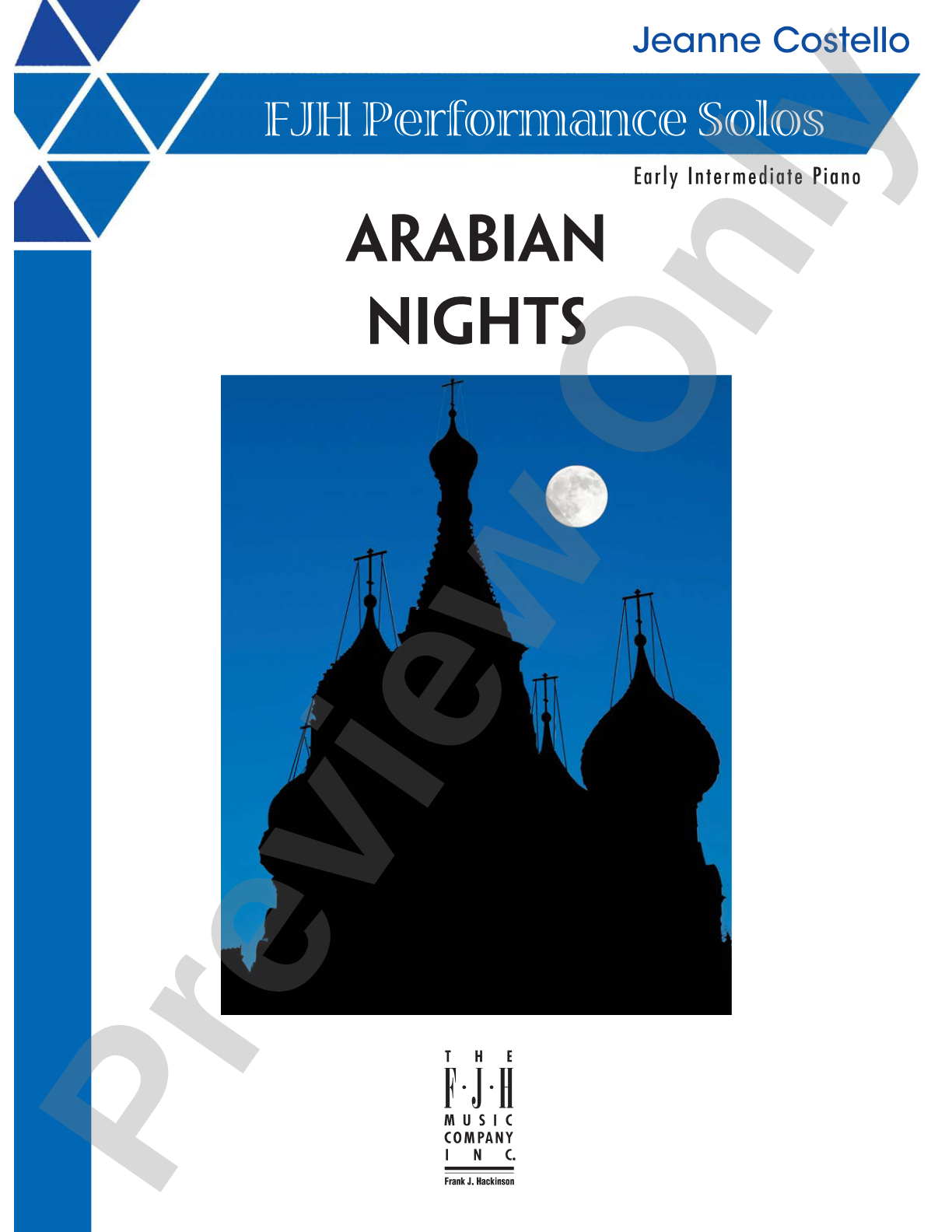
Arabian Nights: Piano

By Jeanne Costello

Item: 98-DP2010

Digital Download
$2.95
Description
A flowing, haunting melody starts in D minor and then modulates to A minor halfway through. There is continuous use of eighth notes and pedal throughout with many dynamic contrasts.

Arabian Nights: Piano isn't in MakeMusic Cloud just yet...but it could be. Let us know you'd like to see it, and you'll help shape what comes next. In the meantime, start a free trial and dive into thousands of interactive titles your students can play along with today.

Sample Audio
No sample audio found.
Sample Video
Additional Details
Series: FJH Performance Solos
Publisher: The FJH Music Company, Inc.
SKU: 98-DP2010

More about this title

Why we love this

The modulation from D minor to A minor creates genuine harmonic intrigue without requiring advanced chromatic vocabulary, making it an ideal waypoint for students developing their sense of key relationships. The relentless eighth-note texture paired with dynamic contrasts teaches pedal control and voice independence in one satisfying package.

What to expect

Arabian Nights pulls you into a winding minor-key reverie with its hushed, persistent eighth-note accompaniment, then shifts ground beneath you when the modulation arrives. The dynamic contrasts feel like shadows and light dancing across an exotic landscape.

Who it's for

Intermediate and early intermediate pianists ready to handle continuous accompaniment patterns alongside lyrical melody. Students benefit from the piece's balance of technical consistency and interpretive space.

How to get the most out of it

  • Shape the opening melody with subtle rubato before the modulation; the flowing quality depends on not rushing through the minor-key material.
  • Maintain consistent eighth-note pulse even as dynamics shift; uneven rhythm will blur the haunting character.
  • Experiment with the pedal changes at the modulation point to refresh the sonority and signal the harmonic shift to listeners.
  • Layer your dynamics carefully so the piece breathes between registral changes rather than becoming a flat, wall-of-sound experience.

How to use it

This works beautifully as a concert opener or closer, creating an intimate moment that contrasts sharply with more rhythmic or energetic works. It's also an excellent choice for student recitals where you want to showcase control and pedal technique without requiring flashy fingerwork.

Skills your students will build

  • Sustaining consistent eighth-note texture while maintaining tonal clarity
  • Modulating between closely related keys (D minor to A minor) and hearing the harmonic shift
  • Pedal control and timing, especially through dynamic changes
  • Balancing accompaniment and melody in a single hand or across the staff
  • Musical phrasing and rubato in a flowing, cantabile style

You May Also Like