Arabesque No. 1: Piano Digital Sheet Music

Arabesque No. 1: Piano Digital Sheet Music

Claude Debussy

Item: 00-PS-0000214

Digital Download
$3.99
Description

Arabesque No. 1: Piano Digital Sheet Music isn't in MakeMusic Cloud just yet...but it could be. Let us know you'd like to see it, and you'll help shape what comes next. In the meantime, start a free trial and dive into thousands of interactive titles your students can play along with today.

Sample Audio
No sample audio found.
Sample Video
Additional Details
SKU: 00-PS-0000214

More about this title

About the Composer: Claude Debussy

Claude Debussy (1862-1918) fundamentally reshaped how composers approached harmony, texture, and form in the early twentieth century. His piano works moved away from the Romantic era's emphasis on virtuosic display toward a more impressionistic sound world, where timbre and subtle harmonic color became primary compositional tools. For piano teachers and students, Debussy's catalog offers essential repertoire that bridges nineteenth-century Romanticism and twentieth-century modernism.

Debussy's influence on music education extends far beyond his own compositions. His approach to the piano as an instrument of color and atmosphere changed how generations of teachers frame the instrument's possibilities, encouraging students to listen more carefully to resonance, pedal work, and the interplay between melody and accompaniment. Arabesque No. 1 remains one of the most frequently assigned pieces for intermediate pianists encountering impressionistic harmony for the first time.

Why we love this

Arabesque No. 1 sits at the sweet spot between accessibility and sophistication. The piece captures Debussy's signature impressionistic sound without the technical demands that make some of his later works intimidating, allowing intermediate students to experience genuine twentieth-century harmony while building confidence.

What to expect

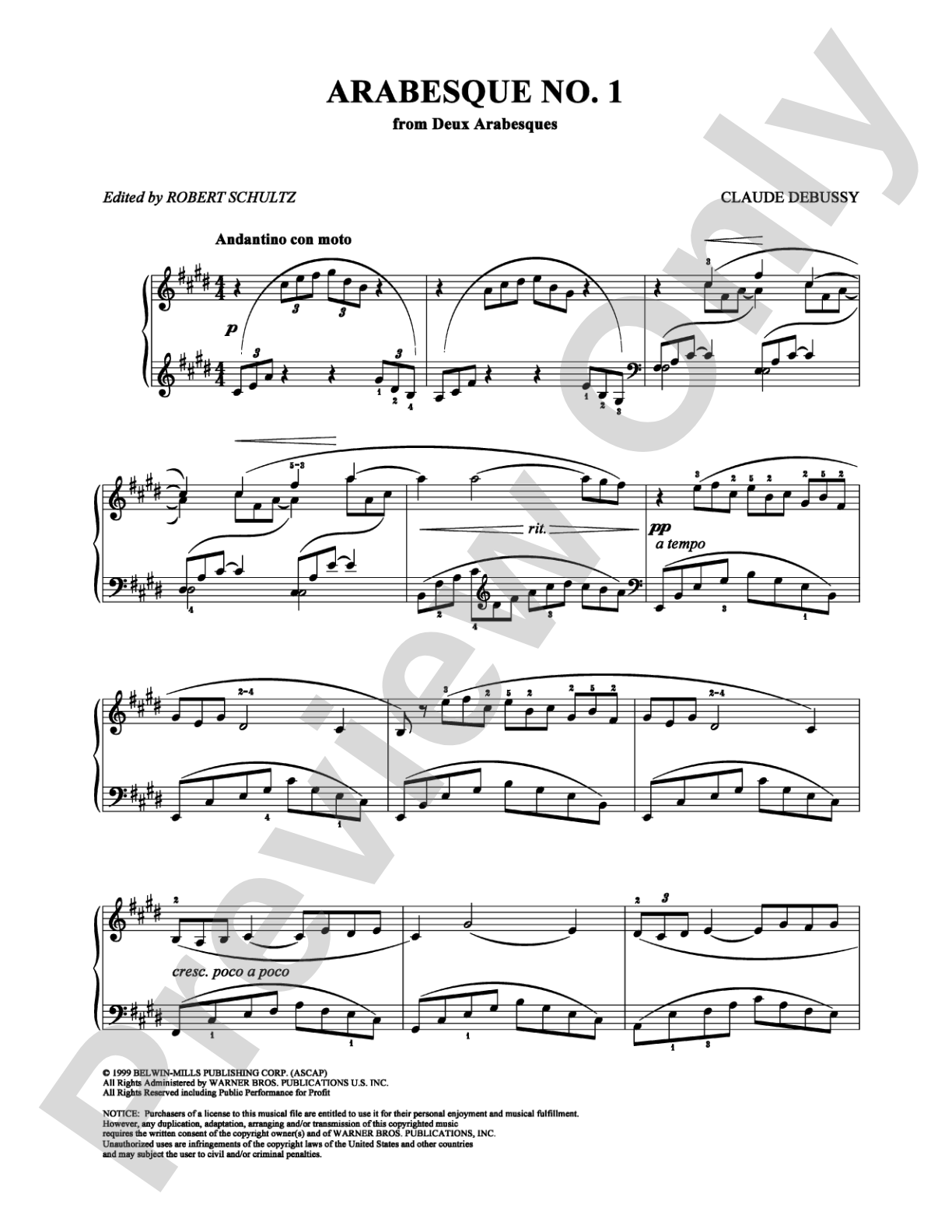
Arabesque No. 1 unfolds with the unhurried grace of a musical sketch, where delicate figuration dances above softly shifting harmonies. The piece evokes quiet contemplation and gentle motion, inviting the listener into an intimate sound world defined by color and suggestion rather than dramatic contrast.

Who it's for

This piece serves intermediate pianists (around Grade 4-5 level) who are ready to explore impressionistic harmony and pedal technique beyond Romantic-era repertoire. Teachers use it to introduce students to twentieth-century compositional thinking while reinforcing musicality and ear training through coloristic listening.

How to get the most out of it

  • Shape the opening melody with gentle dynamic waves rather than maintaining strict mezzo-piano; let the line breathe and suggest the piece's improvisational character.
  • Experiment with pedal release and reengagement to clarify the harmonic movement without creating a blurred wash, especially through the chromatic passages in the middle section.
  • Listen to the accompanimental texture as a complete harmonic entity, not individual chords; this helps the left hand maintain rhythmic flexibility without sacrificing unity.
  • Resist rushing the return to the opening theme. The piece gains elegance through unhurried phrasing and the patient unfolding of its brief formal design.

How to use it

Program this piece on a recital alongside Romantic-era salon music to highlight the evolution of piano writing, or pair it with other Debussy works to showcase his compositional arc. It also serves as an excellent bridge in a student recital between more traditional repertoire and contemporary works, helping audiences hear the lineage of modern piano music.

Skills your students will build

  • Impressionistic harmony and chromatic voice leading
  • Pedal technique for color and clarity
  • Subtle dynamic shaping and phrasing without literal accent
  • Independence between hands in free, non-repetitive rhythmic contexts
  • Listening for harmonic function in non-traditional tonal contexts

You May Also Like