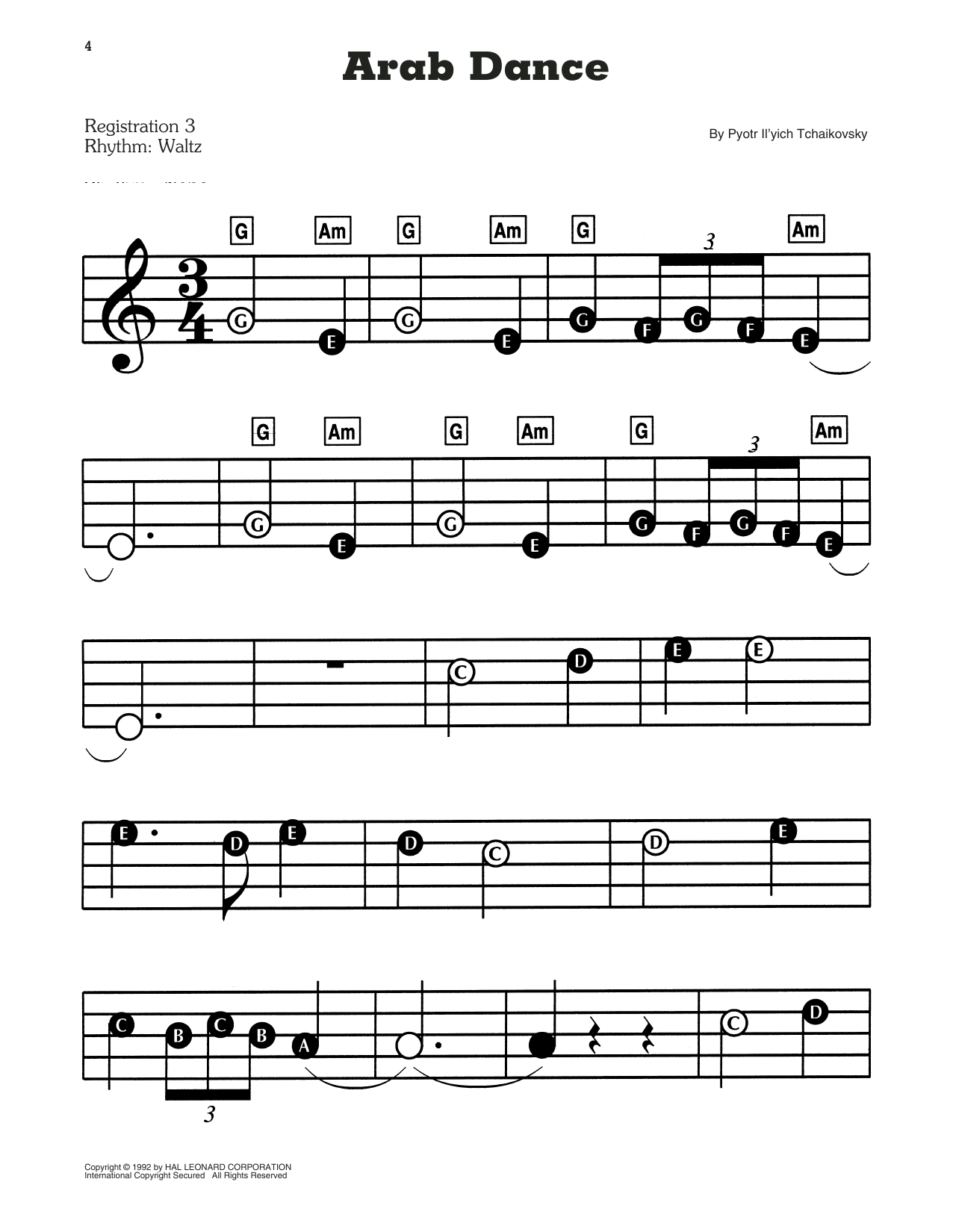
Arab Dance (from The Nutcracker) Sheet Music Preview

Arab Dance (from The Nutcracker): E-Z Play Today

By Pyotr Il'yich Tchaikovsky

Item: 35-DS00490029

Digital Download
$4.99
Description

Arab Dance (from The Nutcracker): E-Z Play Today isn't in MakeMusic Cloud just yet...but it could be. Let us know you'd like to see it, and you'll help shape what comes next. In the meantime, start a free trial and dive into thousands of interactive titles your students can play along with today.

Sample Audio
No sample audio found.
Sample Video
Additional Details
Publisher: Hal Leonard
Page Count: 2
SKU: 35-DS00490029

More about this title

About the Composer: Pyotr Il'yich Tchaikovsky

Pyotr Ilyich Tchaikovsky (1840-1893) was a Russian composer whose gift for melody and orchestration shaped the Romantic era. His works span symphonies, concertos, ballets, and operas, many of which remain central to concert and educational repertoires worldwide. The Nutcracker, composed in 1891-1892, stands as one of his most enduring achievements, prized for its accessibility and imaginative character pieces that introduce students to orchestral color and Victorian-era exoticism.

Why we love this

Arab Dance captures the exotic atmosphere Tchaikovsky conjured for The Nutcracker's second act, and this E-Z Play arrangement makes it achievable for pianists still building technical facility. The piece demands musicality and rhythmic precision without excessive virtuosity, rewarding students who focus on tone, phrasing, and the interlocking rhythmic figures that give the dance its character.

What to expect

Sultry and mysterious, with a hint of the fantastical. The rhythm propels forward with exotic charm while the melody floats above, conjuring images of a snow kingdom's imported dancers and distant, shimmering worlds.

Who it's for

Pianists in the early intermediate range will find this arrangement engaging and within reach. It works well for holiday recitals, school concerts, or as an introduction to ballet music and Tchaikovsky's orchestral thinking.

How to get the most out of it

  • Keep the inner rhythmic pulse steady; the syncopated figures will feel secure only if the underlying beat remains unwavering.
  • Color the melody with warmth and slight rubato, but resist the temptation to rush. Tchaikovsky's exotic harmonies need breathing room.
  • Balance the accompaniment so it supports without overwhelming the distinctive melodic line. The orchestral original thrives on clarity of texture.
  • Pay attention to dynamic shaping within phrases. Small crescendos and diminuendos will illuminate the harmonic movement and prevent static sound.

How to use it

Program this alongside other Nutcracker selections for a ballet-themed concert, or use it as a seasonal staple that doesn't rely on holiday text or elaborate staging. It bridges classical repertoire and accessible arrangement well, making it suitable for student recitals, holiday assemblies, or informal performances.

Skills your students will build

  • Rhythmic precision in syncopated figures
  • Maintaining steady pulse while shaping melody
  • Harmonic awareness and voice leading in accompaniment patterns
  • Dynamic control and phrase shaping
  • Sight-reading of intermediate piano textures

You May Also Like