
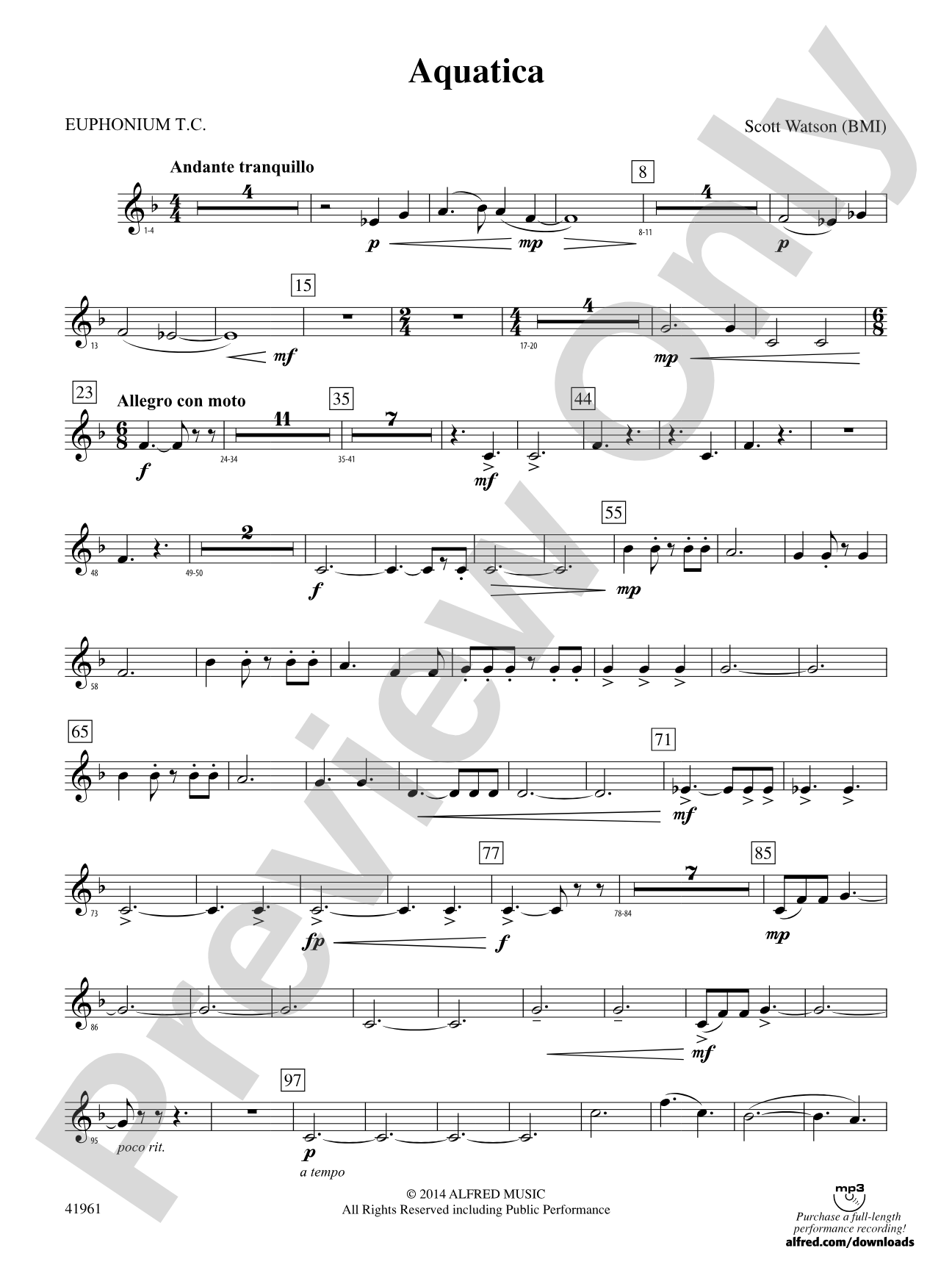

Aquatica: Baritone T.C.
By Scott Watson
Grade: 4 (Medium Difficult)
Item: 00-PC-0016443_BTC1
$3.00
Pickup currently not available
Description
This composition opens atmospherically in tranquil beauty---like a serene lake, a calm sea, or an eerie underwater scene. After a brief, meditative transition scored for four solo instruments, the piece bursts into a spirited 6/8 theme that suggests both water creatures and craft moving playfully through the waves. (4:50) This title is available in MakeMusic Cloud.


Don't just read it, hear it, play along with it, and watch your students grow with it. In MakeMusic Cloud, Aquatica: Baritone T.C. comes alive with professional accompaniment, adjustable tempo, and built-in practice tools that turn solo practice into real progress.
Open in the Player
Jump straight in and assign it today.
Start Your Free Trial
Open this title and explore the full library in minutes.
Sample Audio
1
Audio File
--:--
0:00
0:00
Sample Video
Additional Details
Series:
Alfred Concert Band
Publisher:
Alfred Music
Page Count:
284
SKU:
00-PC-0016443_BTC1
More about this title
About the Composer: Scott Watson

Scott Watson brings three decades of classroom experience into every score he writes. After leading instrumental music programs in the Parkland School District (Allentown, PA), including a tenure as high school Director of Bands and later as coordinator of the district's elementary band and strings initiatives, he joined Cairn University as Associate Professor of Music. His compositional voice reflects this dual expertise: a deep understanding of what works in the rehearsal room paired with engagement in contemporary concert art music.
Watson has established himself as a prolific composer with over 120 published works across concert band, string orchestra, and chamber ensembles at all levels. His music appears regularly on festival programs and has been heard at the Academy of Music in Philadelphia, the Midwest Clinic in Chicago, and the White House. Beyond composing, he contributes regularly to Alfred Publications' Sound Innovations series, leads clinics for music educators, and authored Using Technology to Unlock Musical Creativity (Oxford University Press, 2011).
Why we love this
Watson crafts accessible concert band music that actually rewards careful listening and rewarding conducting. Aquatica opens with genuine atmospheric color—not just sustained chords, but a carefully shaped introduction that establishes mood through orchestration—before shifting into a rhythmically engaging 6/8 section that students find satisfying to execute. The piece demonstrates that Grade 4 writing doesn't require exotic effects or gimmicks; instead, skillful balance of quiet and energetic passages, combined with the contest/festival feature, makes this a strong choice for programs seeking repertoire with both musical substance and strategic value.
What to expect
The opening unfolds like peering into water in stillness, with light and shadow shifting through the sound. The moment the 6/8 theme emerges, the band becomes alive with motion; the water comes alive with activity and play. The overall arc delivers both the meditative satisfaction of slow, carefully voiced writing and the kinetic joy of a piece that swings.
Who it's for
This is ideal for Grade 4 concert bands preparing for festival or contest performance. Directors seeking a piece that engages students musically while offering compelling concert material—one that moves from quiet, atmospheric writing to rhythmically vivid themes—will find Aquatica an excellent fit for programs with solid fundamentals and growing confidence in ensemble blend.
How to get the most out of it
- Shape the opening section with attention to breath and swell in the ensemble; the meditative quality depends on sensitive dynamics across the full band, not just the featured solo quartet.
- Lock the transition into the 6/8 theme with clear rhythmic placement. The shift from contemplative to playful requires precise ensemble unity so the character change registers without rushing.
- Use the recorded accompaniment (available separately) in sectional rehearsals to help students anchor their parts against the full orchestration during initial learning phases.
- Balance the four solo instruments in the transition passage so each voice projects clearly in context; this requires deliberate seating choices and possibly a rehearsal focused solely on that section.
How to use it
Program Aquatica as a concert centerpiece that opens a second half or launches a thematic program around water, nature, or impressionistic music. The 4:50 duration and contest/festival designation make it a practical choice for ensemble festivals, and the piece's character arc—quiet to vibrant—provides a satisfying standalone experience. Pair it with faster or more rhythmically driving material to showcase the full range of your band's capabilities.
Skills your students will build
- Dynamic control and shaping in sustained, transparent textures
- Ensemble balance across varied orchestrations
- Transitions between contrasting tempos and characters
- Mixed meter navigation (4/4 and 6/8)
- Solo and featured ensemble voice confidence
- Rhythmic precision in stylized 6/8 thematic material