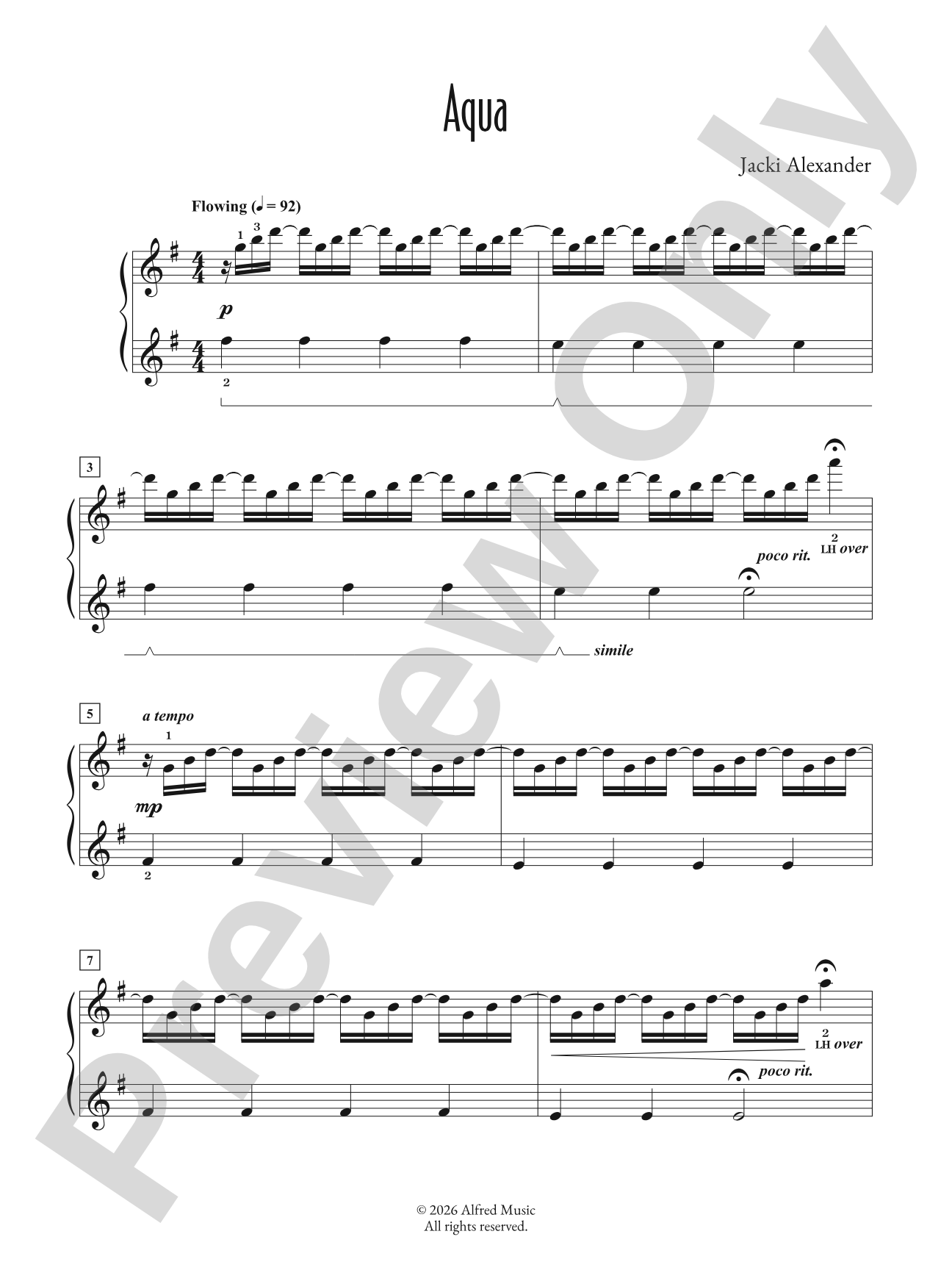
Flowing and sophisticated, Aqua features a rippling, minimalist texture energized by gentle melodic syncopation. A contrasting B section unfolds in broad, sweeping phrases that evoke the motion of rolling waves.
Discover MakeMusic Cloud: thousands of interactive titles your students can play along with today.
Jacki Alexander brings twenty-one years of piano teaching experience into her compositions and arrangements, working with students across beginner through intermediate levels. Her musical voice spans contemporary, lyrical, smooth jazz, pop, and traditional styles, grounded in a practice that began when she started piano at age four. Since becoming a published composer thirteen years ago, Alexander has earned recognition for her work, including a 2016 Sheet Music Plus ArrangeMe Holiday Contest win for her arrangement of "Mary, Did You Know?" Her insights on piano pedagogy and composition have appeared in The Piano Bench magazine and piano teacher podcasts.
Based in McCordsville, Indiana, Alexander draws creative inspiration from multiple artistic pursuits, including watercolor painting and live music attendance. Her arrangements and original solos reflect a deep understanding of what intermediate pianists need: music that sounds accomplished while remaining accessible, with emotional depth that rewards careful practice.
Why we love this
Aqua captures that rare quality of sounding effortless while requiring real interpretive maturity from the player. The minimalist texture with syncopated melodic detail gives intermediate pianists something substantive to shape, and the contrasting B section provides a natural arc that feels rewarding to both performer and listener without demanding virtuosic technique.
What to expect
Aqua evokes fluid motion without literal program music tactics. The opening rippling texture creates a sense of gentle forward momentum, while the syncopated melody adds a subtle shimmer of energy. When the B section arrives with its sweeping phrases, the music feels expansive and reflective, like watching waves crest and fall with quiet inevitability.
Who it's for
Intermediate pianists ready to move beyond purely technical studies into pieces that reward musical interpretation and character development. Students who respond well to contemporary minimalist textures and enjoy exploring how simple materials can generate sophisticated musical expression will find plenty to discover here.
How to get the most out of it
Shape the rippling accompaniment as a continuous, breathing gesture rather than isolated arpeggios; let the texture support the melody rather than compete with it.
Explore the syncopation in the A section by practicing hands separately first, then bringing them together with attention to how the melody sits slightly against the pulse.
Allow the B section to expand naturally; the broad phrases invite a more generous tempo and fuller dynamic range than the opening, creating genuine contrast.
Return to the A section with a sense of rediscovery; the familiar texture feels different once you've experienced the wider emotional landscape of the B section.
How to use it
Program Aqua as a recital opener or as part of a mini-set featuring contemporary piano music; its sophisticated textures pair well alongside other minimalist or impressionistic pieces. It also works beautifully in a mixed program where you want a moment of calm focus before a more dramatic work, or as a gentle closer for a student recital.
Skills your students will build
Control of minimalist texture and sustained accompaniment patterns
Reading and executing syncopated melodic lines against steady pulse
Dynamic shaping across contrasting formal sections
Interpretation of contemporary piano writing with economic means
Pedal technique for creating atmosphere without muddiness
You May Also Like
Scan to Complete Your Purchase
Use your phone's camera to scan the code below
You'll log in on your phone and the order will be added to your account